Start with a water-system walk-through
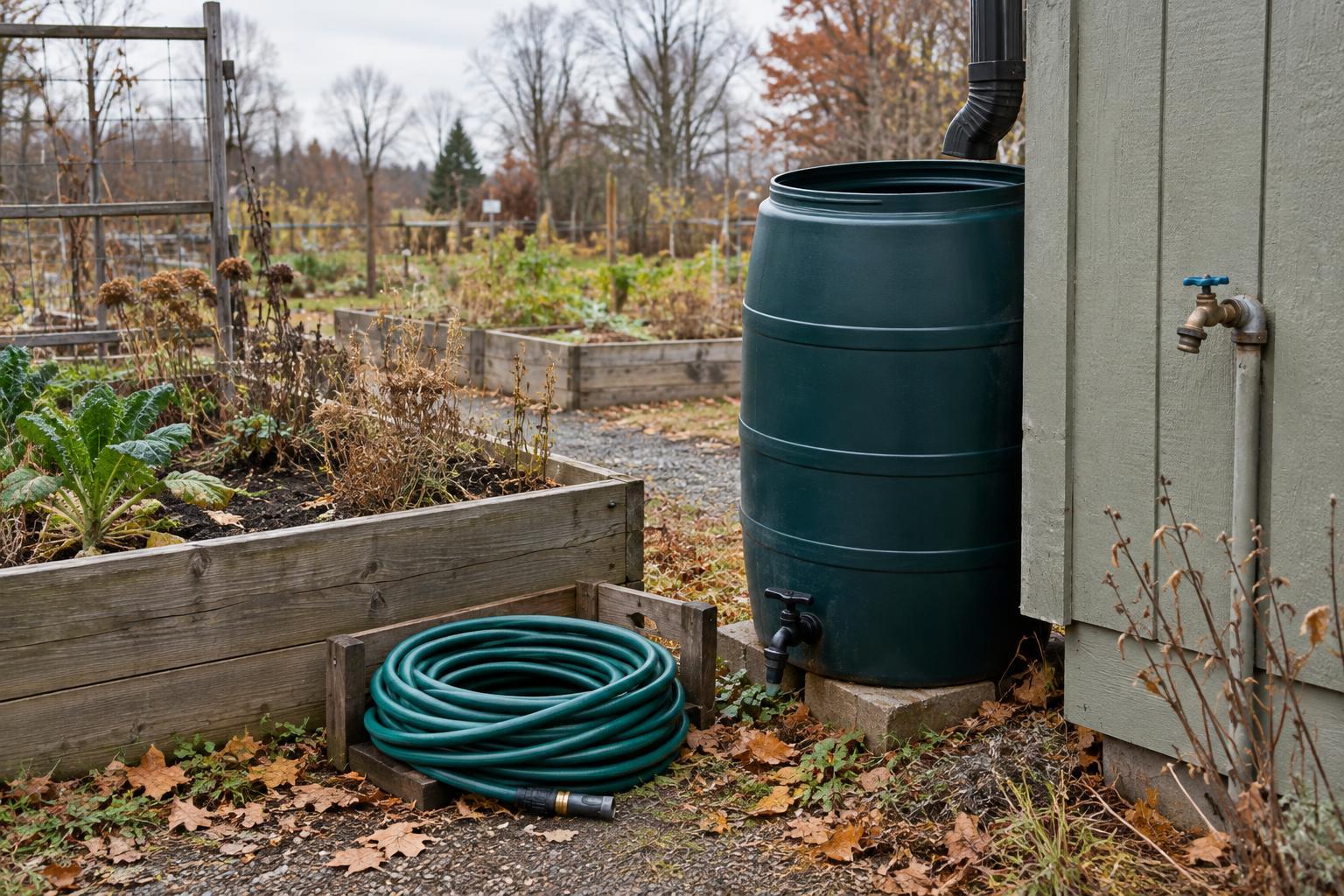
Before freezing weather arrives, trace the path water takes through the garden. Identify every outdoor faucet, hose, splitter, timer, quick connector, rain barrel, and irrigation line. In a community garden, include equipment tucked behind beds or stored near a tool shed. A short walk-through helps prevent one forgotten attachment from holding water where it can freeze and expand.
Take a photo or make a simple list of what belongs at each water station. Note which faucets have indoor shutoff valves and who can access them. If the garden shares a building’s water supply, coordinate with the person responsible for that building rather than turning off an unfamiliar valve. Put a dry storage spot and a container for small fittings on the checklist, too.
Drain and store hoses and attachments
Disconnect hoses from faucets, splitters, and reels. Open any adjustable nozzle, then drain each hose by laying it out on a gentle slope or lifting it section by section toward an open end. Empty hose reels as well as you can before winding the hose into loose coils. A tightly bent hose can be harder to handle later and may develop kinks.
Remove spray nozzles, watering wands, timers, and quick-connect fittings. Drain them, allow them to dry, and store them where they will not freeze. Battery-operated timers may have separate storage instructions; check their manuals before putting them away. Label shared equipment so volunteers can find the right parts in spring.
A hose that is still attached to a faucet can trap water in the connection, even if the faucet is turned off. Some outdoor faucets are designed to drain after shutoff, but an attached hose can interfere with that feature. Disconnecting everything is a useful habit regardless of the faucet type.
Empty and secure rain barrels
Drain rain barrels before water inside them can freeze. Open the spigot and remove any remaining water according to the barrel’s design. Check the screen, overflow hose, and connecting fittings for trapped water. Clean out leaves and sediment while the barrel is empty, using a soft brush and water if needed, and let removable parts dry before storage.
Disconnect the barrel from its downspout or diverter and arrange for roof runoff to flow away from the building as it did before the barrel was installed. Follow the diverter manufacturer’s directions if it has a winter setting or requires a replacement downspout section. A barrel left connected may refill during a winter thaw. Even an empty barrel should be secured against wind; store it under cover if practical, or follow the manufacturer’s guidance for outdoor storage.
If a garden has several linked barrels, check every connecting hose and valve. Do not assume that opening one spigot has emptied the whole system.
Check outdoor faucets and irrigation lines
After removing hoses and attachments, close each outdoor faucet fully. If a faucet has a dedicated indoor shutoff, the usual winter routine is to close that valve, open the outdoor faucet to release remaining water, and drain any indoor valve fitting intended for that purpose. Setups vary, so use the instructions for the installed plumbing. Frost-free faucets still need hoses disconnected so they can drain as designed.
Inspect faucets for persistent drips, loose connections, or signs of damage. A faucet cover may offer some protection, but it is not a substitute for draining equipment or addressing a leak. If a valve is hard to identify or a faucet continues to run after shutoff, ask the property manager or a qualified plumber rather than forcing it.
Drip irrigation, soaker hoses, and automatic watering systems need attention too. Disconnect portable components and drain them according to their manufacturers’ directions. Systems with buried lines or specialized valves may require a different procedure; do not assume that draining a garden hose has prepared the entire system.
Leave a clear plan for spring
In a shared garden, finish the job by recording what was done. Note which barrels were disconnected, where hoses and fittings were stored, and whether a faucet or valve needs repair. Attach a weather-resistant tag to any water station that should stay off. This makes it easier for the next volunteer to avoid reopening a line before it is ready.
When mild weather returns, reconnect equipment gradually and check for leaks before leaving water running unattended. Inspect hoses for cracks, confirm that barrel overflow routes away from structures, and test each faucet and timer. A careful winter shutdown makes that spring check simpler—and gives the garden’s watering tools a better chance of being ready for another growing season.