Decide where volunteers are welcome
A self-seeding flower drops viable seed and produces new plants without being sown by a gardener. That can be an advantage in an informal border: seedlings may fill bare patches and create a changing display. It can also become a maintenance problem when they crowd slower-growing plants, appear in paths or make a planned bed difficult to read. The goal is not necessarily to stop every seedling. It is to decide which ones have a place.
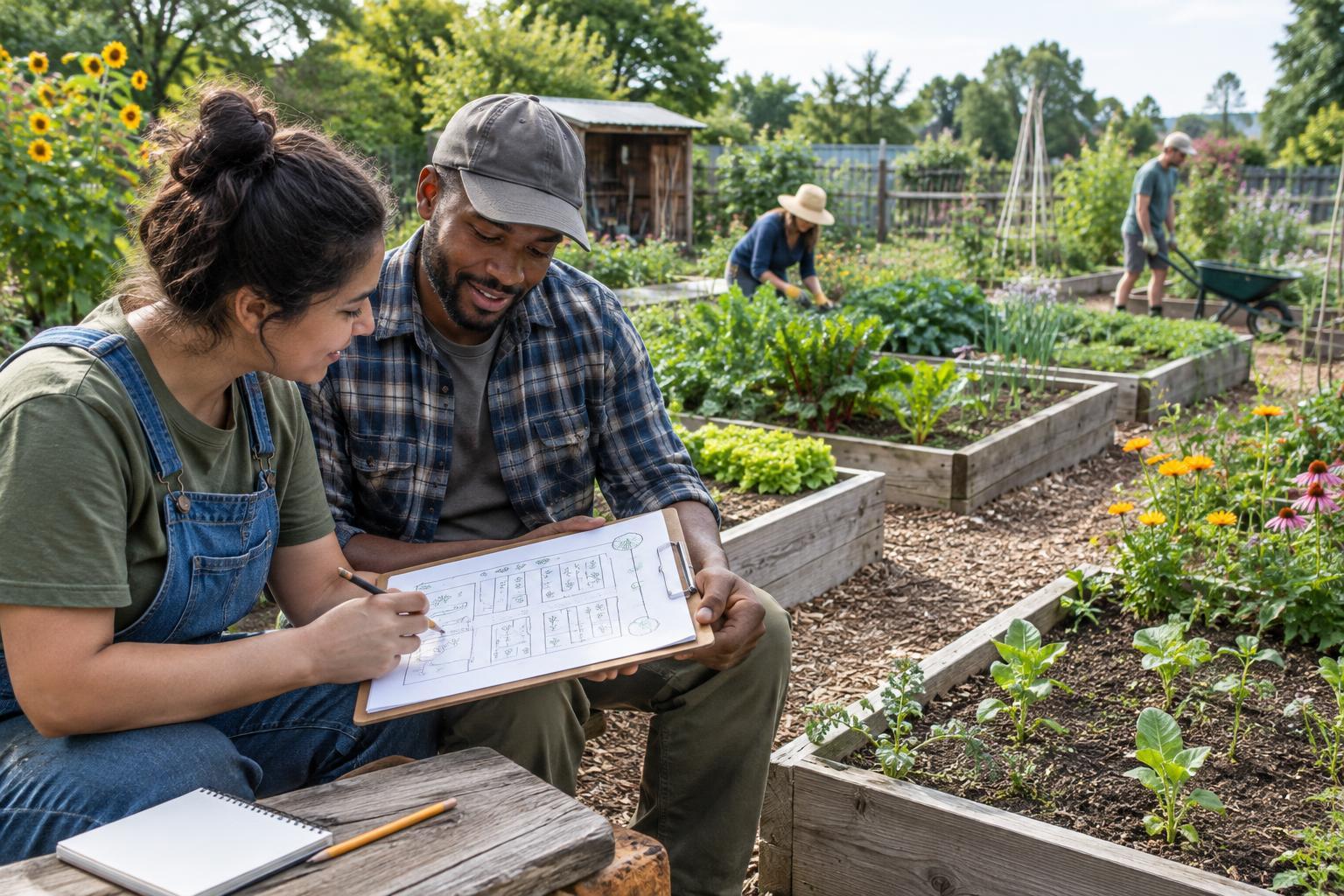
Before the growing season gets busy, identify a few areas where volunteers would be useful, such as an open patch between established plants. Mark places that need to stay clear, including path edges, access to hoses and the crowns of small perennials. In a shared garden, agree on those boundaries with other gardeners before anyone starts pulling plants. A seedling that looks like a weed to one person may be part of someone else’s plan.
Learn what to keep before you thin
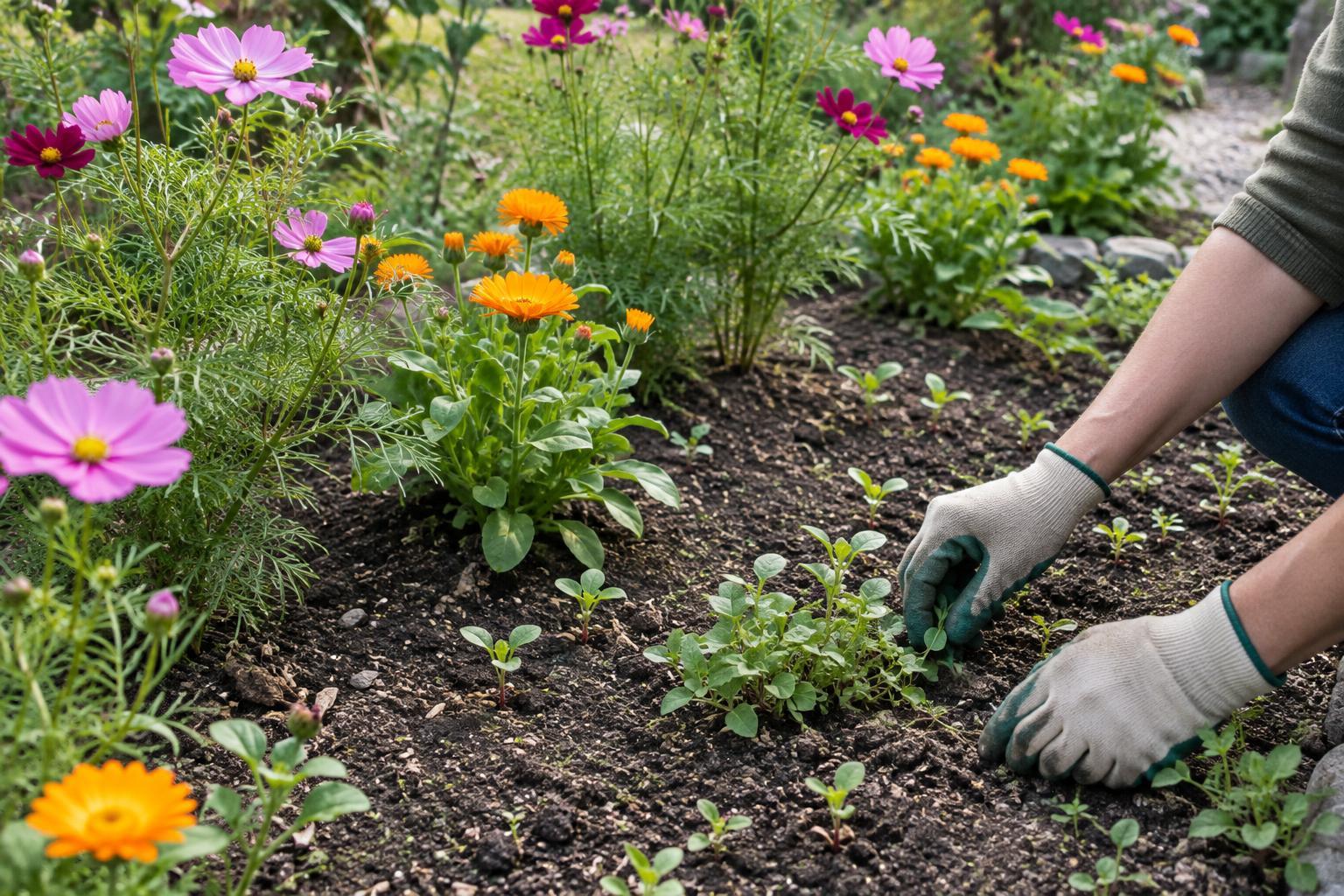
Young seedlings can look surprisingly different from the flowering plants that produced them. When you know a plant self-seeds, observe its first leaves and note where seedlings appear beneath the parent plant. If you are unsure what a volunteer is, let a small, contained group develop until its identity is clearer rather than allowing unknown seedlings to spread throughout the bed. Remove plants you cannot identify from areas where they would compete with valued ornamentals.
Once you can recognize the seedlings you want, thin them while they are still small. Leave space for their mature size, not just the size they are today, and give neighboring plants room for light and airflow. Choose sturdy seedlings in useful positions rather than keeping every volunteer. Small seedlings are usually easier to lift or remove than plants with established roots, so short, regular checks can be less disruptive than one large cleanup later.
Move useful seedlings with care
A volunteer in the wrong spot may be worth moving if it is small and the species tolerates transplanting. Water the soil first if it is dry, then lift the seedling with as much of its root system and surrounding soil as you reasonably can. Replant it promptly at roughly the same depth. Firm the soil gently, water it in and watch for drying while it settles. Some plants form roots that resent disturbance, so do not assume every seedling will move successfully.
Transplant into a prepared gap rather than a crowded corner. Check that the new position offers suitable light and enough room for the plant to grow. In a community bed, label moved seedlings if their identity will not be obvious to the next person tending the space. If there is no suitable home for the extras, removing them is better than placing them where they will create another round of thinning.
Control next season’s seedlings at the seed stage
The simplest way to reduce future volunteers is to remove spent flowers before their seeds mature. You do not have to deadhead the entire bed: leave a few seedheads where new plants would be welcome and cut back the rest. Check plants periodically because flowers on the same stem may set seed at different times. When collecting seed for later sowing, keep it labeled and contained rather than scattering it across shared beds.
If a plant produces more seedlings than the group can manage, consider removing its seedheads consistently or choosing a less prolific replacement when it is time to replant. Check whether a species is considered invasive in your area before encouraging it to spread, and avoid moving unknown volunteers beyond the garden. A brief note on which seedlings were kept, where they appeared and how much thinning they required can help gardeners decide whether that flower has earned its space next season.