Start with a short, workable list
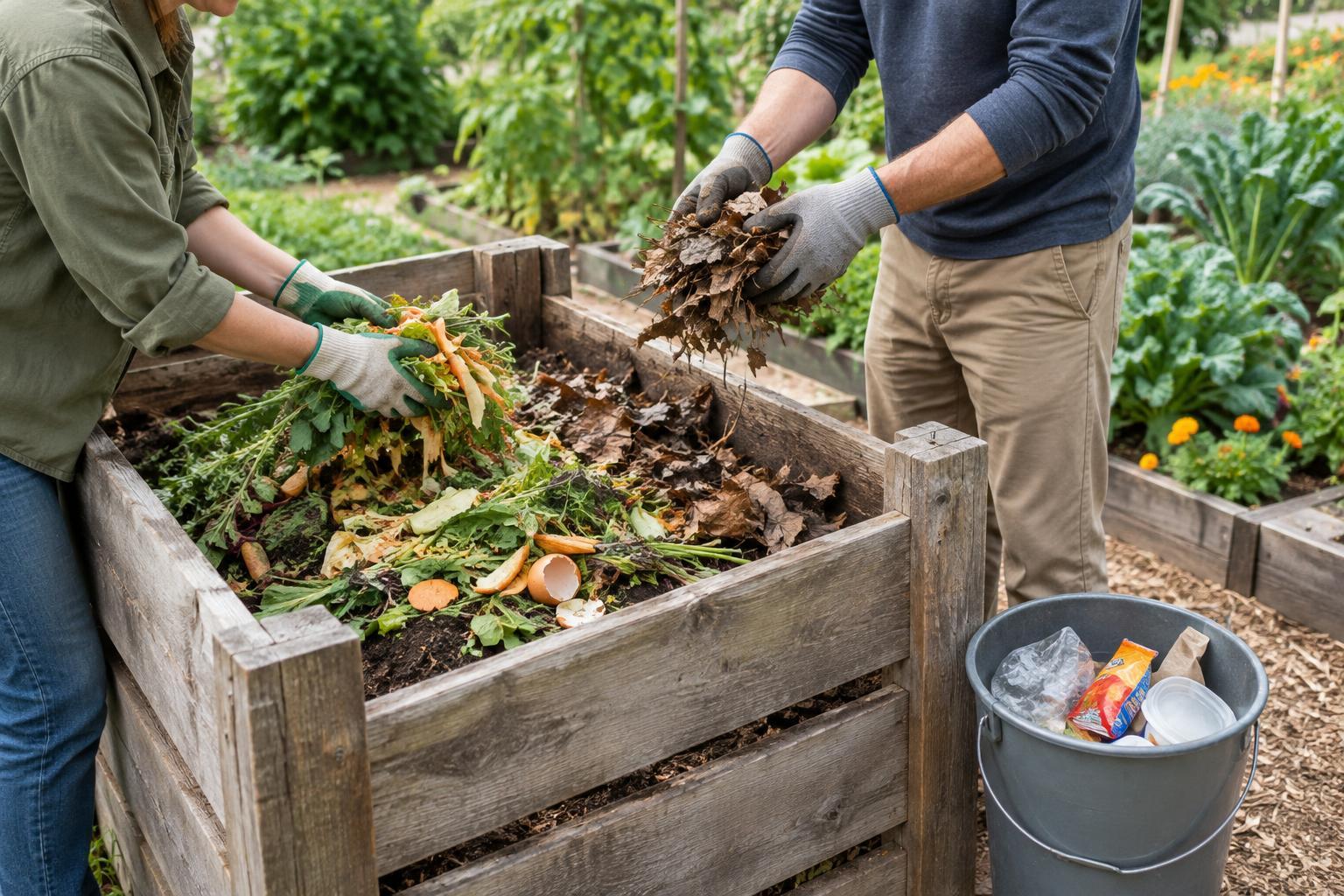
In a shared garden, compost problems often begin before anything reaches the pile. One gardener adds a bag of leaves; another empties a kitchen bucket; a visitor assumes that anything labeled biodegradable is acceptable. A simple list of accepted materials gives everyone the same starting point. Keep it specific enough to use while carrying a full bucket: for example, chopped plant trimmings, fallen leaves, and fruit and vegetable scraps, if the group is prepared to manage food scraps.
Make a separate list of materials to leave out. Many shared gardens exclude meat, dairy, oils, pet waste, treated wood, plastic-coated paper, and packaging advertised as compostable. Such packaging may not break down reliably in a garden pile. Your group may also choose to exclude weeds with mature seeds and plants showing signs of disease, especially if the pile is unlikely to heat evenly. The aim is not to settle every composting debate; it is to establish rules volunteers can follow consistently.
Put decisions where people drop materials
Post the accepted and excluded lists at the collection point, not only in an email or garden handbook. Use large lettering and a few familiar examples. If the garden has more than one pile, label each one by purpose, such as “add materials here” and “curing—do not add.” A clearly marked area for dry leaves or other browns makes it easier for contributors to cover fresh scraps, provided a volunteer can keep that supply stocked.
Think about the path a person takes from the gate to the pile. A container for collecting litter or rejected packaging near the drop-off spot can prevent an unwanted item from being tossed into the compost simply because there is nowhere else to put it. Check the sign from a newcomer’s perspective: could they tell what to do with a whole pumpkin, a pot of spent flowers, or a paper cup? If not, add an example or direct them to ask a designated volunteer.
Make signs inviting without losing clarity
A sign can be welcoming and still give firm instructions. Try a short headline, two contrasting lists, and simple drawings of common items. Keep decorative elements away from the words people need to read. For ideas on illustrating familiar garden materials, browse Creative Techniques · The Artful Guide; for visual inspiration from different styles of art, explore Art History · The Artful Guide; and for approaches to making a sign together, visit Art at Home · The Artful Guide. These are optional creative starting points—the garden’s agreed compost rules should determine what the finished sign says.
Ask two or three gardeners who did not write the sign to test it. Show them an example item and ask where they would put it. Their answers may reveal confusing categories such as “paper” or “yard waste.” Revise the wording before making a durable version. A sign that is easy to update is useful, too: the garden’s accepted materials may change when its volunteers, space, or composting method change.
Handle mistakes without turning them into disputes
Even with good signs, unexpected items will appear. Agree in advance who checks the pile and what that person should do. Obvious litter can usually be removed with appropriate gloves or tools. If an unfamiliar plant, chemical container, or other concerning material appears, pause additions to that area until the group decides how to handle it. Do not assume that turning the pile will solve every contamination problem.
Keep feedback practical and impersonal. A note such as “Please remove produce stickers before adding peels” explains the next useful action without blaming anyone. If the same mistake happens repeatedly, look for a design problem: perhaps the sign is hidden, the scrap bucket is too far away, or contributors do not know which pile is active. A brief check-in with volunteers can be more effective than adding a longer list of prohibitions.
Review the system as the pile changes
A compost policy is most useful when it matches what the garden can actually manage. During busy growing periods, check whether volunteers can still sort incoming materials, add enough browns, and maintain access to the pile. If not, temporarily narrowing the accepted list may be more sensible than allowing a backlog of unsorted scraps. Record any changes where contributors will see them before they arrive with materials.
When the pile is turned or screened, notice what remains recognizable. Persistent stickers, packaging, or other unwanted pieces can point to a rule that needs clearer wording. Share those observations at a garden meeting and assign someone to update the sign. The goal is a routine that makes good contributions easy—and gives everyone a straightforward way to respond when something does not belong.