Decide what the records need to do
A community garden does not need to document every seed or conversation. Its records should answer questions that come up repeatedly: Where is the water shutoff? Who is looking after the compost area? When was the broken gate reported? What happened in the shared beds last season? Start with those questions rather than a complicated filing system.
Choose one place for information that everyone needs, such as a binder in a dry, accessible storage area or a shared digital folder. Either can work if members know where to find it. If the garden uses both, give each a clear purpose: a printed site map and quick-reference notes on-site, for example, with longer records kept digitally. Avoid maintaining two competing versions of the same list.
Keep the system small enough for the people who will use it. A handful of clearly labeled pages is more valuable than detailed forms that nobody updates. Before adding a new record, ask who will maintain it and when they will do so.
Make a map that helps people find things
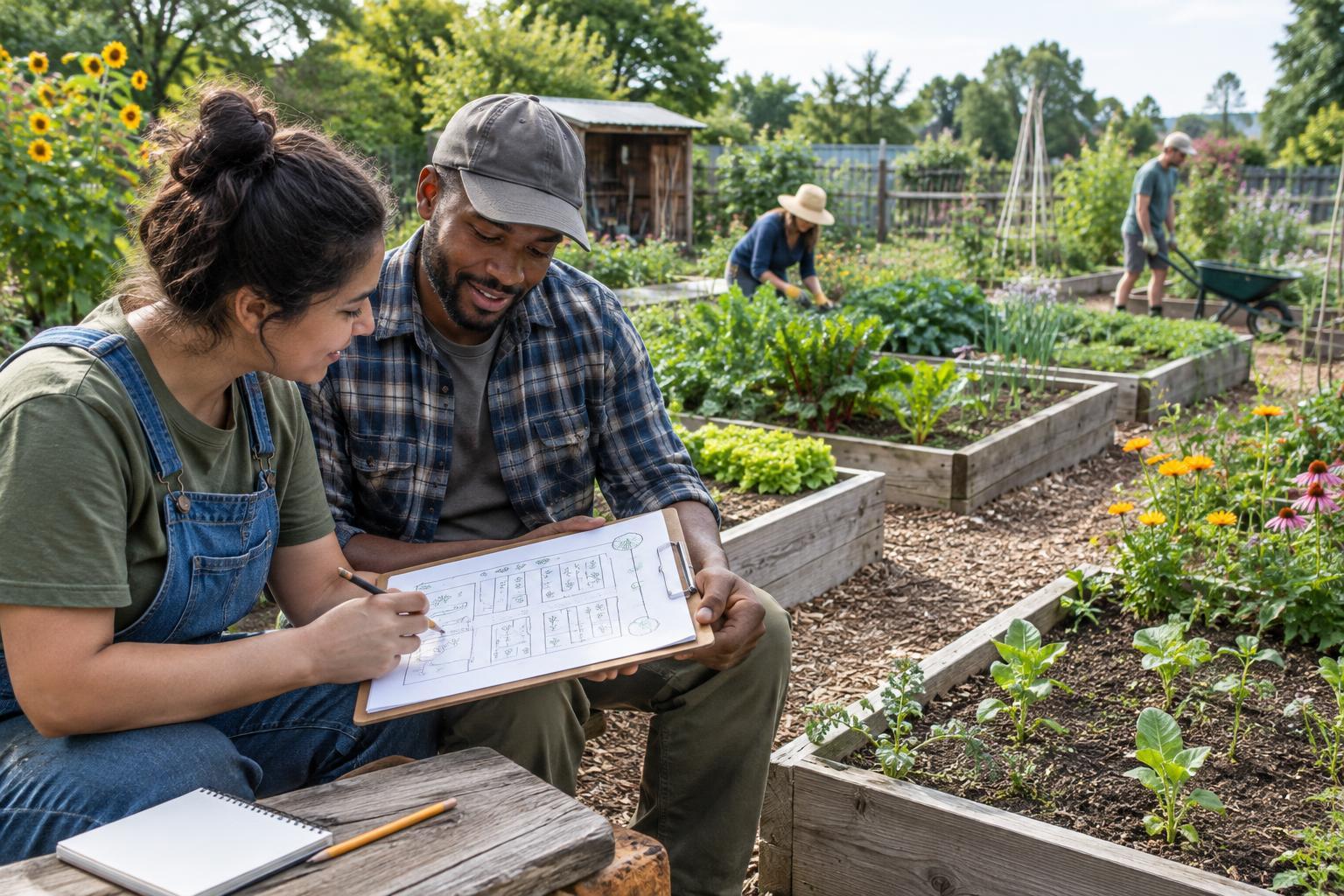
Draw a simple site map showing plot numbers, shared beds, paths, water points, compost areas, tool storage, and gates. It does not need to be to scale. Labels matter more than artistic precision, especially when a new volunteer is trying to find a hose connection or understand which beds are communal.
Give the map a date or version label so people can tell whether it reflects recent changes. If a bed is moved or a new path is added, update the main copy rather than leaving handwritten corrections scattered across several old ones. Keep personal contact details off any map displayed where visitors can see it.
A second page can record practical details that will not fit on the drawing: where replacement hose washers are stored, how the shed is organized, or which areas tend to stay wet after rain. Distinguish observations from permanent features. A note that one bed dried out quickly last summer is useful; it is not a guarantee that the bed will behave the same way every year.
Track shared work, not every gardener's choices
A short maintenance log helps prevent small problems from disappearing between workdays. For each entry, record the date, location, issue, and next step. “North gate latch sticks; check screws at next workday” is more actionable than “gate problem.” When a task is finished, mark it complete so volunteers do not spend time investigating it again.
Shared growing areas may benefit from a basic planting log. Note what was planted, roughly when, and any observations that could guide next year's decisions. If a crop struggled, record what people saw rather than assigning a cause without enough information. Notes such as “seedlings were damaged after a dry week” leave room to consider several possible explanations.
Individual plot holders need not report every planting choice. If the garden wants information for shared planning, ask for only what serves a clear purpose, such as whether a plot will be tended during an extended absence. A light-touch approach respects members' independence and makes participation easier.
Build a routine for updates and handovers
Records stay useful when updating them is part of an existing routine. At the end of a workday, one volunteer might spend five minutes adding completed tasks and outstanding problems. At a seasonal planning meeting, members can review the map and planting notes together. Assign responsibility for checking the records, but make the process simple enough that someone else can take over.
At the end of a growing season, write a brief handover page. Include unfinished repairs, supplies that are running low, changes to shared beds, and questions the next group should revisit. Separate decisions already made from ideas still under discussion. This helps new coordinators understand what needs attention without treating every old suggestion as a commitment.
Review the record book occasionally and remove material that no longer helps. Keep essential site information easy to find, archive older planting notes if they remain useful, and avoid retaining members' personal details without a practical reason. The goal is a reliable memory for the garden—not an ever-growing collection of paperwork.