Choose garlic and reserve its space
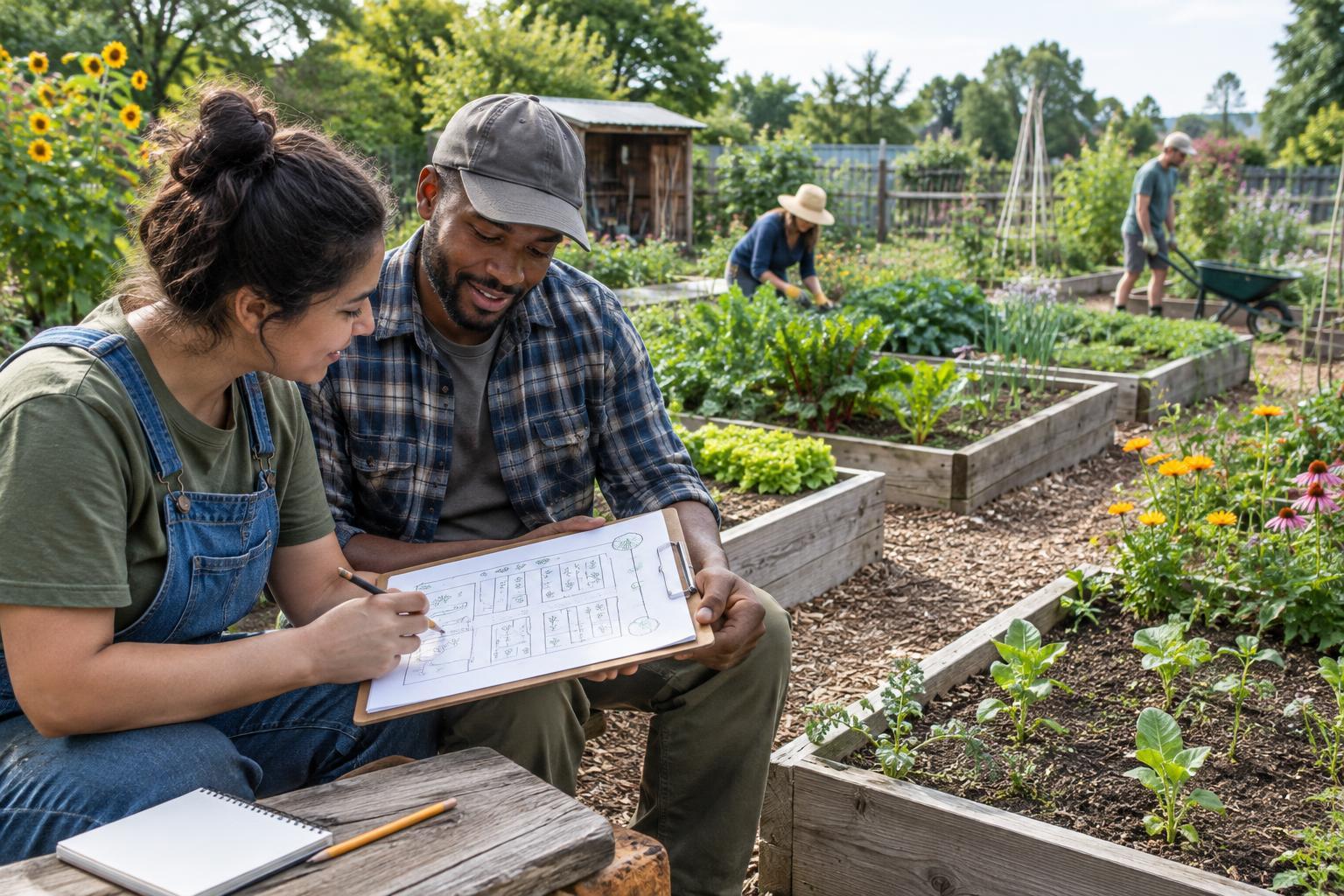
Garlic grows from individual cloves rather than the seeds most gardeners sow for vegetables. Each planted clove can produce a new bulb. Because the crop remains in the ground for much of its growing cycle, decide where it will go before other gardeners plan to use that bed. Mark the planting area and record who will tend and harvest it.
Choose firm, healthy bulbs sold for planting. Soft cloves, visible mold and damaged basal plates—the flat ends where roots emerge—are reasons to set a bulb aside. Grocery-store garlic may sprout, but its variety and growing history may be unknown, making planting stock a more predictable choice. Hardneck garlic typically forms a central flower stalk called a scape; softneck types usually do not. Which type performs best depends partly on local growing conditions.
Plant cloves in a prepared bed
In places with cold winters, garlic is commonly planted in autumn so roots can establish before strong growth resumes in spring. In milder climates, planting schedules can differ. Plan around local conditions rather than a fixed calendar date, and leave enough time for the crop to mature before the bed is needed for something else.
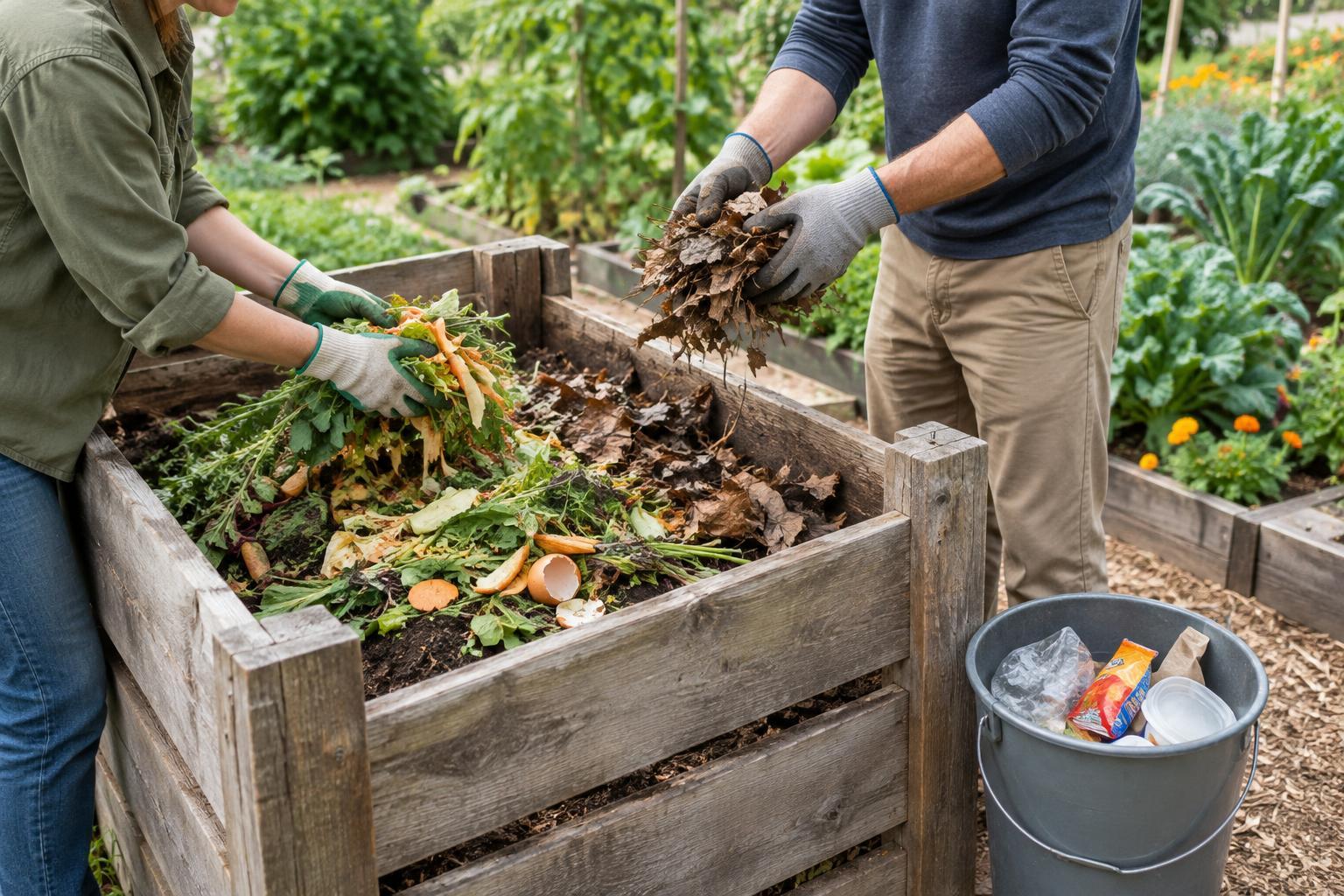
Select a spot with ample sun and soil that drains well. Loosen compacted ground and mix in finished compost if the soil needs improvement; avoid leaving fresh, undecomposed material against the cloves. Separate bulbs shortly before planting so the cloves do not dry out unnecessarily. Plant each clove with its pointed end up and its basal plate down, covering it with a few inches of soil. Give plants room for their leaves and developing bulbs rather than packing cloves tightly together.
After planting, water the bed if the soil is dry. A layer of mulch can help moderate soil moisture and reduce weeds, but keep it loose enough that emerging shoots can grow through it. In a shared garden, label the bed clearly: garlic shoots can be mistaken for grass or overlooked during spring cleanup.
Keep care simple and consistent
Garlic benefits from steady moisture while leaves and bulbs are actively growing, but persistently soggy soil can cause problems. Check the soil beneath the mulch before watering instead of following a rigid schedule. Pull weeds while they are small so they do not compete with garlic or crowd its leaves.
Hardneck plants often produce curling scapes. Gardeners commonly remove them while tender and use them in cooking; doing so may also help direct the plant’s resources toward the bulb. Agree in advance whether scapes belong to the person tending the bed or will be shared. Avoid stripping healthy leaves for kitchen use, since the plant needs them to support bulb growth.
Watch the plant, then harvest gently
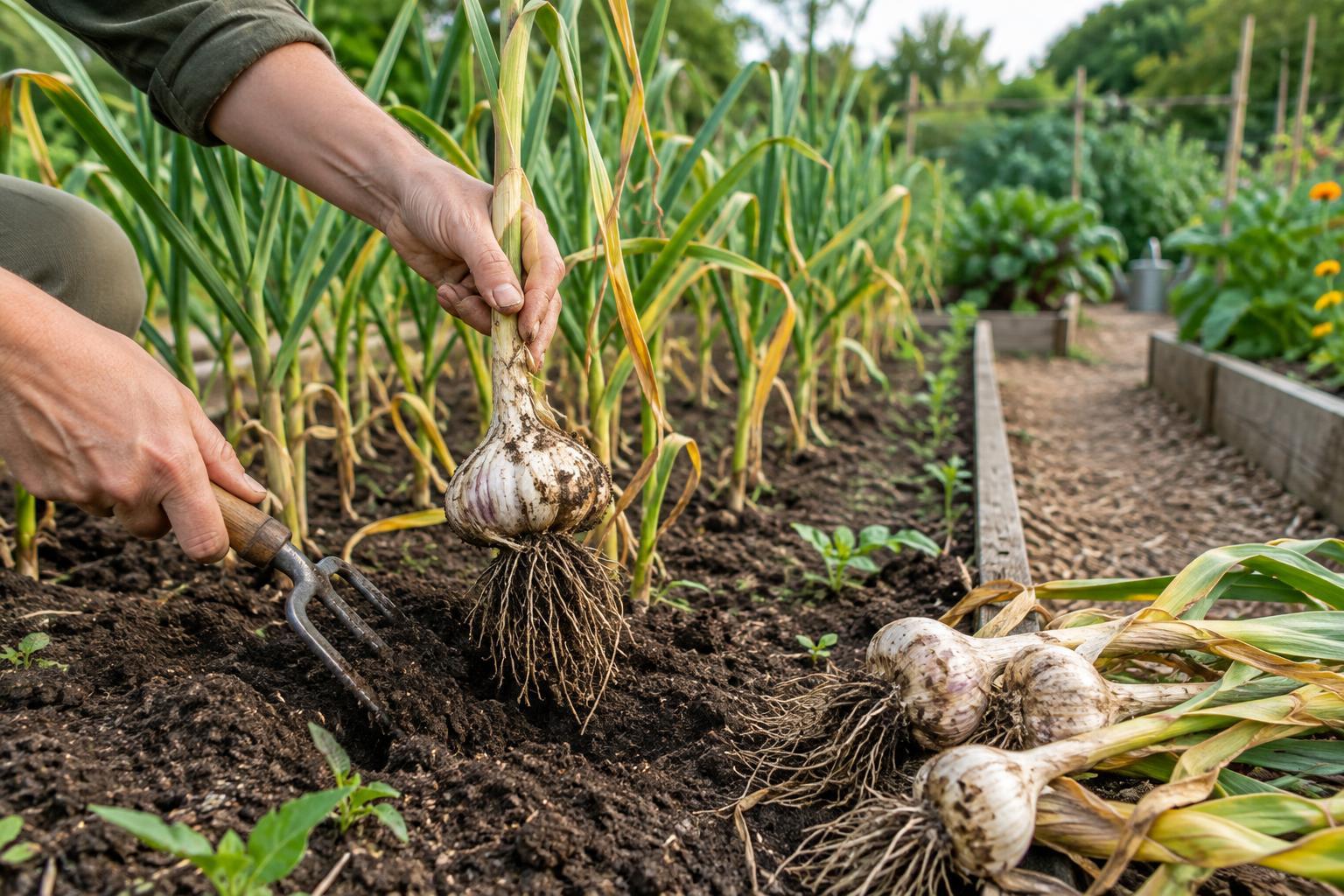
Garlic harvest is less about a date than a change in the plant. As bulbs mature, lower leaves begin to brown while some upper leaves remain green. If harvested very early, bulbs may be small; if left too long, their protective wrappers may split or deteriorate. When in doubt, lift one test bulb and check its size and intact outer covering.
Loosen the soil beside each bulb with a garden fork, taking care not to pierce it, then lift it gently. Brush off loose soil rather than washing bulbs intended for storage. Keep freshly harvested garlic out of prolonged direct sun. If several people share the crop, count the bulbs before distribution so everyone knows what was harvested and which bulbs, if any, are being kept for planting.
Cure and store the harvest
For storage, garlic needs time to dry after harvest. Lay or hang whole plants in a shaded place with good airflow, protected from rain. Keep bulbs spaced so moisture can escape, and check periodically for soft or damaged ones. Curing is complete when the outer coverings feel dry and papery and the necks have dried down; the time required varies with the weather and drying space.
Once cured, trim roots and stems as appropriate for the type of garlic and your storage method. Keep sound bulbs in a dry, ventilated place rather than sealing them in plastic. Set aside any damaged bulbs for prompt kitchen use, and inspect stored garlic occasionally. In a community garden, a simple note recording the variety, planting location and harvest results can make next season’s decisions easier.