Why winter does not always mean dry plants can wait
A garden may look still in winter, but its plants have not stopped depending on moisture. Dormant deciduous plants generally use less water after their leaves fall, while evergreens continue to lose some moisture through their foliage. Roots can take up water when the soil is unfrozen, so a mild, dry stretch may leave plants in need of a drink even outside the growing season.
The need varies with weather, soil and planting history. A recently planted shrub has a smaller established root system than one that has grown in place for years. An exposed evergreen may face drying wind, while a plant in a sheltered, moisture-holding bed may be fine. Winter watering is therefore a response to conditions, not a standing weekly chore.
Check the soil before reaching for the hose
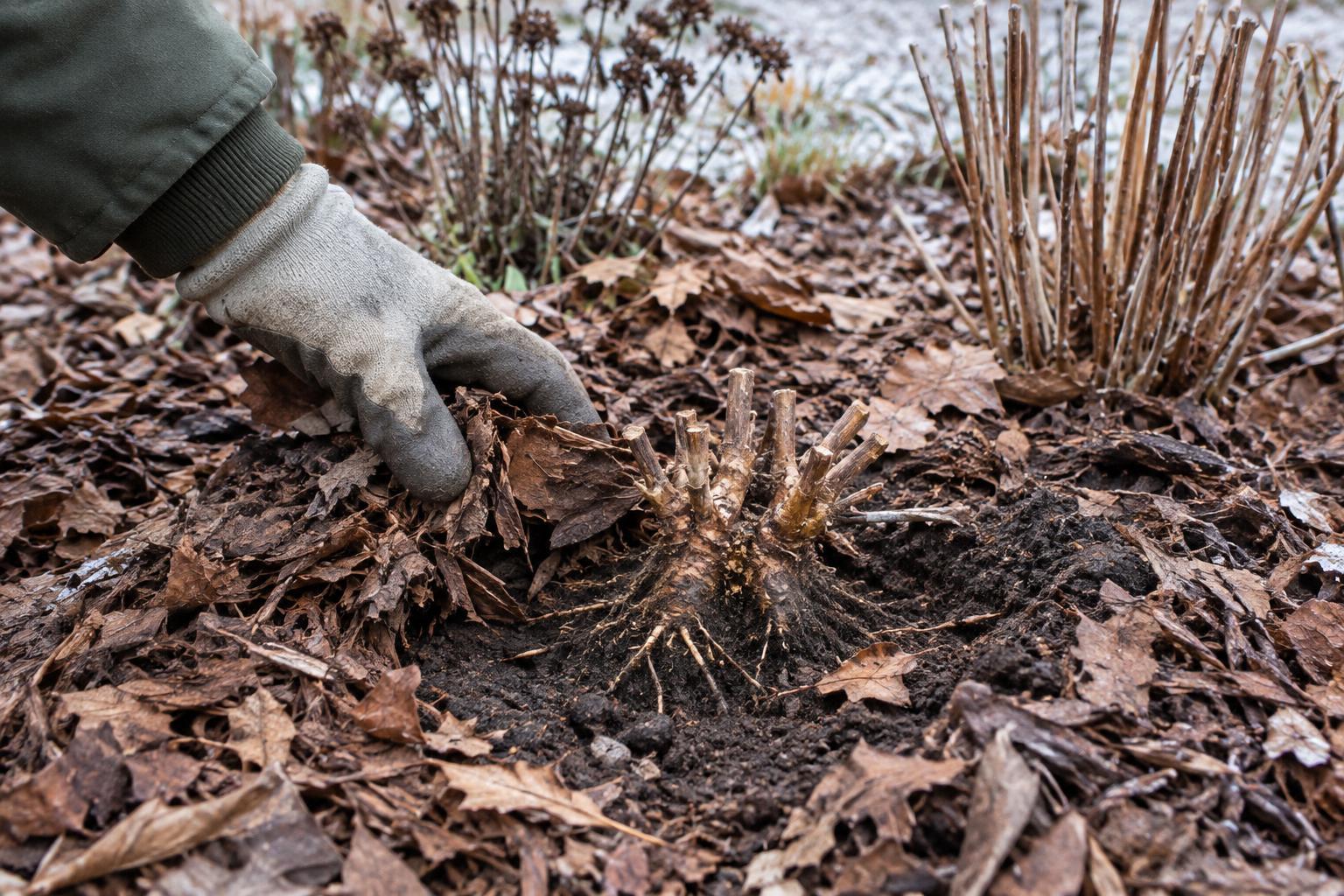
Start beneath the surface. If the ground is workable, use a finger or hand trowel to check the soil a few inches down near the root zone, rather than judging by a dry-looking crust. Soil that feels damp and holds together does not need more water. If it feels dry and crumbly at that depth, consider watering, especially if there has been little useful rain or melting snow.
Do not try to water frozen ground. Water is unlikely to soak in well and may run across paths or collect where it can freeze. Likewise, skip watering when the soil is saturated or drainage is poor. Snow can help supply moisture as it melts, but a light dusting does not necessarily wet the root zone. Checking the soil is more reliable than counting snowy days.
Foliage can offer clues, but it is not a perfect moisture gauge in winter. Browning on an evergreen, for example, can have more than one cause, and damage may become noticeable after the stressful conditions have passed. Use what you see as a reason to inspect the site, not as proof that every affected plant needs water immediately.
Give extra attention to vulnerable spots
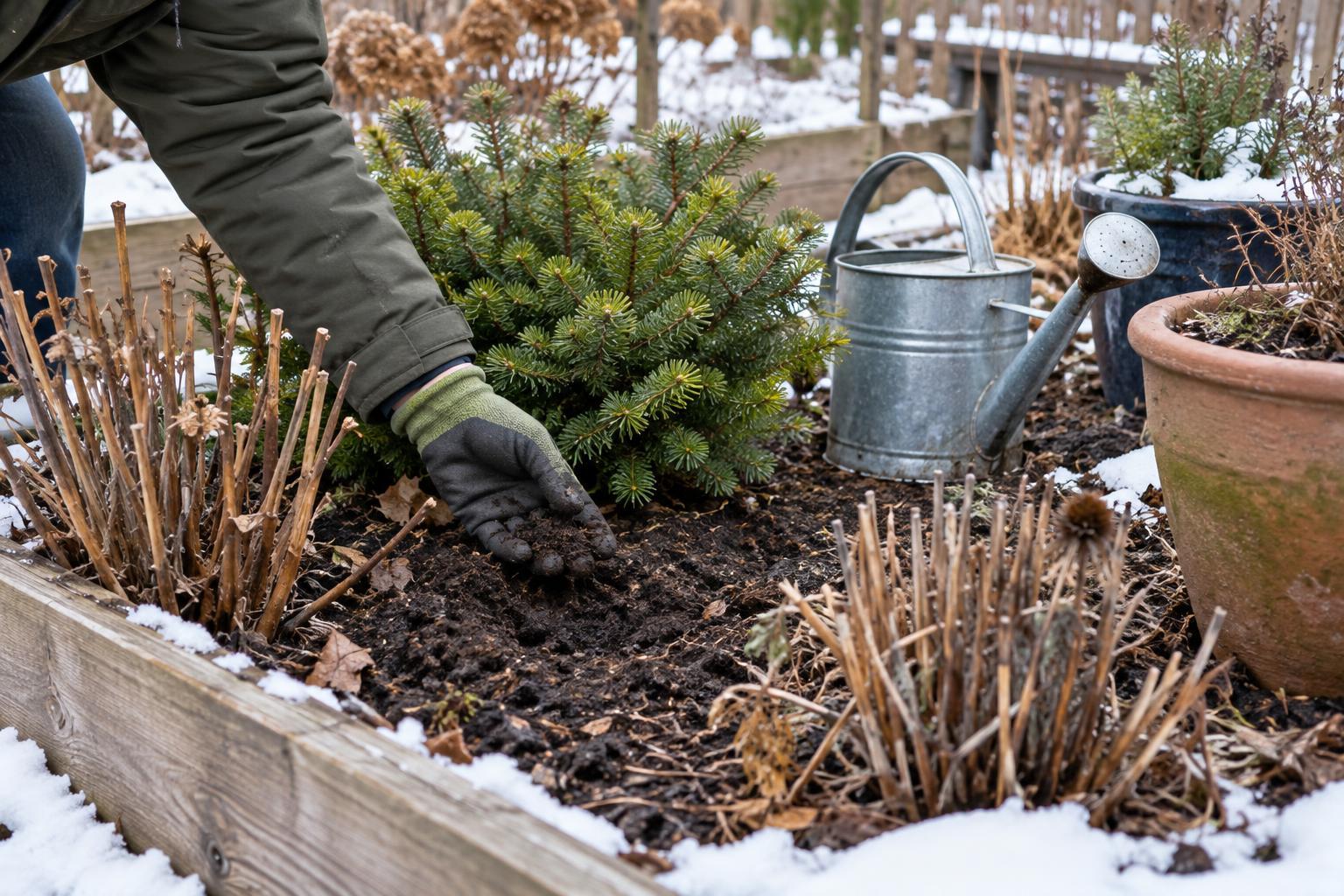
Newly planted trees, shrubs and perennials deserve a closer look because their roots may not yet reach far into surrounding soil. Evergreens, including broadleaf evergreens where they are grown, also merit attention during dry spells. Check the soil around the root area, not just beside the stem, and remember that dense branches or roof overhangs can keep some rain and snow from reaching the ground beneath them.
Containers dry differently from garden beds. Their limited soil volume and exposure on all sides can make moisture change quickly, even in winter. If a container holds a living plant and its soil has thawed, check below the surface and water if it is dry. Make sure excess water can drain away; a pot sitting in water is not a good solution. The watering needs of a dormant container plant may be modest, so check rather than assuming it needs the same amount as it did in summer.
Water slowly on a suitable day
Choose a day when the soil is thawed and temperatures are mild enough for water to soak in before freezing conditions return. Apply water slowly to the soil over the root area, allowing it to penetrate instead of running off. The goal is to moisten dry soil, not leave it muddy. If water pools or flows away, pause and reassess whether the ground is frozen, compacted or already wet.
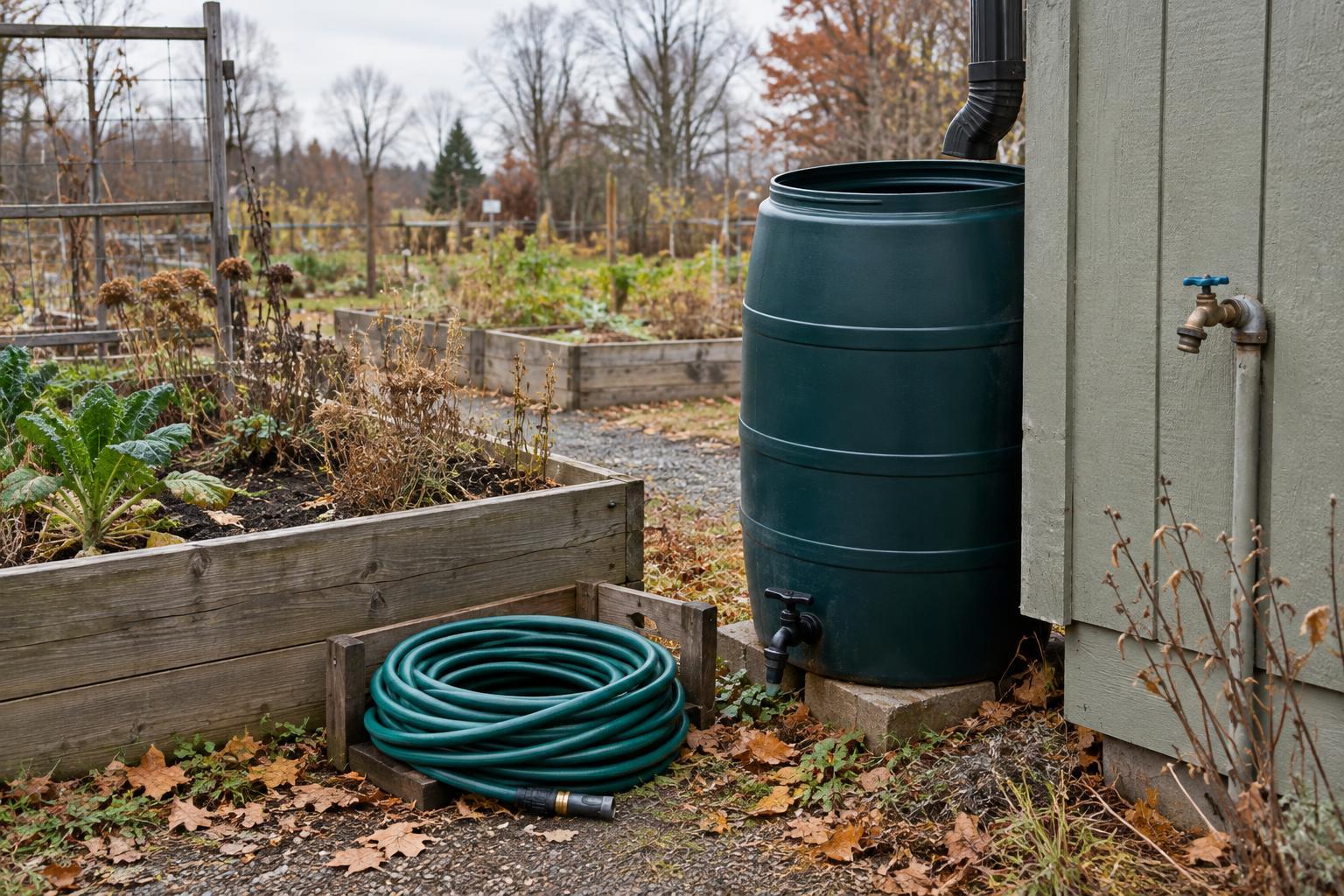
Keep water off walkways and other surfaces where it could turn to ice. When practical, water at the base of plants rather than spraying foliage, and put hoses away so they can drain. Mulch can help moderate changes in soil moisture, but keep it from piling against trunks and stems. After watering, return to checking the soil occasionally; there is no need to repeat the job until conditions call for it.
Make winter checks manageable in a shared garden
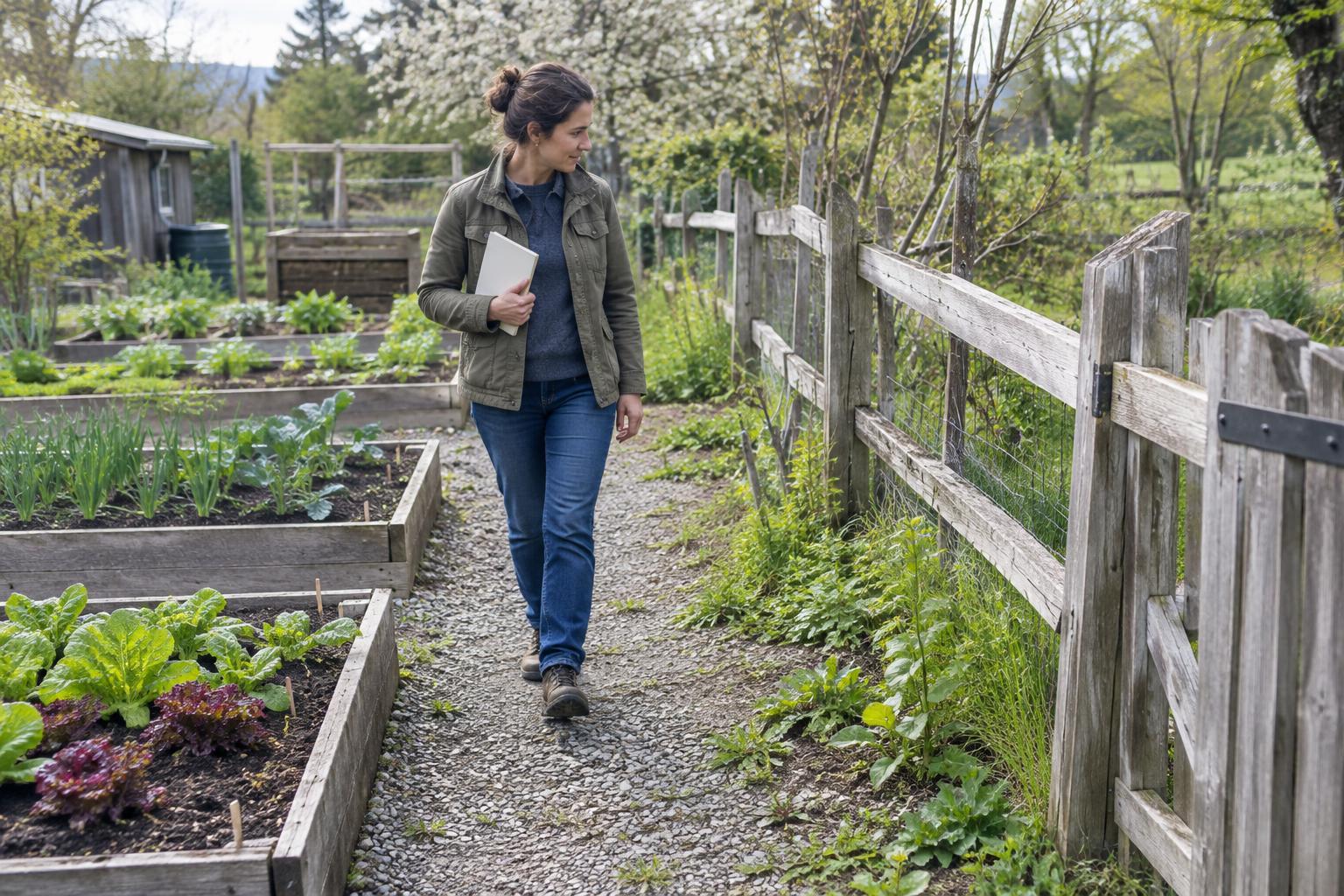
In a community garden, a simple observation routine is more useful than a rigid watering schedule. Identify recently planted beds, evergreen borders and containers that someone should check during extended dry periods. A brief note recording whether the soil was frozen, damp or dry can help the next volunteer understand why a bed was watered or left alone.
Agree on who can access winter water and how hoses will be drained and stored. If the water supply is shut off for the season, avoid improvising around that restriction; focus on noting which areas need attention once water is available and the ground is workable. Thoughtful winter care often means doing less: checking first, watering only where moisture is lacking, and leaving wet or frozen soil undisturbed.