Start by looking at the flower
Flowers are a promising sign, but not every flower becomes a fruit. The first useful question is whether the plant is producing the kind of flower that can develop into one. Squash, cucumbers, and many other members of the squash family have separate male and female flowers. A female flower has a small swelling behind its petals that resembles a tiny fruit; a male flower sits on a narrower stem. If you see only male flowers, there is nothing to pollinate yet. More female flowers may appear as the plant continues growing.
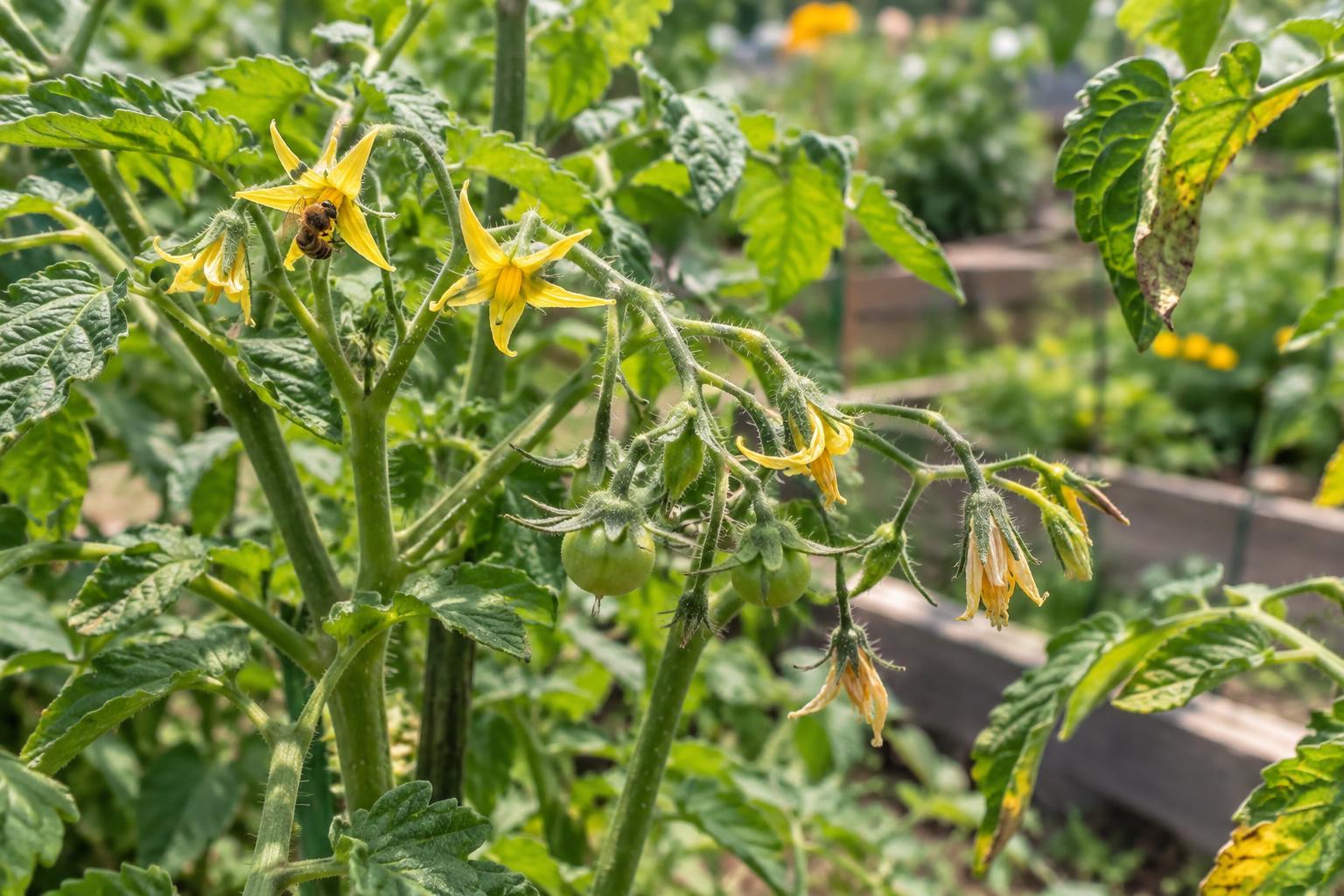
Tomatoes, peppers, and beans have flowers with both pollen-producing and pollen-receiving parts. They generally do not need a second plant to make fruit, though pollen still has to reach the right part of the flower. If a flower drops without leaving a developing fruit, consider the weather and the plant’s condition as well as pollination.
Check whether pollination can happen
Squash and cucumber flowers often depend on insects moving pollen from male flowers to female flowers. A shortage of insect visits can leave the small fruit behind a female flower yellowing or shriveling instead of growing. Flowers may be open for only a short time, so an occasional glance at midday may not show the activity taking place earlier. Watch several flowers on a mild morning before deciding that pollinators are absent.
In a shared garden, support visits by keeping a variety of flowering plants nearby and avoiding pesticide applications to open blooms. If visits remain scarce, hand-pollinating a few squash flowers can help you test the cause: use a small brush to move pollen from an open male flower onto the center of an open female flower. Tomatoes usually release their own pollen; gently tapping a flowering stem may help when air movement is limited. Neither method can overcome every cause of poor fruit set, so compare treated flowers with untreated ones over time.
Consider the temperature during flowering
Vegetable flowers can be sensitive to temperature even when the leaves look healthy. Prolonged heat may reduce the amount or effectiveness of viable pollen, while cold conditions can slow pollen movement and plant growth. The result may be blossoms that fall before a fruit starts to enlarge. Different crops and varieties respond differently, so a single temperature rule will not fit every bed.
Look for patterns rather than blaming one warm afternoon. Did fruit set slow during a stretch of unusually hot days and nights? Did new fruits begin forming when conditions moderated? You cannot control the weather, but you can avoid adding stress: keep soil moisture reasonably steady, mulch where appropriate, and choose a planting time that gives the crop a better chance to flower in suitable conditions. Shade cloth may ease intense sun and heat in some gardens, provided it does not block too much light or access for pollinating insects.
Reduce avoidable plant stress
A plant short of water may shed flowers or tiny fruits. Repeated cycles of very dry and very wet soil can be especially hard on a fruiting crop. Check moisture beneath the surface rather than judging by a dry-looking top layer, and water the root area deeply enough to reach it. Mulch can help slow drying, but leave a little space around stems. In a community plot, agree on who waters and how everyone will tell when a bed actually needs it.
Also look at the balance between leafy growth and flowering. Heavy nitrogen feeding can encourage abundant leaves without improving the harvest. Poor light, crowded plants, damaged roots, and pest or disease problems may weaken growth as well. Before adding fertilizer, check how much sun the crop receives, whether its roots have room, and whether leaves show signs of trouble. More fertilizer is not a universal fix for flowers that fall.
Make one change, then watch the next flowers
Diagnosing fruit-set problems is easier when you observe new blooms rather than expecting fallen ones to recover. Note the crop, whether female flowers are present, whether insects visit, and what the weather and soil moisture have been like. Then try one practical change at a time. That might mean hand-pollinating a few squash flowers, improving a watering schedule, or waiting for a hot spell to pass.
Shared gardens can turn those observations into a simple bed log so different volunteers do not work from conflicting guesses. Record what was tried and whether later flowers produced fruit. A few missing fruits are normal; persistent failure calls for a closer look at several possible causes, not an immediate assumption that the plant needs more food or more pollinators.