Use the calendar as a guide, not a deadline
The best harvest time depends on the vegetable and how you plan to eat it. A small cucumber can be crisp and tender, while a winter squash needs time to mature. Seed packets and planting notes offer useful estimates, but weather, variety and growing conditions can shift the timing. Check plants regularly as harvest approaches, using size, color and texture together rather than relying on a date alone.
When in doubt, pick one and taste it. A sample can tell you more than a row of oversized vegetables left on the plant. In a shared garden, write down what you picked and which signs worked; that small record makes it easier for the next gardener to judge the remaining crop.
Pick leafy greens while they are tender
Lettuce, spinach and other salad greens are often at their most pleasant before leaves become large, tough or bitter. For a continuing harvest, take clean outer leaves and leave the center of the plant intact. If you want a whole head of lettuce, pick it when it feels well formed but before a tall flower stalk begins to rise. Once a plant starts flowering, taste a leaf before gathering a large batch; the flavor may have changed.
Kale and chard can provide leaves over a longer period. Choose leaves that have reached a useful size but still feel supple, and avoid stripping every leaf from a growing plant. Harvest greens in the cooler part of the day when possible, then move them out of the sun promptly. Gentle handling matters: crushed or wilted leaves lose their appealing texture even when picked at the right stage.
Check pods and fruiting vegetables often
Snap beans are ready when the pods are long enough to use but still smooth, firm and easy to snap. Bulging seeds often signal that the pod is becoming tougher. Pick peas according to type: shelling peas need filled-out pods, while snow peas are usually taken while the pods are flat and tender. Frequent checks help catch pods before they become coarse and make ripe ones easier to spot among the foliage.
Harvest cucumbers when they are firm and at a useful size for their variety. An oversized cucumber may develop tougher skin and larger seeds. Zucchini and other summer squash are generally tenderest when picked relatively young; a large fruit can still be cooked, but its texture may be less delicate. Use a knife or pruners rather than twisting hard enough to damage the vine.
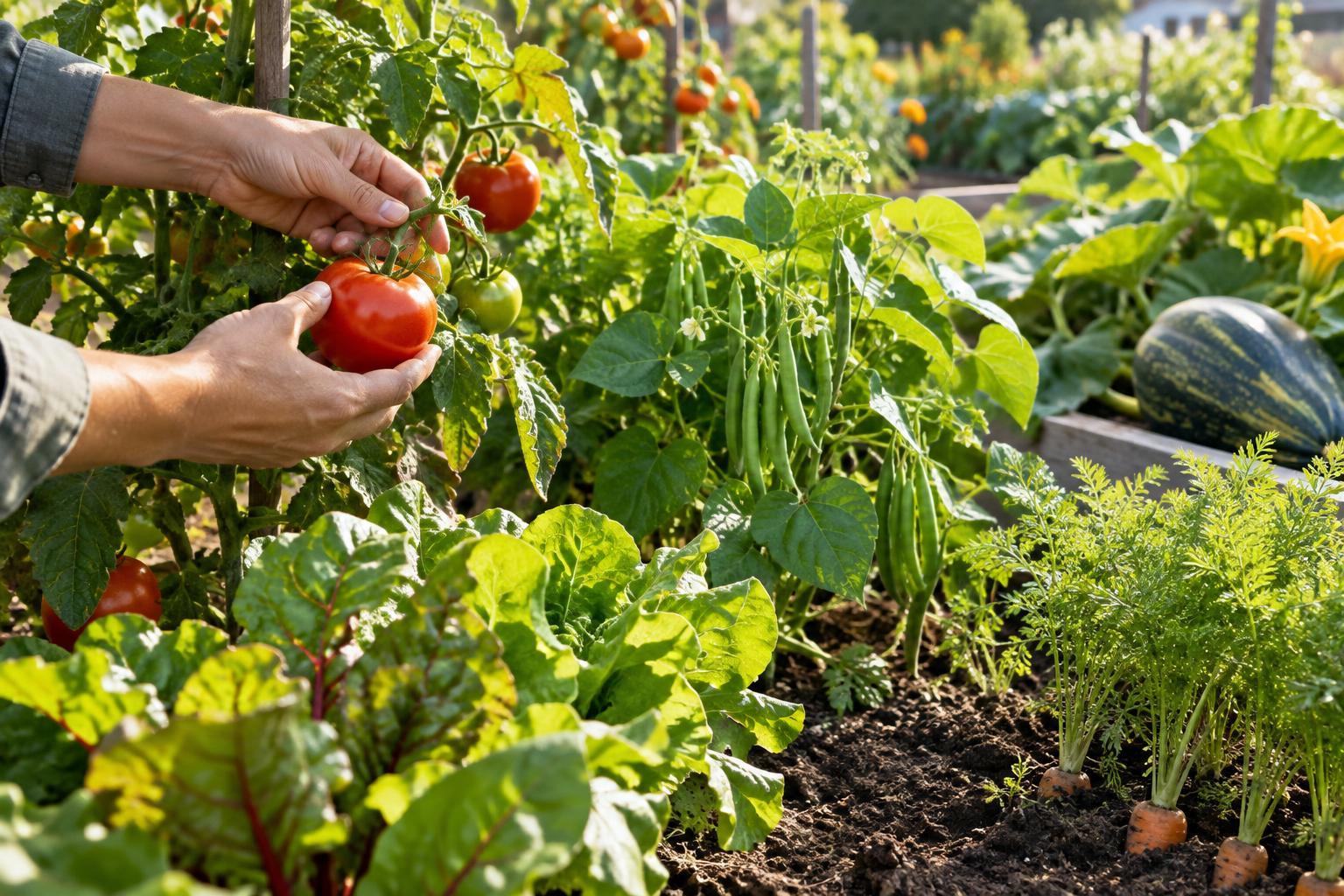
For tomatoes, look for the mature color expected of the variety and a slight give when gently pressed. A tomato picked just as it begins to change color can finish ripening indoors if you need to protect it from damage. Sweet peppers can be picked firm and green or left to reach their mature color for a different flavor. Hot peppers vary by variety, so use their expected color and firmness as your guide.
Judge roots by size, then test a few
Radishes are worth checking promptly once their shoulders appear at the soil surface. Pull one to see whether the root has filled out without becoming woody or hollow. Carrots and beets can often be eaten at several sizes, so the right moment depends partly on whether you want small, tender roots or larger ones for cooking. Brush soil away from the top of a root to estimate its width before lifting a sample.
Root crops rarely mature at exactly the same pace across a bed. Harvest the ready ones first and give smaller neighbors more room. Loosen surrounding soil with a hand fork if the ground is compacted; pulling hard on the leaves can break them away from the root. Once harvested, trim leafy tops from roots you plan to store so the leaves do not continue drawing moisture from them.
Give winter squash time, and make picking clear
Unlike zucchini, winter squash is grown for a mature fruit. Look for the full color typical of the variety and a rind that resists a gentle thumbnail press. The stem may also become dry and firm. Cut the squash from the vine with a short piece of stem attached, and handle it carefully: cuts and bruises can shorten its useful storage life. If you are unsure whether a fruit is mature, compare several on the same plant before cutting.
In a community plot, a simple harvest plan prevents both missed crops and premature picking. Label varieties whose mature colors are unfamiliar, agree on which beds may be harvested, and leave a note when a crop needs checking every day or two. Those habits help everyone bring home vegetables at a stage that suits the kitchen, rather than letting the largest specimen set the standard for the whole bed.