Let the soil guide the schedule
A calendar can remind gardeners to check a bed, but it cannot say whether that bed needs water. Rainfall, heat, wind, soil texture, plant size, and mulch all affect how quickly the root zone dries. Rather than watering automatically, push a finger a few inches into the soil near the plants, away from the wettest spot beside a hose or emitter. If the soil feels moist below the surface, check again later. If it feels dry through that depth, it may be time to water.
Check more than one place in a shared bed. A sunny edge may dry faster than a shaded corner, and water from a hose may not reach evenly across a wide planting. Newly sown seeds and recent transplants also need closer attention than established plants: shallow seeds can dry before they sprout, while transplants have not yet spread their roots into the surrounding soil. The aim is not to keep every surface constantly wet, but to respond to the part of the soil the plants can use.
Water the root zone, not just the surface
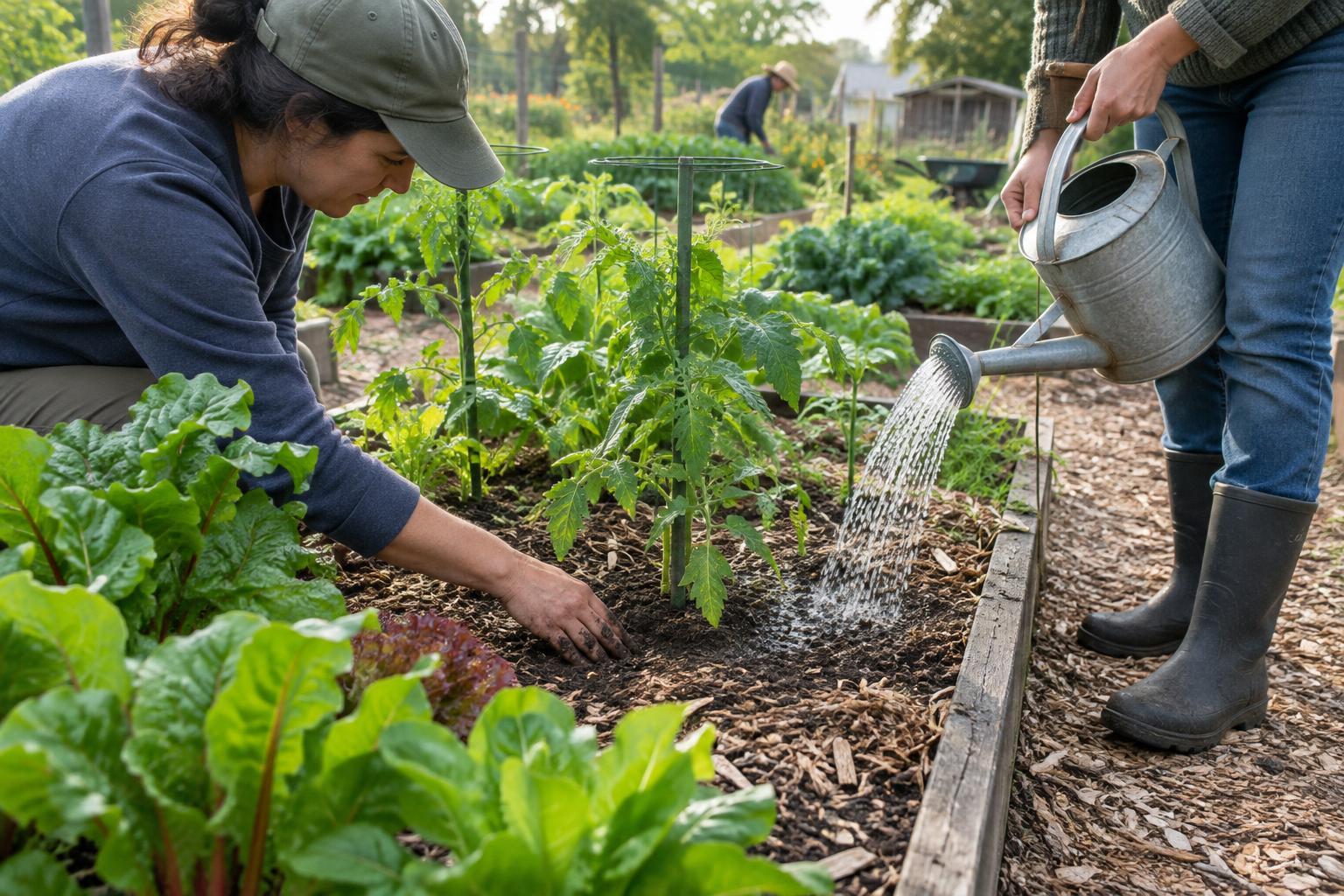
A quick pass with a spray nozzle may darken the soil without wetting it very far down. Apply water slowly enough that it soaks in rather than running off a path or pooling at the bed’s edge. A gentle hose flow, watering can, soaker hose, or drip line can all work if used long enough to reach the roots. After watering, dig a small inspection hole in an open spot to see how deeply the moisture traveled. This simple check can reveal whether the bed needs a longer, slower session.
Direct water toward the soil around plants instead of deliberately soaking their leaves. Wet foliage is not always avoidable, particularly during rain, but watering at soil level keeps more of the applied water where roots can reach it. If a bed has developed a hard, dry surface, pause when water starts to run off, let it absorb, and then resume. Loosening the very top layer between plants may help, but work carefully around shallow roots.
Adjust for the crop and its stage
Vegetables do not all use water in the same way. A small seedling draws from a limited area, so the soil immediately around it matters most. A large fruiting plant draws from a wider root zone and may need a more thorough watering. Leafy crops can become stressed when their bed repeatedly dries out, while crops forming fruits or roots benefit from avoiding sharp swings between very dry and very wet soil. The useful habit is to watch both the soil and the plants as they grow, rather than using one unchanging routine all season.
Wilting can be a warning, but it is not a complete watering test. Leaves may droop temporarily in strong afternoon sun even when the soil is moist. Check the soil before adding water, especially if plants recover by evening. If the soil is already wet, more water may make conditions worse by leaving roots with too little air. Yellowing, slow growth, or poor yields can have several causes, so avoid treating every problem with the hose.
Use mulch to make moisture easier to manage
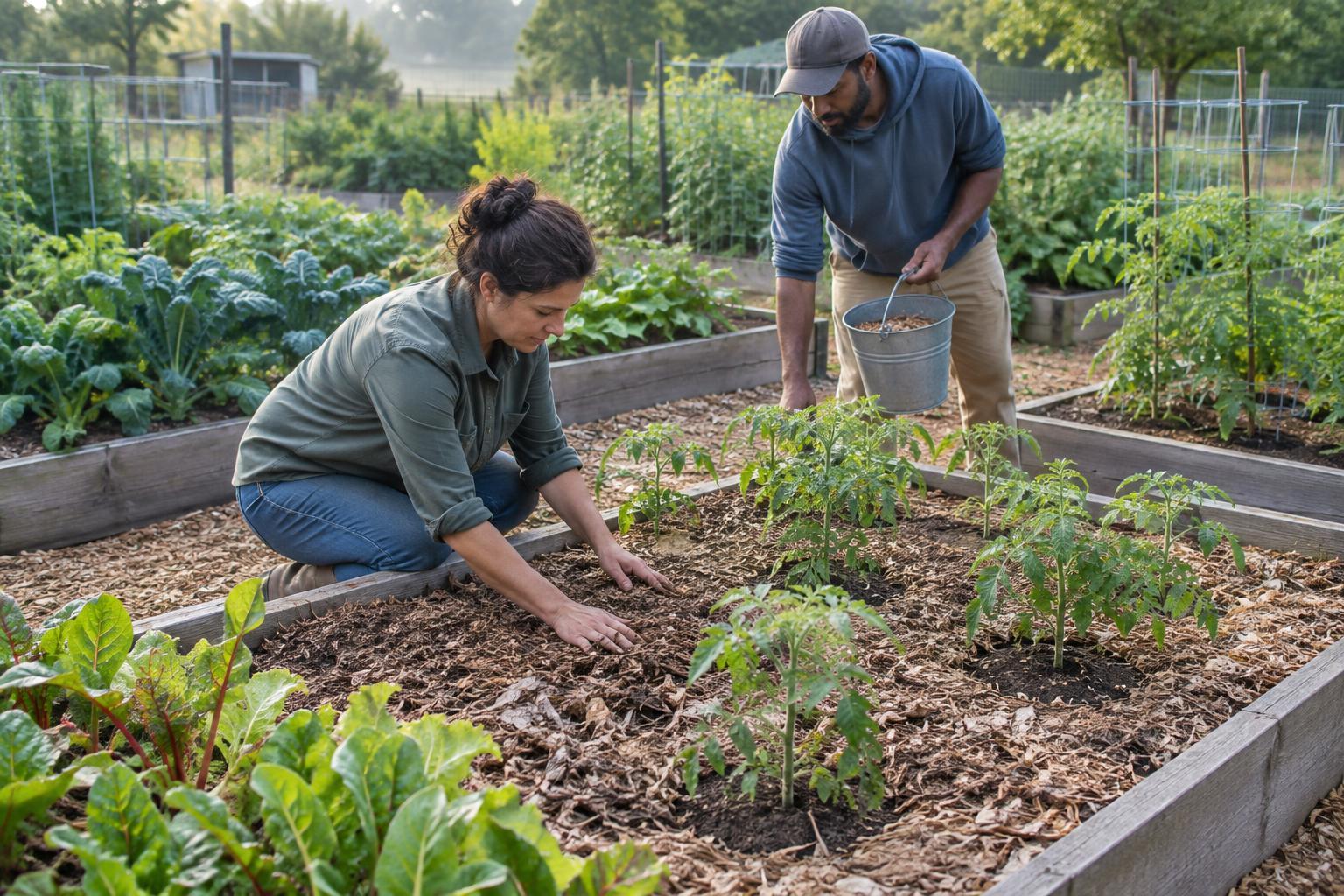
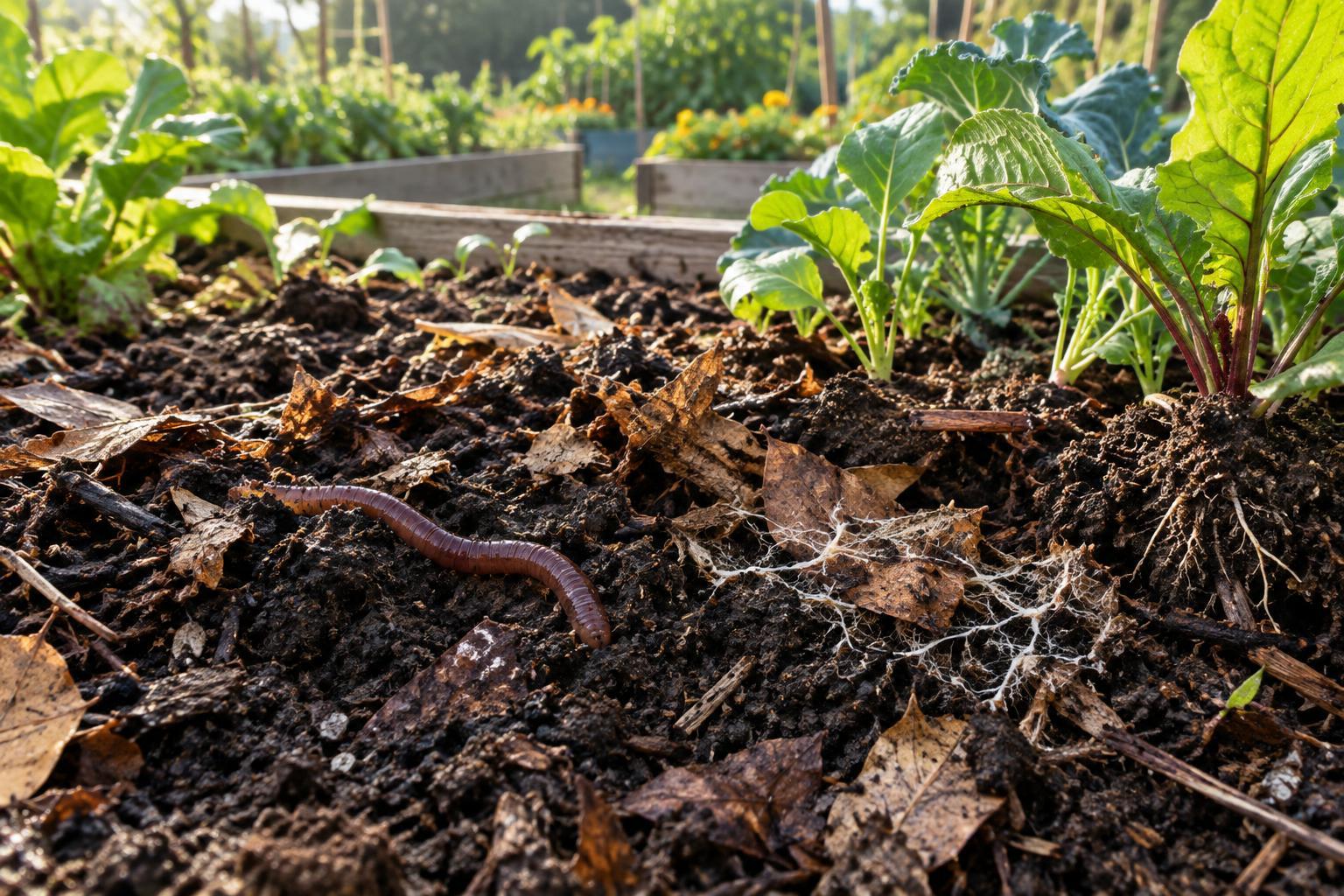
A layer of suitable organic mulch, such as clean straw or shredded leaves, can shade the soil and slow surface drying. Add it after seedlings are established or leave a clear strip where seeds still need to emerge. Keep mulch a little away from plant stems, and check beneath it before watering; the surface may look dry while the soil below remains moist. Mulch is an aid to watering, not a substitute for checking the bed.
Paths and bed edges deserve attention too. Bare, compacted paths may shed water into one part of a plot while another stays dry. Keep hoses out of planting areas where possible, and avoid stepping on beds to reach a thirsty plant. A bed that is easy to access is easier to water evenly without compacting the soil.
Make a shared watering plan people can follow
In a community garden, unclear responsibility can lead to both missed watering and repeated watering on the same day. Agree on who checks each bed, where the water source and tools are, and how gardeners record what they did. A brief note such as “soil moist below surface; no water added” is as useful as a note that a bed was watered. If volunteers rotate, show newcomers how to check moisture and where to look for dry spots.
Keep the plan flexible. A rainy spell may call for checks but little watering; newly seeded rows may need extra attention during dry weather. If access is limited, prioritize clear assignments for vulnerable seedlings and recent transplants. A reliable routine is not one that applies water at every visit. It is one that helps each gardener make an informed decision and leaves the next person knowing what happened.