Think about the mature plant, not the seedling
A newly planted vegetable bed can look almost empty. That open space has a purpose: small seedlings may grow into broad leaves, branching stems, and extensive root systems. If plants are placed according to their size on planting day, they can soon press against their neighbors. Some close planting is useful, but crowding can make each plant work harder for the resources it needs to grow and produce.
Spacing recommendations on a seed packet or plant label are a helpful starting point because they account, roughly, for a crop’s mature habit. Check whether the guidance describes space between plants, space between rows, or both. A compact bush variety and a vigorous vining variety may need different arrangements even when they produce the same vegetable. In a shared garden, leave enough room for people to reach plants without repeatedly stepping into growing soil.
How crowding affects growth
Vegetables compete for light when their leaves overlap. Taller or faster-growing plants may shade smaller neighbors, leaving them with less energy for steady growth. Leafy crops may stretch toward the light, while fruiting crops can develop a dense canopy that makes flowers and developing produce harder to see. More plants in a bed do not automatically mean more food from that bed.
Roots also share a limited supply of water and nutrients. In a crowded planting, the soil may dry more quickly between waterings, and individual plants may stay smaller. Adding fertilizer cannot solve a lack of light or space, and extra feeding is not a substitute for adequate watering. Spacing gives each plant a better chance to use the resources already available.
Dense foliage can restrict airflow and keep leaves damp longer after rain or overhead watering. Depending on the crop and conditions, that may favor some plant diseases. Crowding also makes it harder to inspect leaves, remove weeds, harvest promptly, and spot problems early. Good spacing does not prevent every pest or disease, but it makes routine care easier.
Plan the bed before you plant
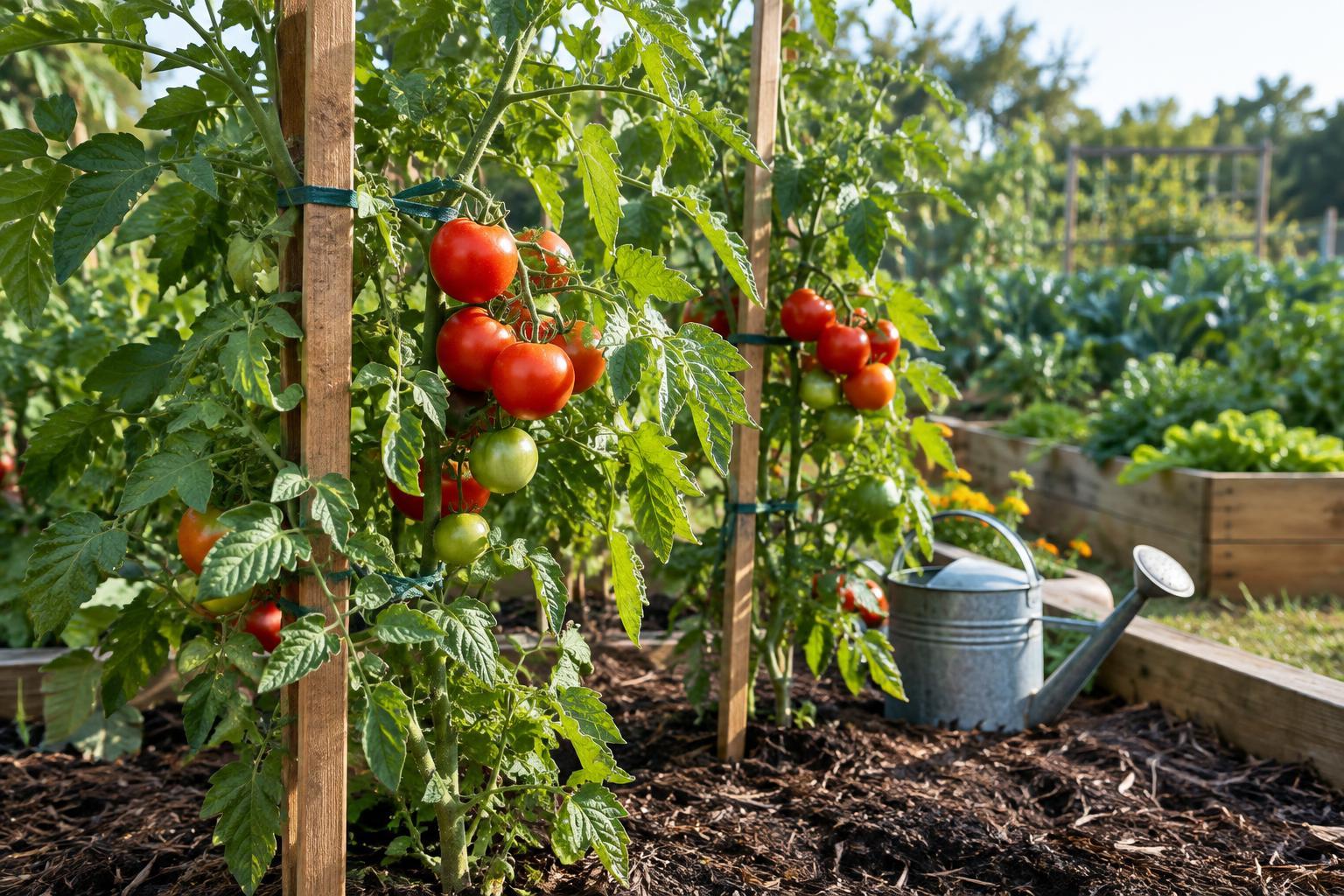
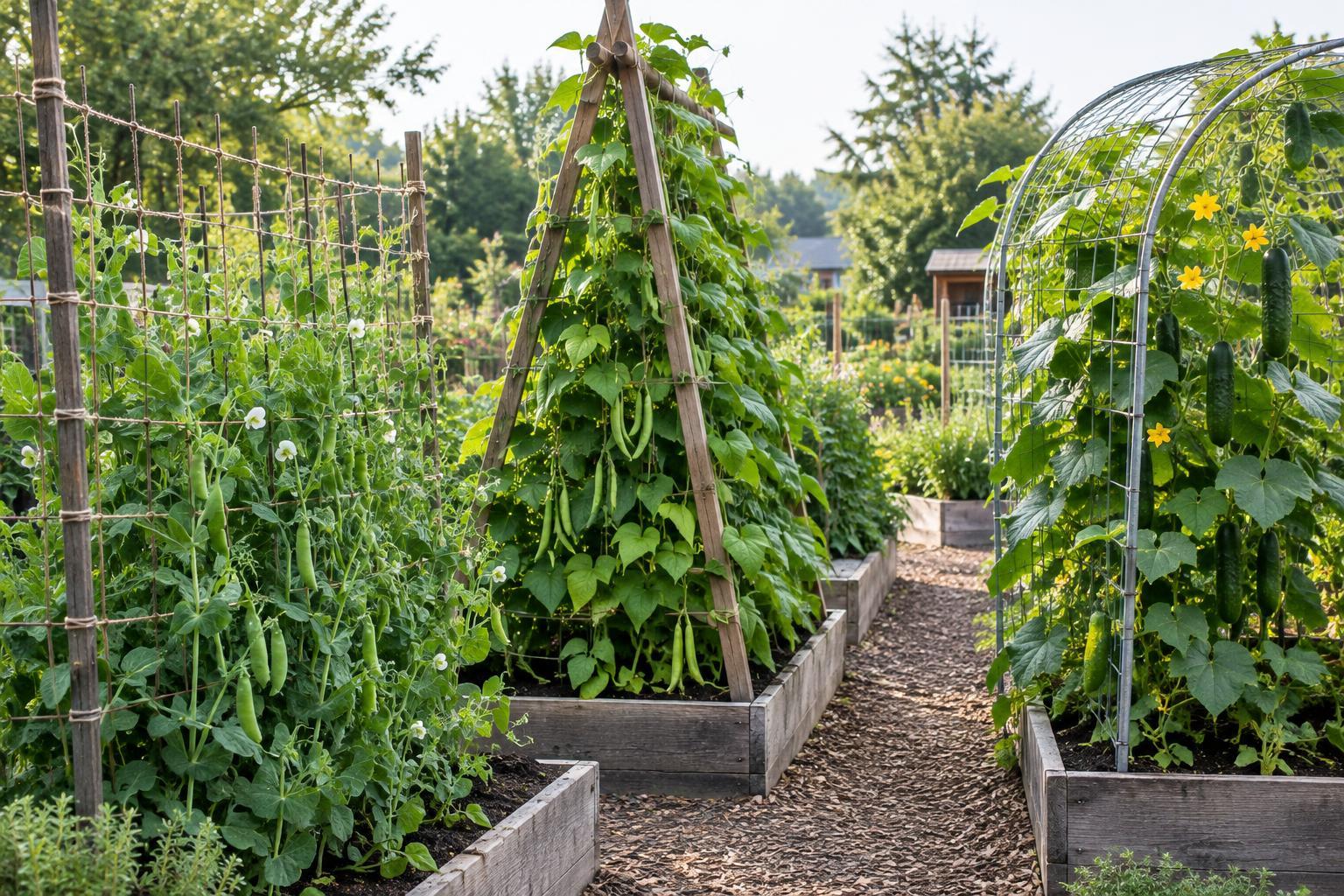
Start with the plants that will occupy the most space. Picture a tomato at full size, a zucchini spreading across a path, or a cucumber climbing its support. Put supports in place early where practical, and check that a climbing crop will not shade shorter vegetables for much of the day. Then fit smaller crops into the remaining areas without blocking access to the larger ones.
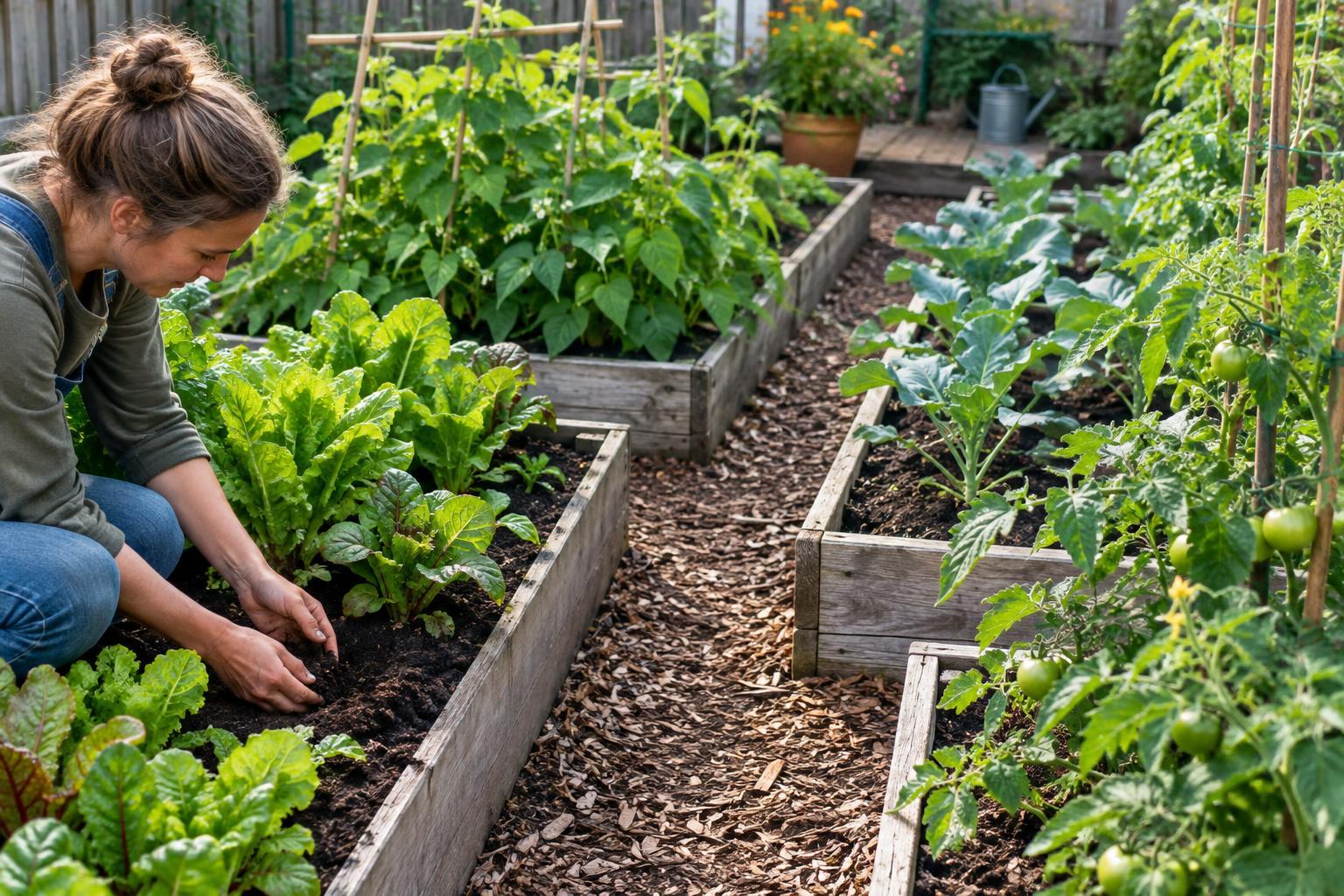
Use the plant’s expected mature spread to guide placement rather than trying to fill every patch of visible soil. You can mark positions with a trowel or a simple measuring stick before transplanting. If a bed is narrow enough to reach from the paths, you may not need wide walking lanes within it; you still need appropriate room between the plants themselves. For containers, consider both the space above the pot and the limited soil volume below it.
Not every vegetable needs the same layout. Radishes, lettuce, carrots, and other crops harvested young can sometimes be grown more closely than large, long-season plants, provided you thin or harvest them before they interfere with one another. A plan to harvest early is different from leaving all the seedlings to mature together.
What to do when seedlings are already crowded
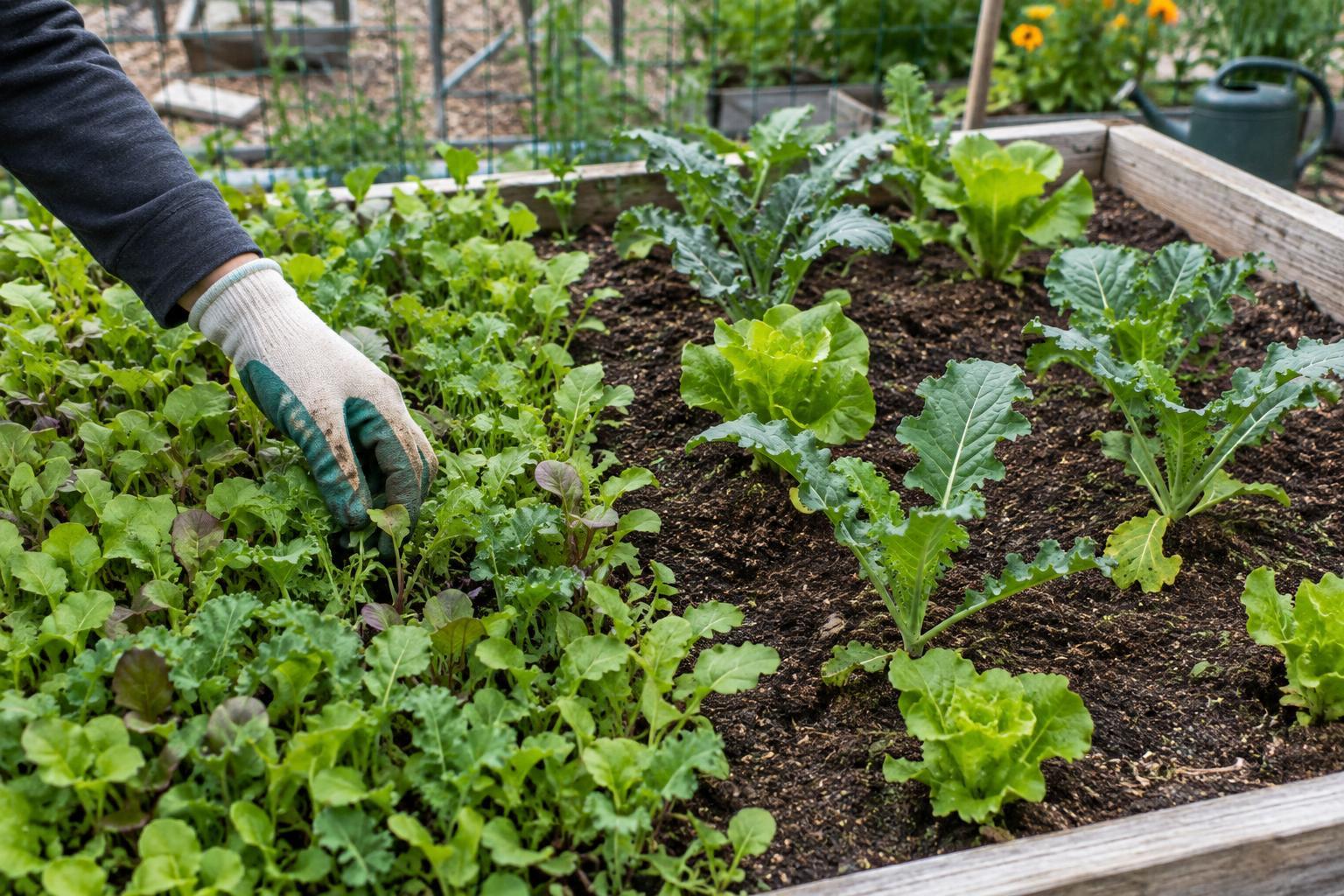
Direct-sown crops often germinate in clusters. Once seedlings are established, thin them toward the spacing recommended for that crop. Choose which plants to keep based on their position and vigor, then remove the extras carefully. If pulling one seedling would disturb nearby roots, snip it at soil level instead. Follow any crop-specific guidance before eating thinnings; not every seedling should be treated as a salad green.
For transplants, act while they are still small if you can move them without excessive root damage. Water the bed first, lift each plant with as much of its root ball as practical, and replant it promptly at an appropriate depth for that crop. Larger, well-established vegetables may be better left in place. In that case, you can prune only where appropriate, guide vines onto supports, or remove a competing plant to give the others room. Avoid stripping so much foliage that the remaining plants lose useful leaf area.
Make space part of the harvest plan
An open patch early in the season is not necessarily wasted space. As crops mature, their leaves may cover much of it. Where the growing season and crop choices allow, you can also plant a quick crop, harvest it, and then give a slower-growing neighbor the room it needs. Keep that handoff in mind from the start rather than allowing both crops to compete indefinitely.
In a community garden, a simple bed sketch helps everyone understand which plants are meant to stay and which are due for thinning or early harvest. Label varieties when their growth habits differ, and agree on who will maintain supports and clear paths. Thoughtful spacing may mean planting fewer seedlings at once, but it gives gardeners a clearer view of their crops and more room to care for them through harvest.