Start with the plant and the space
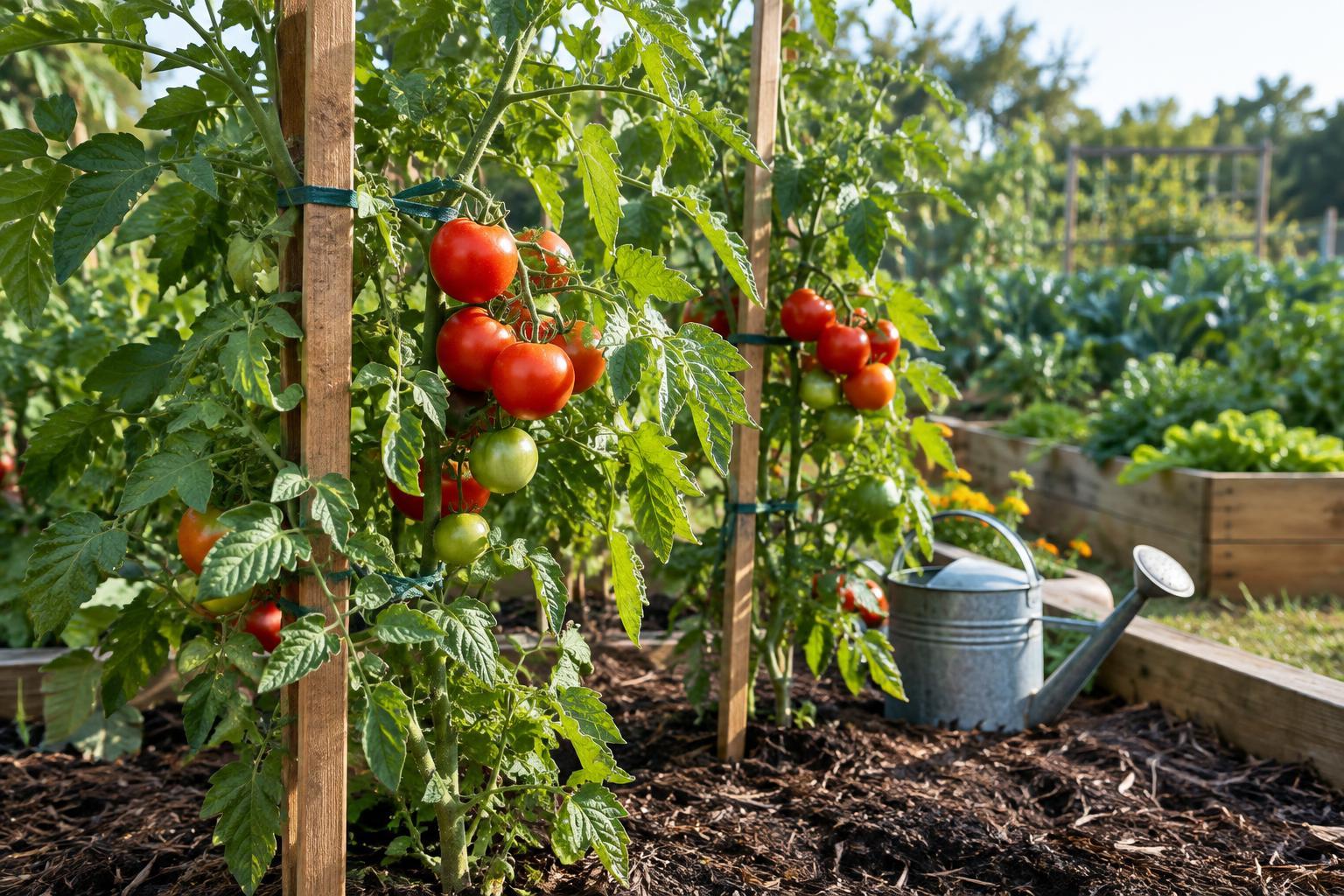
Trellising can make climbing vegetables easier to pick and keep sprawling growth off paths and neighboring beds. The best support depends on how a plant climbs, how large it may become, and where gardeners need to stand to care for it. Before building, check the seed packet or plant label: a compact variety may need little support, while a vigorous climber can quickly outgrow a short frame.
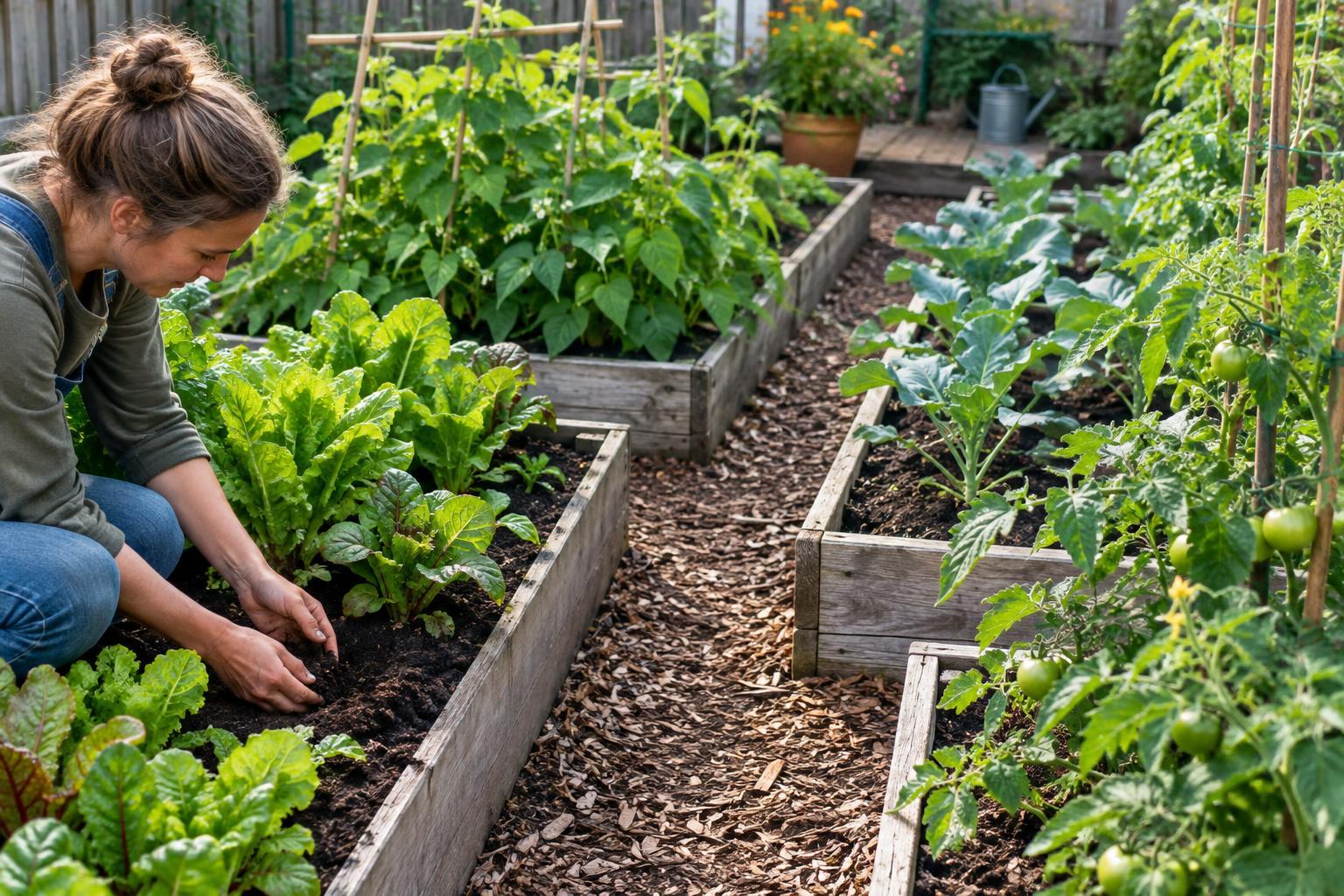
Think about the finished structure, not just the empty one. A trellis covered in leaves can shade nearby crops and catch the wind. Place it where it will not block a shared walkway or make it difficult to reach a bed. If it runs along one edge of a planting area, consider which plants will receive less light as the vines grow. Leave enough room on at least one side for harvesting, watering, and checking leaves.
Give peas a close, easy-to-grab surface
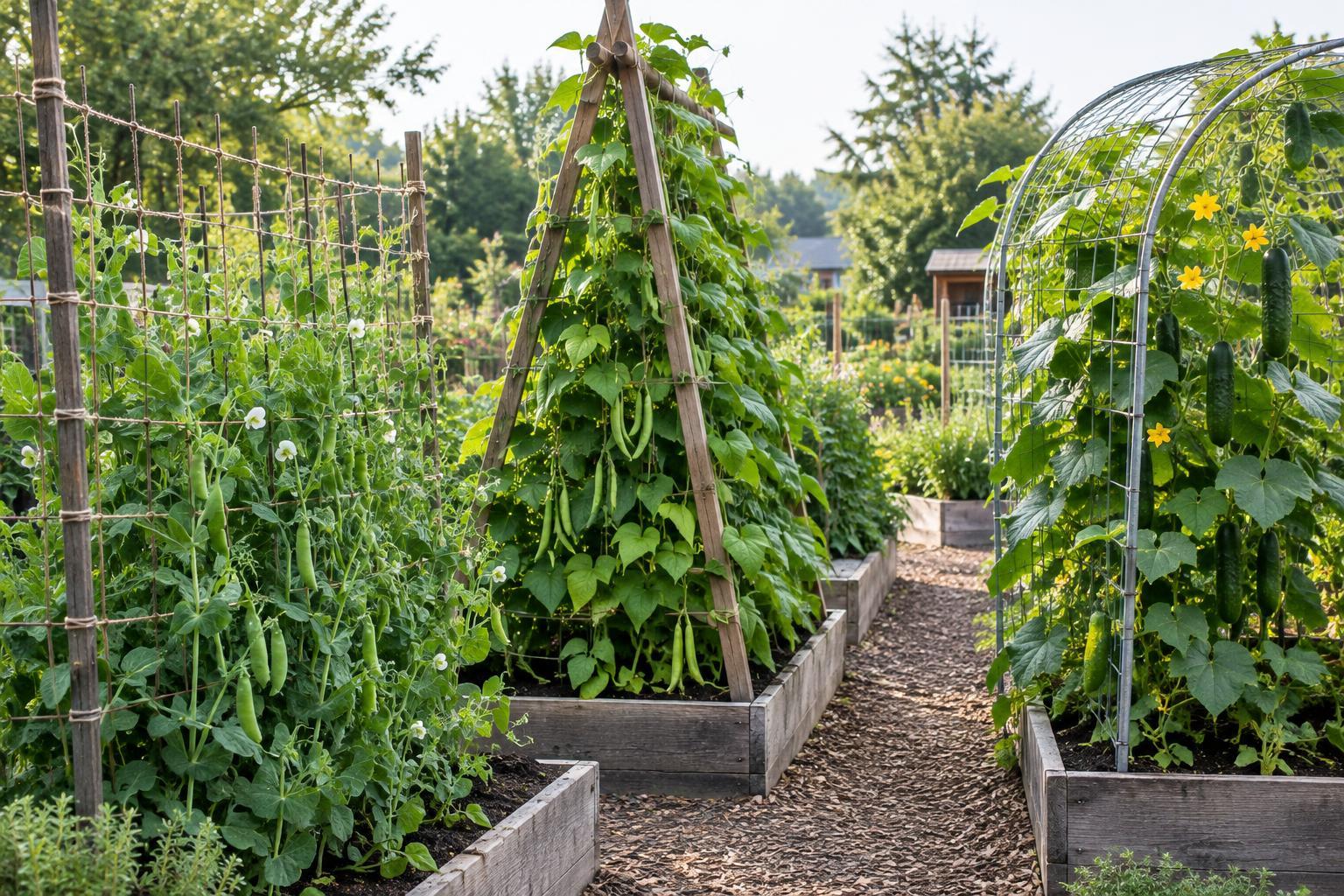
Climbing peas use tendrils to catch narrow material. Netting, string woven between stakes, or a panel with small openings gives them frequent places to hold on. Set up the support before sowing or while seedlings are small so you do not have to work around fragile vines later. Match its height to the variety rather than assuming every pea needs a tall trellis.
Keep the bottom of the support close enough for young plants to reach. If a vine wanders away, gently lay it against the netting; its tendrils can often take over from there. Choose material that stays reasonably taut, since sagging netting becomes harder to manage as plants fill it. At the end of the crop, cut vines away if pulling them would damage a reusable support. Thin string or netting may be simpler to replace than to untangle.
Build a stronger frame for pole beans
Pole beans climb by twining their stems around supports. They can follow vertical poles, sturdy strings, or a well-anchored panel. A teepee of poles creates a compact planting area, while a straight trellis can work well along a bed edge. In either case, provide surfaces that stems can wrap around and make the frame tall enough for the variety you choose.
Install poles firmly before planting. Beans can produce a dense canopy, so a frame that feels steady when bare should also be able to handle leaves, pods, and a gust of wind. Early on, guide a wandering stem around its support without bending it sharply or tying it tightly. Check the structure as the plants grow, particularly where strings are fastened. For shared harvests, position the frame so ripe pods can be seen and reached without stepping into the bed.
Allow for the weight of cucumbers
Vining cucumbers have tendrils, but their broad leaves and developing fruit call for a sturdy support. A rigid panel or a firmly anchored frame is often easier to keep stable than loose netting. Give vines a surface they can catch, then gently direct new growth toward it as needed. Do not pull a stem into place if it resists; tender growth can break.
Check the variety before deciding how much space to reserve. Some cucumbers grow more compactly than others, and not every plant needs a tall structure. Fruits on a vertical vine may hang freely, making them easier to spot, but inspect both sides of the trellis so none are missed. If a large fruit seems to strain its stem or the frame, a soft, breathable sling tied to the support can help carry its weight. Avoid tying anything tightly around the fruit.
Make the trellis workable all season
Whatever you grow, choose supports with edges and openings that are comfortable to work around. Anchor them securely, keep sharp wire ends out of reach, and leave a clear route for carrying tools and harvest baskets. In a community plot, agree on trellis placement before building a tall structure near another gardener’s space. Label shared plantings so everyone knows which vines to train and when produce is ready to pick.
Once a week, look for loose fasteners, vines spilling into paths, and fruit hidden behind foliage. Redirect flexible new growth rather than trying to move older stems. After harvest, remove spent plants and inspect reusable supports before storing them or planting the next crop. A simple frame that is stable, accessible, and suited to the plant will usually serve a garden better than an elaborate one that is difficult to maintain.