Why soil testing belongs in the garden plan
Lead can persist in soil near older buildings, busy roads, former industrial sites, and places where painted materials or other debris were handled. Its presence is not always visible. A productive-looking bed may still contain lead, while a neglected-looking area may not. Testing is more useful than trying to judge soil by appearance or by a property's history alone.
For gardeners, the main concern is often contact with contaminated soil and dust. Soil can cling to hands, tools, shoes, and produce, then travel into shared spaces or homes. Young children may have more opportunities to put soil-contaminated hands or objects in their mouths. A soil test helps a garden group decide where to grow, where to add protective surfaces, and which areas need further attention.
Make a sampling map before collecting soil
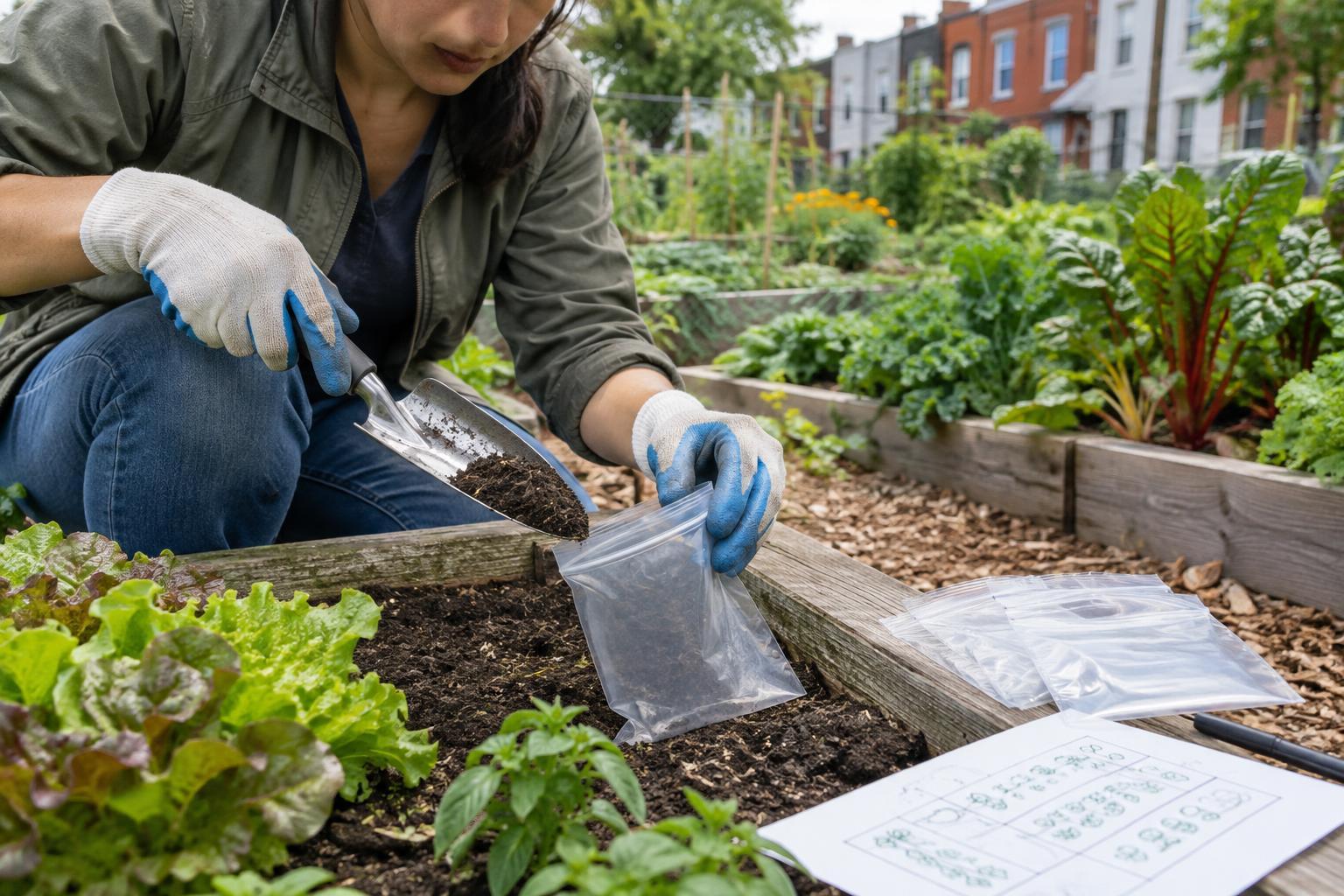
Start by sketching the growing space. Mark existing beds, planned beds, paths, play areas, compost locations, building edges, and spots with a different history or appearance. Treat these as separate sampling areas when they could have different lead levels. For example, do not blend soil from a bed beside an older painted wall with soil from a distant bed. Mixing unlike areas can hide a localized problem.
Choose a laboratory that offers soil lead testing, and ask for its sampling and submission instructions before digging. A lab may specify the depth, amount of soil, container, and whether it wants a composite sample made from several small subsamples. Ask for a measurement of total lead reported in a clear unit, such as milligrams per kilogram. Tell the lab that the soil is for a food garden so it can explain the appropriate test and report.
For a typical composite sample, collect small amounts from several points across one defined area at the depth the lab requests, then combine them in a clean container. Remove surface litter if instructed, and use clean tools between areas to avoid transferring soil. Label each sample with a name that matches your map. Keep unusual spots, such as a patch with paint chips or buried debris, separate; ask the lab how best to sample them. Record where and how deep you collected each sample so you can make sense of the results later.
Use results to make decisions, not assumptions
A lab number describes the soil submitted, not every handful of soil on the site. Lead levels can vary over short distances and at different depths. If a result seems inconsistent with what you know about a location, or if you plan to disturb deeper soil during construction, additional sampling may be worthwhile. New soil brought to the garden should also come from a source that can provide information about its suitability for growing food.
Guidance for interpreting lead results varies by location and intended use. Compare your report with current advice from your local health department or extension service, and ask the lab to clarify any units or unfamiliar terms. Avoid treating a single number as a guarantee that exposure is impossible. A garden's layout and daily practices matter alongside its test results.
Reduce contact with soil and dust
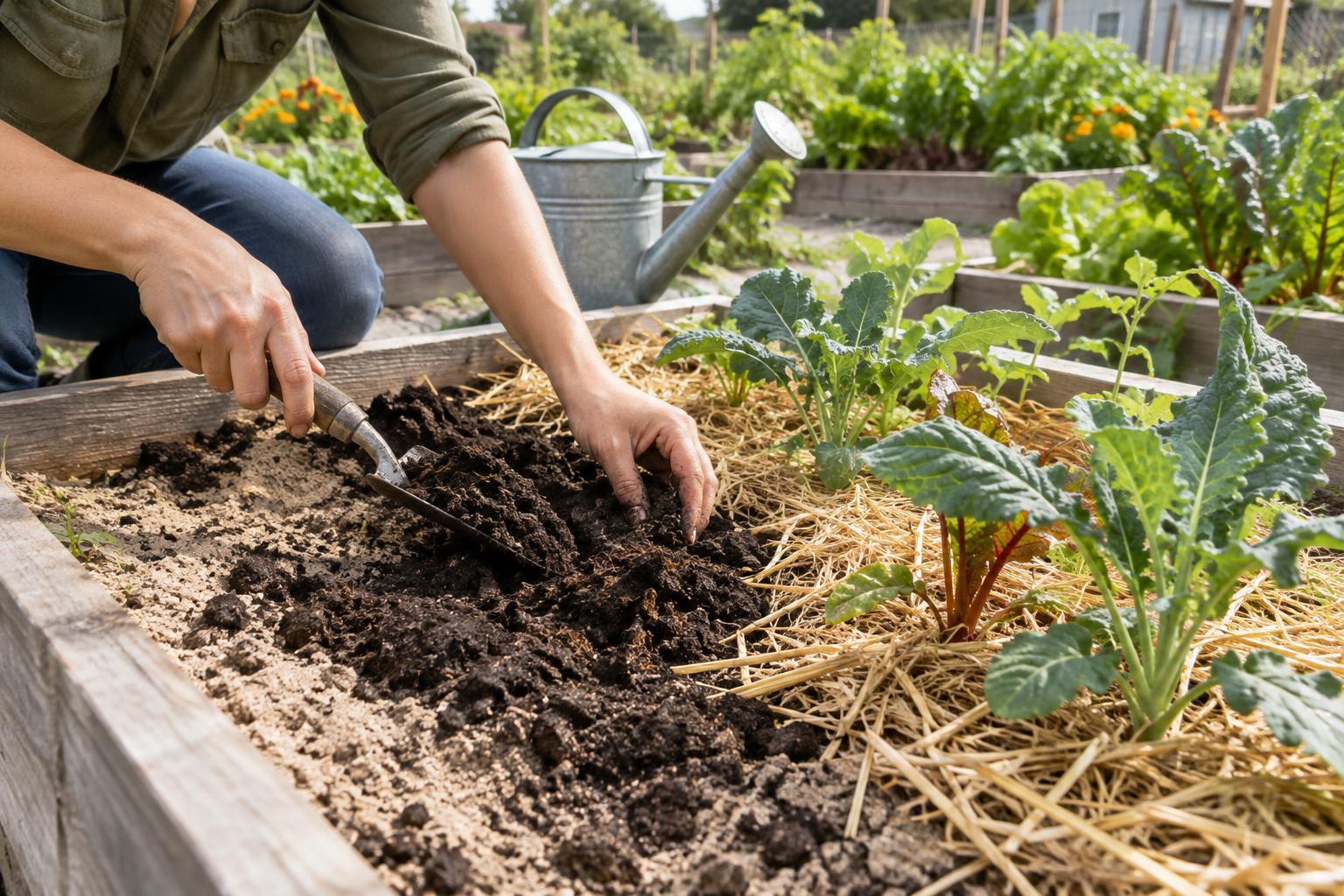
Where testing or site history raises concern, keep bare soil covered with mulch, plants, or another suitable surface, especially on paths and near seating areas. Avoid activities that create dust; lightly dampening dry soil before routine work may help. Wear gloves when handling soil, wash hands afterward, and clean tools outside. Shoes used in the garden can track soil indoors, so a shoe-changing or cleaning routine is useful in a shared space.
Raised beds can separate crops from existing soil when they are filled with suitable growing material and designed to prevent the underlying soil from mixing into the bed. Maintain that separation when digging, topping up beds, and repairing edges. Containers offer another option where space is limited or an area is difficult to manage. Neither approach removes lead from the original soil, so paths and surrounding ground still need attention.
Wash harvested produce thoroughly to remove soil. Peeling root crops can further reduce soil left on their surfaces. If a site has elevated lead, fruiting crops grown in suitable clean soil may be a more practical choice than crops that grow in direct contact with the ground, but plant choice alone is not a substitute for managing contaminated soil.
Turn a test into a shared garden routine
Keep the sampling map, lab reports, and notes about any new soil or bed construction where garden members can find them. Mark areas that should not be dug or used for food growing, and explain why without relying on a verbal handoff. Plan for handwashing, tool cleaning, covered paths, and bed maintenance before the busy growing season begins.
If results indicate a concern or the site has a complex history, seek site-specific guidance from local public health or environmental resources. Testing is the starting point: clear records and consistent habits are what make the information useful as gardeners and garden plans change.