Read the plant and the soil before you water
A hot afternoon can make leaves droop even when the soil still contains moisture. Some plants reduce water loss by wilting temporarily, then perk up as temperatures fall. Others stay limp because their roots cannot reach enough water. Before reaching for the hose, check the soil a few inches below the surface near the plant’s root area. If it feels dry there, watering is likely to help. If it feels moist, give the plant time to recover in the cooler evening and check it again the next morning.
Watch for changes that persist beyond the hottest part of the day: limp leaves in the morning, dry soil below the surface, or containers that feel unusually light. Browning leaf edges and faded flowers can also follow heat stress, though they do not always mean a plant needs more water. Overwatering can leave roots short of air, so use soil moisture and the plant’s condition together rather than following a rigid daily schedule.
Water slowly, where roots can use it
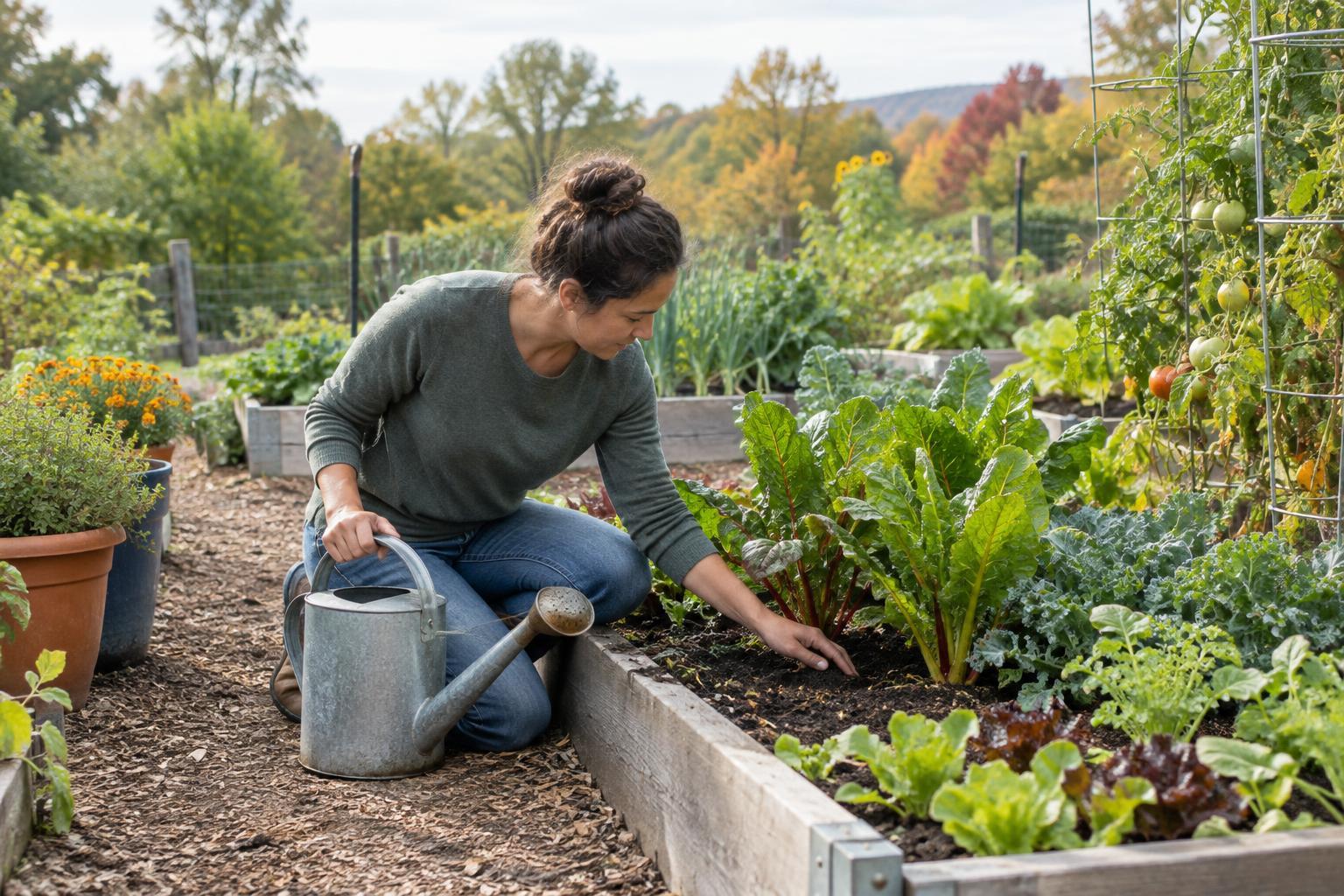
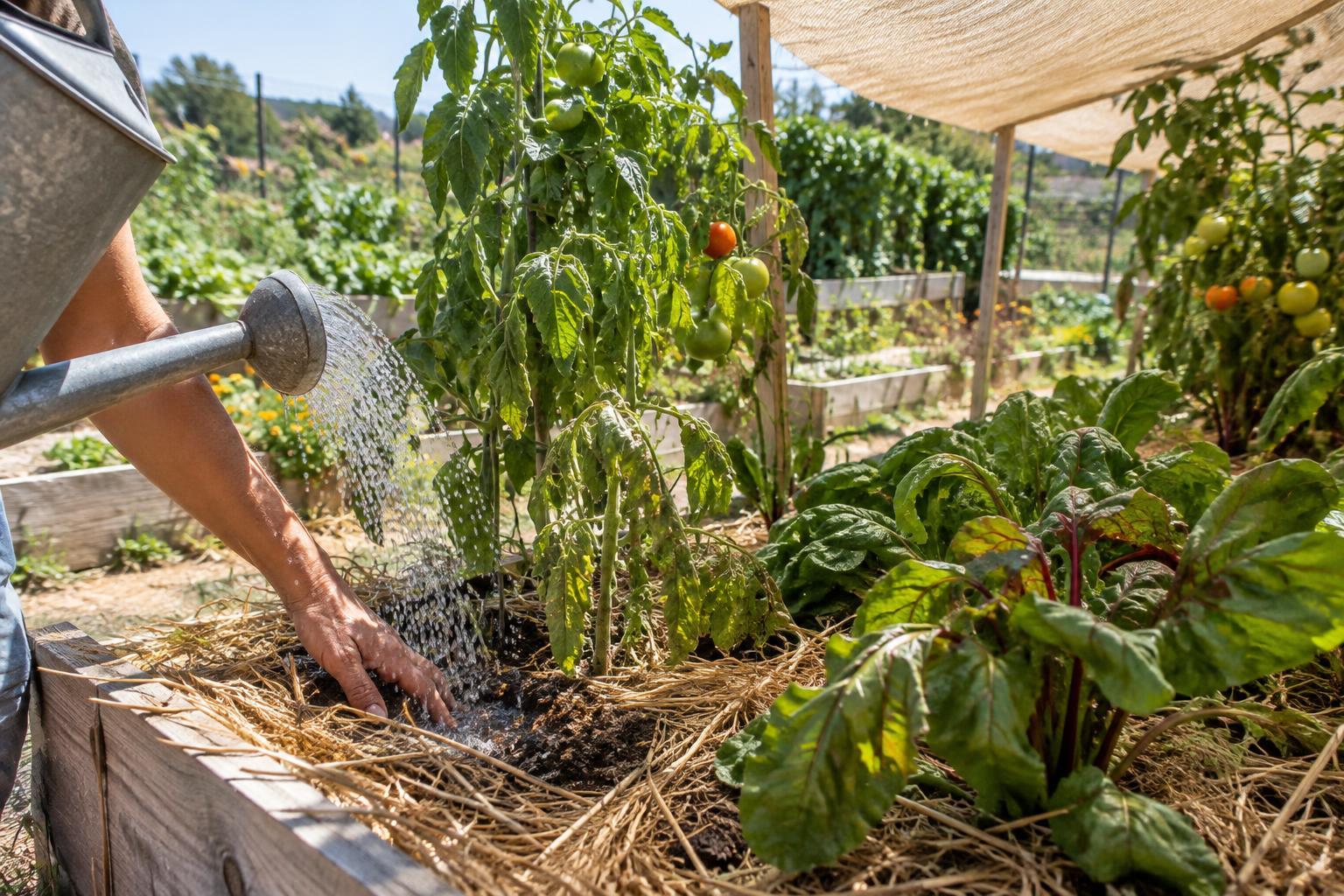
When the soil is dry, aim water at the base of each plant and let it soak in. A slow application is more useful than a quick splash that wets only the surface. If water runs off hard, dry ground, pause and return for another pass after the first has had time to penetrate. In a shared garden, check the far ends of beds and the spaces beneath large leaves; overhead watering does not always reach them evenly.
Early morning is a convenient time to water because plants can take up moisture before the day gets hot. If a plant is severely dry, however, water it when you notice rather than waiting for the next morning. Containers may need more frequent checks than in-ground beds because their limited soil volume can dry quickly, especially in sun and wind. Water a container until moisture reaches its full depth and excess can drain away; do not leave a pot sitting in water for long periods.
Lower the heat around roots and leaves
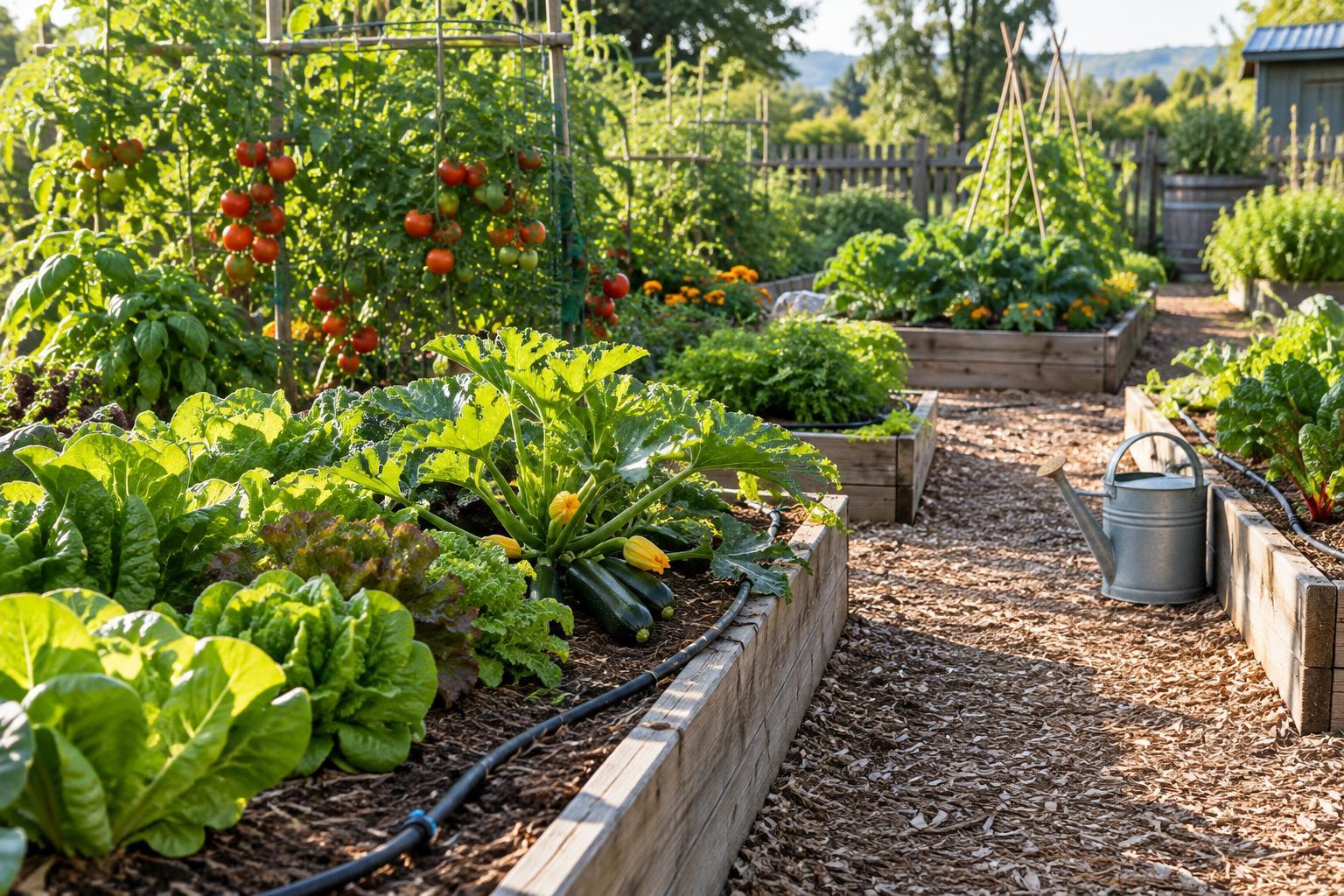
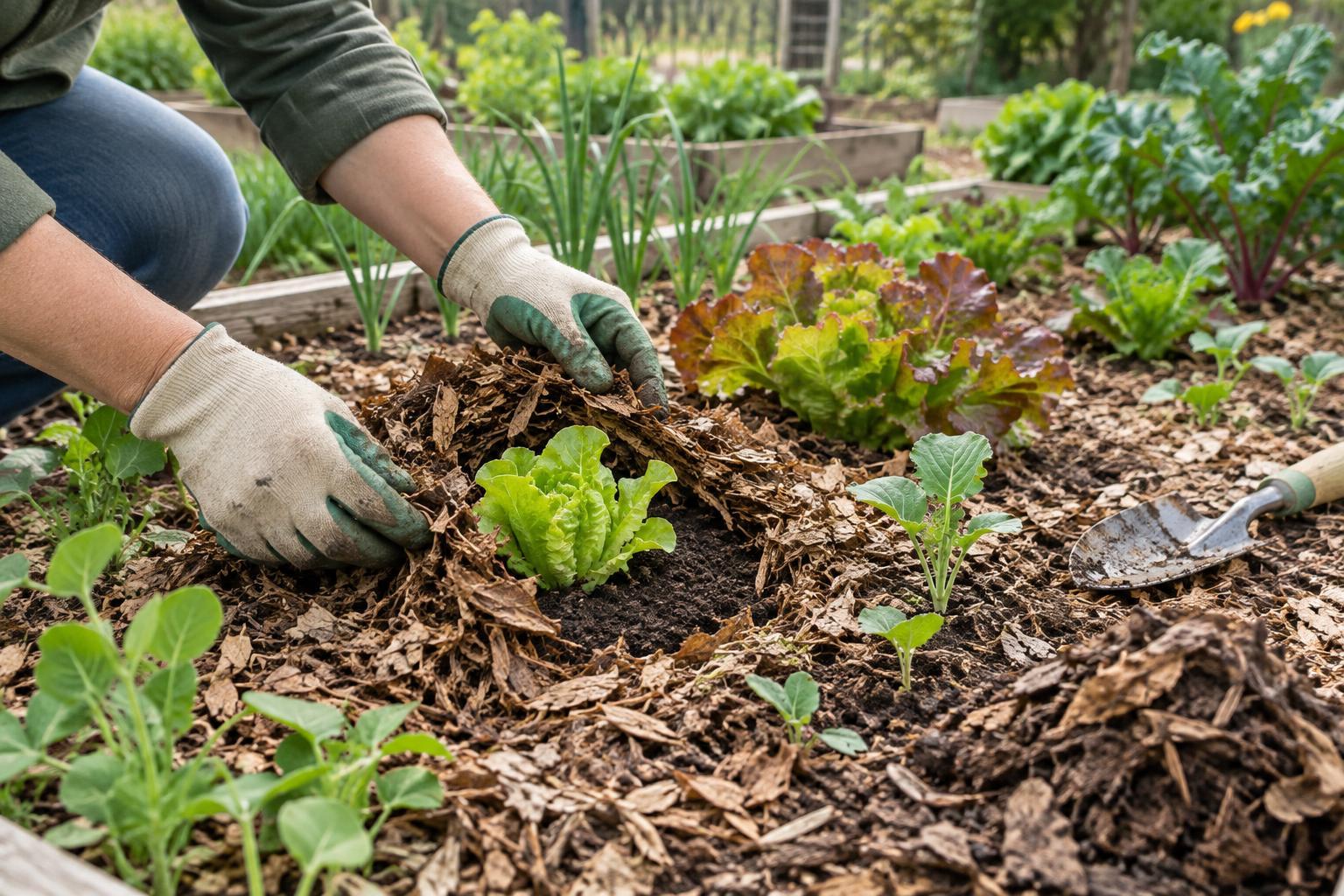
A layer of organic mulch can slow moisture loss and moderate temperature swings at the soil surface. Spread it over bare soil around established plants, leaving a little space around stems and trunks. Water the soil first if it is dry; mulch is most helpful when it helps hold moisture already in the root zone. Keep an eye on young seedlings, whose small roots may still sit close to the surface.
Temporary shade can protect tender transplants, leafy greens and container plants during the hottest hours. Shade cloth or a lightweight screen should allow air to move around the foliage; a cover pressed directly against leaves may trap heat or cause damage. Move portable pots to a spot with afternoon shade if possible, and check that anything placed over a bed is secure enough not to fall onto plants. Shade is a short-term aid, not a substitute for checking soil moisture.
Pause jobs that add stress
A heatwave is usually a poor time to transplant, divide perennials or prune heavily. Each job asks a plant to replace lost roots or foliage while conditions already make water balance difficult. Delay optional work until temperatures ease. If you must plant something already waiting in a pot, prepare the bed first, water the root ball and surrounding soil, and provide temporary shade while it settles in.
Hold off on strong fertilizer applications to stressed plants. Fertilizer will not quickly repair scorched leaves, and encouraging fresh growth during extreme heat may increase a plant’s demand for water. Likewise, avoid removing every damaged leaf immediately: foliage that still has green tissue may continue to support the plant and shade stems or fruit. Remove clearly dead material and reassess the rest after cooler weather returns.
Make a simple heat plan for a shared garden
Community plots are easier to protect when gardeners agree on a few practical priorities. Identify containers, new plantings and shallow-rooted crops that need close checks, and make sure volunteers know which beds they may water. A short note at the tap can record what was checked, what was watered and any plants that still looked stressed. This helps prevent both missed beds and repeated watering of soil that is already wet.
After the heat passes, inspect plants in the morning and give them a little time before deciding they are lost. Leaves with brown, crisp tissue will not turn green again, but healthy roots may support new growth. Continue checking moisture below the surface and return gradually to normal care. Note which beds dried fastest or received harsh afternoon sun; those observations can guide future mulch, shade and planting choices.