Start with the outdoor planting date
The most useful seed-starting calendar begins outdoors. Find your area’s typical last spring frost date, then check each seed packet for how many weeks before planting out to sow indoors. Treat the frost date as a planning guide, not a guarantee: a cold spring can delay planting, while different vegetables tolerate different conditions. Tomatoes, peppers, and basil generally need warm weather; many brassicas can be planted out earlier if they have been prepared for outdoor conditions.
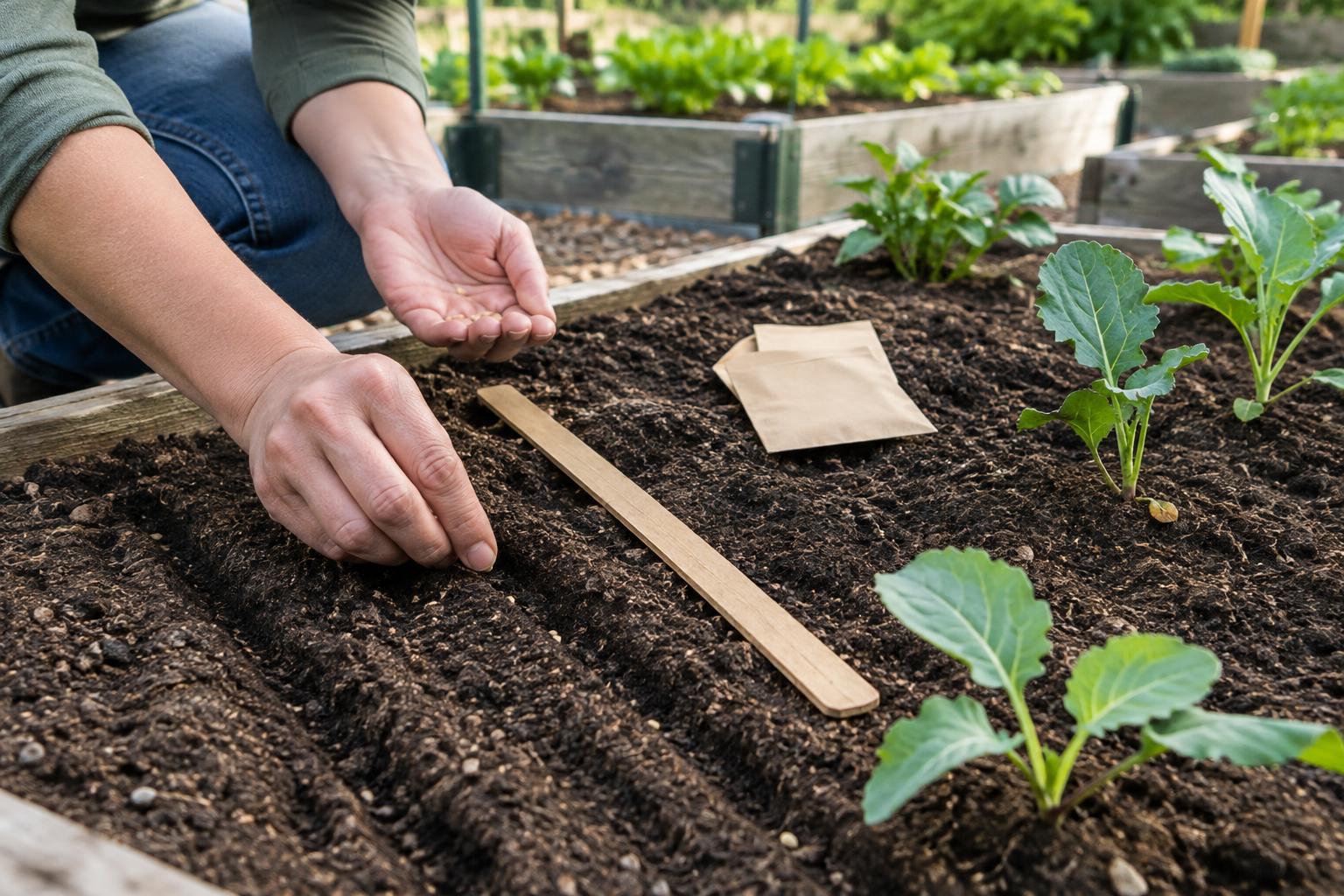
Avoid starting everything at once. Seedlings kept indoors too long can become crowded, leggy, or difficult to move without damaging their roots. If a packet gives a range, consider your available light and space before choosing the earliest date. A shared garden may also have a set bed-opening day or transplant schedule. Check that timing before filling trays, and label each variety with its name and sowing date so plants remain identifiable when several gardeners are raising seedlings together.
Give roots a clean, manageable start
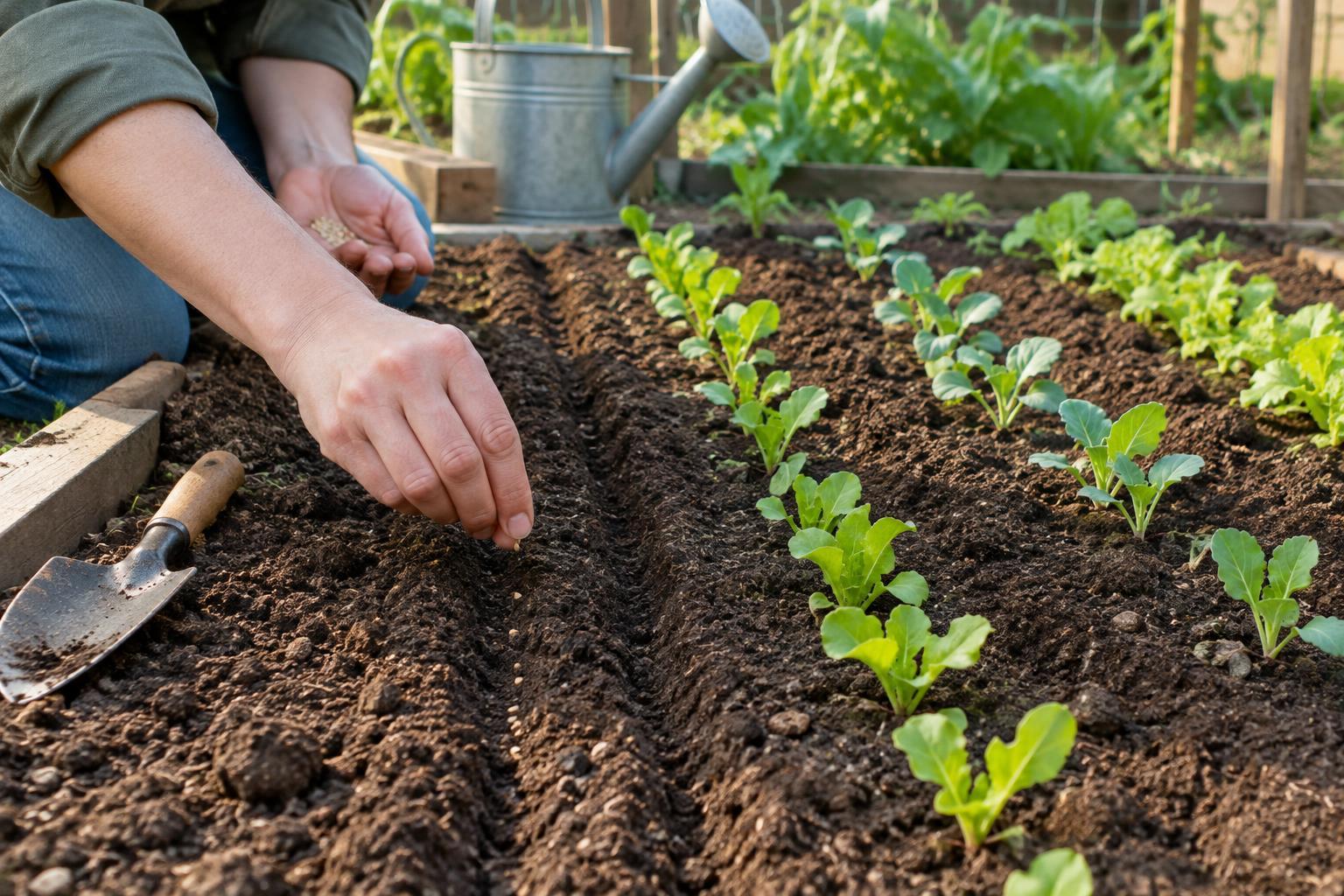
Use containers with drainage holes and a seed-starting mix rather than dense garden soil. Moisten the mix before filling cells so it feels evenly damp but does not drip when squeezed. Sow at the depth recommended on the packet; tiny seeds may need only a light covering, while larger seeds are generally planted deeper. If you sow more than one seed per cell, thin extra seedlings by snipping them at the soil surface once the strongest plant is clear. Pulling them out can disturb nearby roots.
Keep the mix consistently moist during germination, using a gentle pour or bottom watering so seeds do not wash away. A cover can help hold moisture before seeds emerge, but remove it promptly afterward to improve airflow. Empty standing water from trays, and let the mix begin to dry at the surface between waterings once seedlings are growing. Dampness is helpful; constantly waterlogged roots are not.
Make light the daily priority
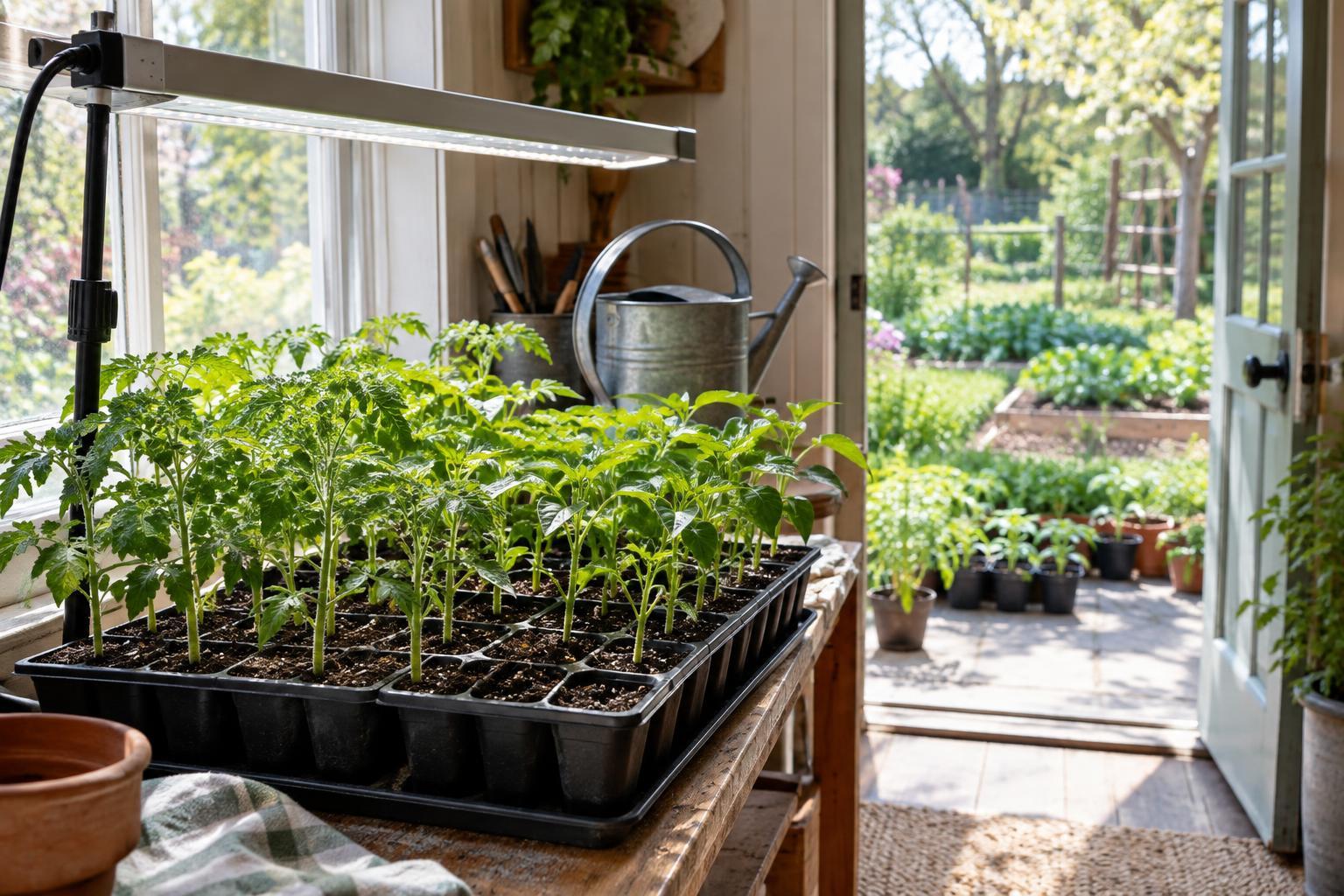
A bright window may be enough for some seedlings, but many vegetables grow sturdier under a grow light. Seedlings that stretch toward a window, lean sharply, or develop long, thin stems are often asking for more light. Position lights close enough to illuminate the plants well without overheating them, following the fixture’s guidance, and raise them as the plants grow. A timer can provide a consistent daily light period of roughly 12 to 16 hours, followed by darkness.
Light and temperature work together. Warmth can help many seeds germinate, but once they emerge, excessive heat combined with weak light encourages spindly growth. Move trays away from heating equipment if they remain hot after germination. Give plants room as leaves expand, and rotate trays if one side receives more light. If seedlings outgrow small cells before outdoor planting conditions are suitable, move them into larger containers with fresh potting mix rather than leaving their roots tightly crowded.
Prepare plants for the move outside
Indoor seedlings are not ready for a full day of direct sun and wind as soon as the weather turns pleasant. Hardening off is the gradual adjustment to brighter light, moving air, and changing temperatures. About one to two weeks before planting, place seedlings outside for a short period in a sheltered, shaded spot. Increase their time outdoors and exposure to morning sun gradually, checking that containers do not dry out. Bring plants back inside when temperatures drop below what their crop can tolerate, or when strong wind or heavy rain is expected.
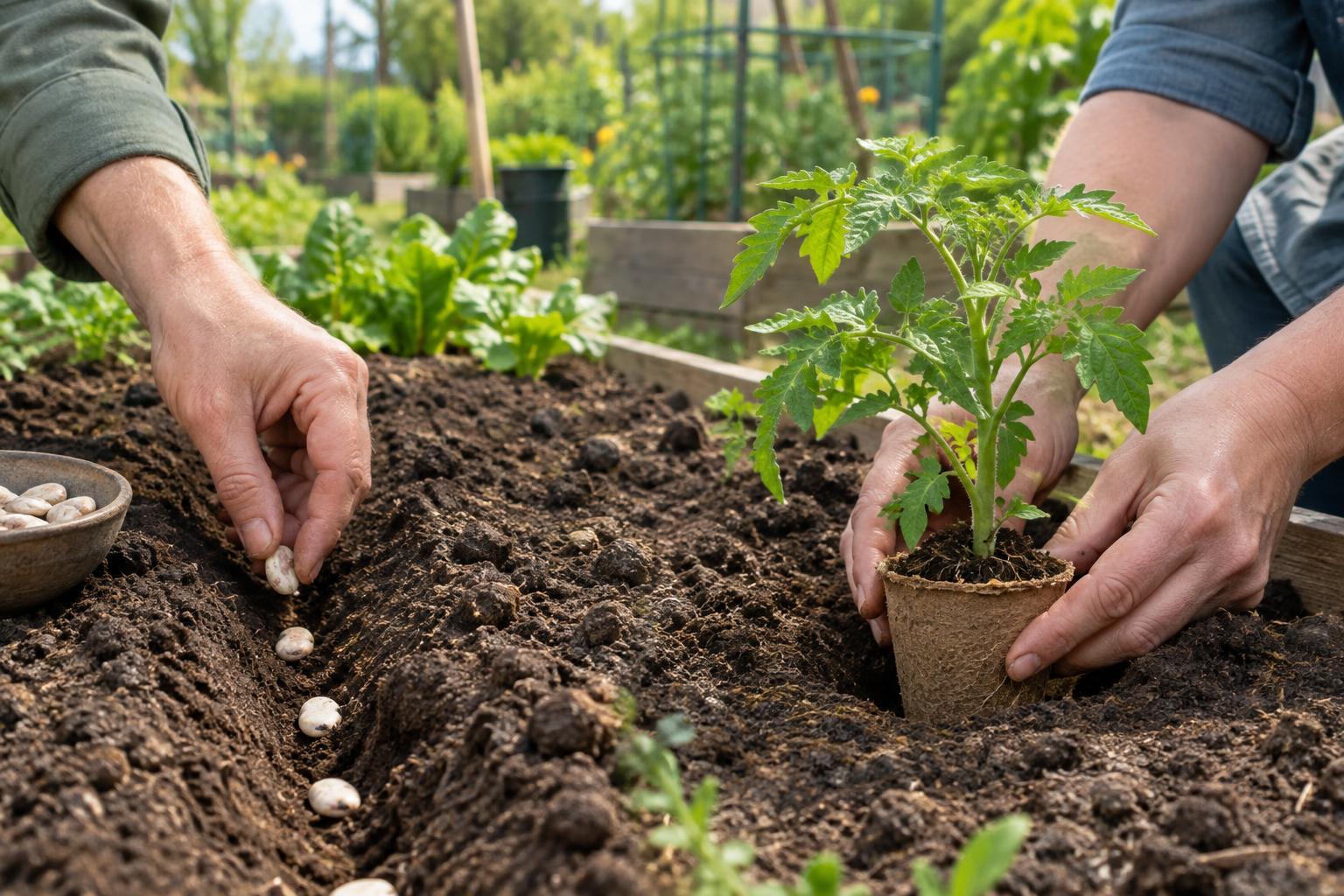
Slow the process if leaves wilt badly or develop pale, damaged patches. Sheltered seedlings still need water, and small pots can dry quickly outdoors. On planting day, choose conditions that give transplants a gentle start if possible, such as an overcast day or late afternoon. Water the seedlings before moving them and water the soil around their roots after planting. Follow the spacing on the seed packet or plant label, even if the young plants look far apart; they need room to mature.
Keep the plan flexible
Successful seed starting is less about perfect dates than about observing plants and adjusting. If outdoor soil is cold or a frost is forecast, keep tender seedlings protected a little longer. If seedlings are becoming crowded, pot them up and reassess how many the garden can hold. In a community garden, labeling extra plants and sharing their care requirements makes exchanges easier and helps each transplant end up in a suitable bed. With a realistic schedule, dependable light, and a gradual introduction to the outdoors, indoor seedlings have a much better chance of becoming productive garden plants.