Start with a small group and a clear purpose
Before looking for land, gather a few people willing to help make decisions and follow through on routine tasks. Ask what kind of garden they want: individual plots, shared harvest beds, a teaching space, or a combination. These models call for different layouts and different ways of dividing work. A short statement of purpose can keep later choices grounded: who the garden is for, what it will provide and what the group can realistically maintain.
Talk with potential gardeners early, but do not treat initial enthusiasm as a staffing plan. Ask what people can contribute during the growing season, including watering, weeding, communications and welcoming newcomers. Decide how the group will make ordinary decisions and who can act when something needs prompt attention. Clear responsibilities help prevent a few volunteers from quietly inheriting every task.
Choose a site for long-term use, not just good looks
A promising site needs more than open ground. Visit it at different times of day to assess sunlight, shade and access. Consider how gardeners will carry tools and harvests, whether there is a practical water source, and whether paths could serve people with different mobility needs. Nearby storage and a place for compost may matter as much as the size of the planting area. A smaller, convenient site can be easier to sustain than a large one that is difficult to reach.
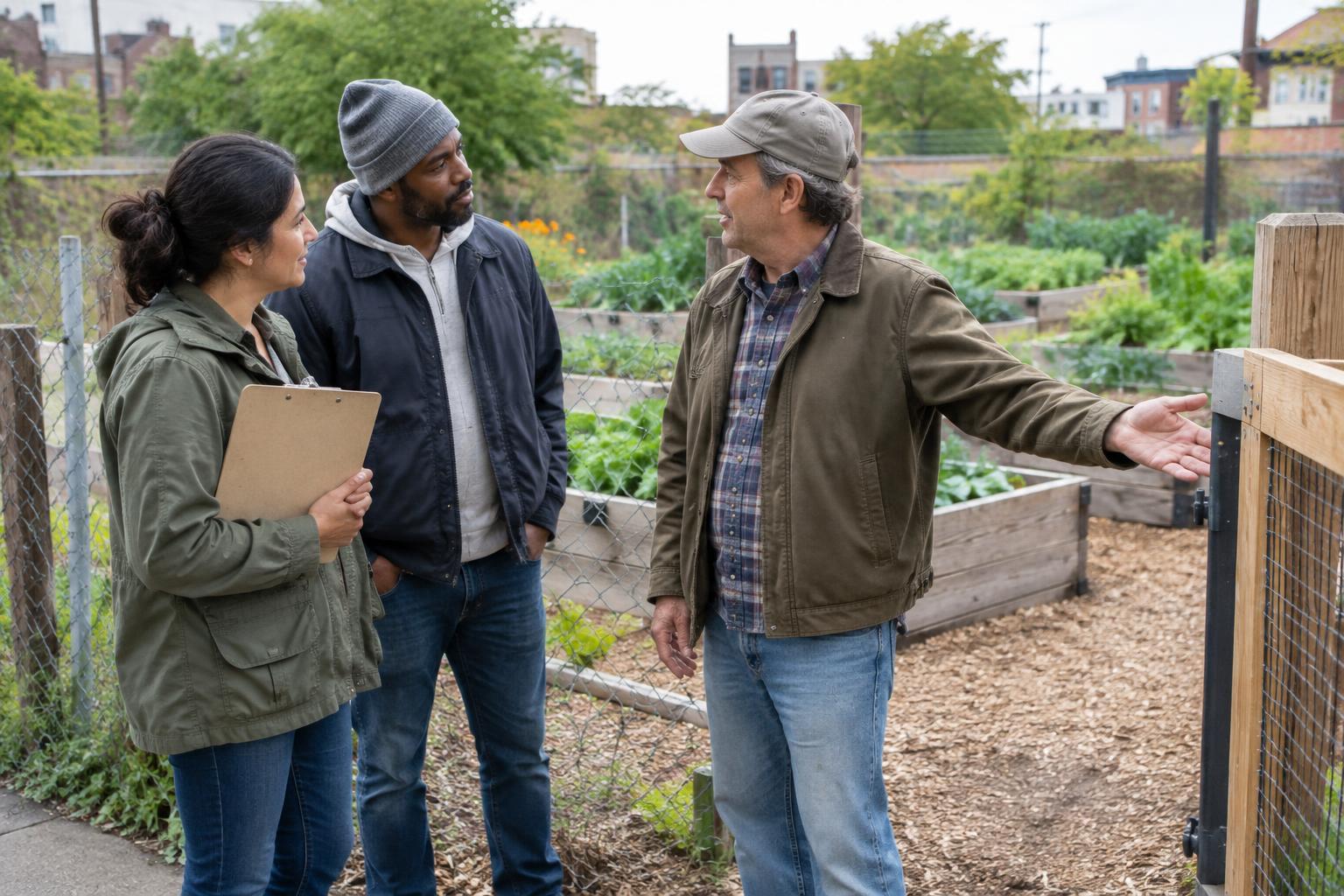
Before committing, establish who controls the land and what permission the group needs. Put the expected length of use, permitted activities, access arrangements and maintenance responsibilities in writing. Ask about the site’s past uses and any restrictions on digging or installing structures. If soil history is uncertain, look into appropriate soil testing and consider raised beds with suitable growing material while questions are resolved. Do not bring in donated soil or materials without knowing what they are and whether they are appropriate for food growing.
Make a simple plan and budget before building
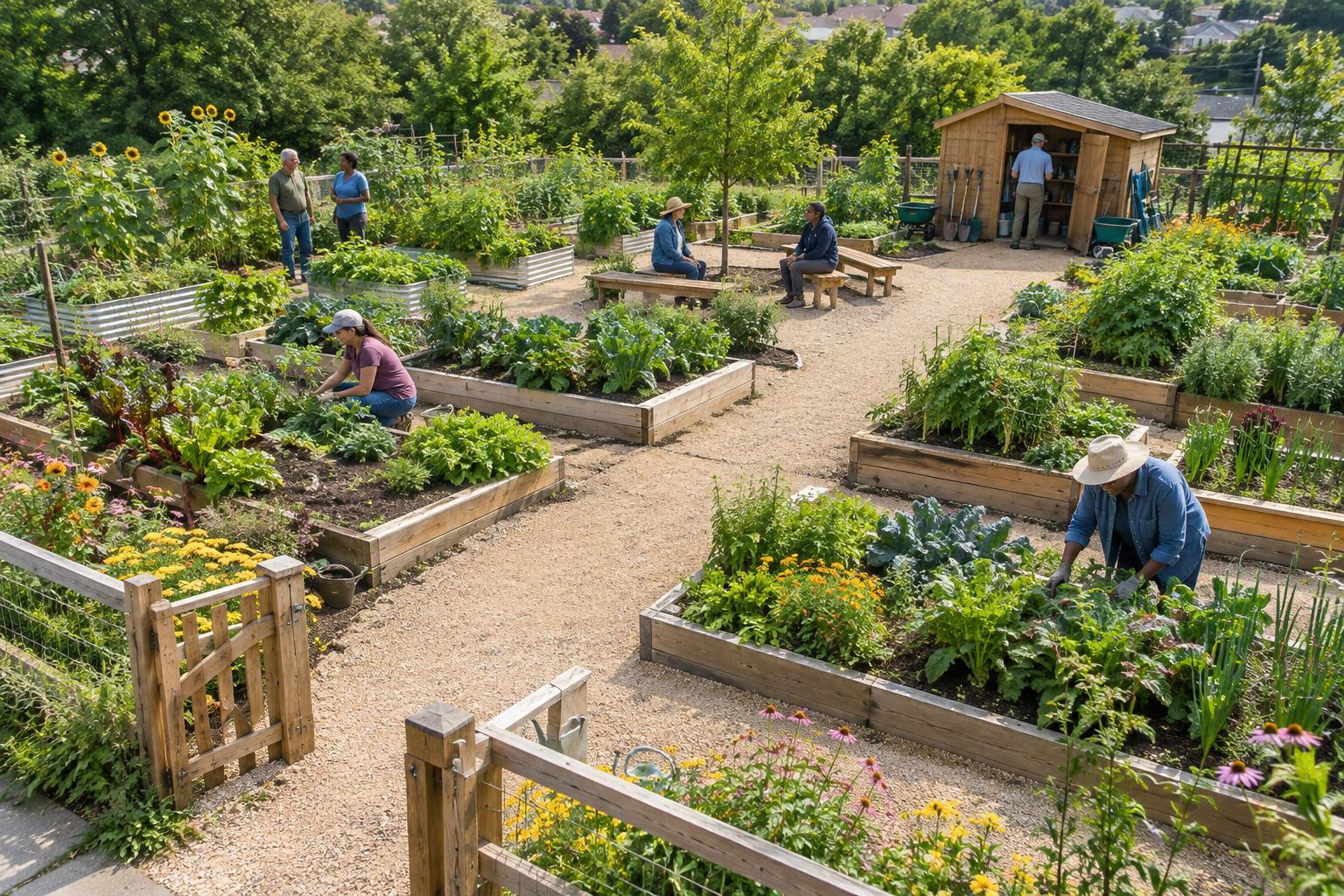
Sketch the site with beds, paths, water access, compost, tool storage and a gathering area. Leave enough room to move a wheelbarrow and reach beds without stepping on growing soil. Decide which areas are shared and which, if any, belong to individual plot holders. A modest first layout leaves room to learn how people actually use the space before adding permanent features.
List both start-up needs and recurring costs. Beds, growing material, tools, hoses and signs may be one-time purchases, but water, repairs, replacement supplies and site upkeep continue. Agree on how costs will be covered and what will happen if expected donations do not arrive. Set a few written garden guidelines covering plot assignment, shared tools, harvests, pets, compost materials and how neglected areas will be handled. Keep the guidelines short enough that people will read them, then revisit them together after the first season.
Use a timeline with room for delays
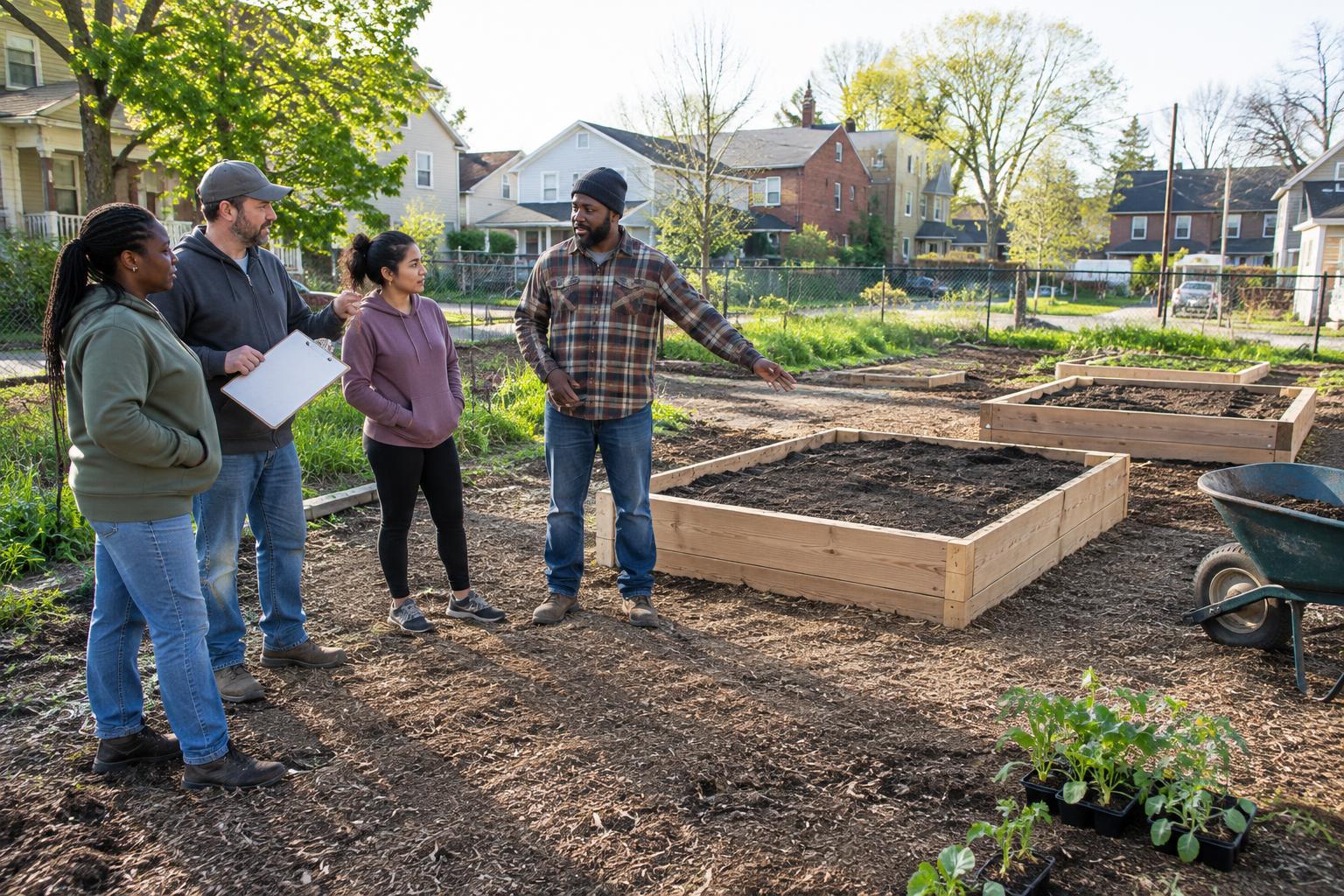
In the first month or two, focus on forming the core group, listening to interested gardeners and defining the garden’s purpose. During the next stage, compare possible sites and work through permission, water, soil questions and a basic budget. These steps may take longer than planting plans; waiting for clear answers is often easier than moving beds later. Once a site is confirmed, allow time to recruit participants, finalize the layout, gather materials and schedule workdays.
Aim to build only what the group can maintain through one full growing season. If agreements or materials are not ready in time for spring planting, start with a few beds later in the season or prepare the site for the following year. Planting on the first available weekend is less important than having water, access and caretaking arrangements in place. Put check-in dates on the calendar so delays lead to revised plans rather than an indefinite pause.
Open the garden with a maintenance plan
Before planting, show participants where to find water and tools, explain the shared guidelines and make sure each task has an owner. A simple watering schedule and regular work sessions are more useful than a long list of projects nobody has agreed to do. Keep contact information in one place, with a way for gardeners to report broken equipment or ask for help. Make joining straightforward for new people while being honest about available space and expected participation.
At the end of the first season, ask what worked and what became a burden. Did paths stay usable? Was water convenient? Were shared beds cared for between workdays? Use those answers to adjust responsibilities, improve the layout and decide whether to expand. A successful first year does not require a finished garden. It requires a place people can use, care for and improve together.