Decide what needs support
Not every tall flower needs a stake. A plant growing in an open, breezy spot may develop a sturdy stem, while the same plant in a sheltered, crowded bed may lean toward the light. Large flower heads also add weight, especially after rain. Walk through the bed while plants are still young and note which varieties have flopped in previous seasons, which stems are already leaning, and where a fallen plant would block a path or cover its neighbors.
Good staking holds a plant in its usual shape rather than forcing it into a rigid column. Leave room for foliage and flowers to move a little. If many plants of the same kind repeatedly need heavy support, consider whether crowding or insufficient light is contributing to the problem. A less exposed position, more generous spacing, or a shorter variety may be a better long-term solution.
Match the support to the plant
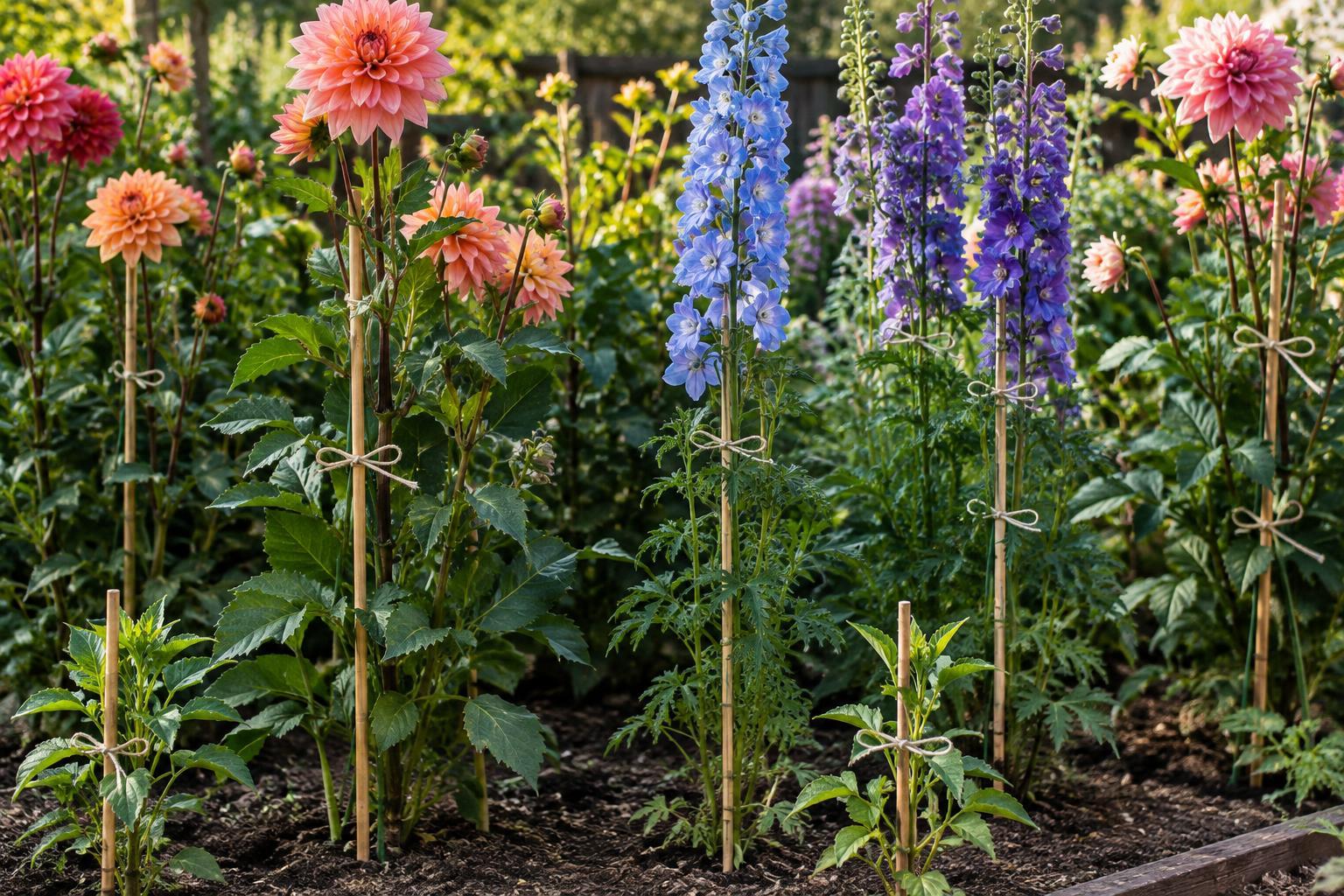
Use a single stake for a plant with one main flowering stem, such as a tall dahlia. Choose a stake that will stand firmly in the soil and reach high enough to support the stem near its upper growth without towering over the flowers. Bamboo, wood, or a sturdy metal stake can work; check that rough edges will not rub against the plant.
For a clump with several stems, a ring support or a set of stakes joined with soft twine usually looks more natural. A grow-through grid is useful when many stems will rise through the same area. Position the grid low over young growth so the stems can grow through it and gradually hide the frame. Twiggy branches can provide a less formal support for lighter plants, though they may not be strong enough for heavy blooms.
In a shared bed, think about people as well as plants. Keep stakes and strings out of walkways, and make the ends of low supports easy to see while plants are small. A support that is sturdy, reusable, and simple to adjust is often the most practical choice for a garden tended by several people.
Install supports while plants are small
The easiest time to stake a flower is before it appears to need help. Place supports after you can identify the young plant but before its stems spread across the space. Early installation lets growth conceal the structure and reduces the need to gather brittle, mature stems into position later. It also makes it easier to put a stake beside a plant without pushing through a dense crown of foliage.
Check where the plant’s crown, bulbs, nearby roots, and any irrigation lines are likely to be before driving a stake into the ground. Set a single stake a little away from the main stem, then press it in firmly enough that it does not wobble. For a ring or grid, center the support over the plant and anchor its legs evenly. If the soil is very loose, a deeper or more substantial support may be needed to keep the whole structure from tipping.
Tie loosely and check as plants grow
Use soft garden twine or flexible plant ties rather than thin wire that can cut into a stem. On a single stake, a loose figure-eight tie puts one loop around the stake and the other around the stem, leaving a small buffer between them. Tie at more than one height if the stem needs it, but avoid fastening every section tightly. The aim is to prevent a sudden bend, not to stop all movement.
Revisit supports as the plants grow. A tie that was loose in spring can become tight around a thickening stem, and new flower heads may need another point of support. Adjust a grid if stems are getting caught beneath it. If a plant has already fallen, lift it gradually and gently; a stem that has grown sideways may break if pulled straight upright in one motion.
Keep the system useful through the season
After strong wind or heavy rain, check for leaning supports, strained ties, and stems resting across paths. Remove ties that no longer serve a purpose, and replace any that are fraying. In a community garden, it helps to keep spare twine and a few stakes with shared supplies so a gardener can make a small adjustment when they notice a problem.
At the end of the flowering season, take down supports when they are no longer needed. Clean off soil and plant debris, let reusable pieces dry, and store them where they will be easy to find next year. Note which plants needed extra help and which supports worked well. Those observations can make next season’s early staking quicker, tidier, and better suited to the bed.