Start with a walk, not a rake
The first mild days of spring can make every brown stem and fallen leaf look like a chore. But a winter-worn garden is also a place where small creatures may still be sheltering. A useful cleanup begins by deciding which areas need immediate attention and which can wait. Walk the garden before moving debris. Look for emerging bulbs and perennials, soggy patches, damaged supports, litter and any signs of nesting activity.
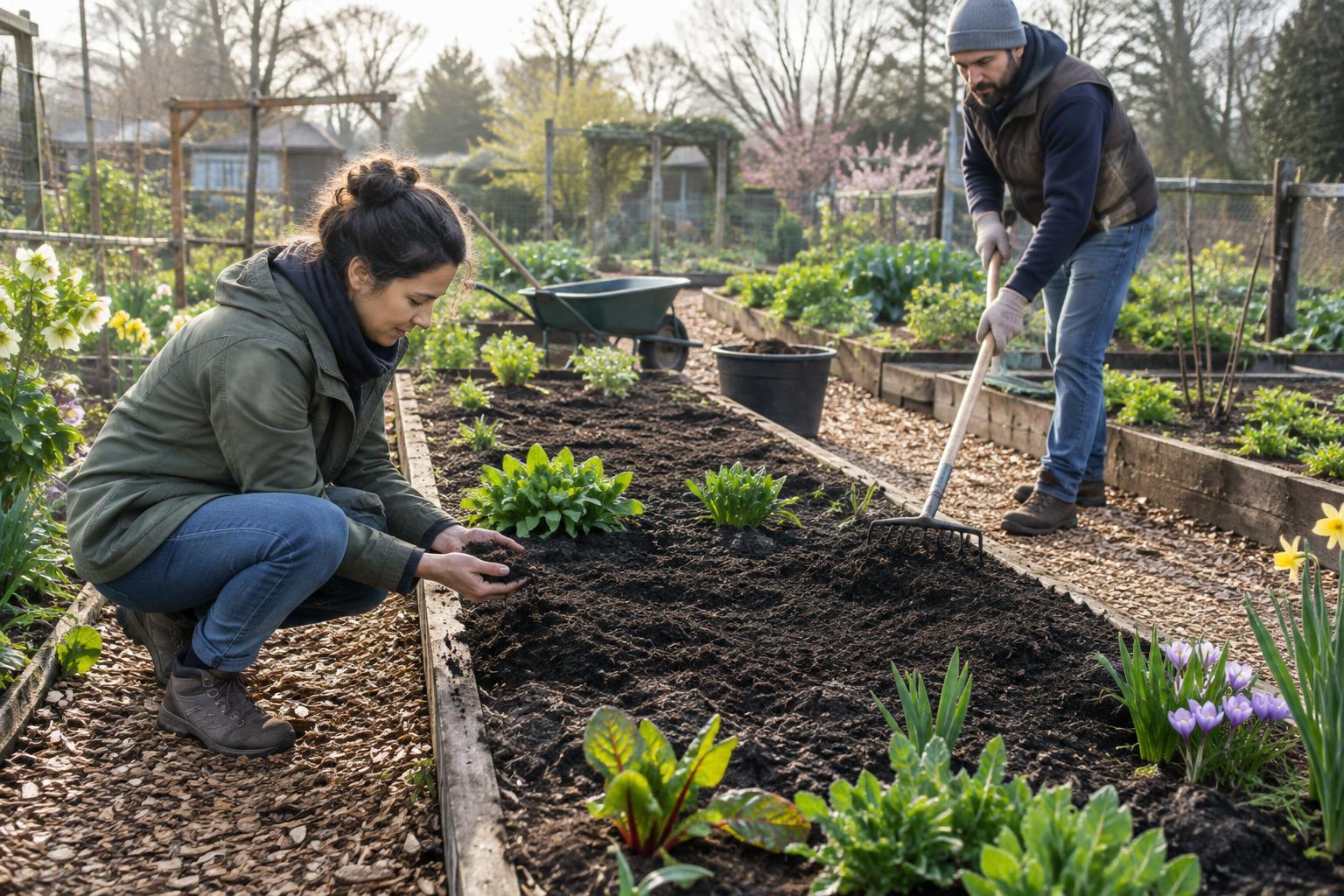
Clear what people need to use first: entrances, paths, seating areas, water access and the edges of shared workspaces. In a community garden, this makes the site safer and easier to navigate without requiring every bed to look bare. Take a photo or make a quick note of places you intend to revisit. A staged cleanup is easier to coordinate than one large workday, and it gives you time to see what is growing beneath last year’s cover.
What to remove promptly
Pick up trash, broken ties and other non-garden materials as you find them. Remove branches that could trip someone or damage a bed, and repair loose edging and supports before plants grow around them. Pull weeds you can confidently identify, especially before they set seed. If a plant may be invasive, check locally appropriate guidance for identification and disposal rather than adding it to a shared compost pile.
Some plant debris needs more care than an ordinary leaf pile. If last season’s foliage showed persistent disease, removing and disposing of it may reduce the chance of carrying a problem into new growth. Keep suspect material separate from healthy debris, and follow the garden’s disposal rules. Healthy, seed-free plant matter can often be composted, provided the pile is managed for the kinds of material it receives. Avoid stripping damp soil just to make a bed look tidy; working wet ground can compact it.
What can stay a little longer
Standing hollow or pithy stems may provide shelter for insects, while dry seed heads can offer cover and, in some cases, food. Leaf litter also protects the soil surface and creates habitat for small garden animals. You do not have to preserve every stem or leaf to make a difference. Keeping a patch of last year’s growth at the back of a bed, under shrubs or along a quiet boundary can leave room for wildlife while keeping active growing areas accessible.
Where leaves have matted over a low-growing plant, gently lift or loosen them so new shoots have space. Elsewhere, a thin layer can remain as mulch. If you need to move leaves from paths or planting holes, tuck them beneath shrubs or into a designated habitat area rather than bagging everything. Check for nests or other signs of activity before pruning dense shrubs or shifting piles. If you find an occupied spot, leave it undisturbed and work elsewhere.
Cut back in stages
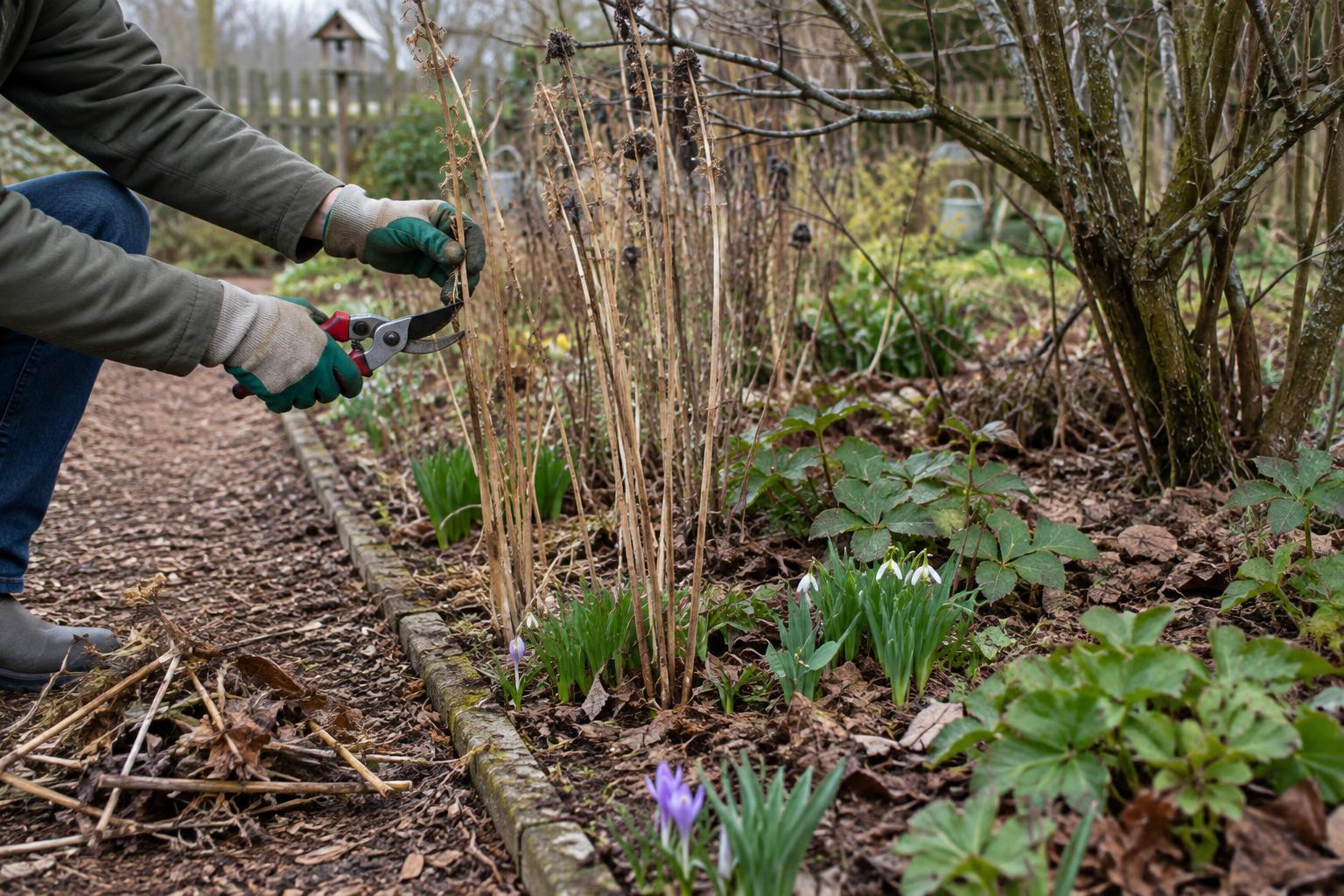
There is no single spring date that suits every garden. Weather, plant growth and the condition of the beds vary. Begin with stems that have fallen across paths or are covering plants that need light. Leave other upright stems until new growth makes the plant’s shape clear. Cutting a few stems at a time also reduces the chance of damaging shoots hidden at the base.
When you do cut back, work gently and avoid chopping all old stems into tiny pieces at once. You can place some cut stems loosely in a quiet, dry corner for a while instead of immediately hauling them away. Keep piles away from walkways and places where they might be mistaken for waste. Prune shrubs according to their growth and flowering habits; a blanket spring haircut can remove buds on plants that flower from older wood. If you are unsure what a plant is, label it and wait until it is easier to identify.
Make a workable plan for a shared garden
A community garden benefits from a visible cleanup plan. Agree on which paths and beds must be cleared, where healthy leaves or stems may be moved, and what belongs in compost or trash. Mark intentional habitat patches so another volunteer does not mistake them for unfinished work. Keep those patches clear of problem weeds and litter, and revisit them as the season progresses.
The aim is not to leave the entire garden untouched or to make it spotless in one weekend. A balanced spring cleanup creates space for planting and visitors while retaining some of the shelter left by winter. By clearing selectively, checking before you disturb a spot and returning for smaller tasks as growth resumes, you can care for both the garden and the creatures that use it.