Know what needs protection
A late spring frost can arrive after weeks of comfortable gardening weather. Newly planted tomatoes, peppers, basil and many summer flowers are especially vulnerable because they are adapted to warmer conditions. Seedlings raised indoors may also be less prepared for cold, wind and direct sun than plants that have spent time outdoors. Established cool-season crops often tolerate a chilly night better, though their tolerance varies by crop, variety and growing conditions.
Start by walking the garden before cold weather is expected. Make a short list of tender transplants, seedlings and potted plants. Notice low spots where cold air may settle, and check whether a fence, building or other feature offers shelter from wind. Use a local forecast to plan ahead, but remember that temperatures can vary across a garden. If a frost is possible and you are unsure how a particular plant will respond, a simple cover is usually easier than trying to repair damaged growth later.
Prepare before evening
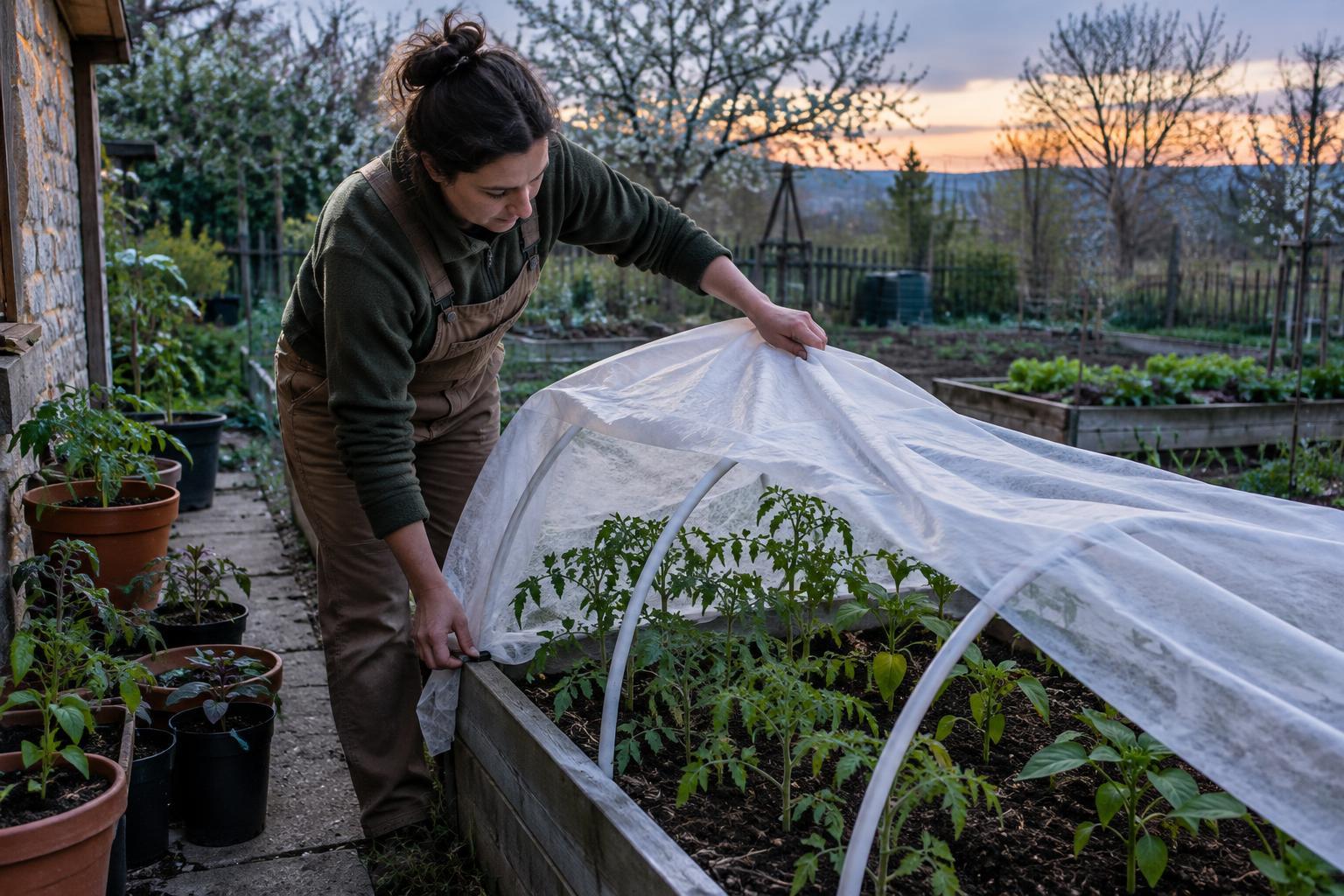
Set out supplies while there is still daylight. Frost cloth, lightweight row cover, old bedsheets and similar breathable fabrics can work as temporary covers. Keep a few stakes, hoops, clothespins or weights nearby to hold the material in place. Avoid using a heavy blanket directly on small seedlings: its weight can bend stems or press leaves against cold, wet fabric. A simple frame gives delicate plants breathing room.
If the soil is dry, water it earlier in the day so moisture has time to soak in. Moist soil may retain warmth better than very dry soil, but watering is not a substitute for covering tender plants. Avoid soaking foliage just before nightfall. Containers are often the easiest plants to protect: move them into a garage, shed or other sheltered place that will not become too cold. If moving them indoors, keep them away from heaters and return them gradually to outdoor light.
Cover plants with care
Place covers before the garden cools for the night, rather than waiting until frost is visible. Drape fabric over a support where possible and extend it all the way to the ground. Secure the edges with stones, boards or soil so wind cannot lift them and warmer air near the soil is less likely to escape. In a shared garden, mark low covers or paths clearly so other gardeners do not trip over them or pull them aside by mistake.
Plastic sheeting can be useful as an outer layer over a sturdy frame, but keep it from touching leaves; foliage in contact with plastic may be damaged by cold. Do not seal a cover so tightly that it becomes difficult to ventilate the next day. Skip candles, open flames and improvised heaters in garden beds. They add fire risk and are unnecessary for a straightforward frost plan. A well-secured cover and sensible timing are the more practical tools for most small plots.
Uncover and assess in the morning
Once temperatures have risen above freezing, open or remove covers so plants receive light and do not overheat. Row cover designed for garden use can sometimes remain in place longer, but check beneath it on sunny days. Shake off moisture before folding fabric for storage, and let wet materials dry fully to discourage mildew.
Frost damage may show up as limp, darkened or translucent leaves. Resist the urge to prune everything immediately. Give the plant time to reveal which stems are still firm and growing; damaged leaves can then be removed without cutting away healthy tissue. Keep the soil evenly moist as the plant recovers, but do not try to force new growth with extra fertilizer. Severely damaged warm-season plants may need replacing, especially if their growing points have been lost.
Make the next cold night easier
Late frosts are less disruptive when protection is part of the spring routine. Harden off indoor-grown seedlings by introducing them to outdoor conditions gradually before planting them in the ground. When practical, wait to set out the most cold-sensitive crops until nights are more reliably mild. Keep covers labeled and stored where gardeners can find them quickly.
In a community garden, agree on who will check forecasts, where shared supplies belong and when covers should be removed. A brief note beside a plot can tell neighbors which plants are covered and why. These small preparations turn an urgent scramble into a manageable task—and help everyone protect tender plants without disturbing one another’s beds.