Why winter is harder on plants in pots
A plant growing in the ground has a large volume of soil around its roots. A container holds much less soil, and cold air can reach it from the sides as well as the top. During mild spells, the pot may thaw; when temperatures drop again, it freezes. Repeated changes can stress roots, loosen plants in the soil and make existing cracks in a pot worse.
The plant and the container need separate attention. A cold-tolerant shrub may survive winter outdoors while its thin or brittle pot does not. A sturdy pot may remain intact even if the plant’s roots are not hardy enough for the conditions. Before making a plan, identify what is planted, whether it normally lives outdoors through winter in your area, and whether its container can tolerate freezing.
Start with drainage and a sheltered location
Check that each pot has open drainage holes and is not sitting in a saucer that collects water. Waterlogged potting mix can freeze into a solid mass, and trapped water can expand inside cracks or porous container walls. Clear fallen leaves from the surface and from beneath pots where they block drainage. If a container needs to be moved, do it before the soil freezes and the pot becomes more difficult to handle.
Place outdoor containers where they are less exposed to wind and sharp changes in temperature, such as near a building or in a sheltered corner. Avoid spots directly beneath a roof edge that sheds heavy water or ice. A south-facing wall may feel protective, but strong winter sun can warm a pot during the day and allow it to freeze again at night. A location with steadier temperatures is often more useful than the warmest-looking spot.
Insulate roots without trapping water
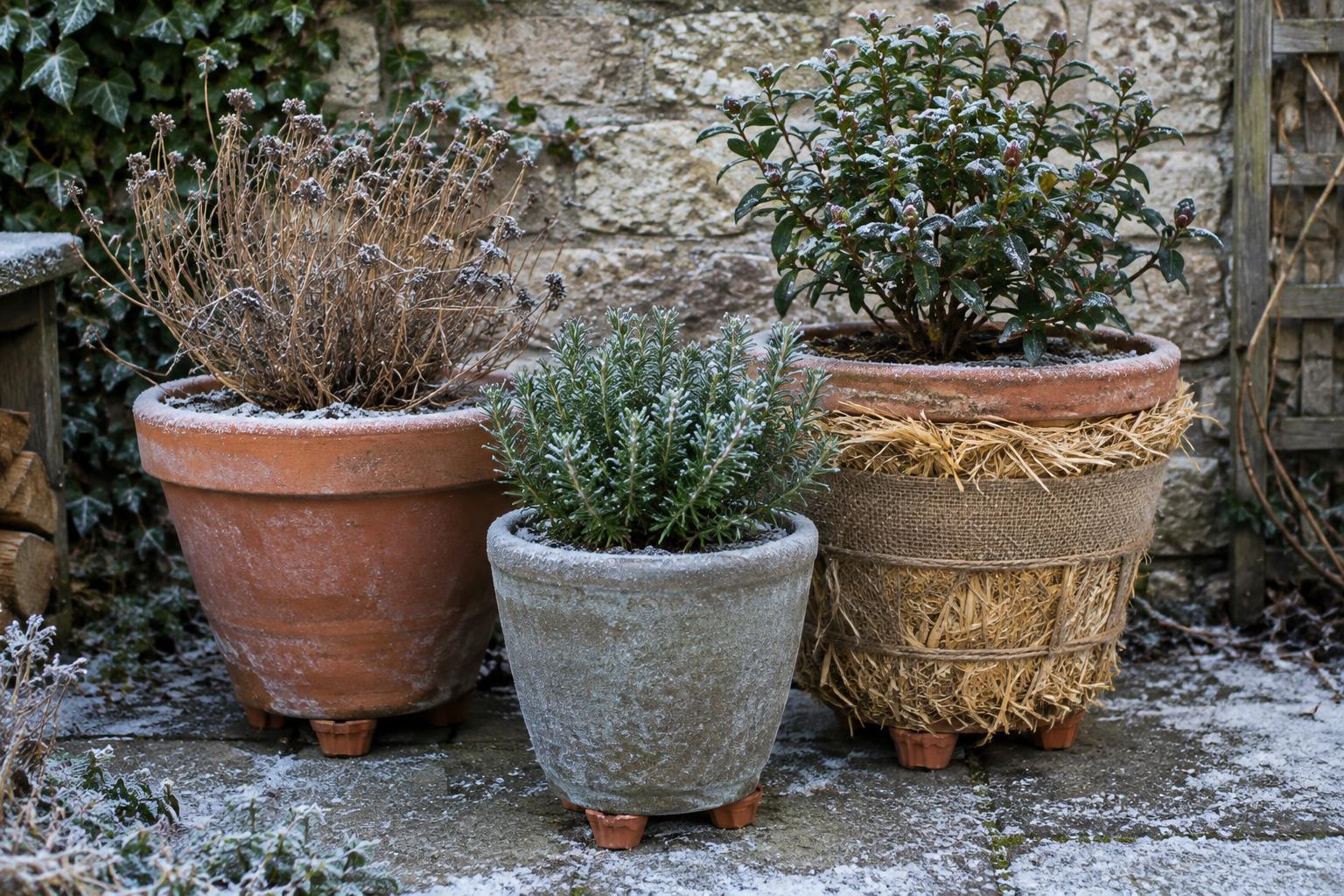
Group pots close together so the outer containers help shield those in the middle. For plants that will remain outside, surround containers with loose leaves, straw or another dry insulating material held in place by a simple enclosure. Focus on the sides of the pots, where roots have the least protection. Keep drainage openings clear and avoid packing material tightly against stems or covering evergreen foliage.
Another option is to set suitable pots into the ground for winter, with their rims near soil level, then lift them out when conditions allow. This gives the roots some of the buffering they would have in a garden bed. Choose a well-drained spot and check that the pot material can withstand burial and freezing. For large containers that cannot be moved, insulating the sides and protecting the planting surface with mulch may be more practical. Leave a little space around the base of each plant.
Match the storage space to the plant
Moving a pot indoors is not automatically safer. Many outdoor perennials and shrubs need a cold dormant period, while a heated room may encourage weak growth and dry the potting mix quickly. An unheated garage, shed or similar space may protect dormant plants from wind and severe temperature swings, but it must suit the plant’s light and temperature needs. Evergreens, in particular, should not be assumed to thrive for months in darkness.
Tender plants require a different plan from hardy ones. Depending on the species, that may mean bringing them into a suitable indoor growing space or keeping only cuttings rather than the whole plant. Label shared-garden containers before moving them, and agree on who will check stored plants. A clear plan prevents pots from being forgotten in a locked shed or watered repeatedly by different volunteers.
Water carefully and inspect in spring
Winter care is not simply a choice between watering and leaving pots alone. Plants use less water when growth slows, yet exposed containers can still dry out, especially under cover or during windy weather. Check the potting mix periodically. If it is dry and unfrozen, water modestly during a mild period and let excess water drain. Do not pour water onto frozen soil or leave a pot standing in runoff.
When weather begins to warm, remove insulation gradually and check for heaved plants, blocked drainage and cracked containers. Firm a loosened root ball gently back into place without compacting the soil heavily. Some plants are slow to show new growth, so avoid declaring them lost after the first warm day. Empty damaged pots safely, clean up broken pieces and note which placements worked. Those observations can make next winter’s container-care plan simpler for everyone sharing the garden.