Why the first spring visits matter
A shared garden often draws people back as soon as the weather begins to soften. It is tempting to clear every bed and start planting at once, but damp spring soil is easy to compress underfoot. Compacted soil has fewer open spaces for air and water to move through, and roots may have a harder time spreading. The effects can last well beyond the day the work was done.
The simplest protection is to treat growing space and walking space as two different things. Before a group workday, identify where people can stand, carry supplies and reach each bed. If a gardener cannot tend the center without stepping into the soil, consider a narrower bed or a designated access point. An agreed layout prevents accidental shortcuts when several people are working at the same time.
Check the soil before working it
A bed can look dry on top while remaining wet below. Take a small handful of soil from several inches down and squeeze it. If it stays in a sticky lump, smears on your fingers or forms a dense ribbon when pressed, give the bed more time. Soil that breaks apart readily when nudged is generally easier to work without creating hard clods. Different soils behave differently, so use the test as a guide rather than a fixed rule.
If the bed is not ready, there is still useful spring work to do. Repair path edges, clean tools, label planting areas, sort seeds and plan crop spacing. Remove litter from the surface without digging into wet ground. A short delay can be more helpful than trying to improve a saturated bed with a fork or spade.
Make paths obvious and comfortable
Mark paths before hauling compost or setting out transplants. Established paths may need a fresh layer of wood chips or another suitable surface material to make them easy to recognize. Keep that material out of the planting beds. Where paths become muddy, address the walking surface rather than moving foot traffic onto the growing soil. A board can help spread weight during brief access to an awkward spot, but it is not a reason to work a wet bed.
Think through how a group will move on a busy day. Leave room to carry a watering can or wheelbarrow without brushing young plants. Place compost and tools where people can collect them from a path. Clear signs or a quick orientation can help new volunteers understand which areas are beds, especially before anything has sprouted.
Prepare beds with a light touch
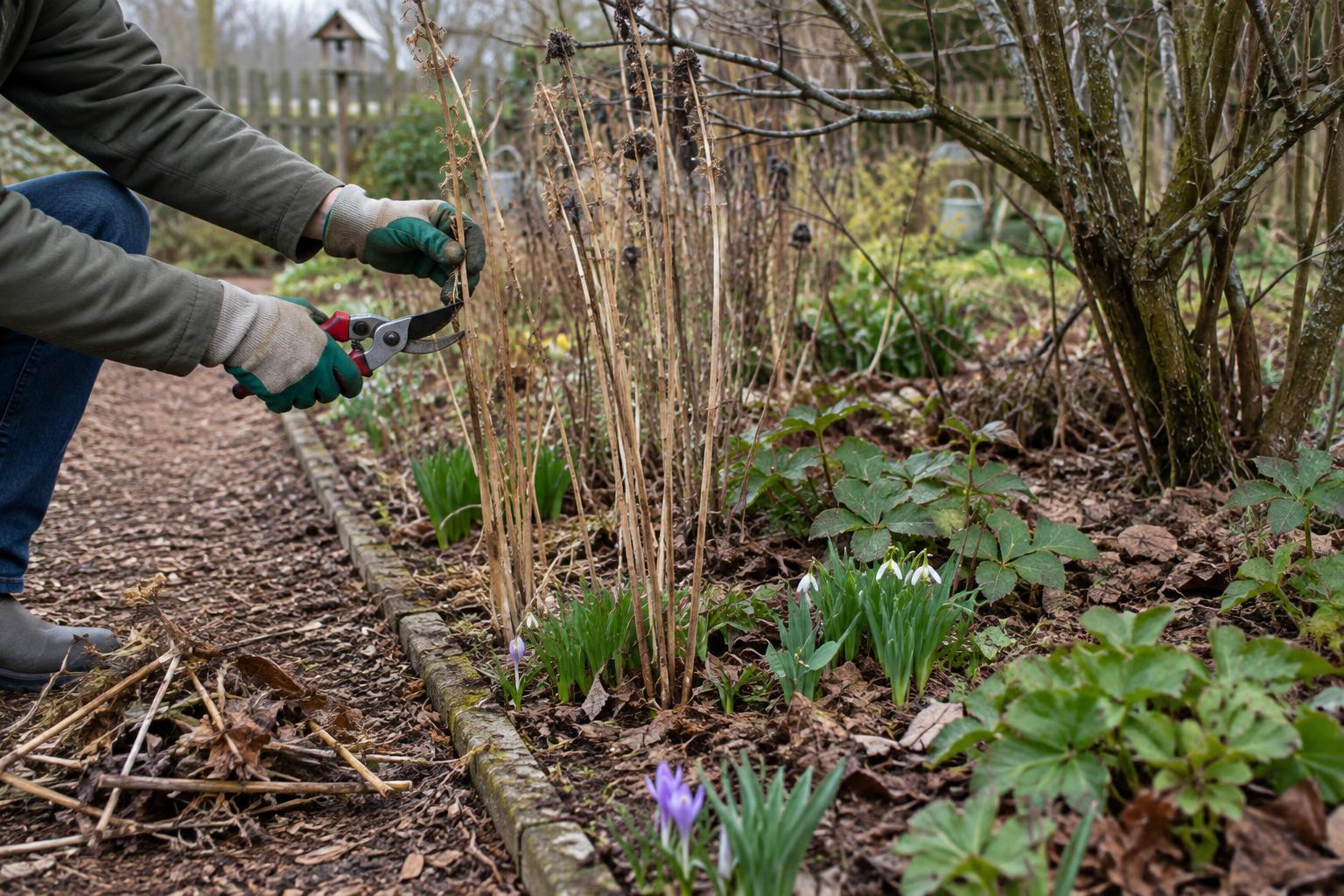
Once soil is workable, remove weeds before they establish deep roots. Pull or cut them from the path side of the bed, taking care not to press down on the planting area. Move aside any remaining stems from last season and decide which healthy material can be composted under your garden’s usual practices. If the bed has a cover crop, choose a way to cut it back that fits the time available before planting; its remaining roots can be left in place where practical.
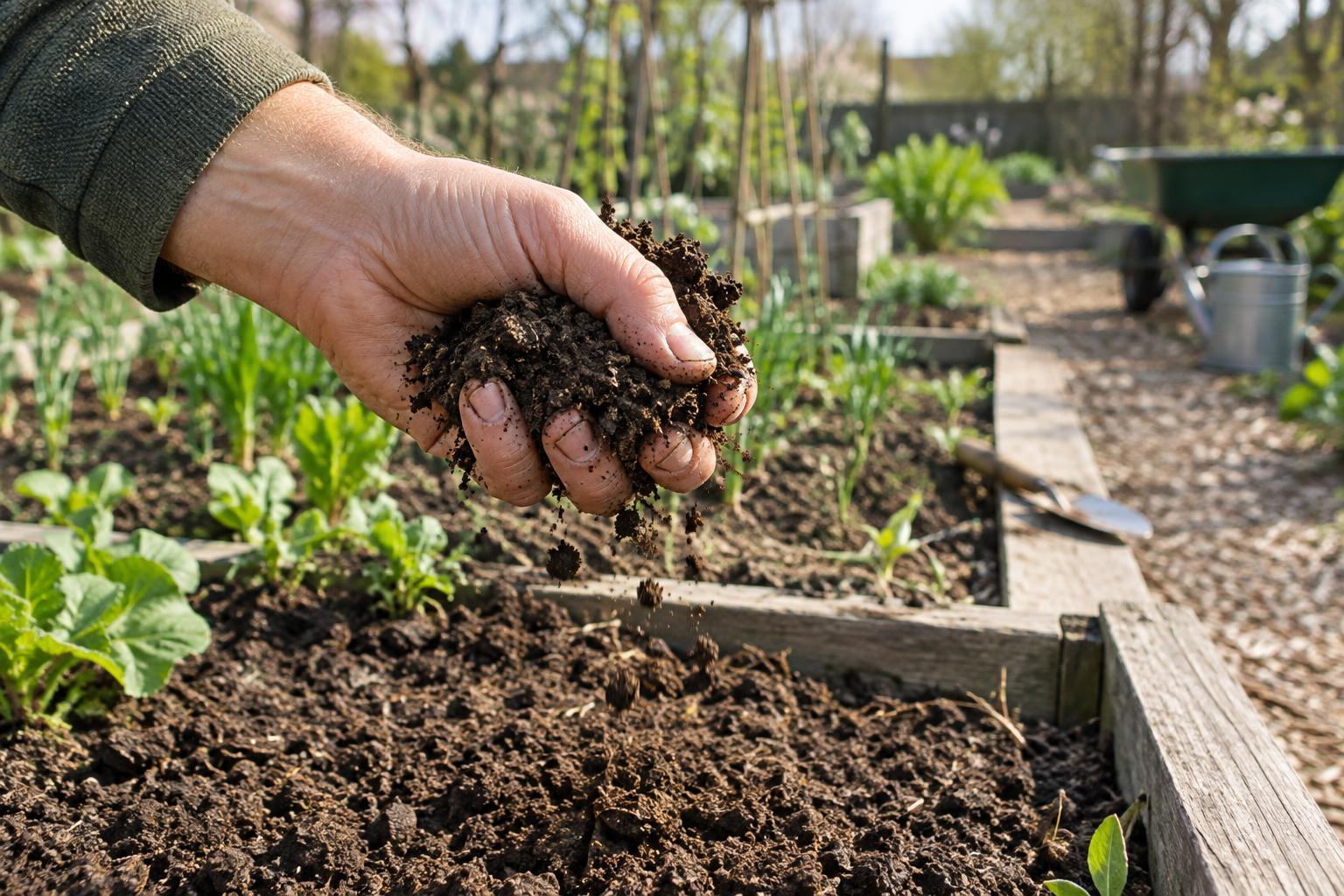
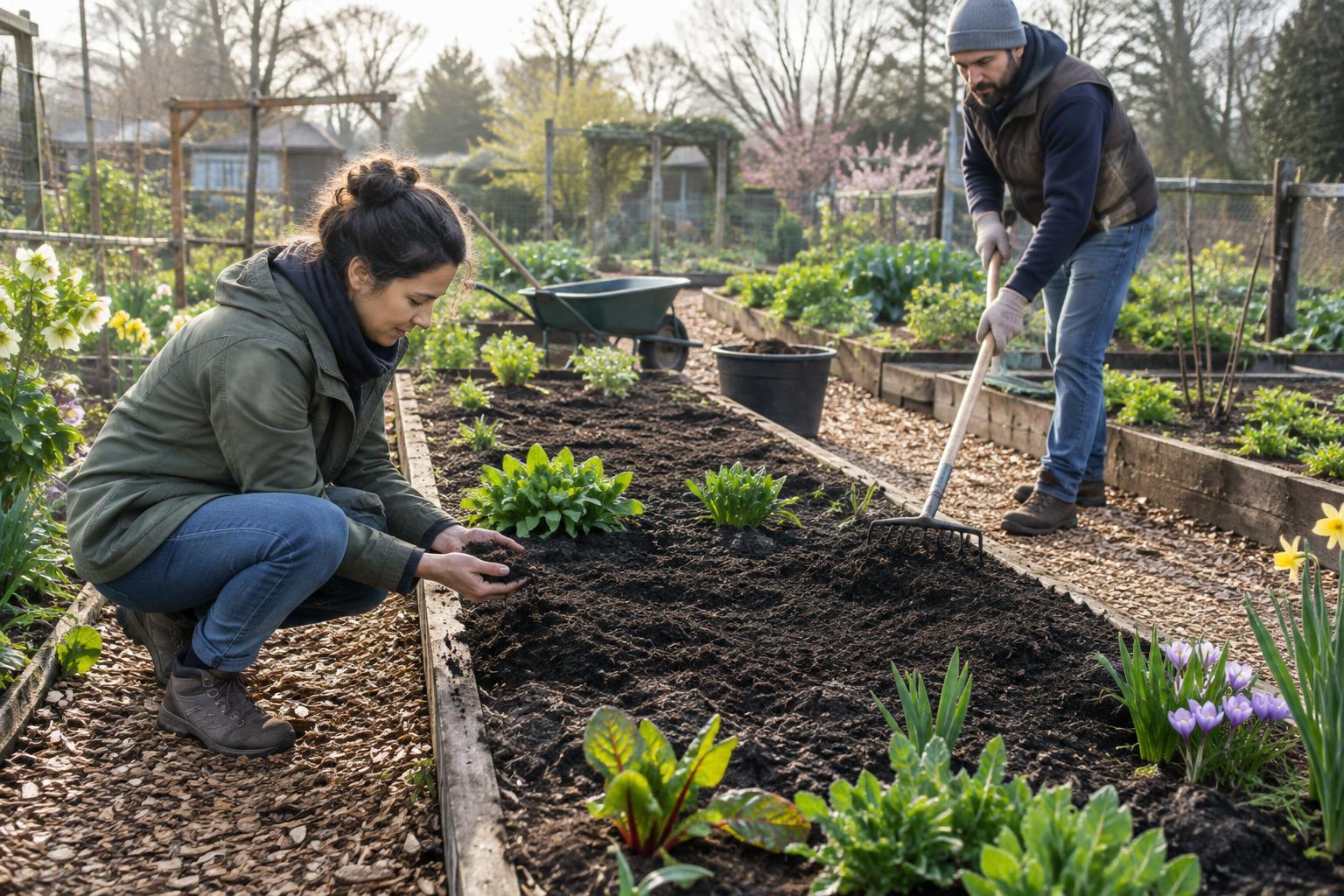
Spread finished compost over the surface if the bed needs organic matter, then rake it level. Deep turning is not necessary for every spring bed, and repeated digging can disrupt soil structure. If a spot is visibly crusted or difficult to plant, loosen only what is needed with an appropriate hand tool when the soil is ready. Leave the surface reasonably even so seeds have consistent contact with the soil and water does not collect in avoidable hollows.
Keep the plan working after planting
Compaction prevention is an ongoing habit, not a one-day task. Agree on a simple rule that feet, buckets and wheelbarrows stay on paths. Put watering points and shared supplies within easy reach so gardeners do not have to cross a bed to use them. After planting, a suitable mulch can help protect bare soil from heavy rain and reduce the need to walk near plants for frequent weeding. Keep mulch clear of emerging seedlings until they are easy to see.
Take note of places where the plan proves inconvenient. A trampled corner may signal that a path should change, while a bed that no one can reach comfortably may need reshaping at the next opportunity. Shared beds stay healthier when the layout fits the people tending them. By checking moisture, making access clear and doing only the soil work that is needed, a group can prepare for planting without undoing the structure it wants to preserve.