Why winter soil needs a cover
After the last harvest, it can be tempting to pull everything out and leave a bed tidy and bare. But uncovered soil is exposed to rain, wind, and repeated freezing and thawing. A layer of plant material can soften the impact of weather, help limit erosion, and make the bed less inviting to weeds. It also gives gardeners a clear starting point when work resumes in spring.
The right cover depends on the bed. A plot that will hold overwintering garlic has different needs from one that will sit unused until late spring. Before choosing mulch or a cover crop, note what is still growing, how wet the soil tends to stay, and when you hope to plant again. The goal is not to seal the ground under a thick blanket. It is to protect the surface while allowing water and air to move through it.
Clear problems, but keep useful material
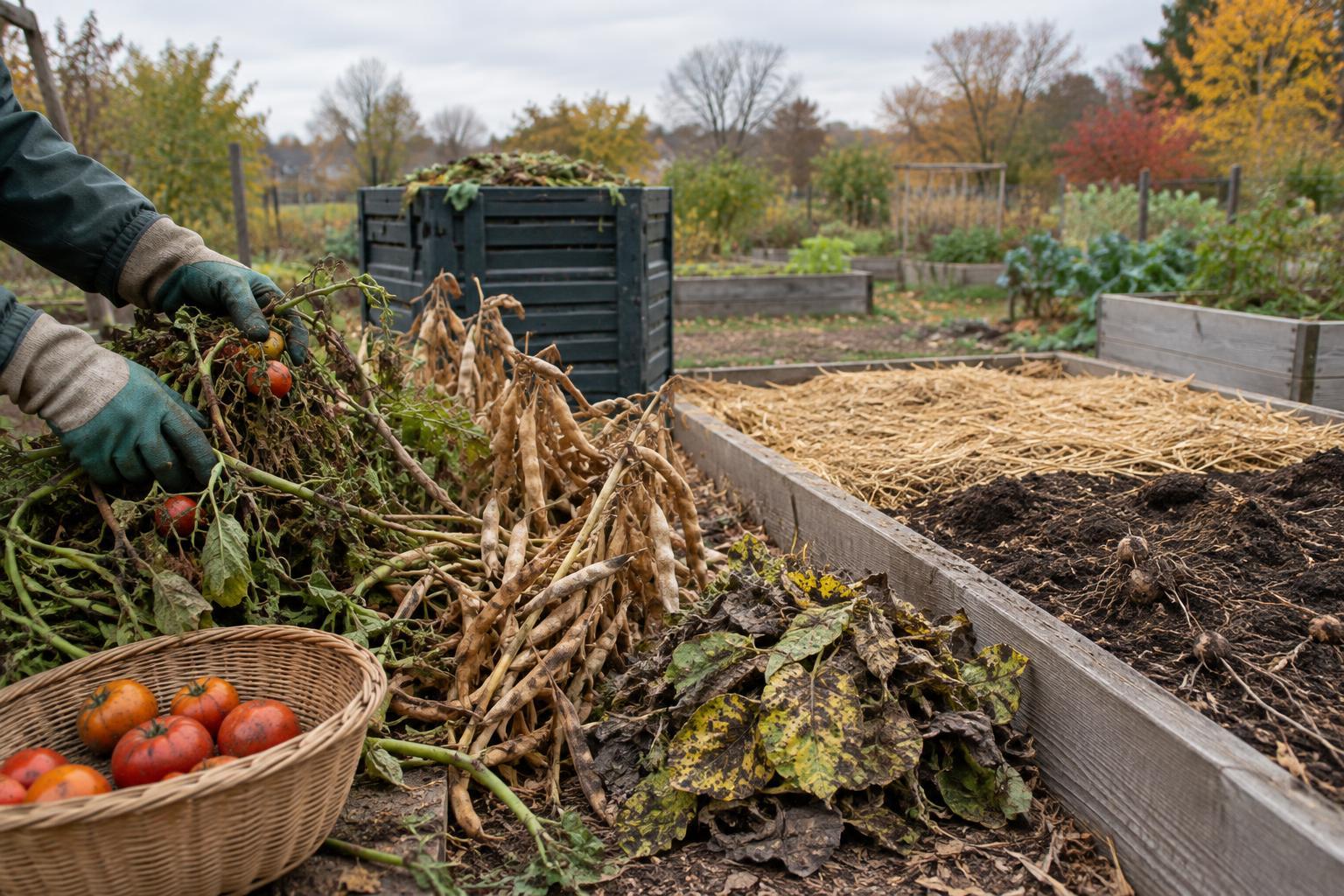
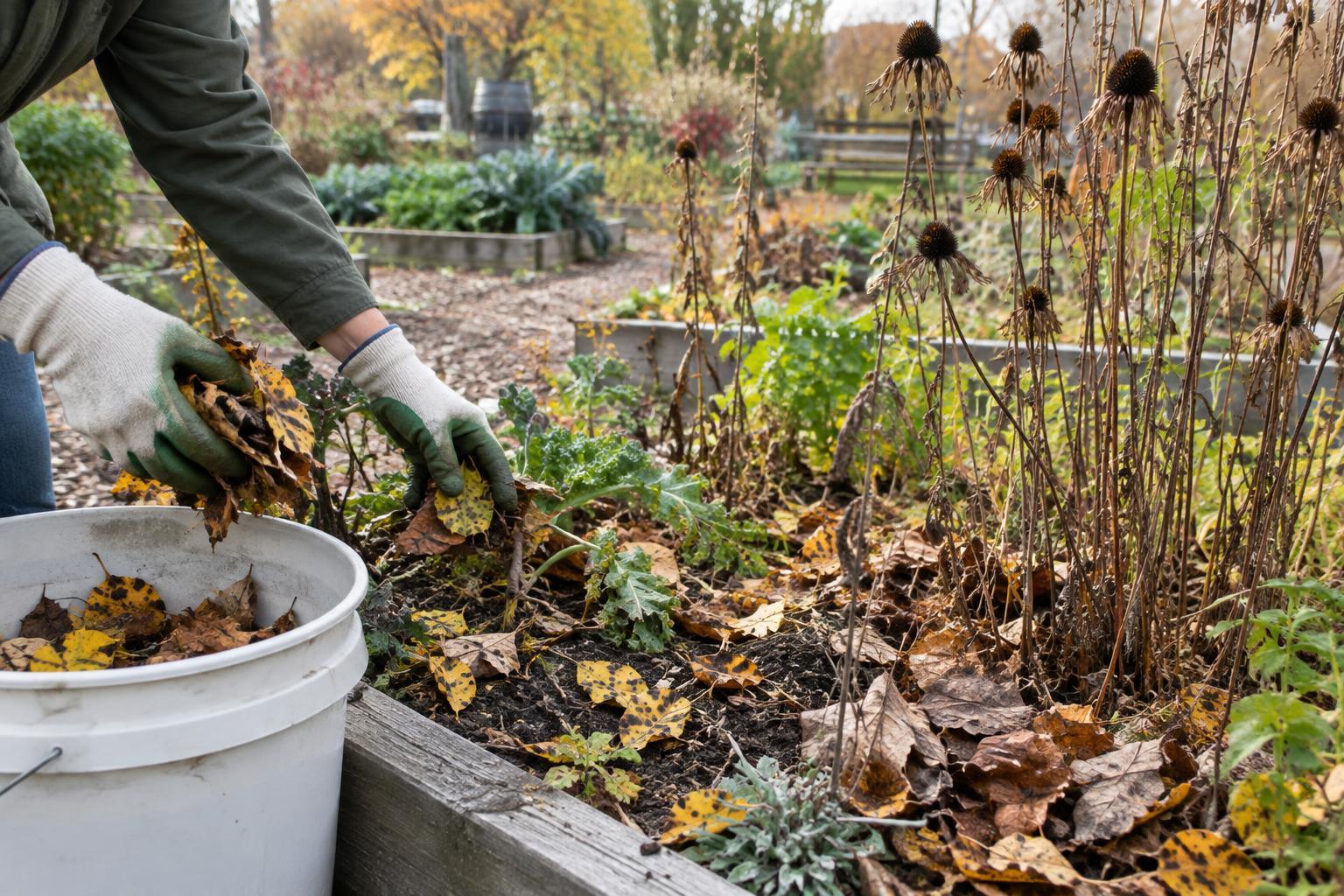
Begin with a selective cleanup. Pull weeds before they set seed, and remove plants with obvious signs of disease from the bed rather than leaving them as winter cover. Follow the disposal rules for your garden site; some shared compost systems do not accept diseased plants or mature weed seeds. Take out stakes, broken ties, and irrigation parts that could be damaged or lost over winter.
Healthy annual plants can often be cut at soil level instead of pulled. Leaving the roots in place avoids disturbing the bed and lets them break down gradually. Chop the aboveground growth if you plan to compost it or use it as a light surface layer, provided it is free of seeds and apparent disease. Sturdy stems that would be slow to break down may be easier to remove.
If the soil is soggy, wait for a drier day to work in the bed. Walking on or digging wet soil can compact it. Winter preparation is usually a good time to do less digging, not more.
Choose a protective cover
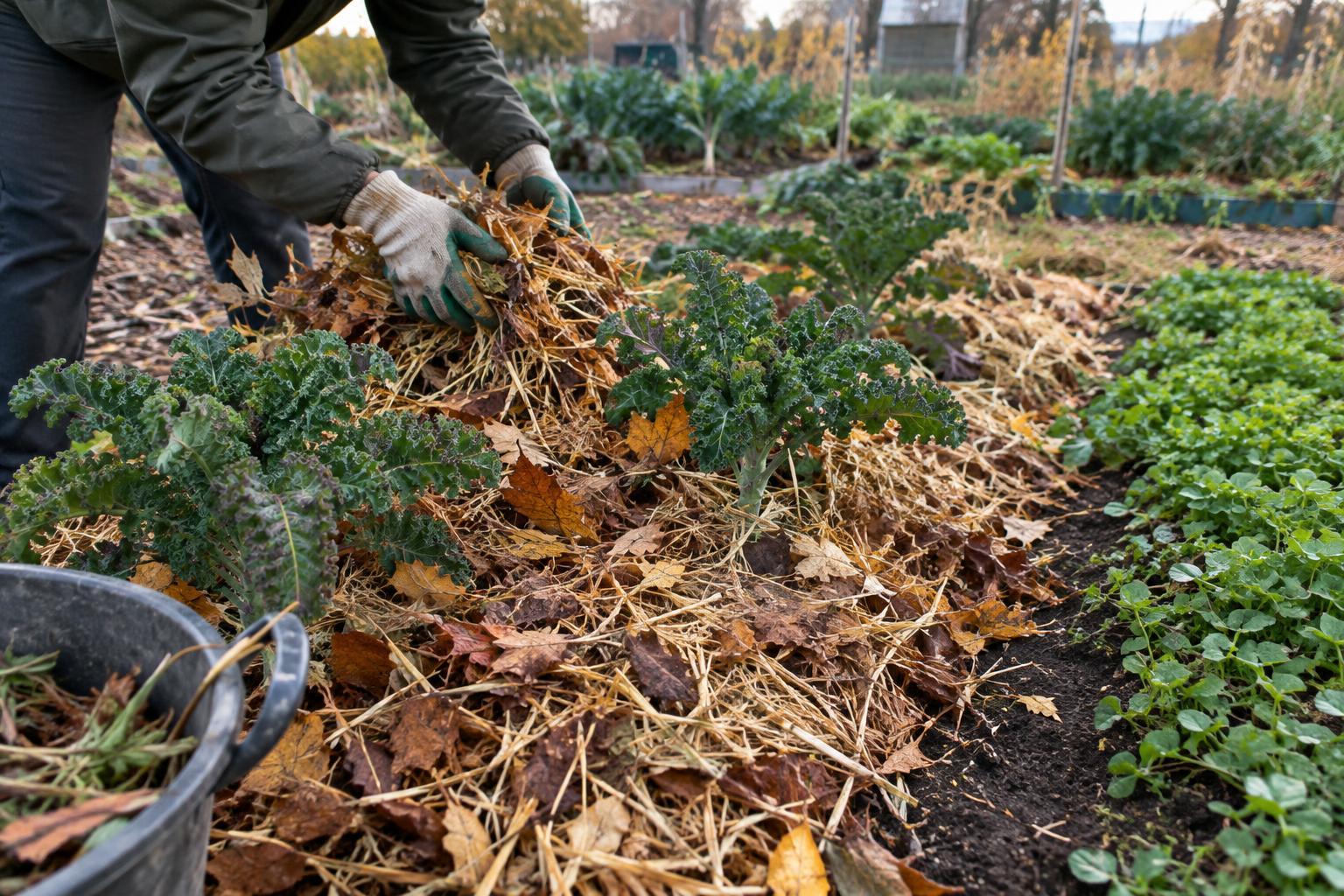
Mulch is a flexible choice when planting time is close or uncertain. Spread clean, seed-free straw, shredded leaves, or another locally suitable organic material over exposed soil. Aim for a loose layer that covers the surface without being packed down. Keep mulch back from the crowns of perennials and the stems of plants that will remain in the bed, especially where winters are damp.
A cover crop is another option if there is enough growing time before cold weather slows it down. Species differ in when they can be sown, whether they survive winter, and how much work they take to clear in spring. Choose one that fits your climate and planting schedule, then follow its seed instructions. In a shared garden, confirm that a cover crop is permitted and that the next gardener knows when it should be cut or removed.
If neither option is available immediately, healthy fallen leaves can provide temporary cover. Avoid using material that may contain persistent weed seeds or unwanted plants. A cover only helps if it stays on the bed, so check lightweight materials after windy weather.
Work around crops and perennial plants
Beds with living plants need a gentler approach. Remove weeds from around overwintering vegetables, then mulch the open spaces rather than burying the crop. Mark rows of garlic or other dormant plantings so they are not accidentally disturbed during a winter workday. Where hardy greens remain, leave room for harvesting and for any protective cover you may use during cold spells.
For perennial herbs, flowers, or other established plants, identify their crowns before spreading mulch. Some benefit from winter surface protection, while others are more vulnerable when wet material rests against their stems. If you are unsure how a particular plant handles winter moisture, keep its crown clear and cover the surrounding bare soil instead. Paths also deserve attention: leaves or mulch on muddy paths can reduce the temptation to step into planting beds.
Leave a plan for spring
Before closing the bed for the season, note what grew there and what you added. A simple label or garden notebook entry can record mulch type, cover crop, surviving plants, and any weeds or disease you removed. This is especially helpful when several people use the same space.
In spring, check the soil before moving the cover. If it is still wet, avoid turning it just to meet a calendar date. Pull mulch aside where seeds need direct soil contact, then return it around seedlings once they are established. Cut down or otherwise manage a cover crop with enough time for its residue to settle before planting, according to the crop chosen. A protected bed should make spring preparation easier, not create an urgent cleanup job.