Start with the space and the people using it
A cut-flower bed works best when harvesting is part of the plan, not an afterthought. Choose a spot that receives plenty of direct sun, has soil that drains reasonably well, and is close enough to a water source for regular care. If you are converting lawn or a weedy patch, clear existing growth before planting and add compost where it will improve the soil. Avoid working wet soil, which can compact underfoot.
Make the bed narrow enough to reach its center without stepping among the plants. In a shared garden, leave clear paths for carrying a bucket and moving around other gardeners. Decide early whether the flowers are for anyone to pick, for a designated project, or for scheduled harvests. A simple sign or shared plan can prevent confusion once the first blooms appear.
Choose flowers for a sequence of bouquets
Start with a short list rather than trying every appealing variety at once. Zinnias, cosmos, and branching sunflowers are useful warm-season annuals for colorful stems. Snapdragons and sweet peas can offer earlier flowers where growing conditions suit them; sweet peas need support and generally prefer cooler weather. For perennials, consider coneflowers or yarrow if they are suited to your site. Check mature height and bloom period before buying, since a plant that looks compact in a nursery pot may spread widely by midsummer.
Include more than showy focal flowers. Small blooms and airy stems help fill out arrangements, while ornamental grasses or suitable foliage plants add shape. Select plants you will enjoy in the bed as well as in a vase: not every flower opens at once, and some stems will remain uncut. Where space is tight, favor varieties that produce multiple harvestable stems over those grown for one large bloom.
A simple succession plan can extend the harvest. Sow a small group of fast-growing annuals, then sow another group later if your growing season allows. Match sowing times to the seed packet and local frost risk rather than using one schedule for every flower. Leave room for replacements; empty patches are easier to replant when paths and labels are already in place.
Space for healthy plants and easy cutting
Use the spacing on the seed packet or plant label as your starting point. Mature width matters more than the size of a seedling at planting time. Crowding may produce a quick-looking display, but it can make watering, weeding, and cutting difficult. Air movement around leaves also helps them dry after rain or irrigation, which may reduce some disease problems.
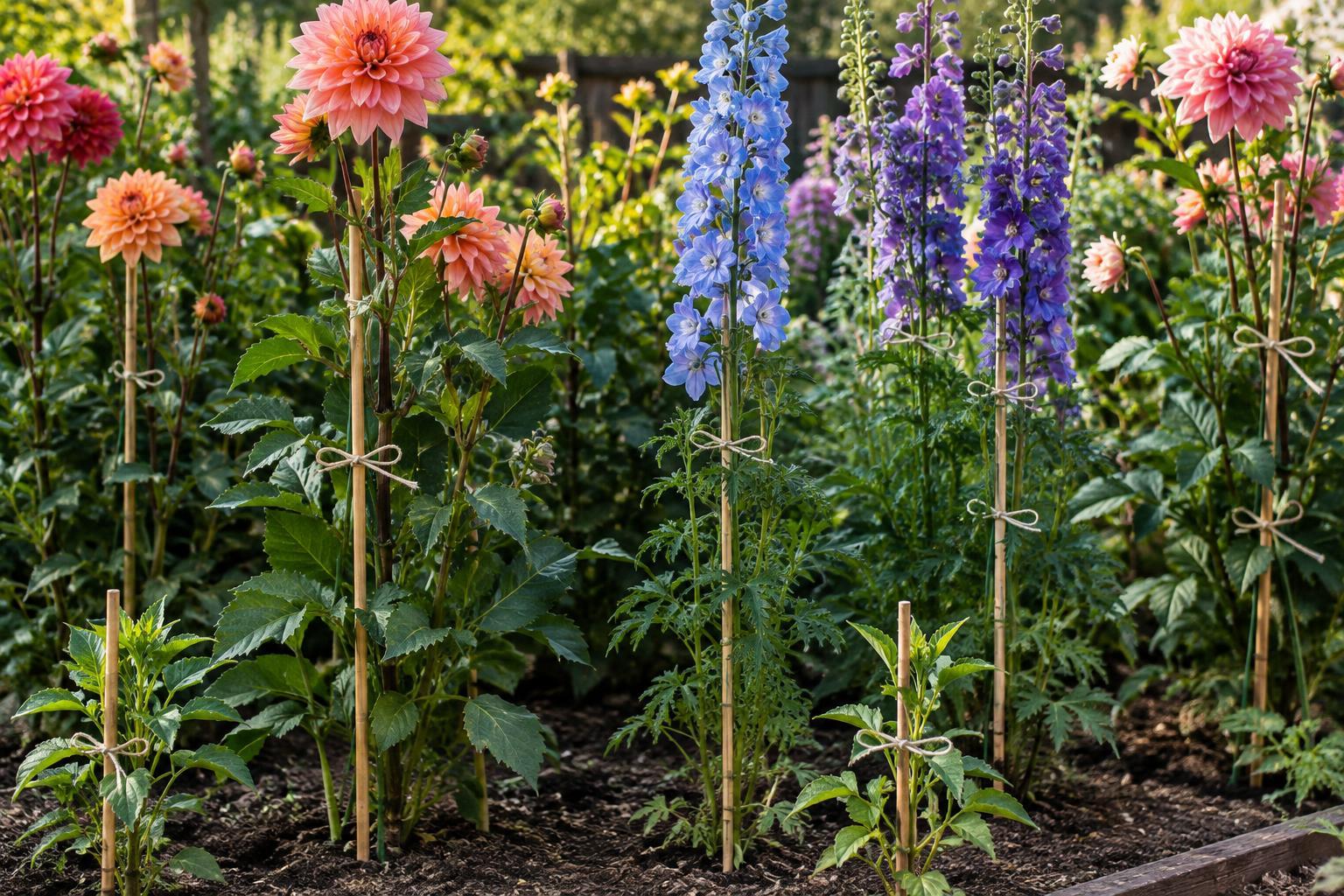
Arrange taller flowers where they will not shade shorter ones, and put plants needing stakes or netting where you can maintain the support. Branching varieties need room for side shoots; a single-stem sunflower planting may be managed differently from a branching one. If you are unsure how a variety will perform, plant a modest trial group and note its actual size before expanding it next season.
Mulch exposed soil after seedlings are established to help limit weeds and slow moisture loss. Water the root zone thoroughly when needed rather than giving leaves frequent light sprays. Keep an eye on plants along path edges: stems that lean into a walkway may need support, not a narrower path.
Harvest with the next flush in mind
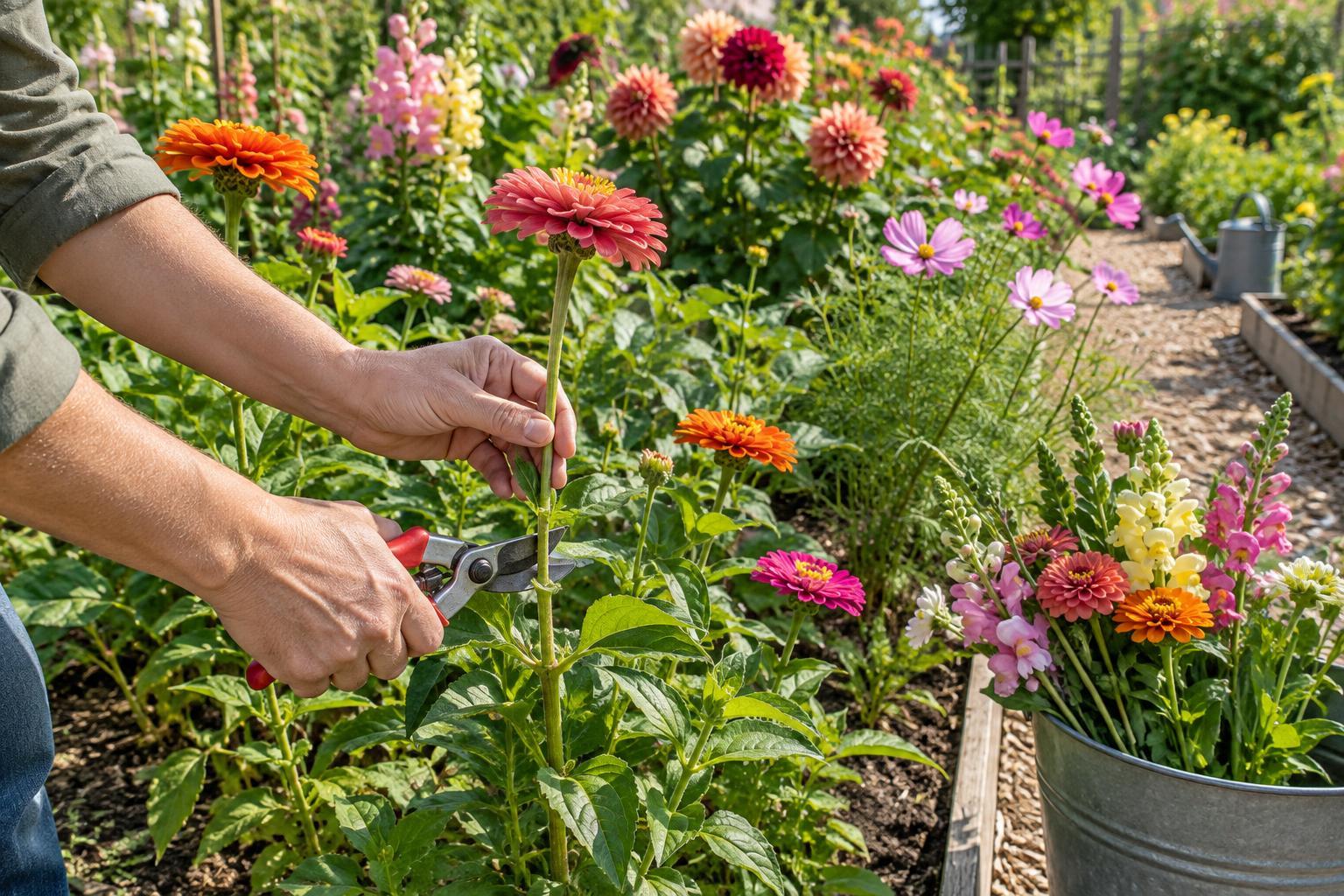
Cut during a cooler part of the day when stems are well hydrated. Bring a clean bucket of water and sharp, clean snips so stems can go into water promptly. The best stage to cut varies by flower: some travel well when buds are just beginning to open, while others should be more fully open. Try a few stems first and observe how they develop in a vase.
For flowers that branch and rebloom, cut above a healthy set of leaves or a side shoot, leaving enough foliage for the plant to keep growing. Regular harvesting and removal of spent blooms can encourage further flowering in many annuals, although results vary by species. Avoid stripping a young plant of every stem at once. Cut only flowers you can use, and check for insects before bringing bouquets indoors.
Remove leaves that would sit below the waterline, refresh vase water, and clean buckets between uses. Compost healthy trimmings; discard diseased material according to your garden’s usual practices. In a shared bed, record which varieties held up well, which needed support, and which were most popular. Those notes make next year’s flower plan easier than relying on memory.