Start with the season
Peas and common garden beans may look like close companions in a seed catalog, but they prefer different conditions. Peas are a cool-season crop. Gardeners usually sow them in spring when the soil is workable, or in autumn where the growing season allows it. They tend to produce best before sustained heat arrives. Common garden beans, including many green, shelling, and dry beans, are warm-season plants. Sow them after frost danger has passed and the soil has warmed; cold, wet ground can cause bean seed to rot.
That contrast makes the two crops useful for planning an edible bed. A pea planting may finish as warmer weather begins, leaving room for a later crop. Beans can then occupy a separate bed or, if space and timing permit, follow the peas. Check the expected maturity of your chosen varieties before planning a succession: a bean crop still needs enough warm growing time to reach the harvest stage you want.
Choose a growth habit before choosing a support
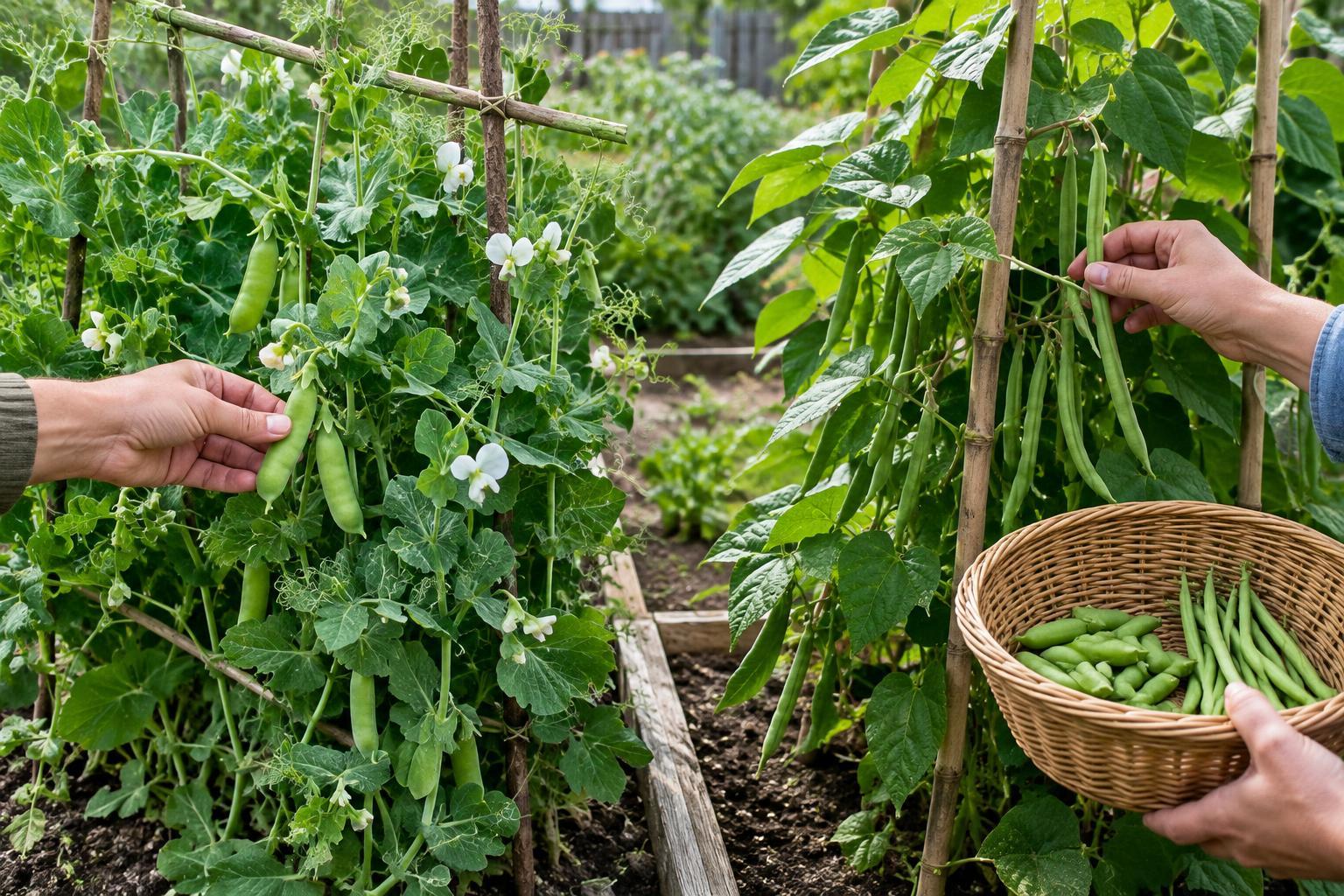
Peas come in compact and climbing forms. Even shorter varieties often benefit from twiggy branches, netting, or a low trellis that keeps stems off paths and makes pods easier to find. Tall climbing peas need a sturdier structure. Put supports in place at sowing time so later installation does not disturb the roots.
Beans are commonly sold as bush or pole varieties. Bush beans grow without a tall trellis, though a little space around each plant helps with airflow and picking. Pole beans climb and need a secure support installed before their vines begin to twine. A pole-bean structure may need to carry more mature plant growth than a light pea net, so check that it is firmly anchored. In a community plot, place taller supports where they will not shade a neighbor’s bed or block a shared walkway.
Give both crops a sound start
Choose a sunny site with soil that drains well. Compost can help improve soil texture, but avoid assuming that more fertilizer will mean more pods. Peas and beans are legumes that can form partnerships with soil bacteria to obtain nitrogen; heavy nitrogen feeding may encourage leafy growth at the expense of a useful harvest. Soil conditions vary, so observe plant growth and follow any reliable soil-test guidance available to your garden rather than fertilizing by habit.
Sow seeds according to the spacing and depth on the packet, then water gently to settle the soil. Keep it reasonably moist while seeds germinate and plants establish, without leaving the bed soggy. Once plants are growing, steady moisture is especially helpful during flowering and pod development. Water the soil rather than repeatedly wetting foliage when practical, and leave enough room between plants to make harvesting possible without crushing vines.
Pick according to what you want to eat
Pea harvest depends on the type. Pick snow peas while their pods are still flat and tender. Harvest snap peas when pods have filled out but remain crisp. For shelling peas, wait until the peas inside are plump, then remove them from the pod. Check plants frequently as pods develop: peas left on the vine can become starchy or tough. Hold the stem with one hand while picking with the other to avoid pulling a vine off its support.
Beans also have distinct harvest stages. Pick green or snap beans while the pods are tender and before the seeds inside become too large for the texture you prefer. Shelling beans are harvested when their seeds have filled out but are still fresh; remove the seeds from the pods before cooking. Dry beans stay on the plant longer, until the pods and seeds are mature and dry enough for storage. Damp weather can complicate drying, so do not treat dry beans as simply overgrown green beans.
Regular picking is useful for peas and green beans alike: it helps you catch tender pods and may encourage continued production while conditions remain favorable. Dry beans are different because the aim is mature seed, not a steady supply of young pods.
Make the harvest easy to share
In a shared garden, label each row with the crop, variety, and intended harvest stage. “Bean” alone may not tell a volunteer whether to pick a tender pod or leave it for dry seed. Agree on who checks the plants and how often during peak production, and show new pickers what a ready pod looks and feels like.
At season’s end, remove spent vines and any visibly diseased plant material according to the garden’s composting practices. Note which supports held up well, when each crop began producing, and whether the harvest matched the space it used. Those simple observations will make next season’s choice between peas, bush beans, and pole beans much easier.