Start with a purpose and a realistic task list
A community garden workday goes more smoothly when everyone knows what the group hopes to accomplish. Walk through the space beforehand and note work that would benefit from several people at once, such as refreshing paths, spreading finished compost, preparing shared beds, or tidying common areas. Separate that work from tasks that need special knowledge, careful timing, or permission from plot holders. A volunteer day is not the best moment to make unplanned changes to someone else’s growing space.
Choose a small number of priorities rather than trying to finish every garden chore. For each task, identify what “done” looks like, what tools and materials it requires, and whether a beginner can start without close supervision. Break large jobs into pieces: one group can clear a path edge while another adds mulch. Keep a few optional tasks ready in case a project finishes early, but make sure the essential work can be completed with fewer volunteers than expected.
Offer shifts people can understand
An invitation is easier to act on when it states the location, start and end times, planned tasks, and whom to contact with questions. If the workday is long, offer shorter shifts with a brief overlap for handoff. People who cannot commit to the full event may still be able to help for part of it. Ask volunteers to sign up for a shift or role, but leave room for those who prefer to decide what they can do when they arrive.
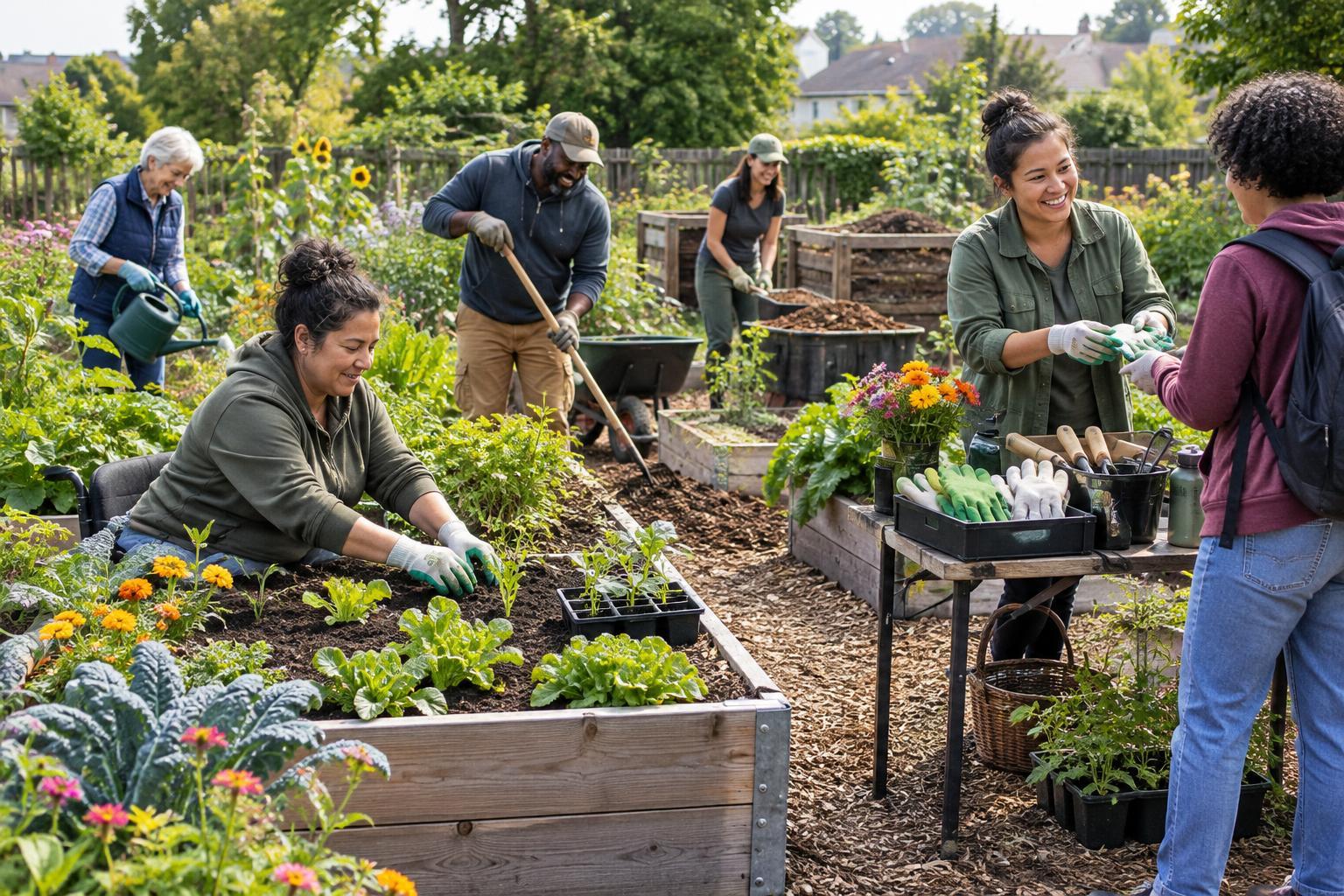
Describe the work honestly. Moving mulch, weeding while kneeling, greeting arrivals, sorting supplies, and taking notes require different kinds of effort. Offer seated or lighter-duty options where practical, and let people switch tasks without having to explain why. If children may attend, clarify what supervision is expected and which activities are suitable for them. A welcoming sign-up process helps people judge whether the day will work for them without making assumptions about their abilities.
Prepare supplies, roles, and a backup plan
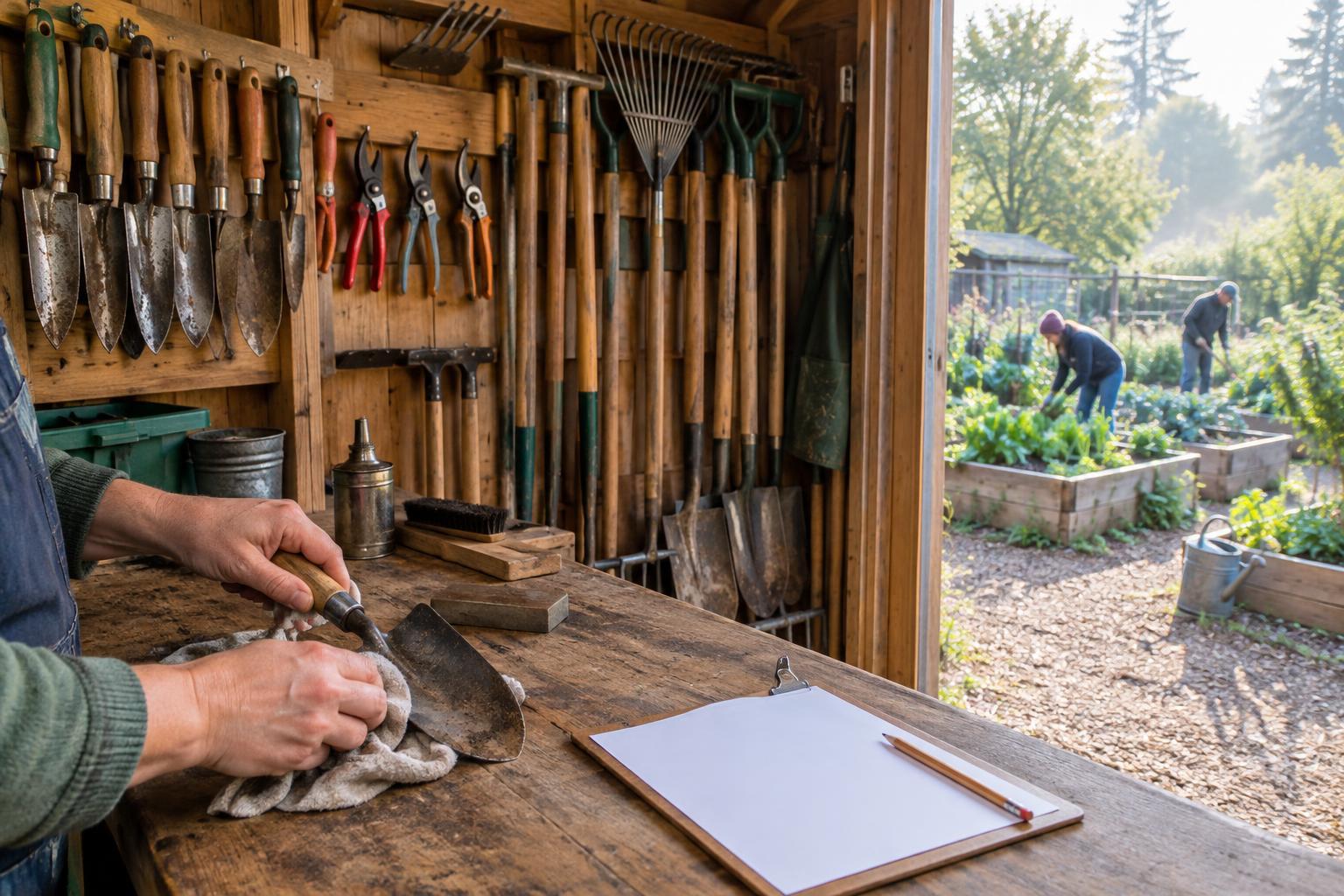
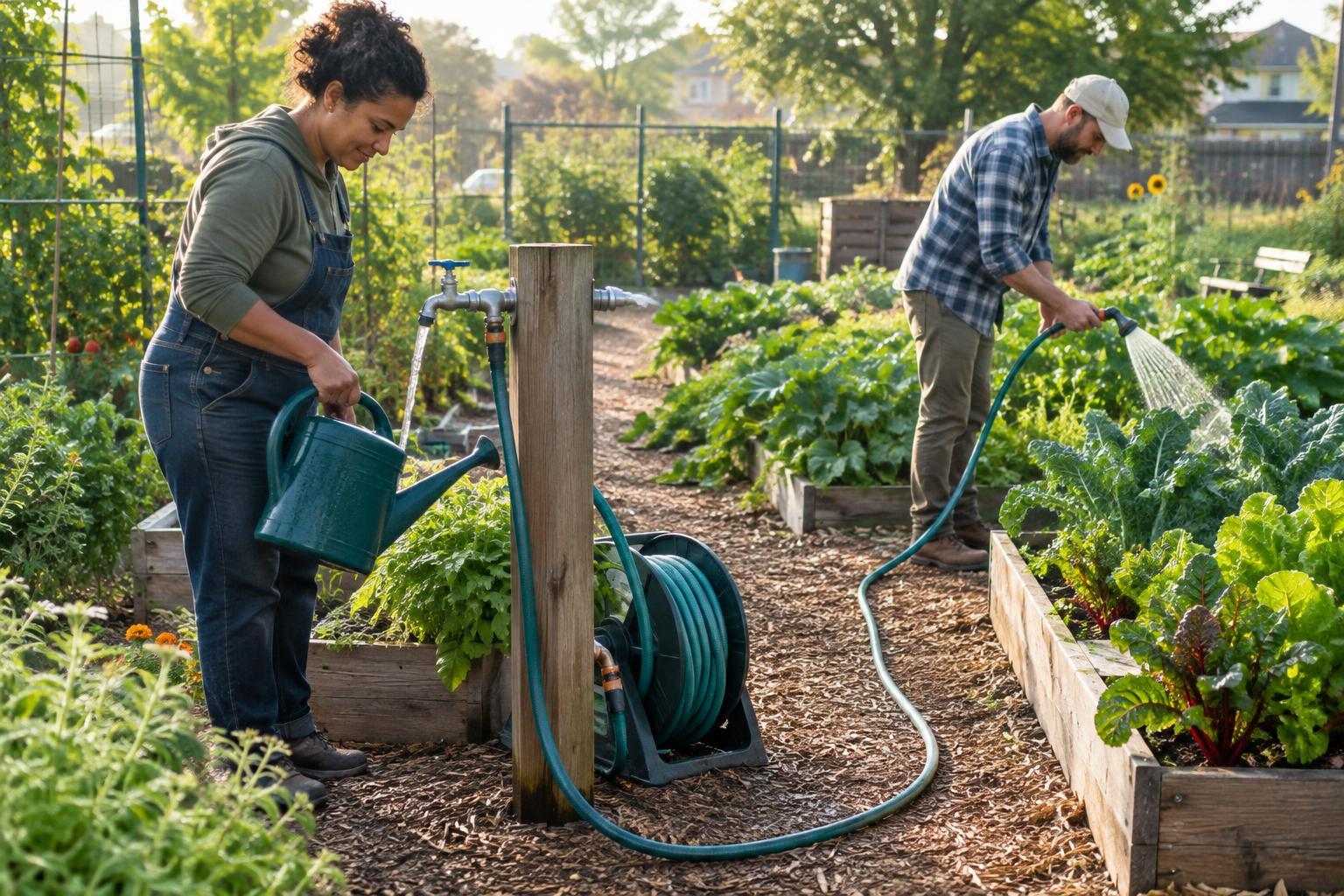
Before the workday, confirm access to water, tools, materials, and any shared storage areas. Set out supplies by task so volunteers spend less time searching. Check that tools are in usable condition and provide a clear place for returning them. Gloves, drinking water, and a spot to take a break can make a physical workday more comfortable, though volunteers may need to bring their own items if the garden cannot provide them.
Assign someone to welcome arrivals and someone to coordinate each major task. Those people do not need to direct every movement; they should explain the goal, show where materials belong, and answer questions. Decide in advance what will happen if weather or ground conditions make the planned work unsuitable. A message explaining how a cancellation or task change will be shared prevents people from making an unnecessary trip or wondering whether the event is still on.
Make the first few minutes count
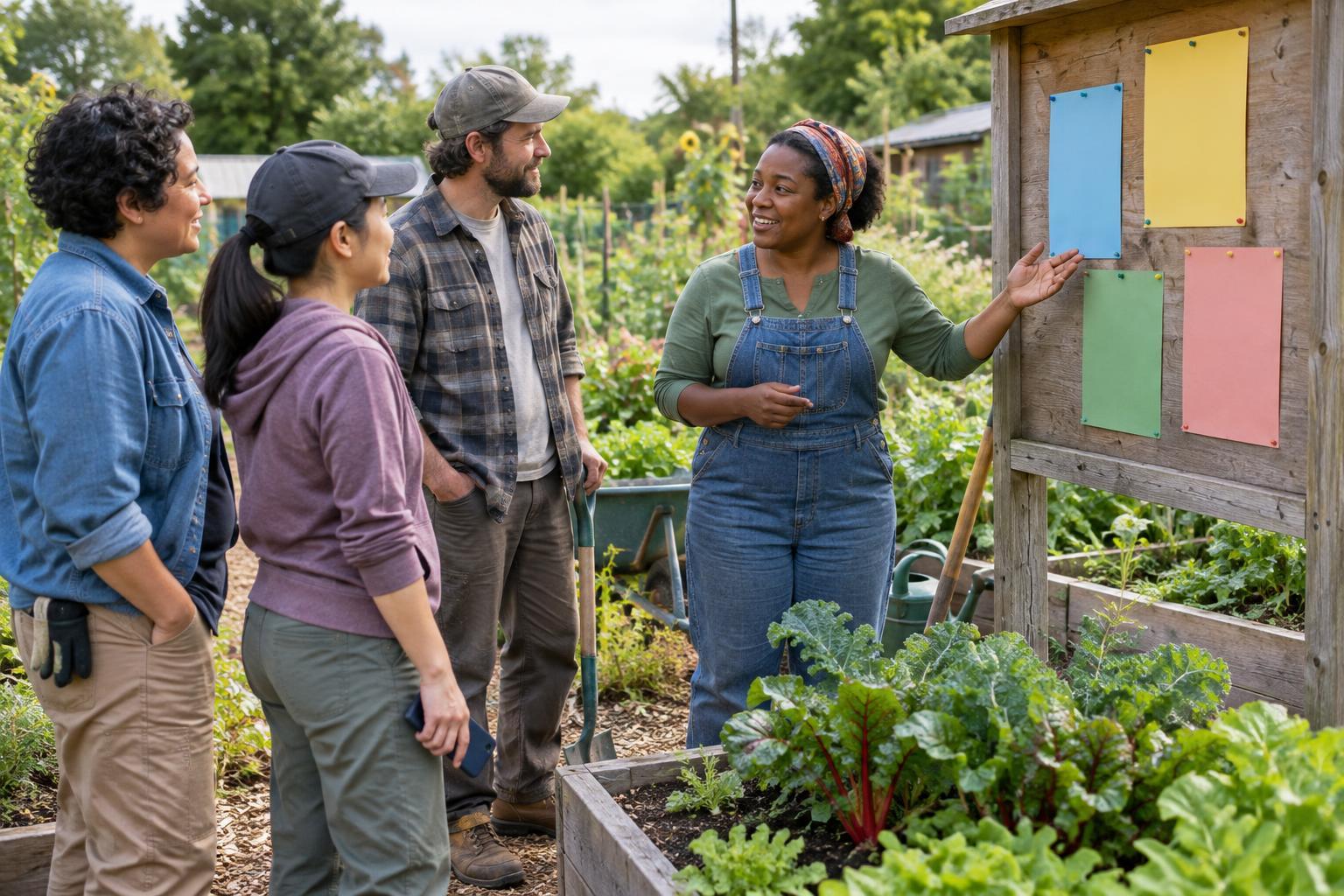
Begin with a short orientation: describe the day’s priorities, point out water and break areas, and explain any site-specific boundaries. Show volunteers where to place weeds, reusable materials, and rubbish rather than assuming those destinations are obvious. If a task involves established plants, identify what should stay before anyone begins clearing. Demonstrating one small section is often more helpful than giving a long set of instructions.
Pair newcomers with someone familiar with the garden when possible, and check in as work progresses. The aim is to help people contribute confidently, not to measure how much each person accomplishes. Keep paths and shared access points clear while materials are being moved, and pause a task if the group discovers a hazard or needs a decision from a plot holder. Leave time near the end of each shift to clean and return tools; that work is part of the workday, not an afterthought.
Close the loop after the workday
At the end, briefly review what was finished and what remains. Record unfinished tasks while details are fresh, including any supplies that ran out or tools that need attention. This gives the next workday a useful starting point and keeps one ambitious afternoon from becoming a source of confusion. If volunteers worked in separate areas, invite each group to share anything the garden should know before regular activity resumes.
Follow up through the same channel used to invite volunteers. Thank people for their time, share a concise account of the work completed, and explain the next step without implying that everyone must sign up again. Ask for practical feedback: Were instructions clear? Were supplies easy to find? Did the shift length work? Small adjustments based on those answers can make future workdays easier to join, more productive, and more enjoyable for the whole garden.