What leaf mold is good for
Leaf mold is the dark, crumbly material left after fallen leaves slowly break down. Unlike a mixed compost pile, it needs no kitchen scraps or regular additions of nitrogen-rich material. The process is usually slow, but the work is simple: gather leaves, keep them damp, and give them a place to sit.
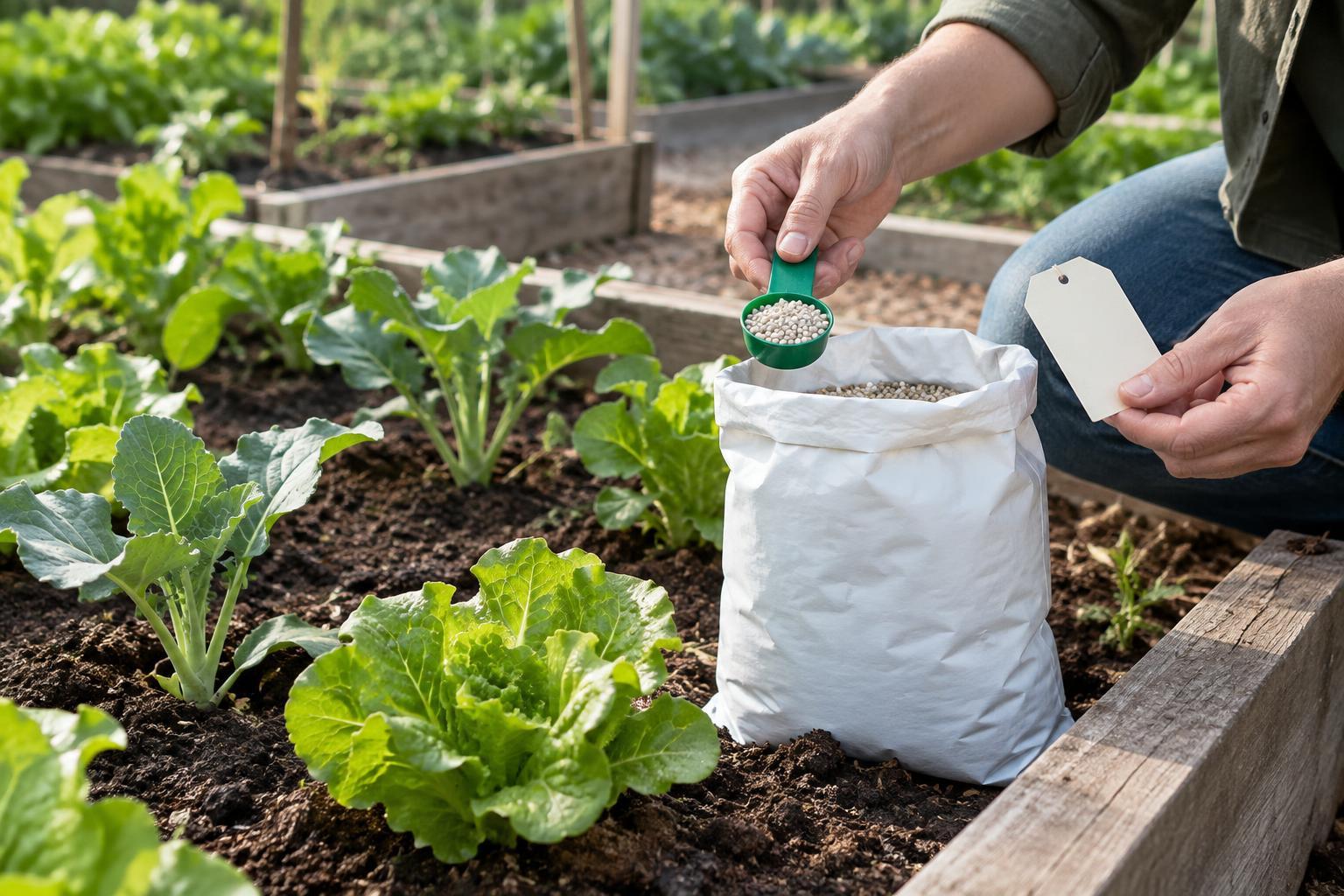
Finished leaf mold helps garden soil hold moisture while maintaining a loose texture. It can also serve as a surface mulch or an ingredient in a homemade potting mix. It is not a substitute for a balanced fertilizer, so think of it primarily as a way to add organic matter. In a community garden, it gives members a use for leaves that might otherwise be hauled away.
Choose leaves and a place to keep them
Collect leaves from areas where you know how the ground is managed. Skip leaves mixed with litter, road debris or materials you cannot identify. It is also sensible to leave some leaves in place under shrubs and in suitable garden beds, where they can protect soil and provide habitat. Gather the surplus from paths, lawns and other areas that need clearing.
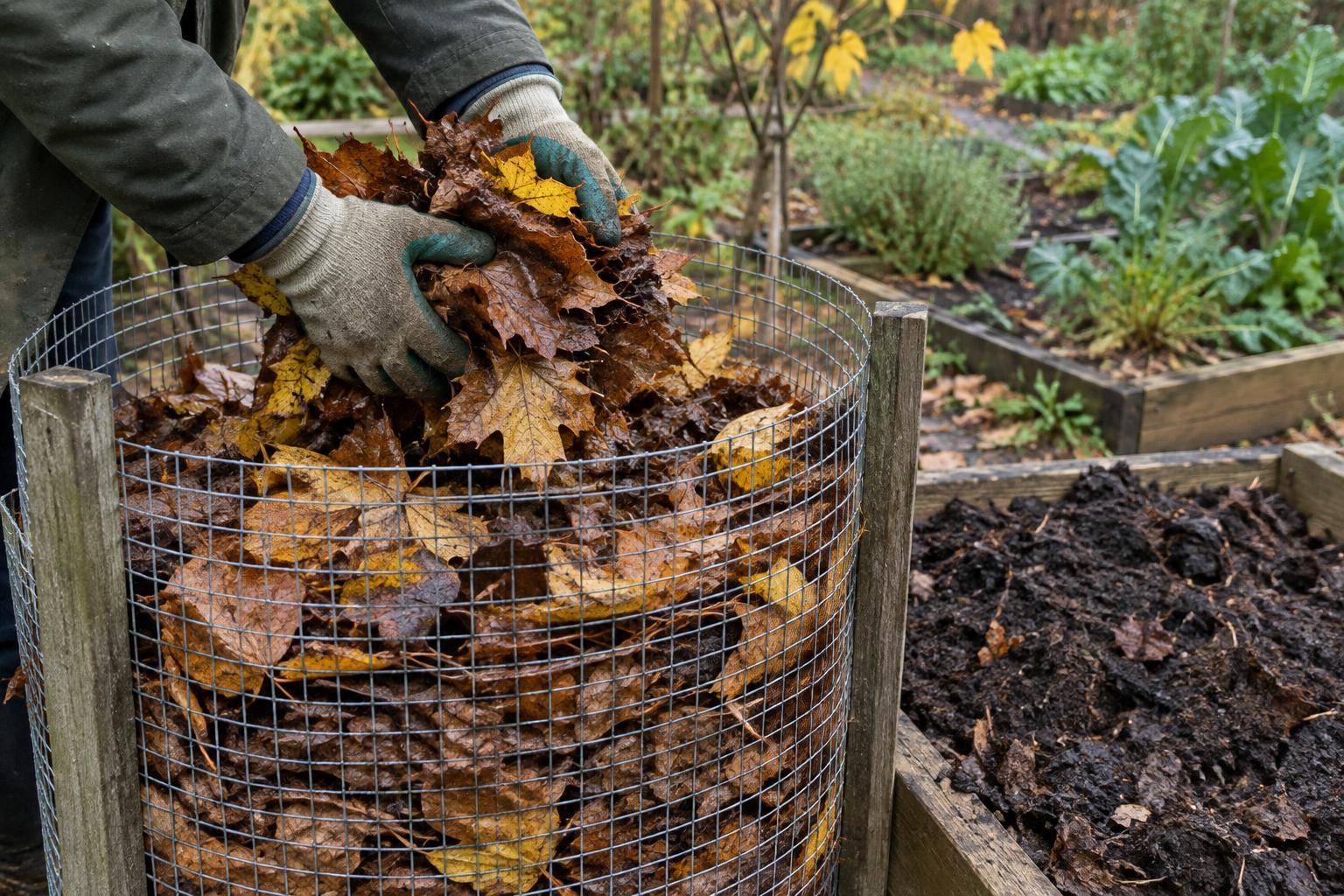
Choose a spot that will not block access, drains or neighboring plots. A wire-mesh enclosure makes an easy leaf bin: it holds a generous pile while allowing air and rain to reach it. Ventilated bags work when space is limited. If you use bags, make several holes for airflow and drainage, then place them where they can stand without becoming a tripping hazard. Check any shared-garden rules before setting up a bin or storing bags.
Build the pile and manage moisture
Fill the enclosure or bags with leaves, pressing them down gently to fit more in without packing them tightly. Running over dry leaves with a mower or shredding them by another safe method can speed breakdown and keep them from matting together. Shredding is helpful, not essential. If the leaves are dry, moisten them as you fill the container so water reaches more than just the top layer.
Aim for leaves that feel damp, not waterlogged. A pile that dries out may stop changing for a while; add water and check whether it has reached the center. If a bag is holding standing water or the contents smell unpleasant, open it, let excess water drain and loosen the leaves before closing it again. Occasional turning can bring drier outer leaves into the middle, but leaf mold does not require the frequent turning associated with fast composting.
Know when it is ready
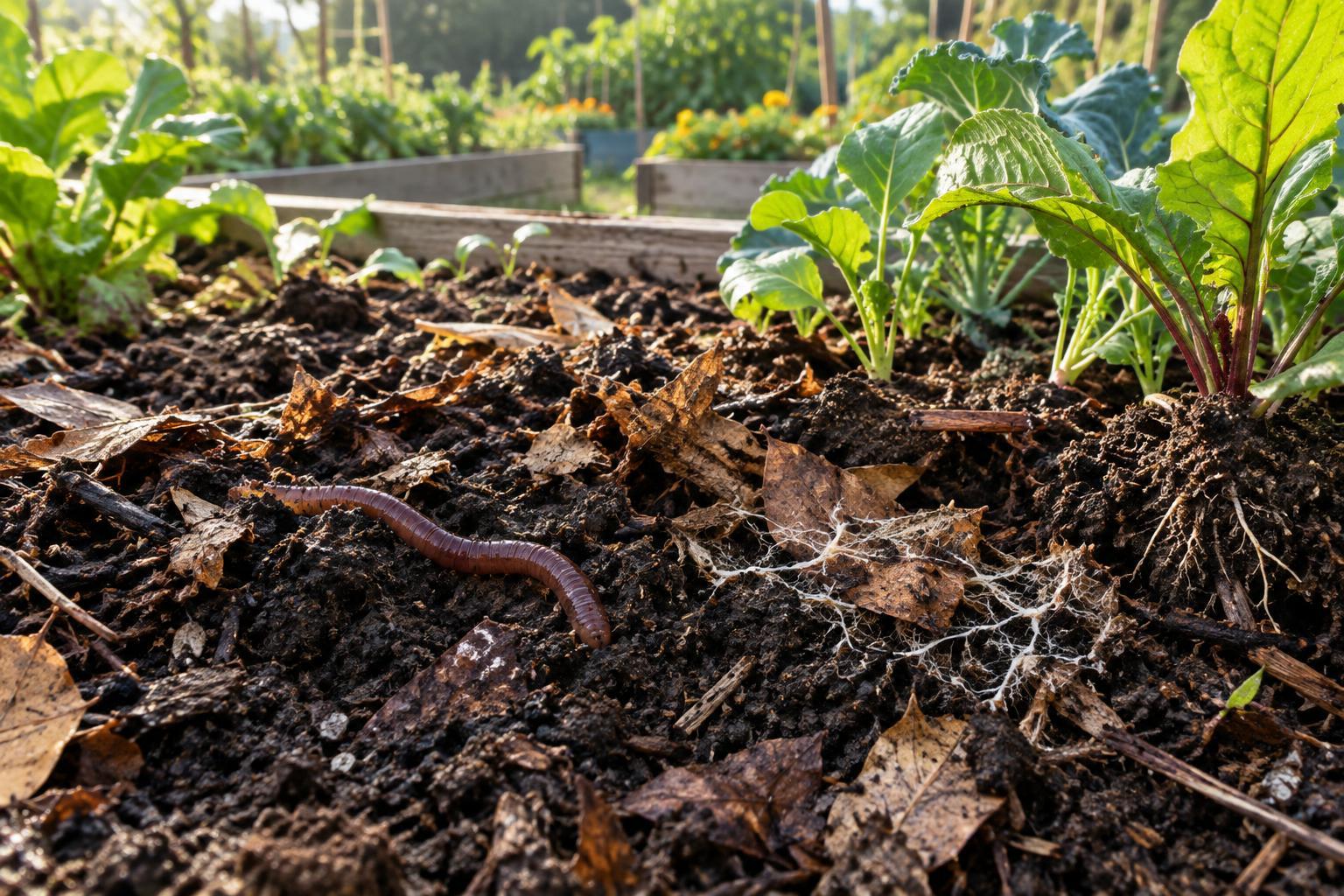
Leaf mold develops gradually. The time depends on the kinds of leaves, whether they were shredded, and how consistently damp the pile stays. Rather than relying on a calendar, look at the material: finished leaf mold is dark and earthy, with a loose, crumbly feel. You may still see a few recognizable leaf pieces, especially if you started with whole leaves.
If the pile is only partly broken down, you can use the coarser material as mulch or return it to the bin for more time. For a finer texture, sift out larger pieces and put them back into the next batch. Keep the finished material covered or contained until you need it so it does not dry out completely or wash onto paths.
Put it to work in a shared garden
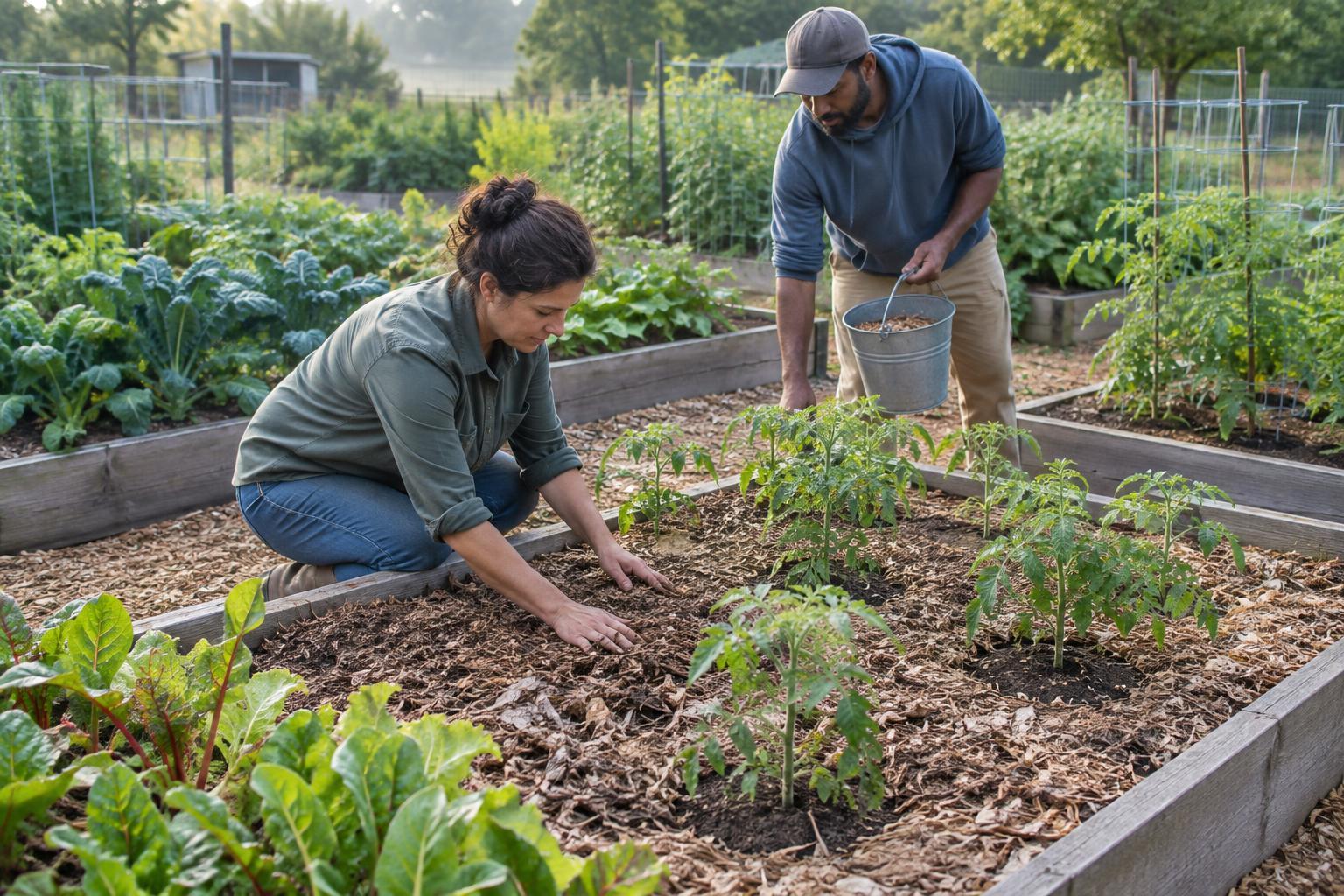
Spread finished leaf mold over bare soil around established plants, leaving a little space around stems and trunks. You can also mix modest amounts into a garden bed when preparing it for planting. If using leaf mold in a potting mix, combine it with other suitable ingredients rather than assuming it will provide all the drainage and nutrients a container plant needs.
A shared leaf-mold project works best when everyone knows which leaves belong in the bin and when the material is ready to take. A simple sign can identify the collection area and ask gardeners to keep out trash and other garden waste. Set aside a way to distribute the finished material fairly. With a clear spot and a few agreed-upon habits, a seasonal cleanup can become a continuing source of organic matter for the garden.