Decide What Needs Care
Before making a vacation plan, walk through each bed and note what will change while you are gone. Newly planted seedlings, containers, and crops that are flowering or setting fruit may need closer attention than established plants growing in well-covered soil. Look for harvests that will ripen soon, weeds about to set seed, and stems that need support. This quick inventory helps you ask for specific help instead of leaving someone responsible for an entire garden without guidance.
Match the plan to the length of your absence. For a short trip, a thorough watering and harvest may be enough if conditions are mild. For a longer absence, arrange for someone to check the beds, especially during hot or dry weather. No preparation can guarantee that every crop will keep producing through an extended summer break, so prioritize plants you most want to maintain.
Prepare Soil and Watering Before You Leave
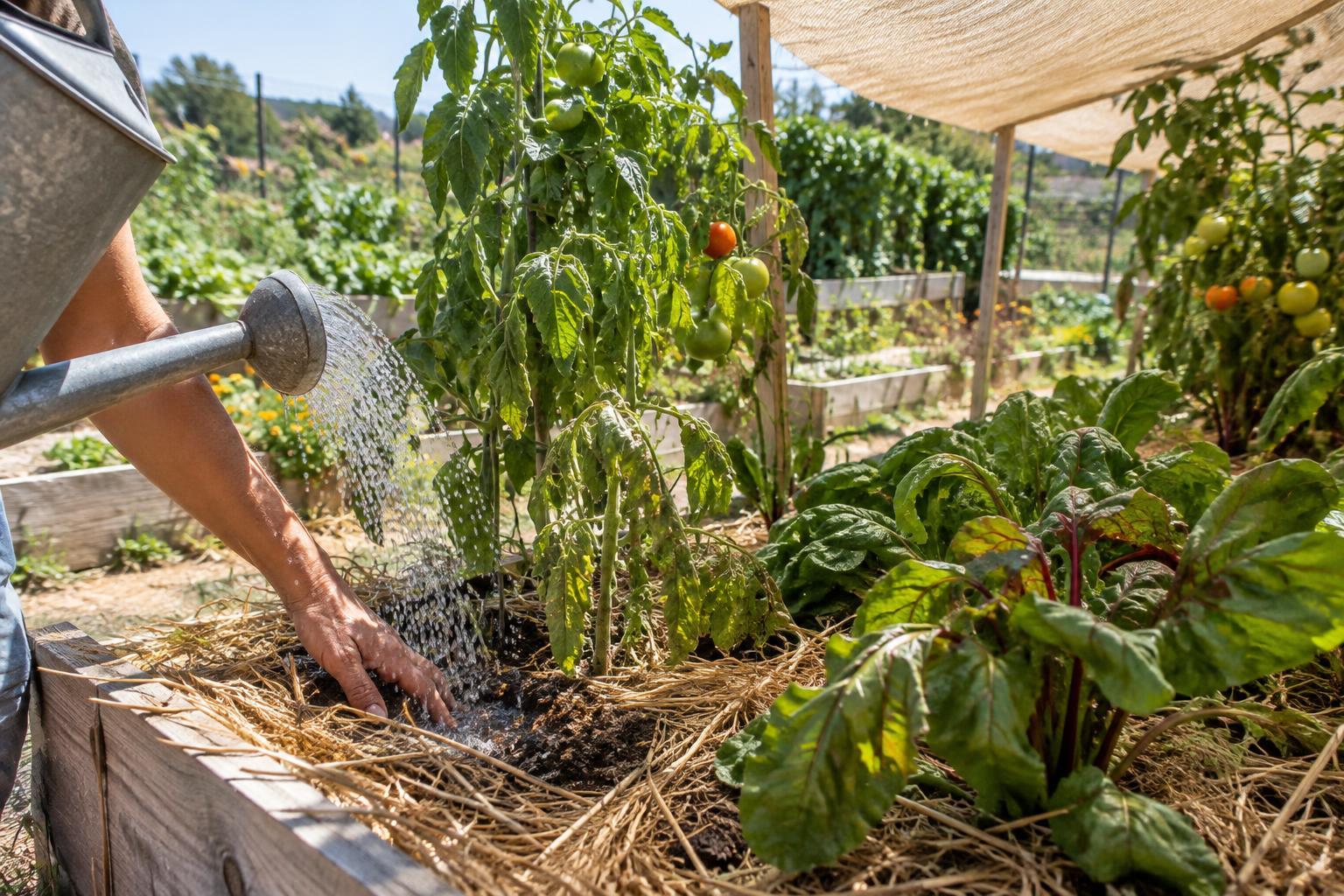
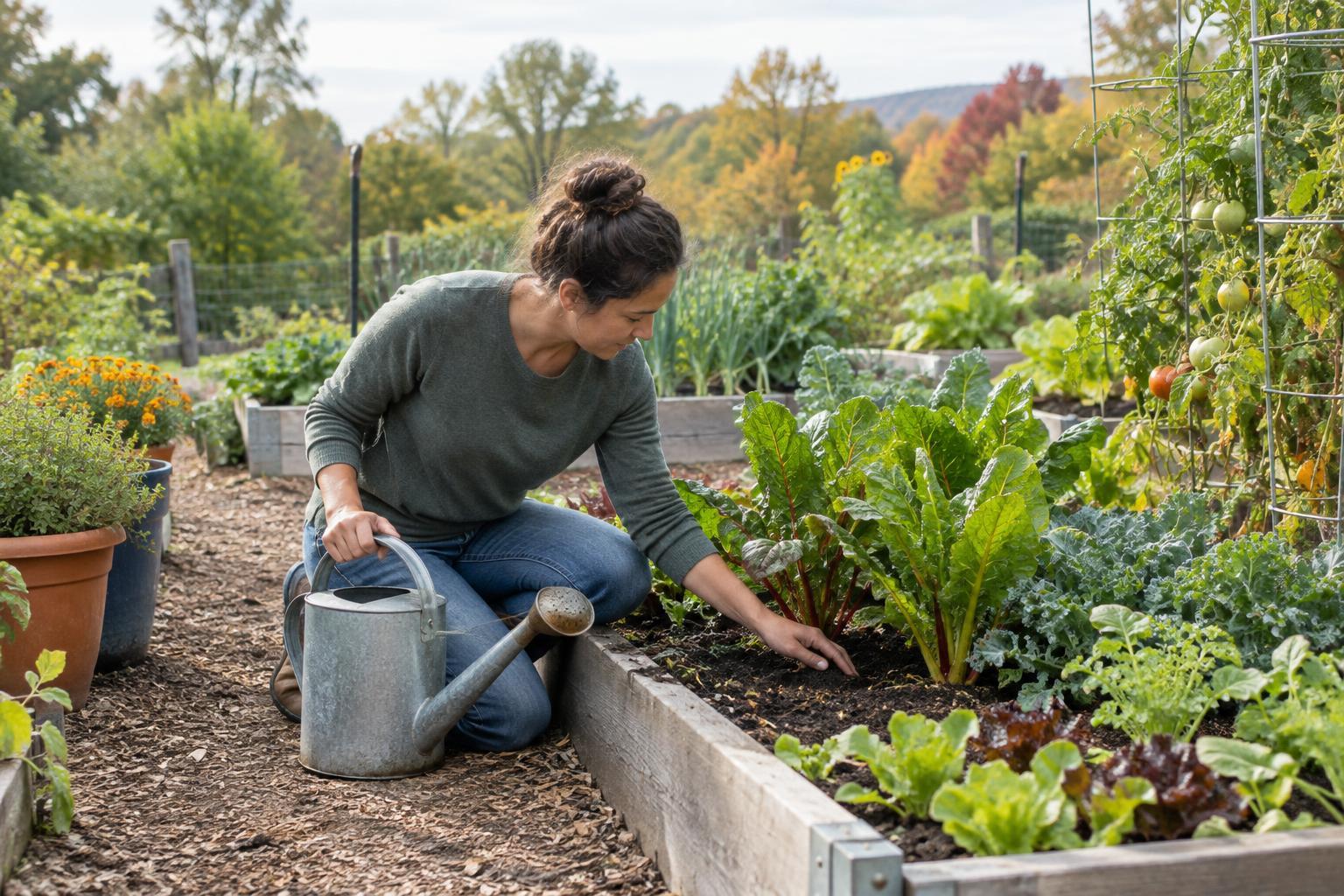
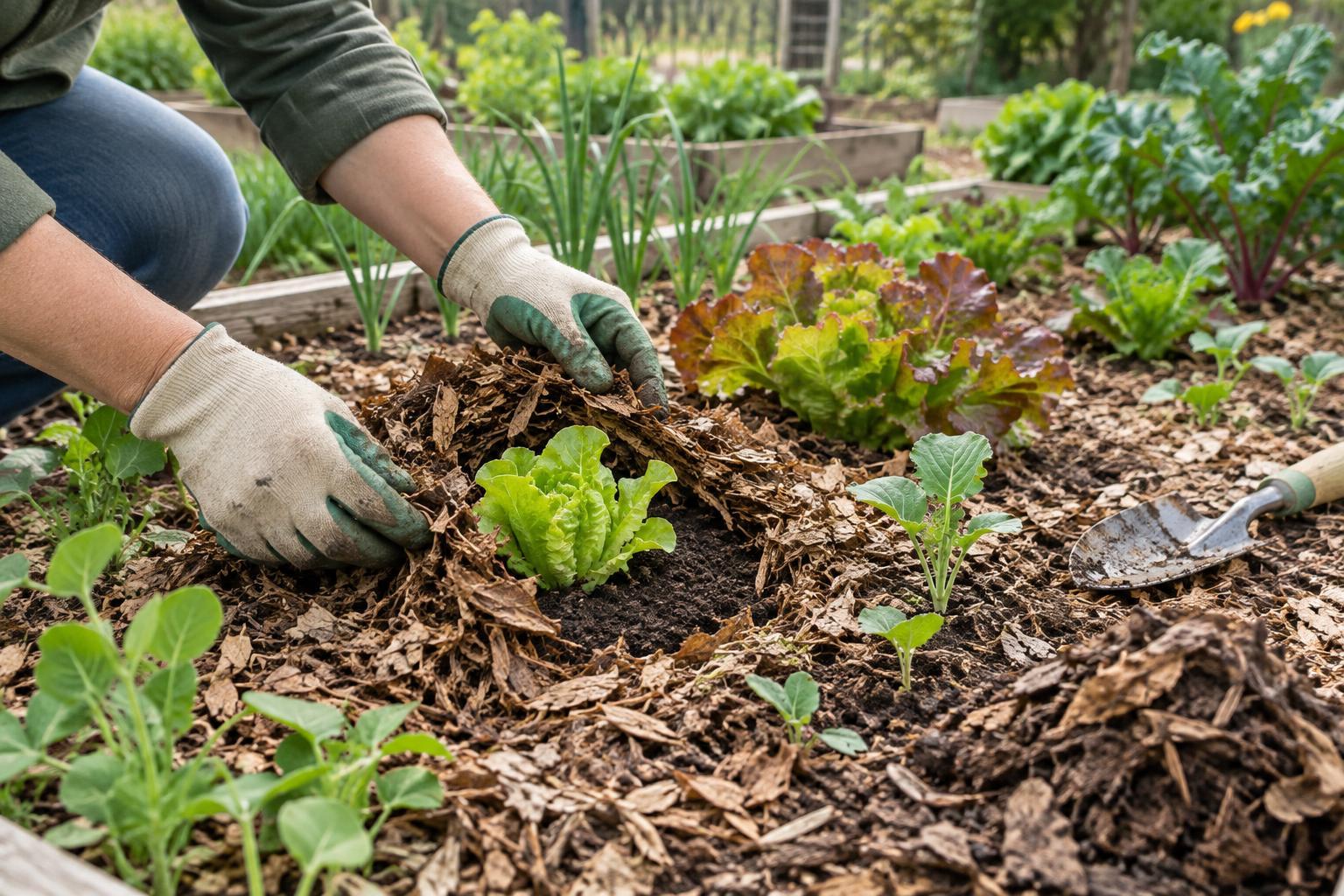
Water deeply before departure, giving moisture time to soak into the root zone rather than briefly wetting the surface. Check the soil afterward; if it remains dry beneath the surface, water again slowly. Add a layer of organic mulch, such as straw or shredded leaves, around plants to help slow evaporation and reduce weed growth. Keep mulch clear of stems and crowns, where constant dampness can cause problems.
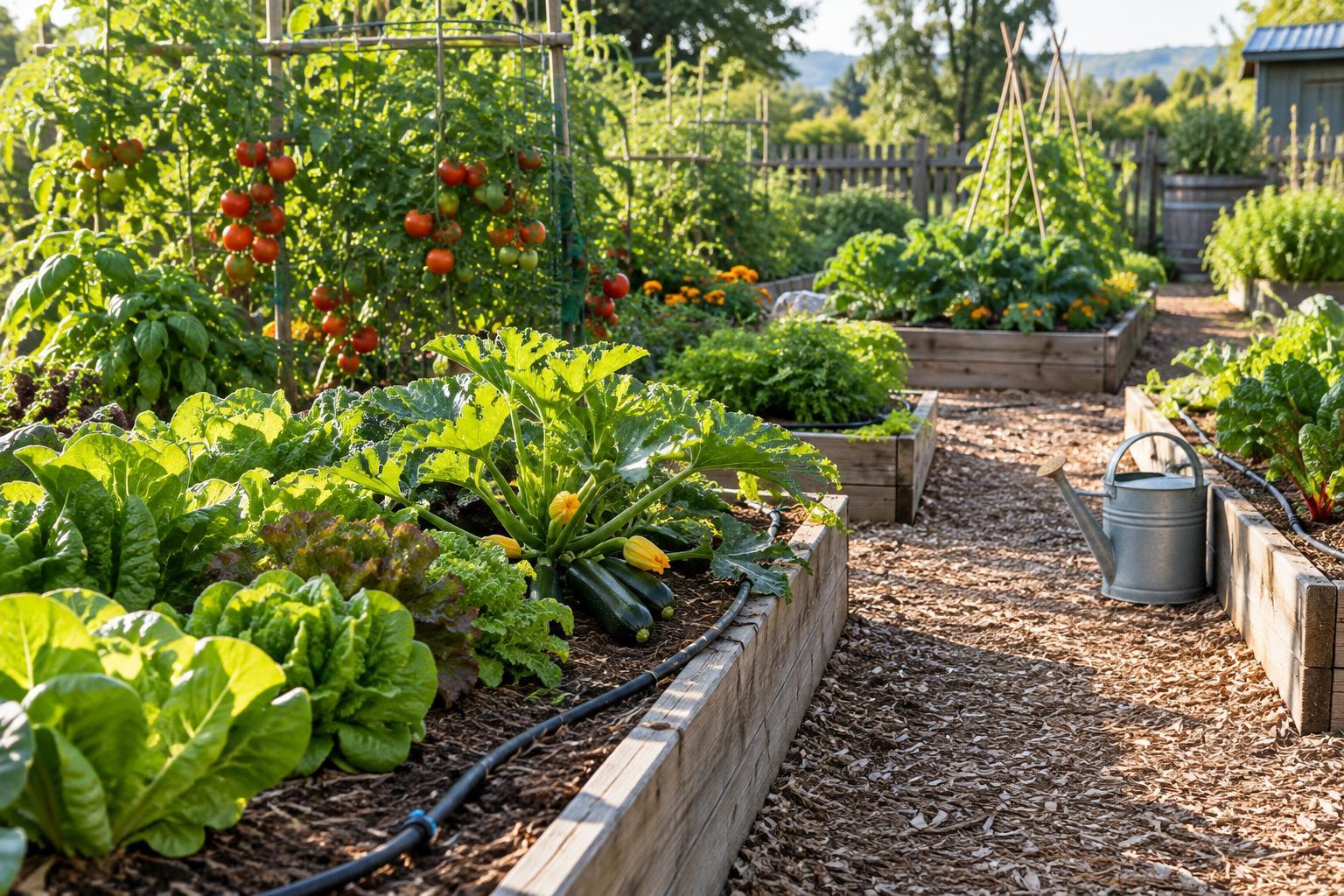
If you use a soaker hose or drip system, inspect it while you are still available to fix leaks, clogged outlets, or misplaced lines. Run it and check whether water reaches each plant. A timer can make care simpler, but it is worth testing the schedule in advance and adjusting it to the soil, weather, and plants rather than assuming one setting will suit every bed. If someone will water by hand, show them where the water source and watering tools are and which beds need attention first.
Containers dry out differently from in-ground beds. Group movable pots where they can be reached easily and receive suitable light, rather than leaving them scattered around the site. Avoid moving sun-loving plants into deep shade solely to reduce watering.
Harvest, Tidy, and Avoid New Work
Pick vegetables, herbs, and cut flowers that are ready before you go. Harvesting mature produce reduces waste and makes it easier for a helper to spot what is ready next. Remove damaged fruit and obvious plant debris, weed around young crops, and secure climbing plants to their supports. Take care not to do so much pruning or soil disturbance that plants must recover while no one is watching them.
A few days before leaving is rarely the best time to start a demanding new planting. Seeds and transplants need consistent moisture while they establish, and a missed watering can set them back. If you want to fill an empty space, consider waiting until you return or arranging dependable care first. Leave paths clear so a helper can reach plants without stepping into beds.
Make Shared-Garden Help Easy to Give
In a community garden, check any shared rules before asking another gardener to enter your plot or use communal supplies. Agree on the tasks, frequency of visits, and what the helper may harvest. A short written note can identify beds by location, name the plants most in need of water, and explain where picked produce should go. Clear boundaries are useful: someone willing to water may not want to weed, prune, or troubleshoot a malfunctioning system.
If several gardeners will be away, a simple rotation can spread the work, provided everyone agrees to it. Keep requests manageable and give helpers a way to tell you if they cannot make a visit. When you return, thank them and offer to return the favor. Reliable, modest agreements work better than assuming that a shared space will care for itself.
Check the Beds When You Return
Walk the garden before making major changes. Check moisture beneath the mulch, look for ripe or overripe produce, and inspect plants for broken supports or signs of stress. Harvest what is usable, remove spoiled fruit, and resume watering according to what the soil needs now. A plant that looks wilted in afternoon heat may recover later, so check the soil before adding water automatically.
Some crops may have passed their best harvest stage while you were away. Clear those that are no longer useful and plan the next planting when you can care for it. Note what worked: perhaps mulch held moisture well, a container needed more attention than expected, or your helper needed a clearer map. Those observations will make the next absence easier to prepare for.