Start by Understanding the Soil You Have
Heavy clay soil can feel like a barrier to gardening. It may cling to a trowel after rain, form hard clods when dry, and leave puddles where you hoped to plant. Yet clay has useful qualities: its fine particles can hold water and nutrients that plants need. The goal is not to turn it into a different soil overnight. It is to improve the structure of the soil you have and make the growing area easier to use.
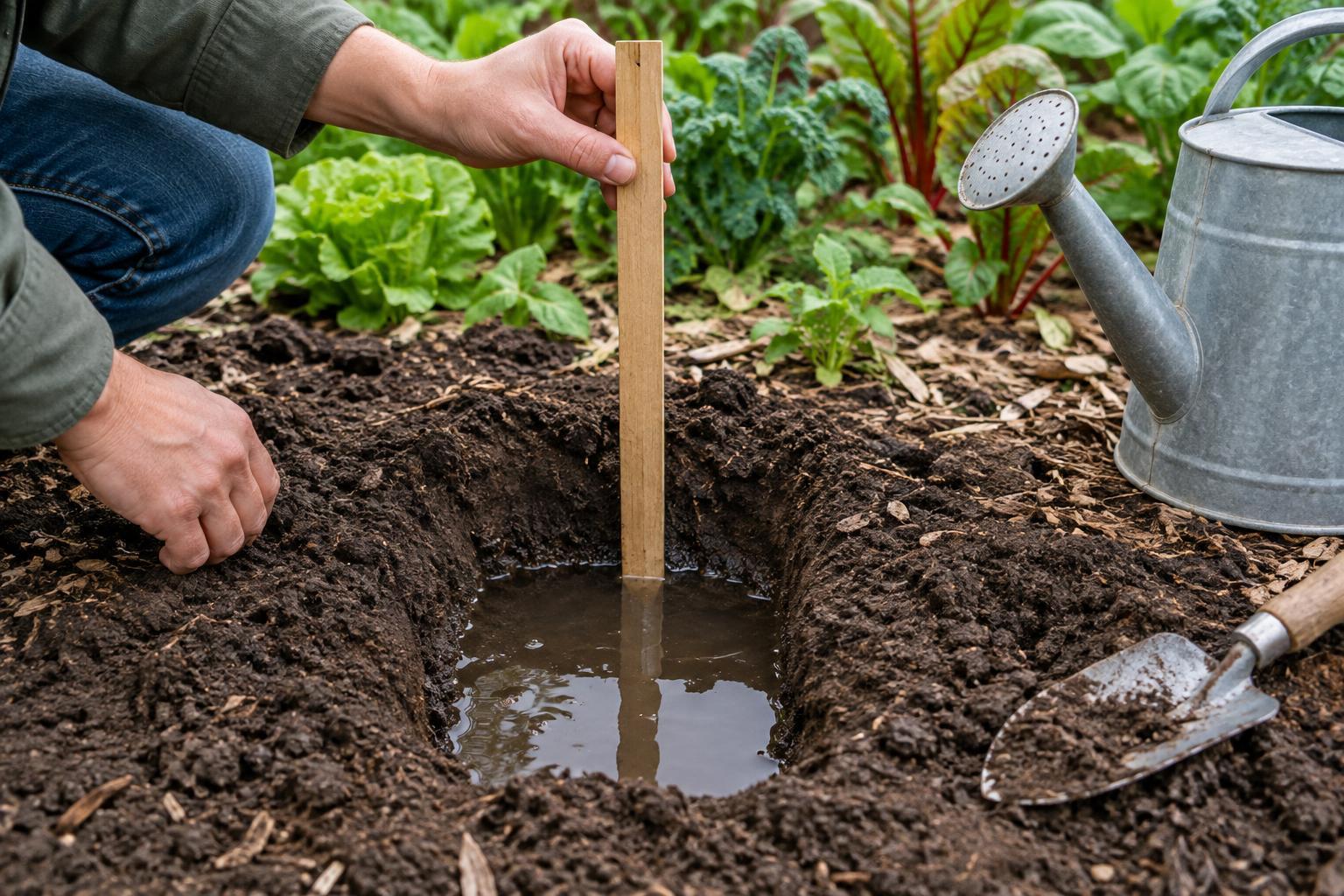
Before changing a bed, watch what happens after a rain. Does water stand briefly, or does it remain for a long time? Is the entire plot affected, or only a low spot near a path? Those observations help you distinguish a generally heavy soil from a drainage problem that needs its own solution. In a shared garden, compare notes with neighboring plot holders before moving soil or redirecting water toward another bed.
Why Sand Usually Is Not the Shortcut
A small amount of sand mixed into heavy clay is unlikely to produce the loose texture gardeners hope for. It can leave the bed difficult to work while requiring a great deal of material and labor. Carefully designed soil mixes may include sand, but casually adding a few bags to an existing clay bed is not the same thing.
Instead, focus on organic matter and soil protection. Finished compost contributes material that soil organisms can work through over time. A layer of mulch helps shield the surface from pounding rain and drying sun. Neither is an instant cure, but repeated, moderate additions can make a bed more workable across growing seasons without trying to replace all its clay.
Build Better Structure With Compost and Roots
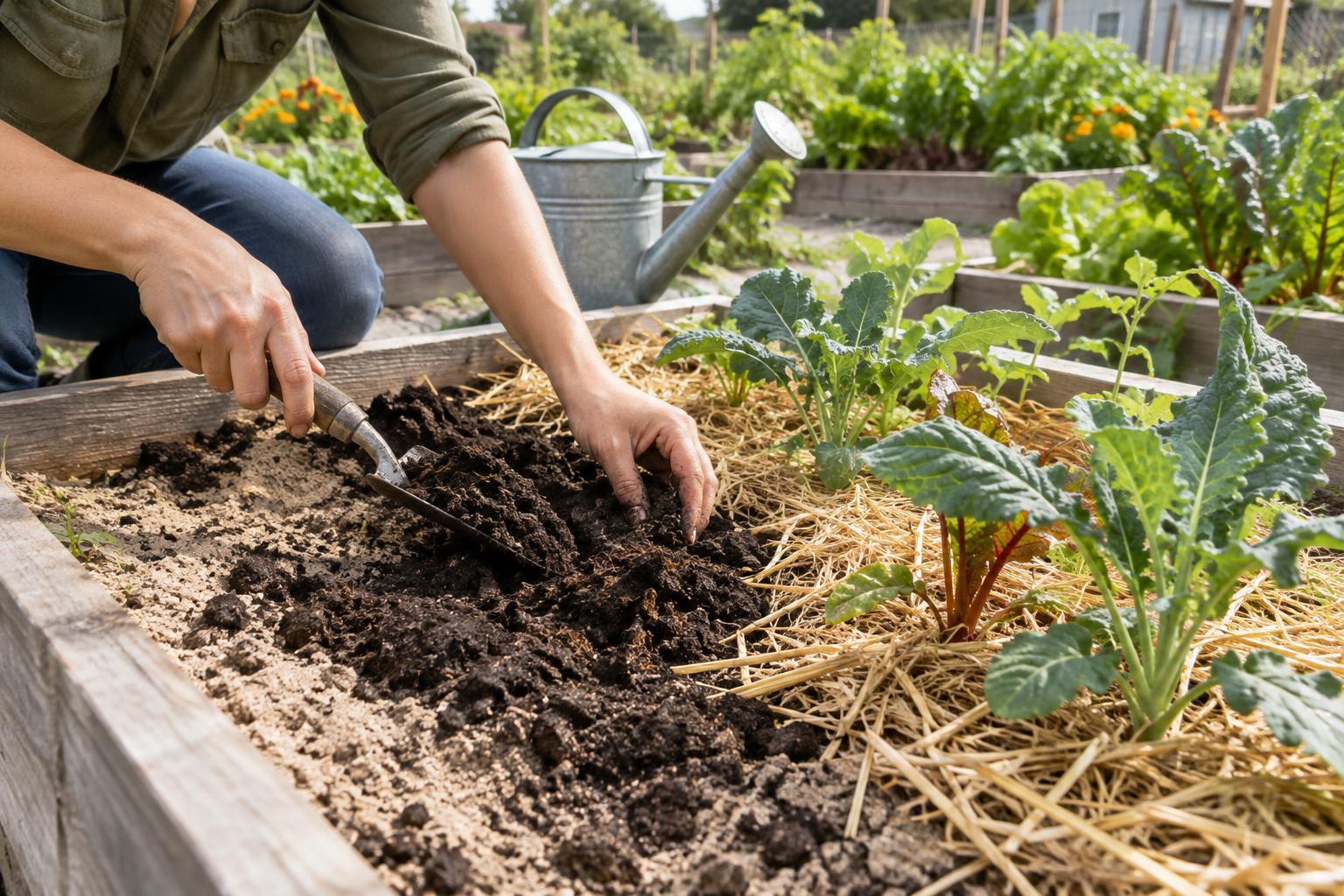
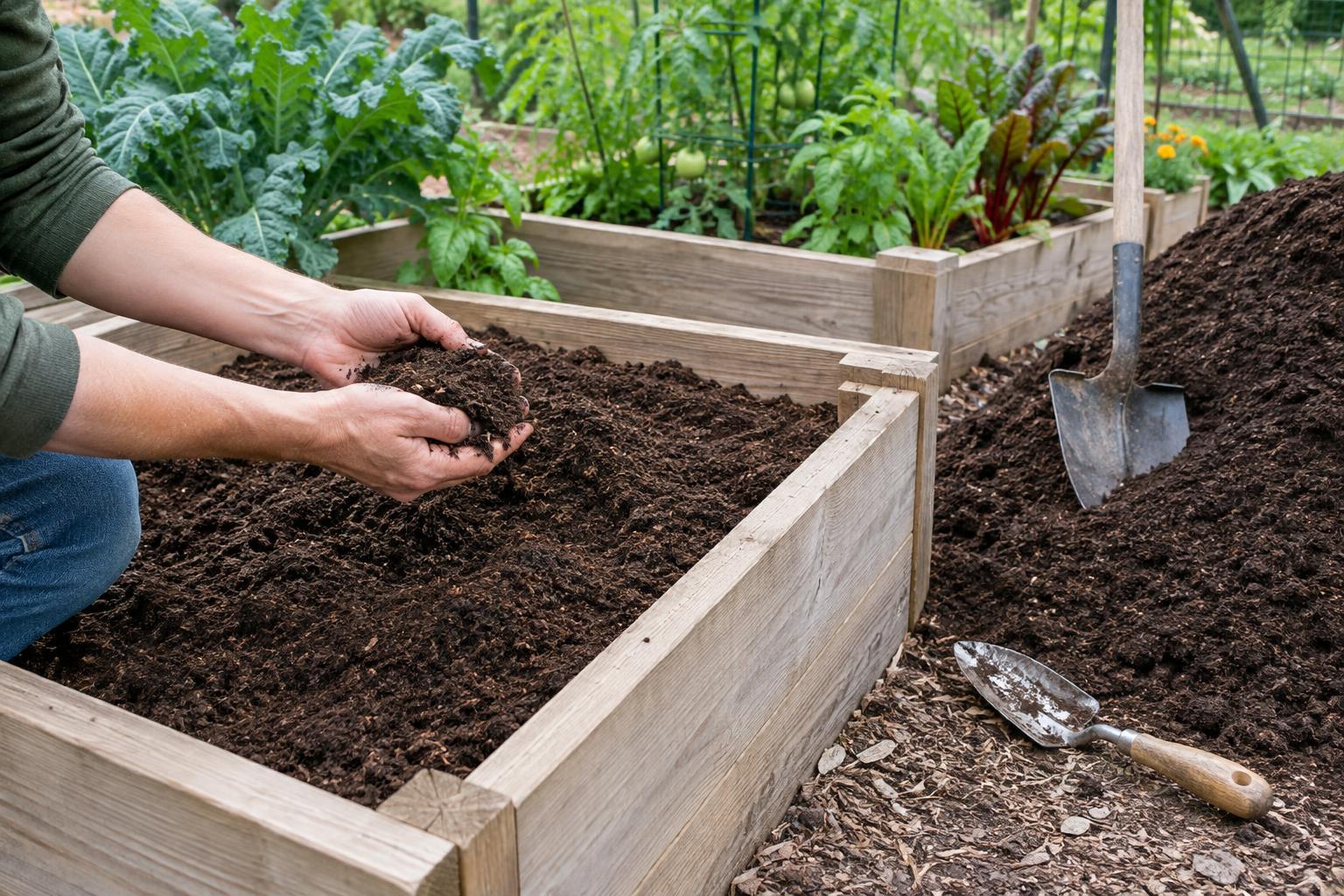
Spread finished compost over the bed before planting. If the soil is workable, gently mix it into the upper layer; once plants are growing, use compost as a surface dressing rather than disturbing their roots. Follow with an organic mulch, such as shredded leaves or straw, keeping it away from plant stems. Avoid burying large amounts of unfinished material where crops will be planted, because decomposition can temporarily affect nutrient availability.
Living roots help too. Between main crops, a suitable cover crop can keep soil covered and add root channels as it grows. Choose one that fits your planting schedule and that you can manage before it sets seed. If a cover crop is impractical, mulch bare ground instead. In either case, aim to leave the soil covered as much as possible rather than exposing it to repeated rain and foot traffic.
Be cautious with products promoted as universal clay fixes. Gypsum, for example, is useful for certain soil conditions but is not a general substitute for compost or good drainage. If plant growth remains poor despite sound gardening practices, a soil test can help you decide whether a specific amendment is warranted.
Work the Bed at the Right Time
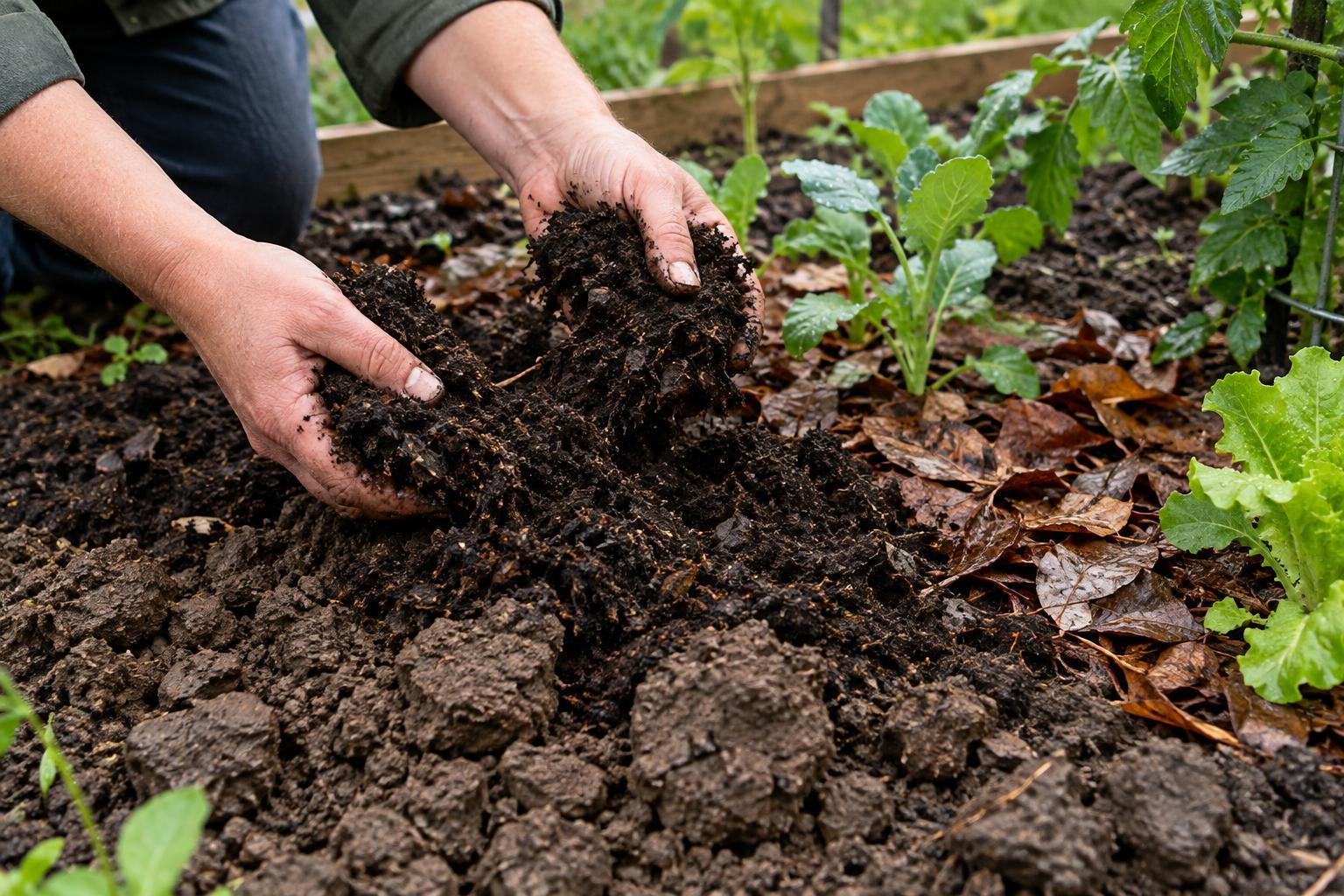
Timing matters as much as what you add. Digging or tilling clay while it is wet can compress it into dense clumps. To check a bed, pick up a handful of soil and squeeze it. If it smears easily or stays in a sticky ball, wait. When it crumbles with gentle pressure, it is usually easier to work. Very dry clay can be difficult to dig as well, so plan major bed preparation for a workable interval rather than a fixed calendar day.
Limit traffic on growing areas. Mark paths clearly and make beds narrow enough to reach from the sides. This is especially valuable in community gardens, where several people may tend or harvest the same plot. Broadforking or loosening a compacted area may help create planting space, but avoid repeating deep disturbance when surface additions, roots, and protected paths will do the job.
Adapt Planting Plans to Persistent Wet Spots
If a site stays saturated long after rain, compost alone may not solve the problem. Check whether runoff from a path or roof is collecting there, and address the flow only with the garden's permission and neighboring plots in mind. A raised bed filled with an appropriate growing mix can give vegetable roots a better start above persistently wet ground. Do not build a bed where water will simply pool against its edges without a place to go.
For less severe spots, choose planting locations thoughtfully and give the soil time to improve. Keep a simple record of where puddles form, which beds become workable first, and how crops respond. Heavy clay rarely changes in one season, but a steady routine—compost, covered soil, living roots when possible, and no walking on beds—can make it a more dependable place to grow.