What soil compaction looks like
Garden soil contains spaces between its particles. Those spaces hold air and let water move downward while roots spread through the soil. When foot traffic, equipment or repeated work presses particles closer together, the spaces shrink. Roots may have trouble extending, and water may run off the surface or linger in low spots.
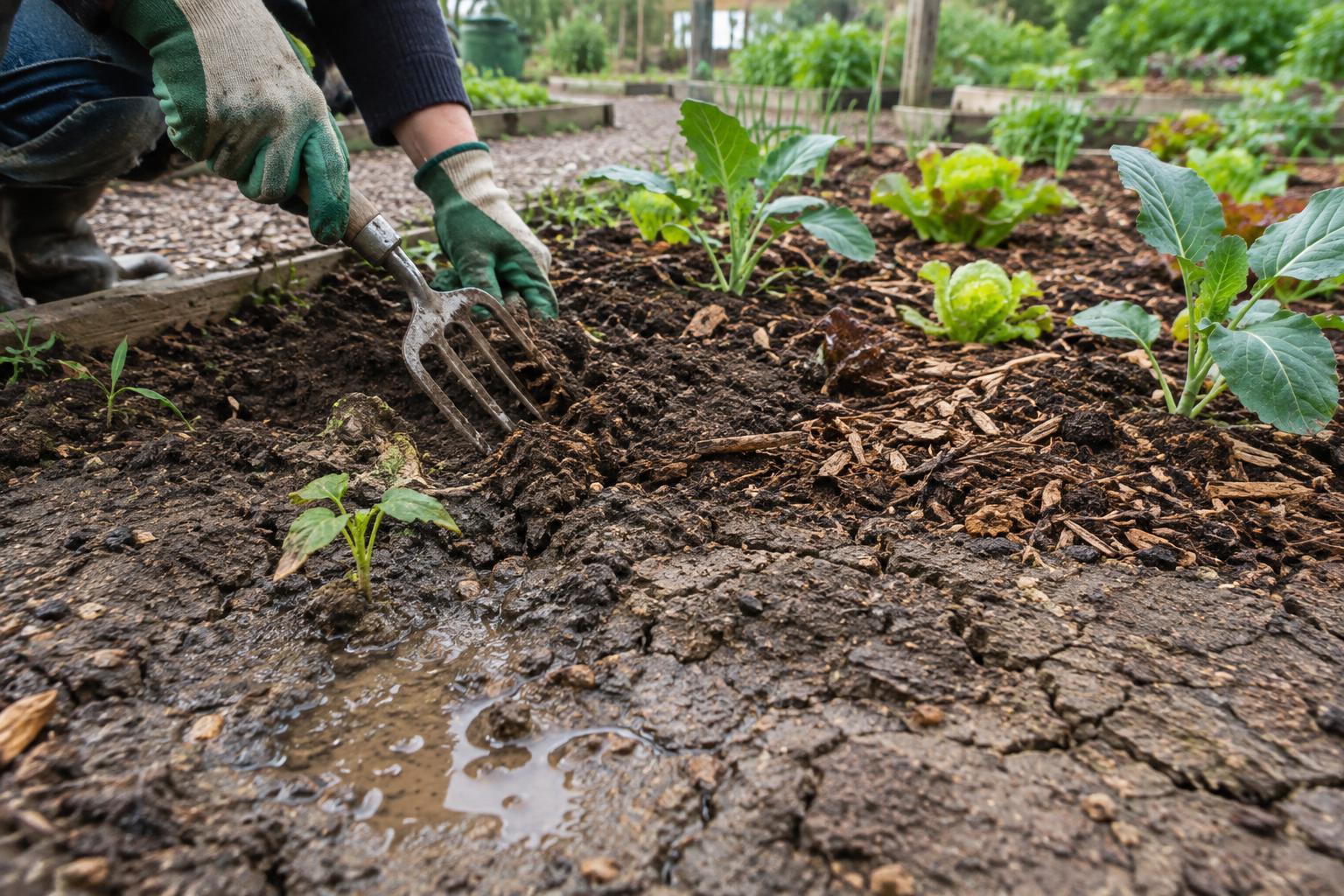
Possible signs include a hard surface crust, puddles that remain after nearby beds have drained, or plants with shallow, sideways-growing roots. A trowel may meet strong resistance just below the surface. These signs are clues, not proof: heavy rain, poor grading, a naturally dense soil layer or inconsistent watering can produce similar effects. Compare an affected spot with a healthier part of the garden before deciding what to change.
Check the soil before working it
Choose a day when the soil is moist but not wet. Squeeze a handful from below the surface. If it stays in a sticky lump and smears when rubbed, give it more time to dry. If it crumbles with gentle pressure, it is usually easier to assess and work without squeezing it into dense clods. Soil texture matters: clay-rich soil naturally feels firmer than sandy soil, even when both support healthy roots.
Push a garden fork or trowel into several places, including a path edge and the middle of a bed. Notice where resistance begins and whether it occurs at a similar depth each time. If a crop is finished, lift one plant and look at its roots. Roots that spread along a firm layer instead of growing through it may point to a compacted zone. Avoid digging around plants you want to keep.
Loosen beds gently, then protect the surface
For a small bed with moderate compaction, a garden fork can help open the soil. Insert the fork into soil that is workable, ease the handle back just enough to create cracks, then move a short distance and repeat. There is no need to turn every forkful upside down. If the soil is very wet, wait; working it then can leave dense slabs that are difficult to break apart later.
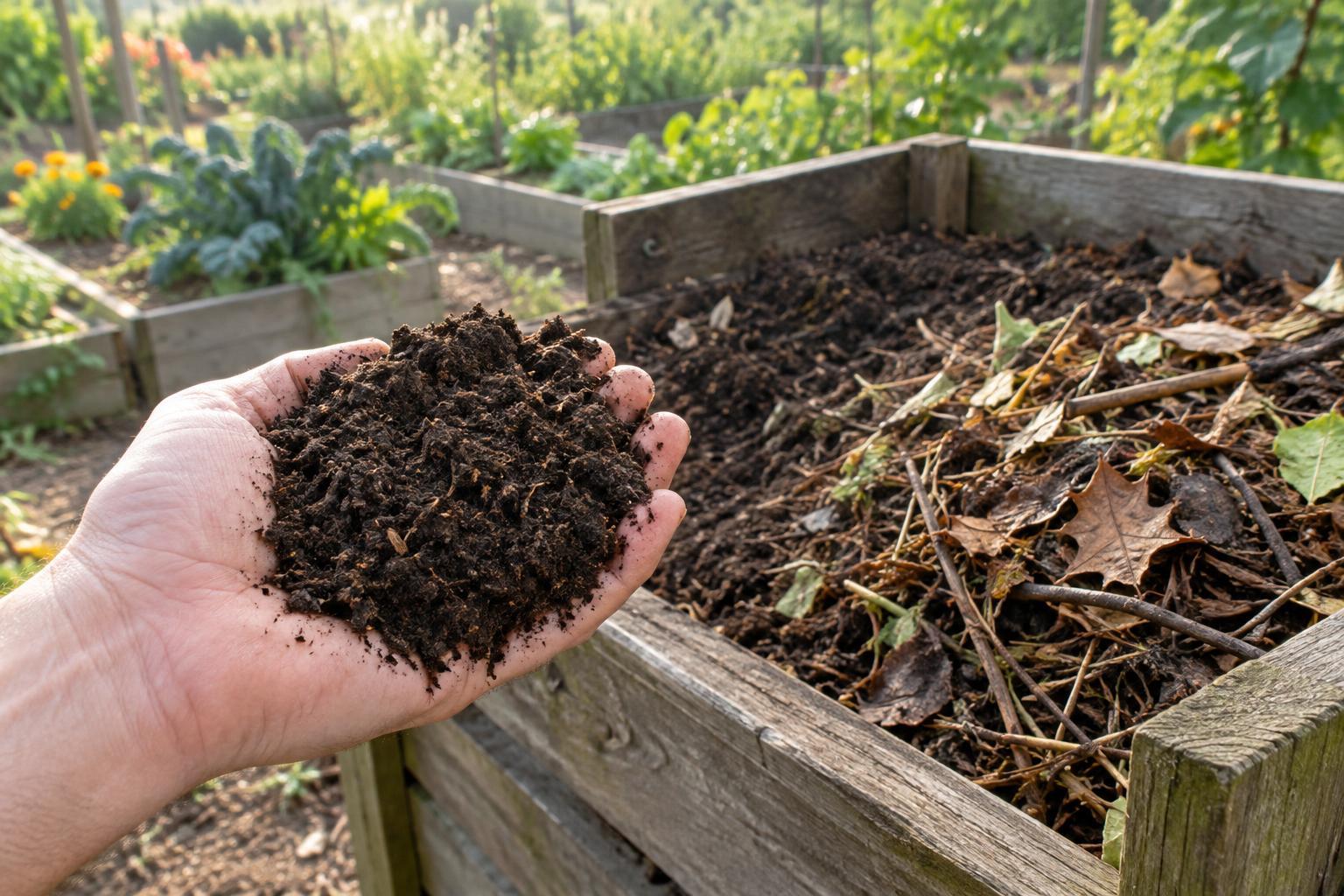
After loosening, spread finished compost over the bed and mix it lightly into the upper soil if needed for planting. Organic matter can help soil develop a more workable structure over time, but one application will not immediately fix a deeply compacted layer. Cover bare ground with an appropriate mulch to reduce surface crusting and protect it from the impact of heavy rain. Keep mulch clear of plant stems.
Give roots time to do some of the work
Living roots can help maintain openings in soil. Where a bed will rest between crops, consider a cover crop suited to the space and season. Choose one the group can manage and remove or cut back before it competes with the next planting. In an ornamental bed, established plants and a steady layer of mulch may offer similar protection by keeping soil covered.
Severely compacted ground may take more than one growing cycle to improve. If water cannot drain from a site or a hard layer remains well below fork depth, surface compost alone may have little effect on that problem. It may be more practical to grow in a raised bed while evaluating the underlying drainage. Do not add sand or gypsum simply because soil feels hard; whether an amendment helps depends on the soil and the cause of the problem.
Prevent compaction in a shared garden
The most lasting fix is to keep pressure off growing soil. Mark paths clearly, make them convenient to use and place them so gardeners can reach beds without stepping into them. Put wheelbarrows, carts and stored materials on paths or designated work areas. If a task requires access inside a large bed, a temporary board can help distribute weight, but avoiding the trip is better.
Agree as a group to postpone digging, transplanting and hauling across beds when the soil is wet. Add that reminder to seasonal work plans so new gardeners know why it matters. Recheck previously hard spots after rain and at planting time: easier fork entry, fewer persistent puddles and roots extending farther into the bed are useful signs of progress. Improving compacted soil is gradual, but consistent paths, covered beds and careful timing help protect every improvement the garden makes.