What “finished” compost means
Compost is ready to use when most of its original ingredients have broken down into a stable, earthy material. It does not have to look perfectly uniform. A few recognizable twigs, eggshell fragments, or other slow-to-decompose pieces are normal. The important question is whether the bulk of the pile has finished its active breakdown and is unlikely to compete with nearby plants for air or nitrogen as it continues to decompose.
There is no single finishing time. A well-managed pile of chopped leaves and kitchen scraps may change quickly, while a pile containing thick stems or dry leaves can take much longer. Weather, moisture, pile size, and how often the material is turned all matter. Rather than judging by the calendar, check several signs together.
Check the look, feel, and smell
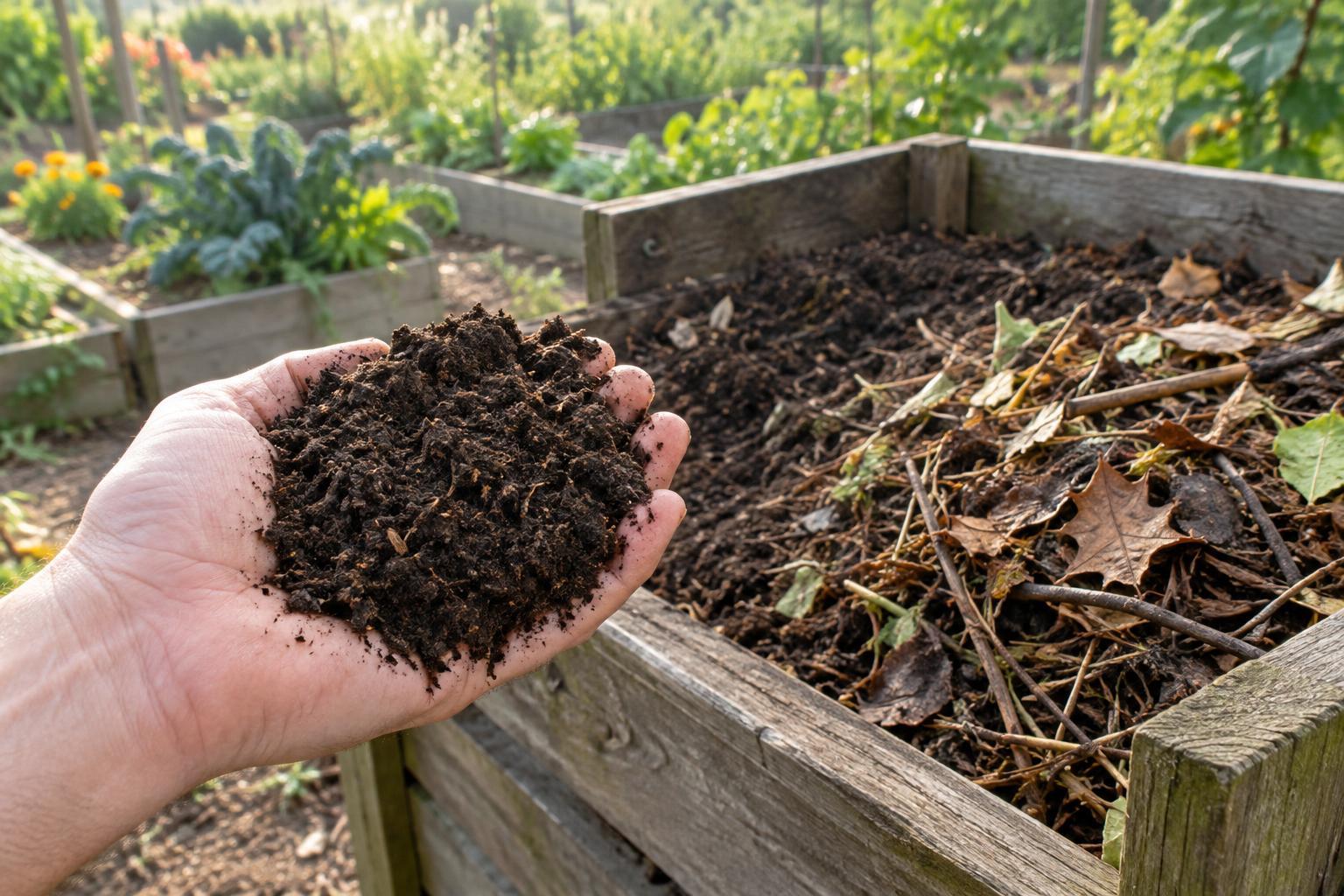
Scoop material from the middle as well as the outside of the pile. Finished compost is usually dark brown, crumbly, and reasonably consistent in texture. It may hold together briefly when squeezed but should not feel slimy or leave water dripping from your hand. You may still see small pieces of wood or leaves; large amounts of clearly identifiable food scraps or fresh plant material suggest the batch needs more time.
A pleasant, earthy smell is another useful clue. A sharp ammonia smell can point to too much nitrogen-rich material or inadequate mixing. A sour, rotten, or sewage-like smell often suggests overly wet conditions and too little air. If the pile smells unpleasant, turn it to introduce air and mix in dry, bulky material such as shredded leaves. Then let it continue breaking down before using it around plants.
Appearance alone is not enough. Dry, undecomposed material can look dark, and a soggy pile may seem fine on its surface. Check a handful from several spots, especially if people have added materials to the pile at different times.
Notice whether the pile heats up again
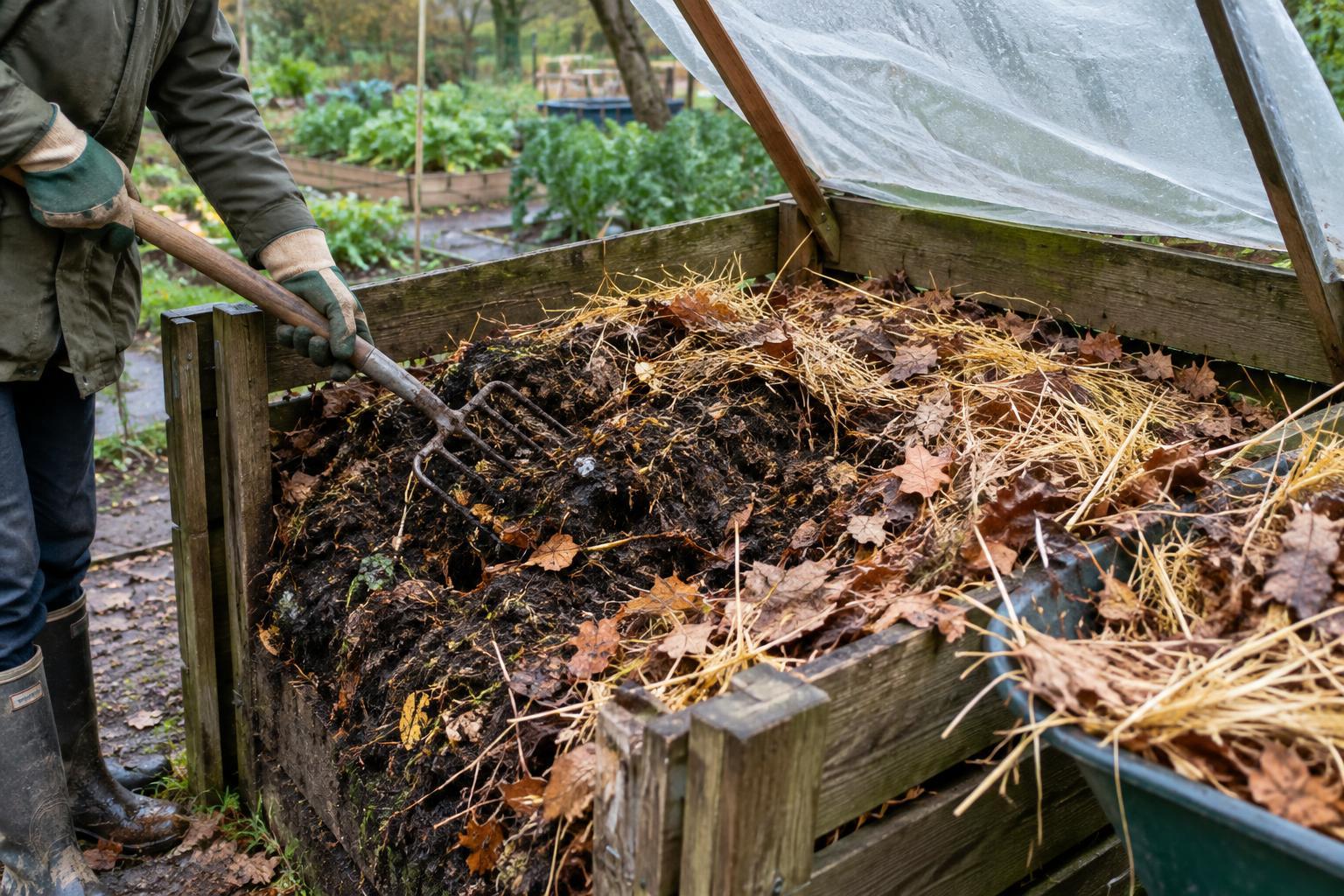
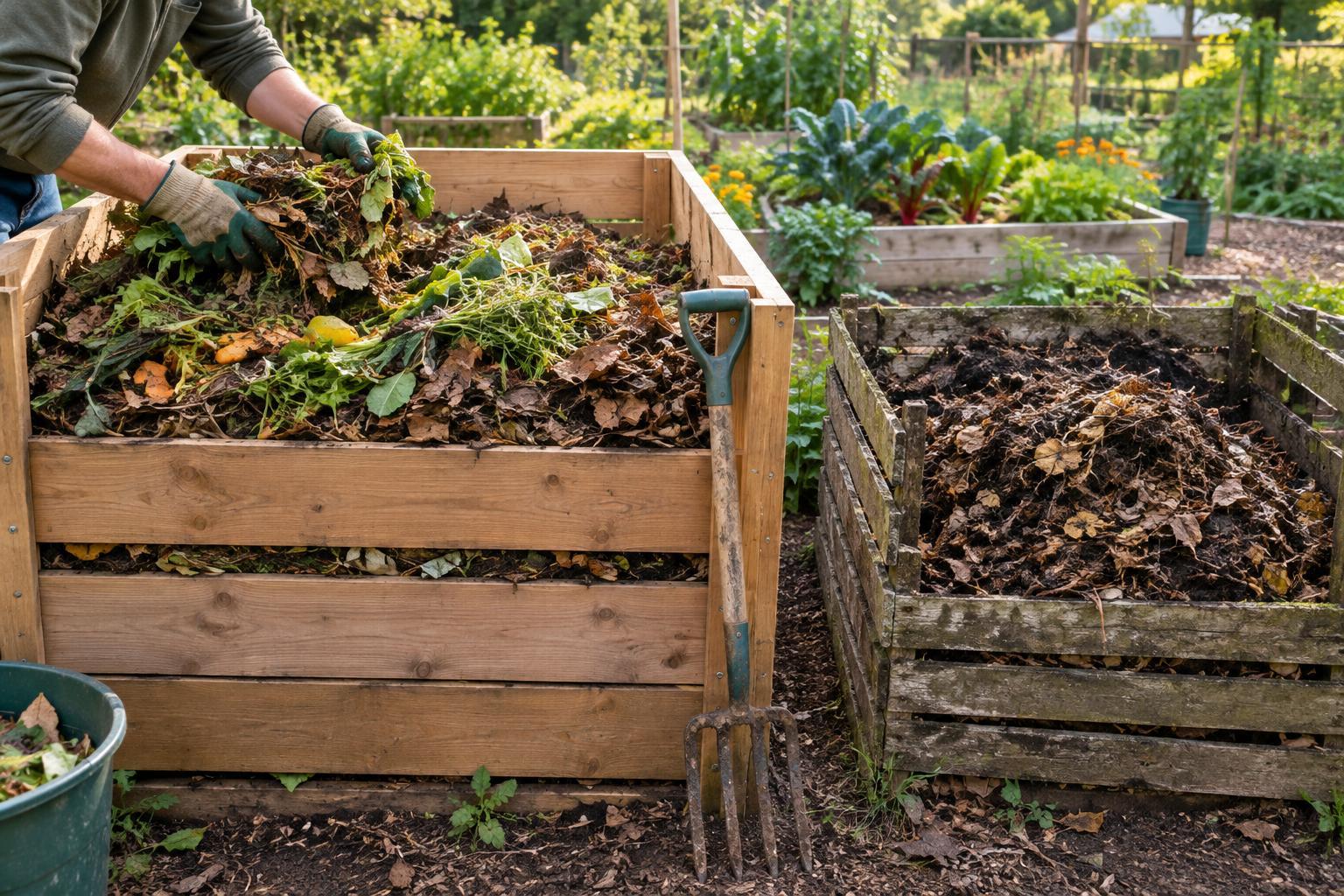
An actively decomposing pile may feel warm in its center. Finished compost generally cools toward the surrounding air temperature and stays that way after it is turned. If mixing the pile brings another noticeable rise in heat, give it more time. Fresh additions can also restart heating, which is why it helps to stop adding to one pile while it finishes and begin a second pile for new scraps.
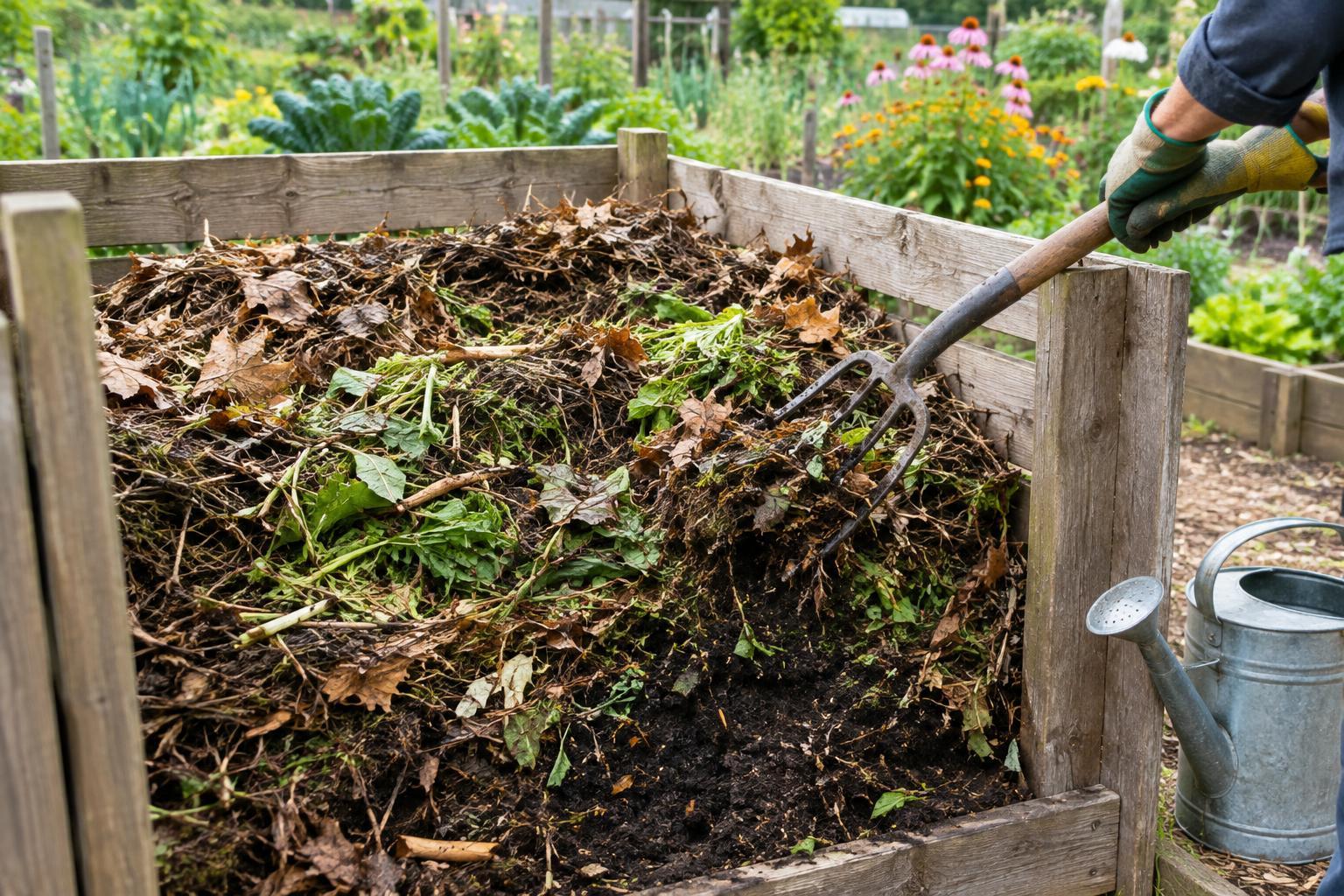
A cool pile is not proof that compost is done. A pile can also be cool because it is too dry, too small, or short on materials that break down readily. If it still contains many recognizable ingredients, moisten it if needed, mix it, and wait. The look, smell, and behavior of the pile are more useful together than any one test.
Try a small plant test if you are unsure
When a batch looks finished but you are uncertain, try growing a few quick-sprouting seeds in a small container of compost blended with ordinary garden soil. Plant the same type of seed in a second container of soil alone, and keep both equally moist and in the same location. If seeds sprout and grow reasonably well in the compost blend, that is reassuring. Poor growth has several possible causes, however, so treat the test as a clue rather than a guarantee.
No home check can establish that a pile is free of every weed seed or harmful organism. Be particularly cautious with compost containing animal manure, diseased plants, or materials whose origins are unknown. Visual signs of maturity do not establish that those materials were heated sufficiently throughout the pile. In a shared garden, it is sensible to agree on what goes into the compost before trying to judge when it is finished.
Use the finished portion and return the rest
Once the compost passes the basic checks, spread a modest layer over garden soil or gently work it into the top few inches before planting. It can also serve as a surface dressing around established plants, kept away from direct contact with stems. For containers, blend finished compost with an appropriate potting mix rather than using compost alone; it can be too dense or inconsistent by itself.
If a batch contains both fine compost and unfinished chunks, screen it through a simple garden sieve. Use the fine portion and put the larger pieces back into an active pile. This makes the material easier to spread without wasting slow-to-break-down ingredients. In a community garden, labeling piles as “adding,” “finishing,” and “ready” helps everyone know where to put new scraps and which material to use.