Start with what the garden needs
A fertilizer label tells you what is in a product, but it cannot tell you whether your soil needs it. Before buying fertilizer, look at the plants, the growing conditions, and any soil test results available for the bed. Slow growth can have many causes, including poor drainage, limited sunlight, compacted soil, or inconsistent watering. Adding nutrients will not correct those problems.
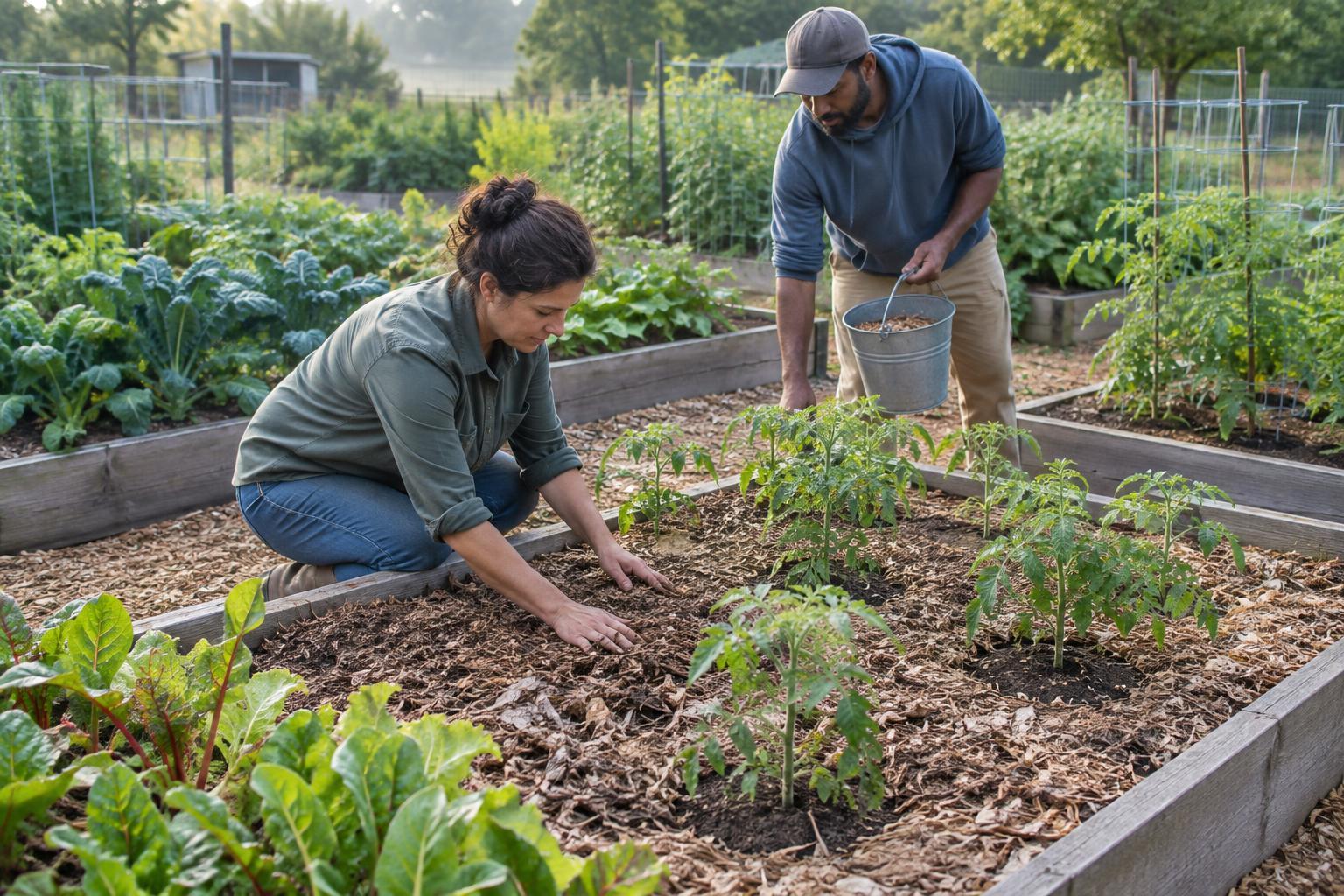
This matters in a community garden, where several people may care for the same beds. Ask what has already been applied and keep a simple record of products, amounts, and locations. If a soil test shows that a nutrient is already plentiful, choose a product that does not add more of it, or skip fertilizing until there is a clear reason to do so.
Understand the three N-P-K numbers
The three prominent numbers on a fertilizer package give the percentages by weight of nitrogen (N), available phosphate (P₂O₅), and soluble potash (K₂O), in that order. A label reading 5-10-5 contains 5% nitrogen, 10% available phosphate, and 5% soluble potash by weight. The middle and last numbers use labeling conventions based on phosphate and potash; they are not percentages of elemental phosphorus and potassium.
Nitrogen supports leafy growth, phosphorus has roles in root growth and other plant processes, and potassium contributes to overall plant function. These roles do not mean every garden needs all three added. The numbers describe a product’s composition, not its suitability for a particular bed. A higher number also means a greater concentration by weight, not an instruction to use more.
Read the rate before opening the bag
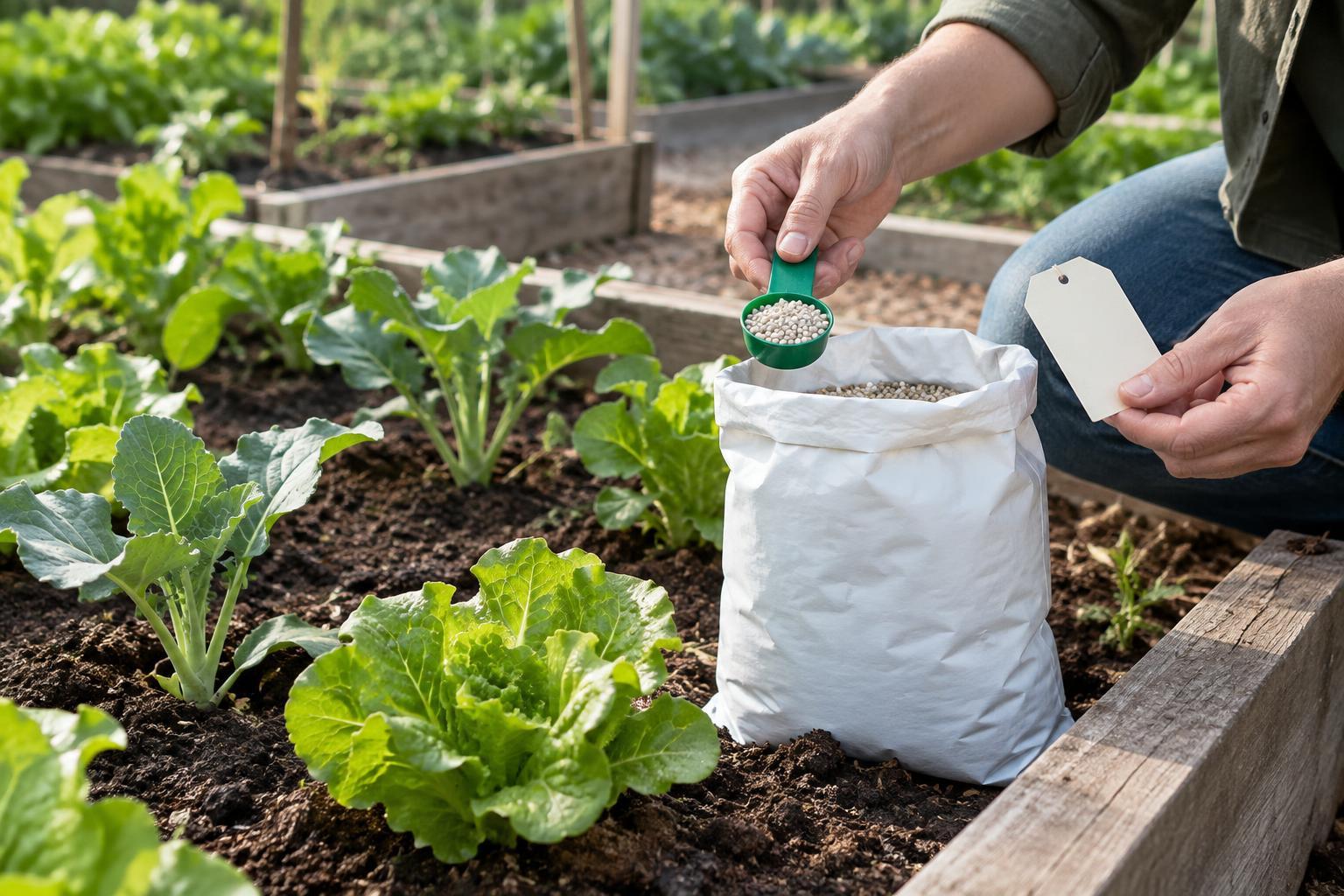
Find the label directions for your crop or planting type and check whether the rate applies to a measured area, a row length, a single plant, or a volume of water. Also check whether it is a rate per application or a limit over a longer period. Product forms differ: a scoop of granular fertilizer, a scoop of another brand, and a diluted liquid feed are not interchangeable.
Measure the area you intend to treat, then scale the label rate to that area. For example, if directions specify an amount for 100 square feet, a 25-square-foot bed receives one-quarter of that amount. Use a scale or a measuring tool appropriate to the product rather than guessing by handfuls. If directions give a range and you are uncertain what the bed needs, the lower end is the more cautious starting point.
Pay attention to placement instructions as well as quantity. Some products are mixed into soil before planting; others are placed beside established plants or diluted before use. Do not put fertilizer directly against stems or into a planting hole unless the label specifically calls for it. In shared spaces, mark recently treated beds so another gardener does not repeat the application.
Know why fertilizer can burn plants
Fertilizer burn usually refers to injury associated with an excessive concentration of soluble salts near roots or on leaves. Plants may show scorched leaf edges, wilting, or poor growth, though those symptoms can also have other causes. Seedlings and plants already stressed by heat or dry soil may be especially vulnerable. Applying more than the label allows increases risk without guaranteeing better growth.
Reduce the risk by measuring carefully, following dilution instructions, and keeping fertilizer off foliage when the product is intended for soil application. Follow the label’s watering directions; water can help move appropriately applied fertilizer into the root zone, but it does not make an excessive dose harmless. If granules spill in one spot, collect the excess rather than spreading it into nearby beds or washing it toward a drain. Organic or slow-release products may release nutrients more gradually, but they still require measured application.
Make the label part of a shared garden routine
Before applying a product, confirm four things: the bed needs the nutrients it supplies, the label covers the intended use, the amount matches the area or plants being treated, and someone can record the application. Keep the package or a clear photo of its directions until the product is used up. This makes it easier for the next gardener to check the rate and avoid mixing up similar-looking materials.
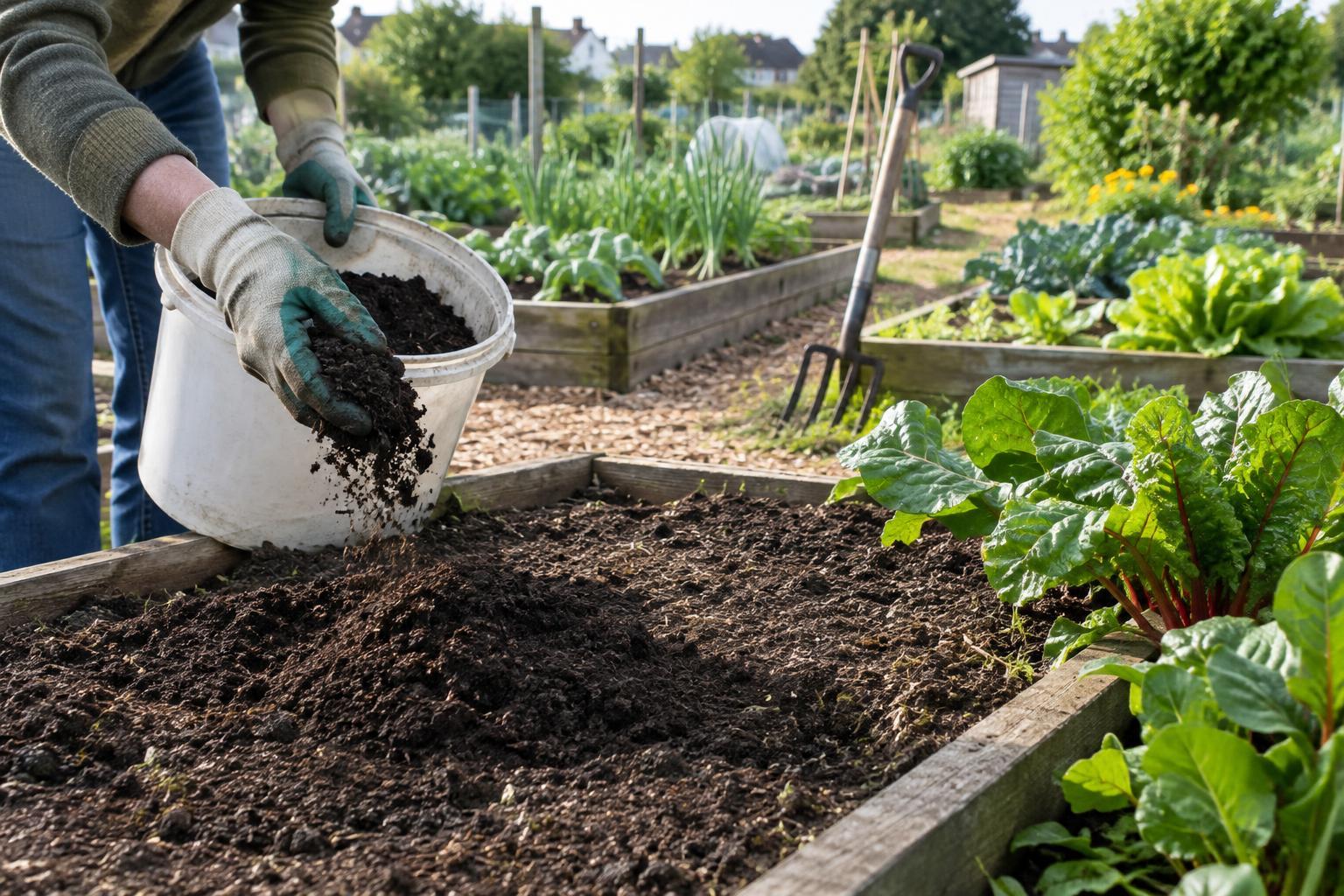
A good fertilizer decision is often a restrained one. Healthy soil management also includes adding suitable compost, protecting soil structure, watering consistently, and growing plants where they receive enough light. Fertilizer is one tool among many. Reading the label closely helps you use that tool with greater care for both the plants and the people sharing the space.