Start with the planting method
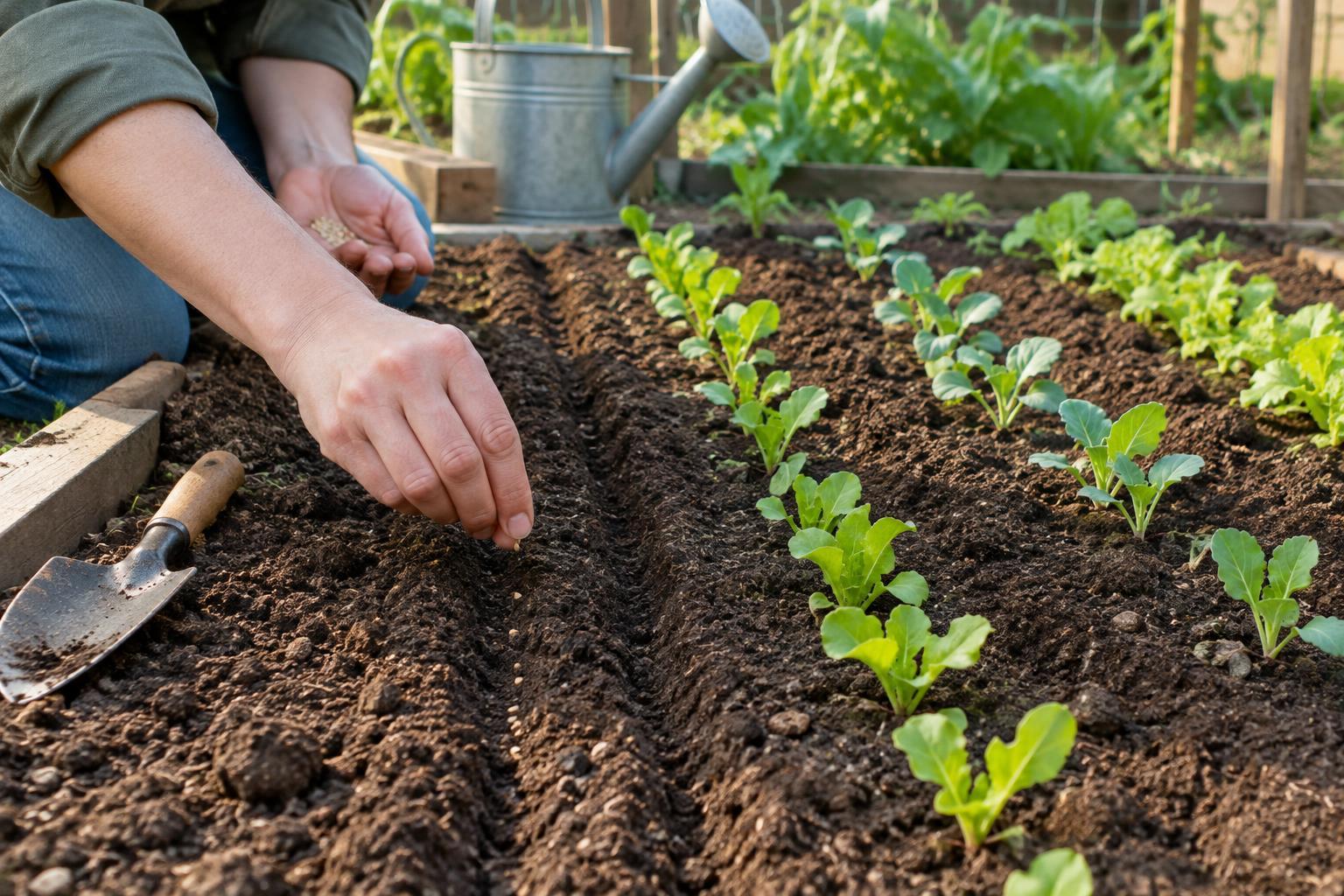
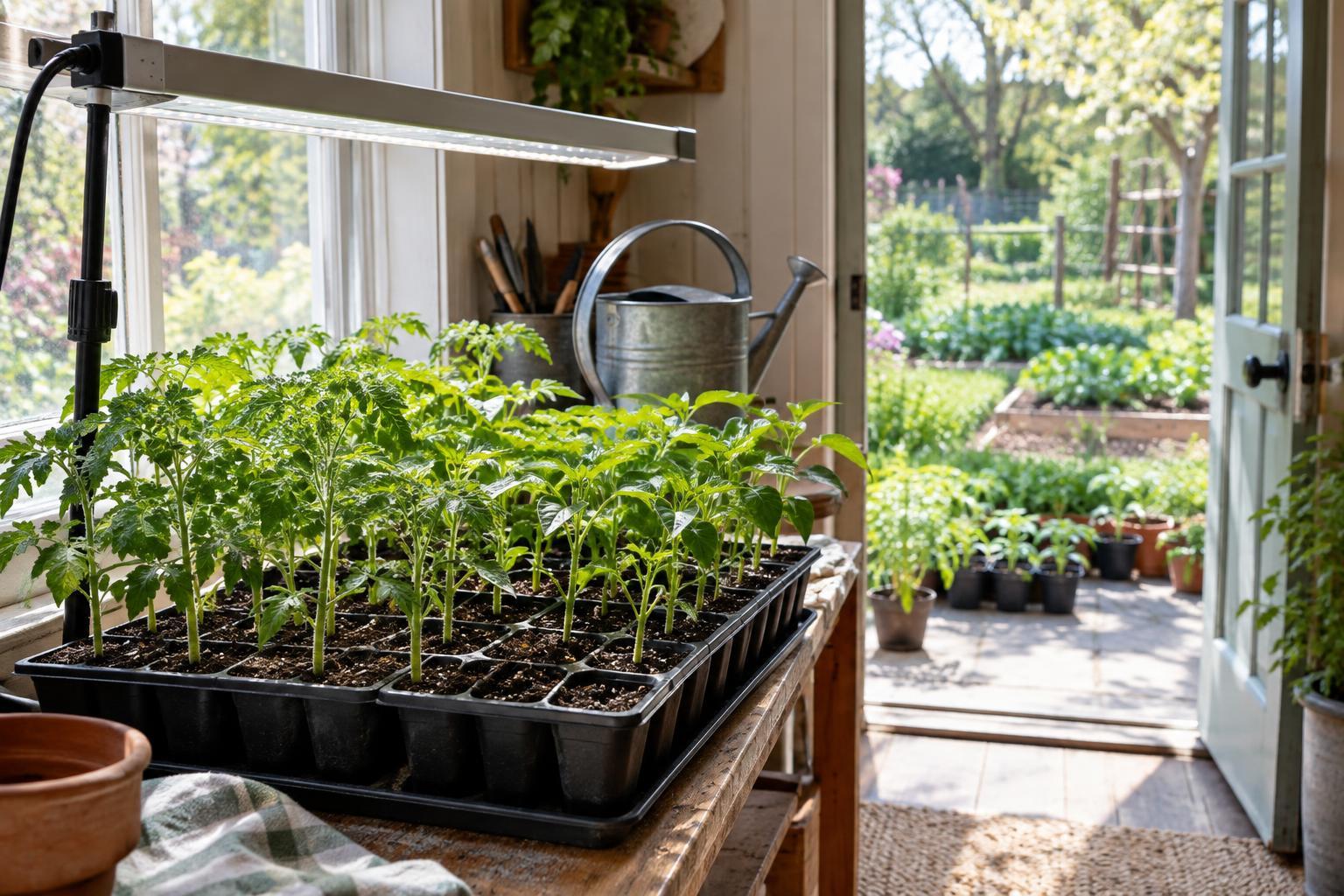
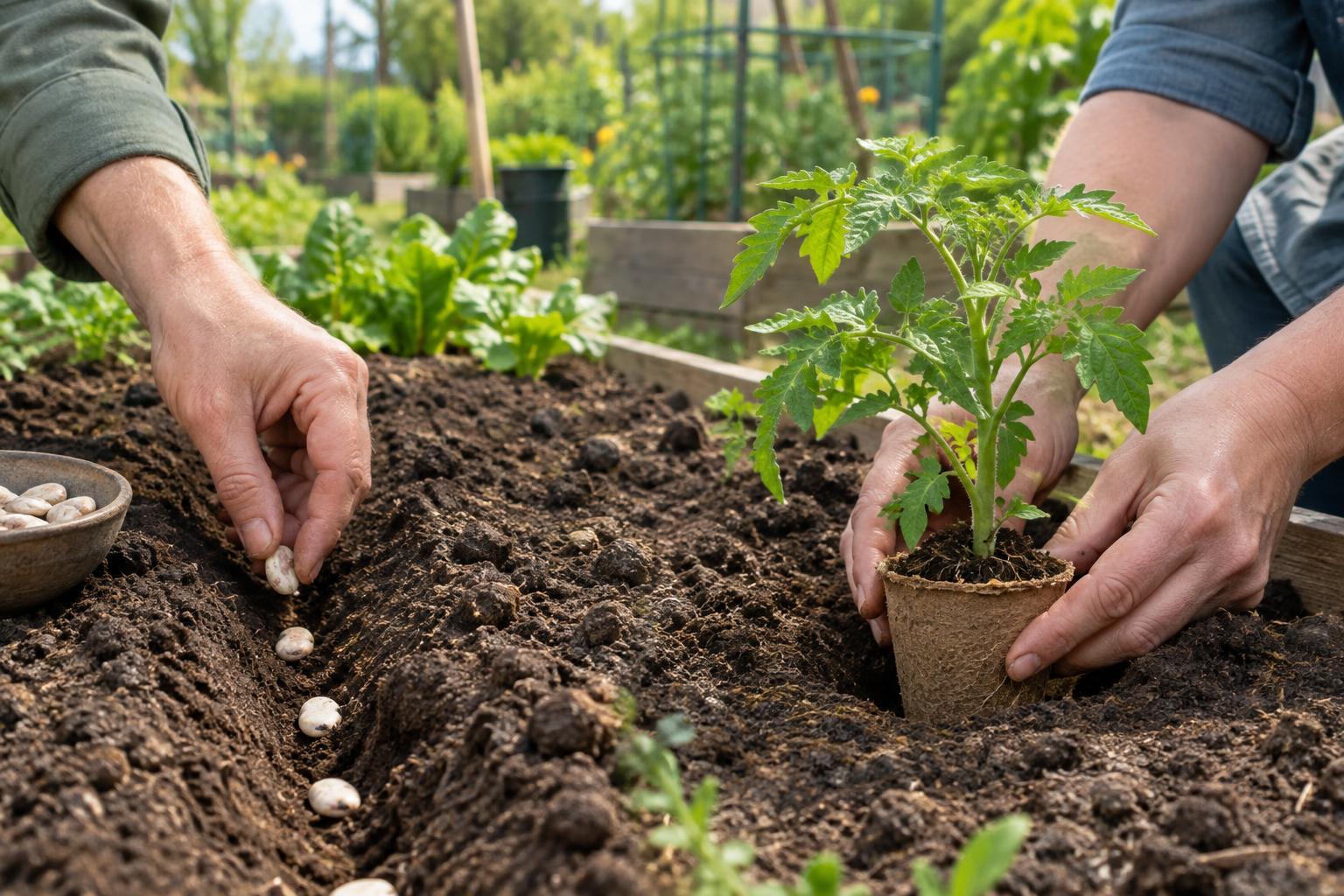
Before looking at the numbers, check whether the packet recommends direct sowing, starting seeds indoors, or either method. Direct sowing means placing seeds where the plants will grow. Starting indoors means raising seedlings in containers and moving them outside later. Some vegetables are commonly direct-sown because their roots can be disturbed by transplanting; others benefit from a head start indoors where the outdoor growing season is short.
Read the timing instructions alongside the planting method. A packet may describe when to sow outdoors or how many weeks before an expected last frost to start indoors. These are planning guides, not promises about a particular day. Soil conditions and the weather still matter. In a community garden, it helps to note the chosen method and sowing date on a plot label so other gardeners know whether an apparently empty bed has already been planted.
Use sowing depth as a starting point
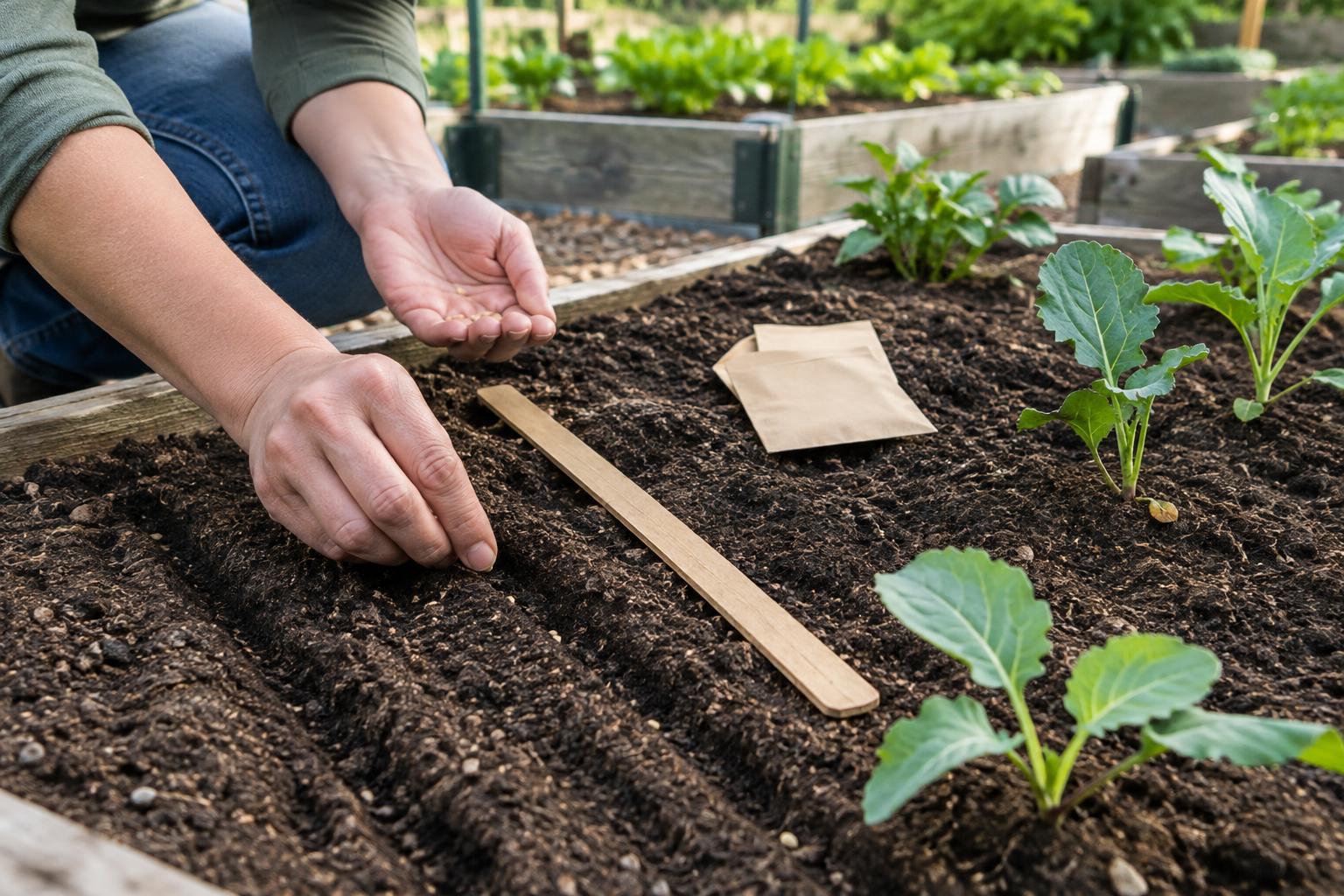
Sowing depth tells you how much soil should cover a seed. A direction to sow one-half inch deep generally means making a shallow opening, placing the seed, and covering it with about one-half inch of soil. It does not mean pressing the seed to the bottom of a deep hole and leaving the hole open. Seeds sown much deeper than directed may struggle to reach the surface; seeds left too exposed can dry out or be displaced.
Follow any special note on the packet about pressing seeds onto the soil surface or covering them lightly. After sowing, firm the soil gently so the seed has contact with moist soil, then water carefully enough to avoid washing it away. Soil texture can affect how easily seedlings emerge, so treat the printed depth as a useful guide rather than a measurement that must be exact to the fraction of an inch.
Separate seed spacing from final plant spacing
Packets may give several different distances: how far apart to place seeds, how far apart plants should stand after thinning, and how far apart to make rows. These numbers serve different purposes. Seeds are sometimes sown closer together than mature plants need because not every seed will sprout. Once seedlings have emerged, thinning removes extras so the remaining plants have room for light, air, water, and root growth.
Look for wording such as “thin to” or “final spacing.” If a packet suggests sowing seeds two inches apart and thinning plants to eight inches apart, eight inches is the target distance between plants that remain. You can often snip unwanted seedlings at soil level rather than pulling them and disturbing neighboring roots. Row spacing usually describes room between rows for plant growth and access. In a raised bed, you may choose a different layout, but keep the final plant spacing in mind and leave a workable path for tending and harvesting.
Interpret days to maturity with care
Days to maturity is an estimate of how long a variety takes to reach a typical harvest stage under suitable growing conditions. Check the packet for its starting point: the count may begin at direct sowing or at transplanting. If the packet does not say, avoid treating the number as an exact harvest appointment. Cool soil, limited light, water stress, and other growing conditions can change the pace.
The harvest stage matters, too. A crop picked young may be ready before one left to grow larger, and some plants produce over an extended period rather than all at once. Use the maturity estimate to compare varieties and make a rough plan for when a bed might become available. For succession planting, leave room in the schedule for germination, harvesting, and clearing the bed instead of assuming one crop will finish precisely on its listed maturity day.
Turn packet details into a shared planting plan
A few notes can make a packet much more useful after it has been put away. Record the variety, sowing date, planting method, depth, final spacing, and estimated harvest window on a garden map or shared log. Keep the packet or photograph its planting instructions so anyone helping with thinning or watering can check what was intended. A planting date is also useful if seedlings do not appear and the group needs to decide whether to wait or sow again.
Finally, read the remaining directions rather than relying on the three headline numbers alone. Packets may include guidance about sun, watering, germination, or whether a crop benefits from support. Compare those needs with the space you actually have. The packet provides a starting plan; observing what happens in your bed helps you adjust the next sowing for your soil, season, and garden team.