Start with the sample and the crop
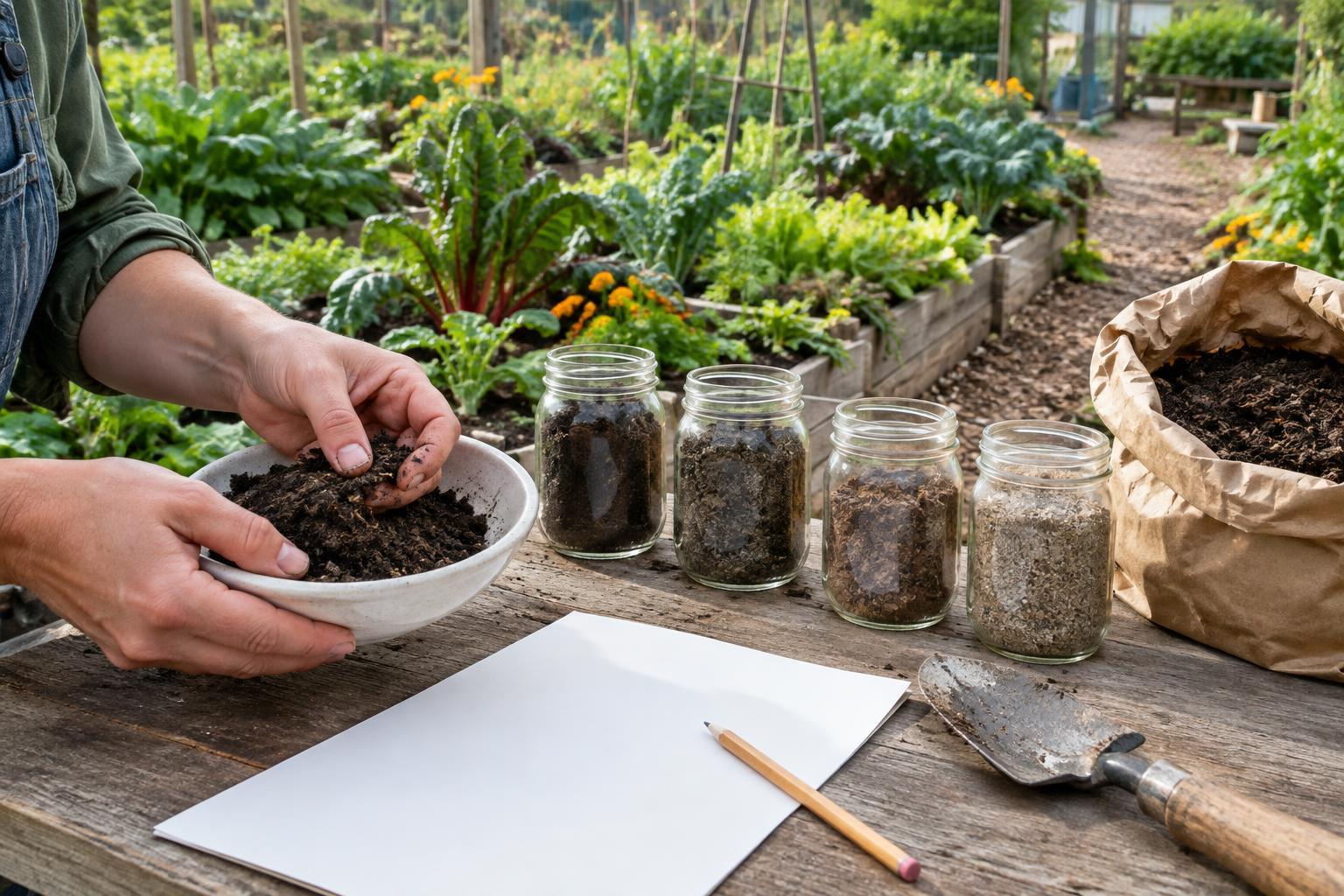
Before reading the numbers, check what soil the report represents. A sample from one vegetable bed may not describe a nearby raised bed filled with different material, or a flower border that has received years of mulch. If soil from several areas was combined, the results describe their average rather than any one spot. Keep the sampling location, depth, and date with the report so you can compare results later.
Next, check which plants or land use you selected when submitting the sample. A laboratory may give different recommendations for vegetables, lawns, and ornamental beds because their needs and management differ. If the listed use does not match your plans, ask the testing service how to interpret its recommendations before applying amendments.
Read pH before choosing amendments
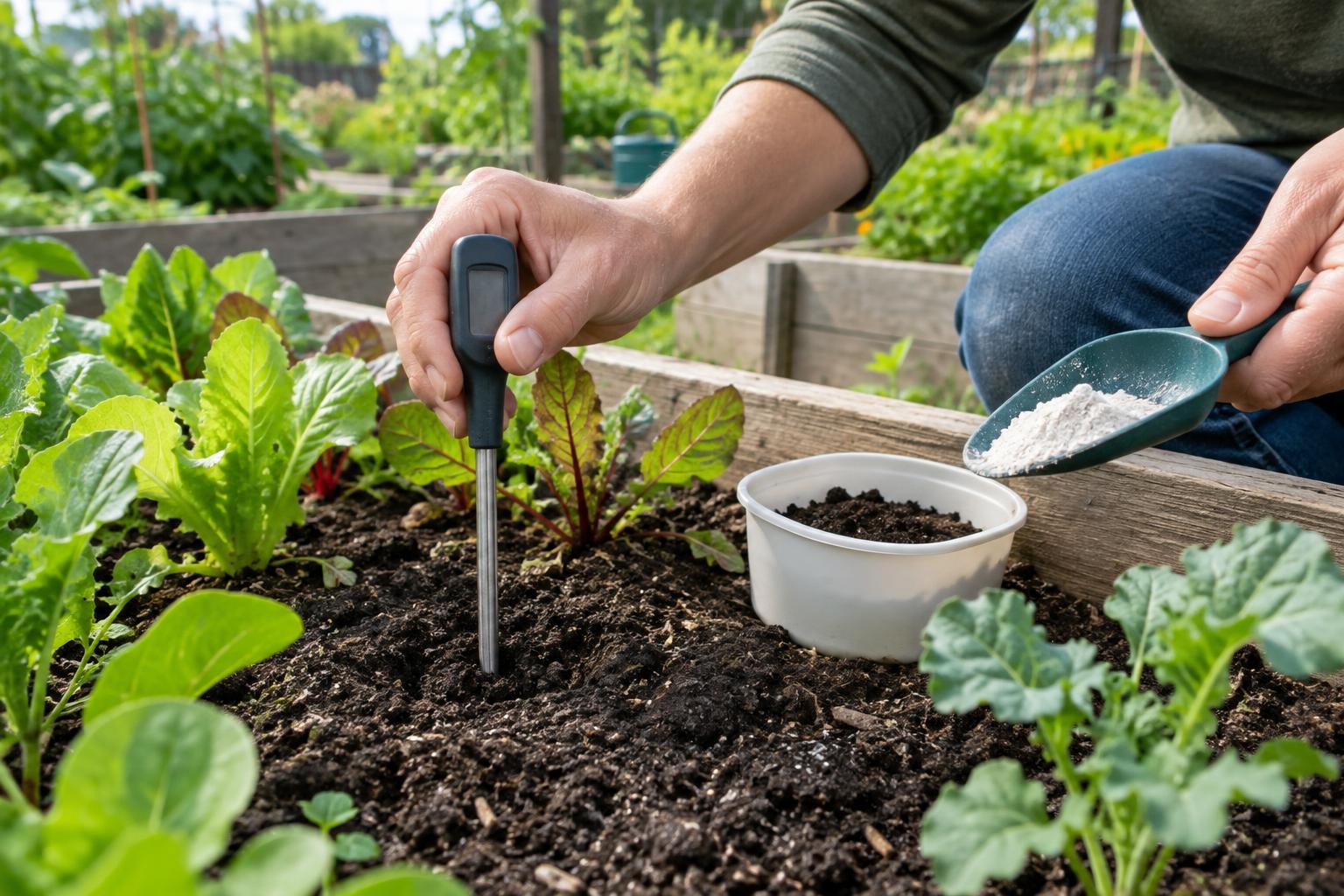
Soil pH describes how acidic or alkaline the soil is. It affects how readily plants can take up some nutrients, so a nutrient problem is not always solved by adding fertilizer. Many common garden crops grow well in soil that is slightly acidic to near neutral, but preferences vary. Read the target range supplied for your intended plants rather than assuming every bed needs the same pH.
A report may recommend lime to raise pH or sulfur to lower it. Treat the stated rate as a calculated recommendation, not a reason to apply an extra handful “for good measure.” The amount needed depends partly on how strongly the soil resists pH change; two soils with the same pH can require different amounts. If your report includes a buffer pH or a lime requirement, use the laboratory’s explanation of that measurement instead of treating it as a second target pH. Changes can take time, and retesting is more reliable than guessing whether an amendment worked.
Understand nutrient ratings, not just numbers
Most routine garden reports focus on nutrients such as phosphorus and potassium and may also list calcium, magnesium, or micronutrients. Results might appear as concentrations, estimated availability, or categories such as low, medium, and high. Those categories are an interpretation of the laboratory’s test method. Avoid comparing a number on one report directly with a number from another laboratory unless their methods and units are compatible.
A low rating suggests that a crop may respond to added nutrients; a high rating usually means there is little reason to add more of that nutrient. More is not automatically better. For example, routinely applying a balanced fertilizer when phosphorus already tests high may add phosphorus the bed does not need. Nitrogen is often handled differently because its availability can change quickly with weather, plant growth, and the breakdown of organic matter. If your report does not show a nitrogen value, that does not mean the soil contains none.
Organic matter is useful context when it appears on a report, but it is not a complete measure of soil health. Compost, roots, mulch, and soil organisms influence structure and water movement in ways a basic nutrient panel may not capture. Pair the report with observations: Does water soak in? Do plants root freely? Is the soil compacted or persistently waterlogged?
Turn recommendations into a restrained plan
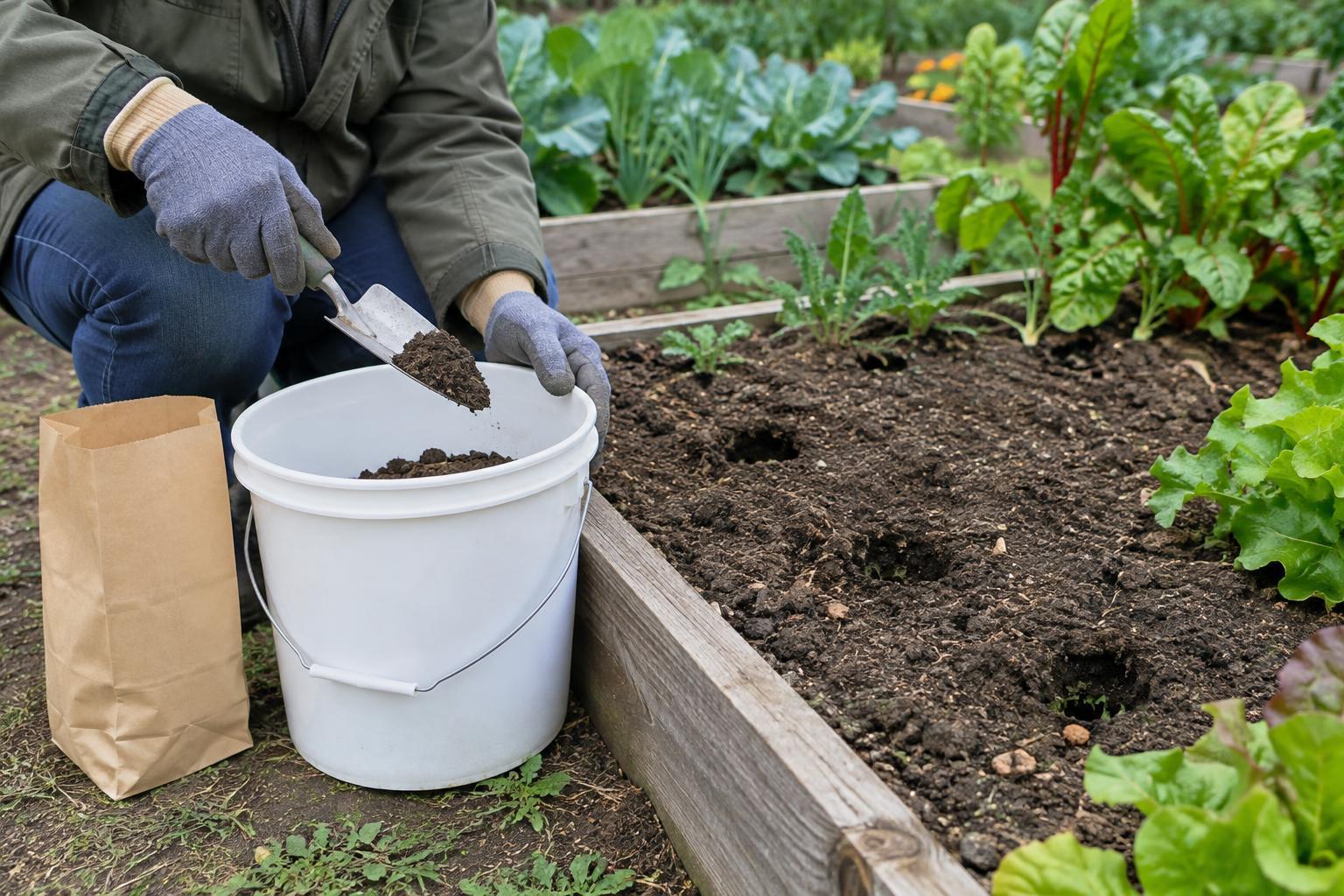
Read the units on every amendment recommendation. A rate might be given per square foot, per 100 square feet, or for a much larger area. Measure the bed you actually intend to treat, then convert the rate before buying or spreading anything. Check whether the recommendation is for a nutrient, such as nitrogen, or for a product, such as a particular fertilizer blend; those are not interchangeable amounts.
Apply only what the report and your planting plan call for. Compost can improve a bed’s tilth, but it also supplies nutrients, and repeated heavy applications can build up some of them. In shared gardens, record what was added, where, and approximately how much. That simple log helps the next gardener understand the bed and reduces duplicate applications. Where beds have different histories or results, manage them separately rather than giving the whole garden one treatment.
Know what a routine test cannot tell you
A standard fertility test is meant to guide nutrient and pH management. It generally does not establish whether soil is free of contaminants. If a garden site has an uncertain history, ask a testing service which separate tests are appropriate before growing food there. Similarly, a report cannot diagnose every cause of yellow leaves or poor growth; watering, light, temperature, pests, and root conditions also matter.
Keep the report as a baseline, make changes deliberately, and sample comparable areas in a consistent way when you test again. The goal is not to make every number as high as possible. It is to support the plants you want to grow while avoiding unnecessary amendments.