Start with the smell and the squeeze test
A healthy compost pile may have a mild earthy smell, especially when you turn it. A strong sour or rotten smell usually means wet material has packed together and air cannot move through it. An ammonia-like smell often points to an excess of nitrogen-rich materials, such as fresh grass clippings or vegetable scraps. These clues are useful, but you do not need to identify the smell perfectly before taking action: both problems usually call for more dry, bulky material and better airflow.
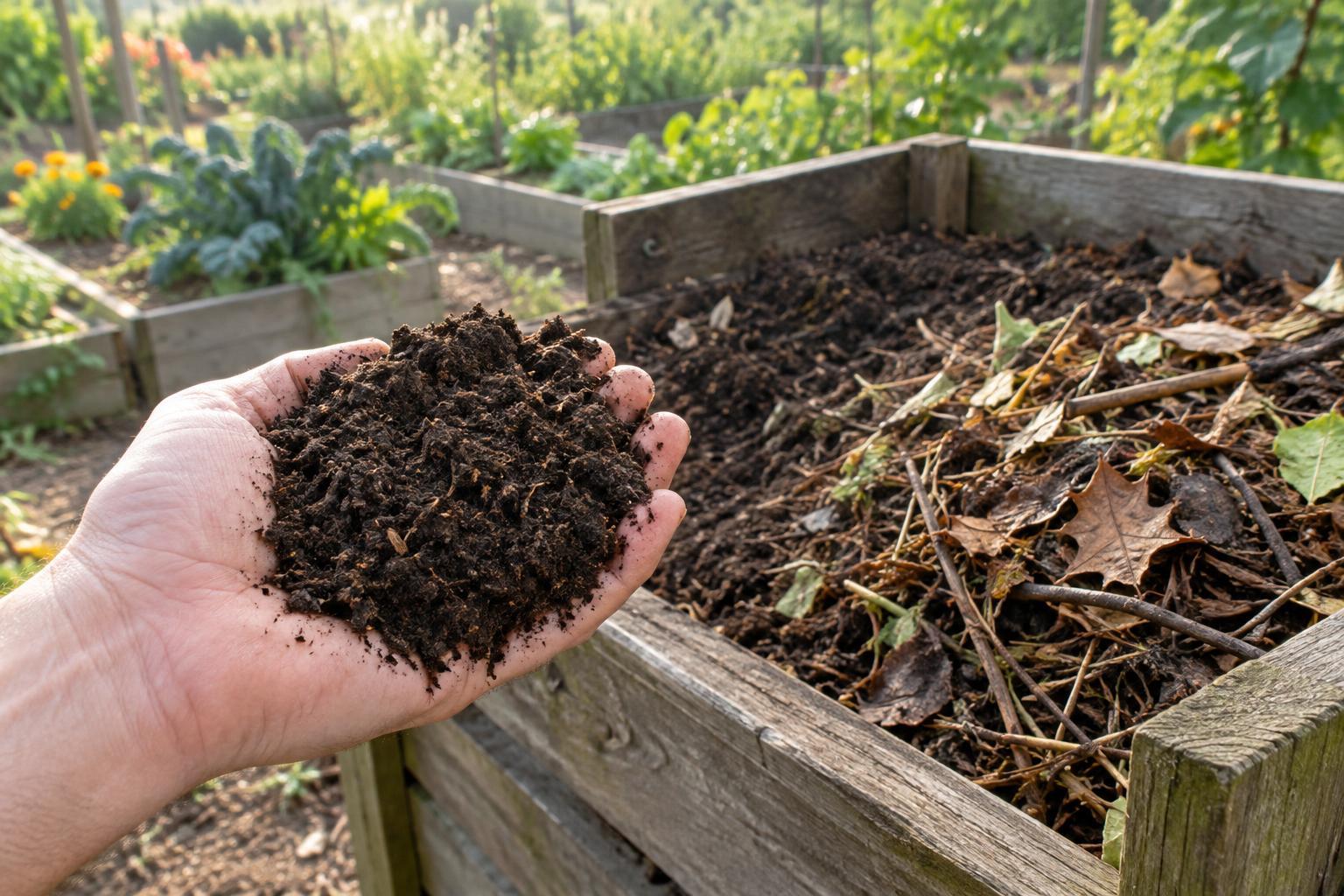
Put on gloves and check a handful of material from several inches inside the pile. It should feel roughly like a wrung-out sponge: damp, but not dripping. If water runs out when you squeeze it, or the contents look shiny and matted, the pile is too wet. If the top looks dry but the center is soggy, judge the pile by the center. Wash your hands after handling compost, and avoid breathing in dust if any dry material becomes airborne.
Add dry materials, then loosen the pile
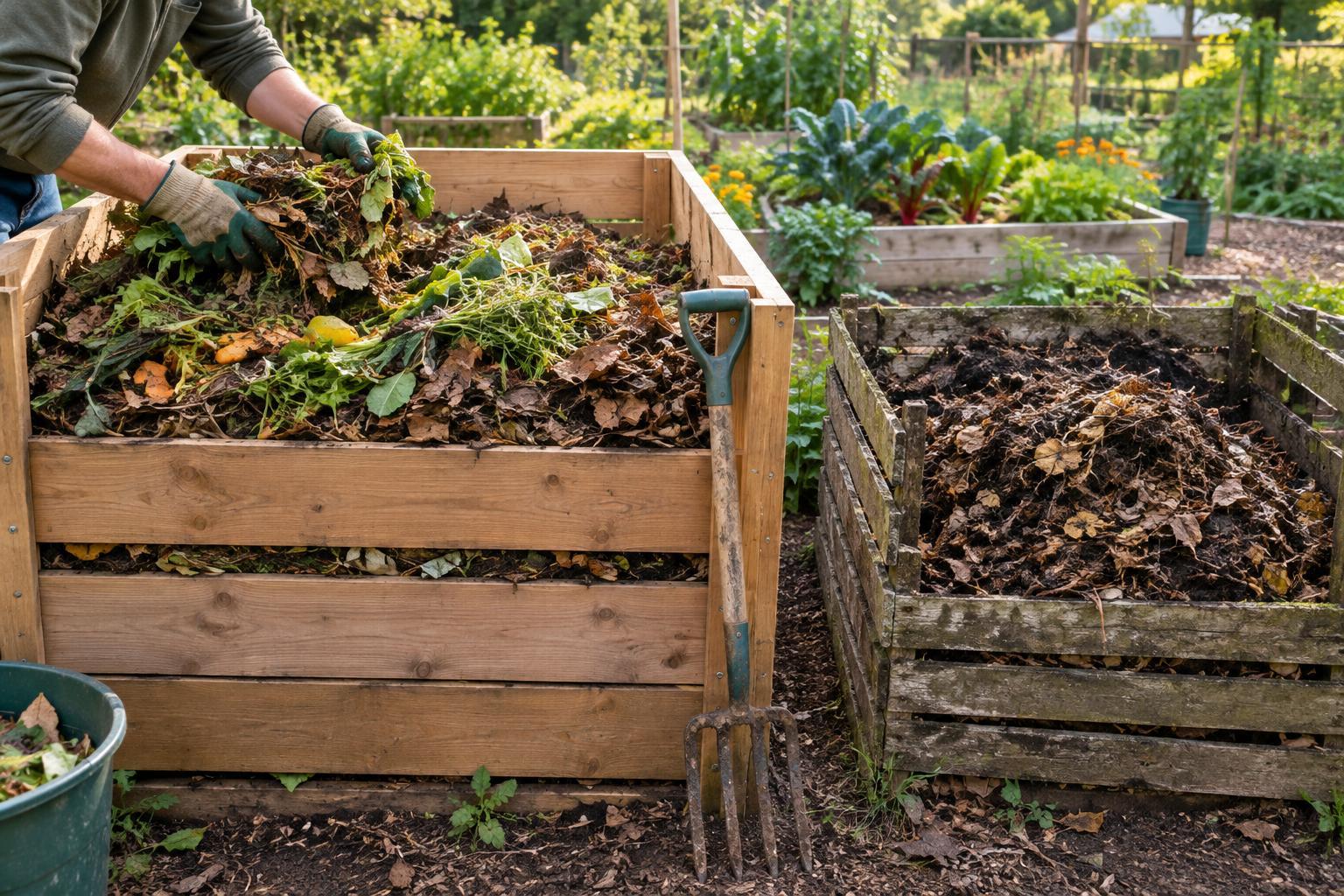
To correct a soggy pile, gather what composters often call “browns”: dry leaves, torn plain cardboard, shredded uncoated paper, or small amounts of untreated wood chips. Pull apart dense clumps of food scraps or grass and mix in the browns throughout, rather than leaving them in a layer on top. Bulky pieces help hold open small air spaces; finer material helps absorb excess moisture. Add enough that the pile feels damp rather than wet when you check it again.
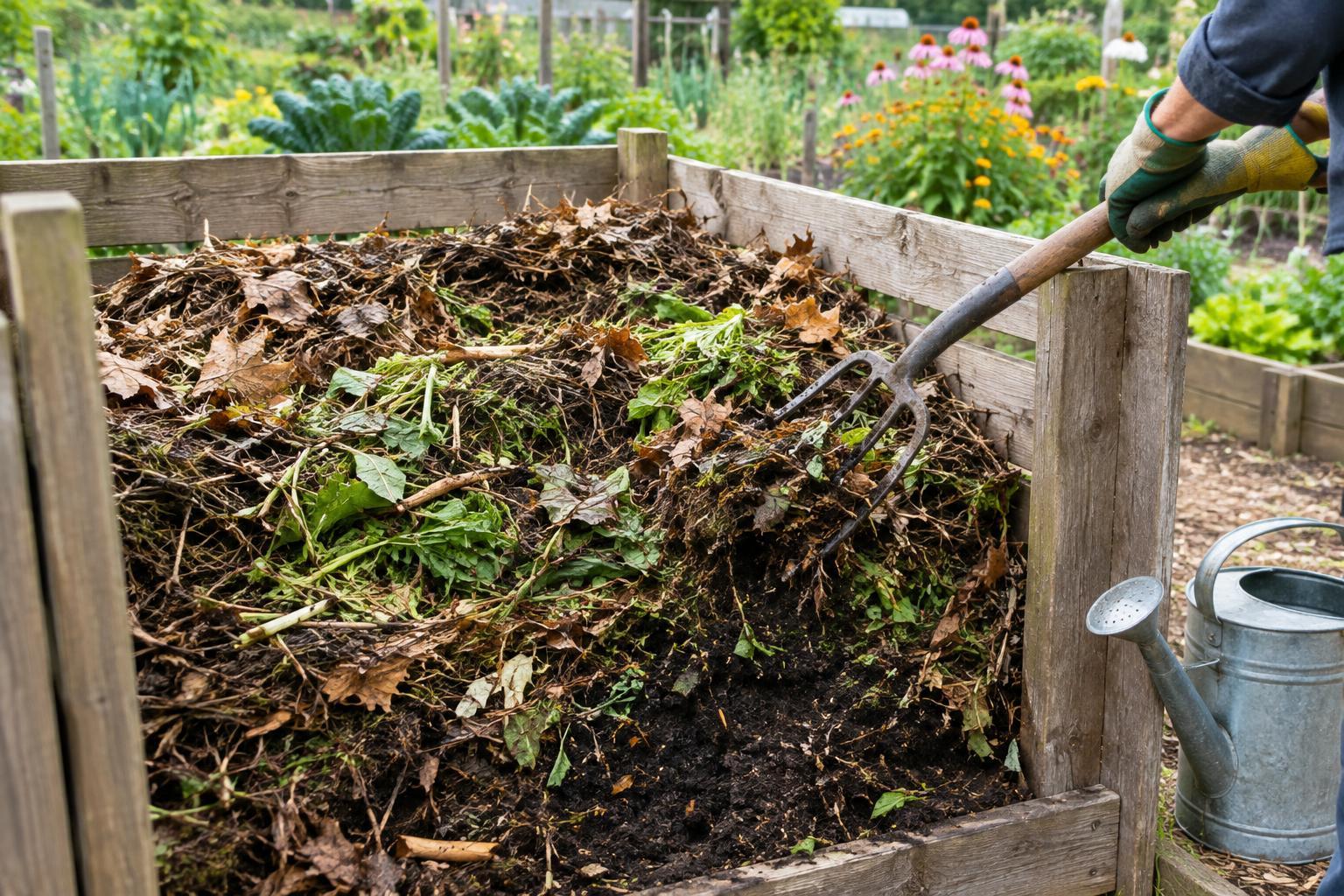
Turn or lift the material gently with a garden fork to let air reach the center. You do not need to churn it into a paste. If the pile sits in a solid-bottomed container, check whether liquid has collected at the bottom and whether drainage openings are blocked. Keep any drainage away from walkways and water sources. A persistent puddle beneath a bin is a sign to address the bin’s location or drainage, not just add another layer of cardboard.
Keep rain out without sealing air in
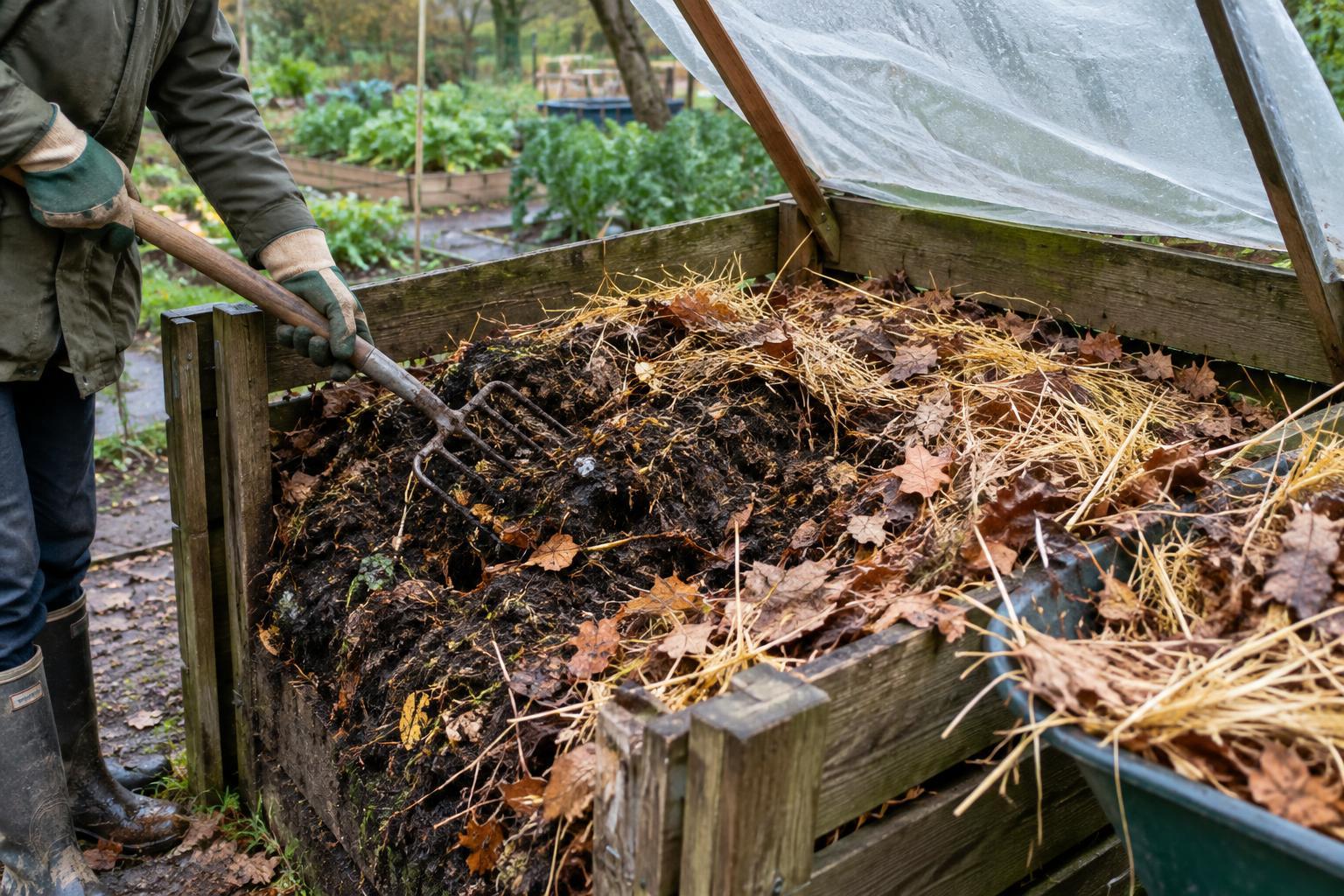
A cover can stop heavy rain from undoing your work. Use a lid or a loose tarp that sheds water while leaving room for air to enter. Avoid wrapping the pile tightly in plastic. If the compost sits in a low spot that collects runoff, consider moving the bin to a better-drained location when practical. In a shared garden, make sure a cover can be opened and replaced easily by everyone who uses the system.
After the first adjustment, check the pile again over the next several days. If it still feels wet or smells sour, mix in more browns and loosen compacted areas. If it has become dry all the way through, add water gradually while turning. The goal is a consistent dampness, not a perfectly measured recipe. Large, tightly packed piles and bins filled mostly with fine scraps may need more frequent checks because their centers can stay wet even when their surfaces look fine.
Prevent the next smelly batch
Keep a supply of dry leaves or torn cardboard near the compost area so each addition of fresh scraps can be covered with browns. Break up thick deposits of grass clippings before adding them; left in a heavy layer, they can mat together quickly. Chop large kitchen scraps if convenient, but avoid making everything so fine that it packs tightly. Aim for a mix of textures, from small pieces that break down readily to coarser pieces that leave room for air.
Food choices matter too. Meat, fish, dairy, and oily foods can attract pests and cause odors in a typical open garden pile, so keep them out unless your compost system is specifically designed and managed for them. Follow any rules your shared garden has for accepted materials. If one bin receives more scraps than volunteers can mix and cover, consider adding a second active bin or limiting deposits until the current pile is manageable.
Make the fix easy for everyone to repeat
A shared compost system works best when the next person can tell what to do. Label a container for dry browns and place a simple reminder by the bin: add scraps, cover them with browns, and close the lid. Agree on who checks moisture, turns the pile, and reports problems. A small, regular check is easier than rescuing a bin after weeks of neglected, wet additions.
Give the pile time to respond. The worst smell should lessen as the excess moisture is absorbed and air returns, though the material will not become finished compost overnight. If odors keep coming back, look beyond the latest scraps: a rain-soaked location, blocked drainage, or too many fresh additions may be the underlying issue. Fixing that routine is what keeps the compost useful for the garden and pleasant for its neighbors.