What an infiltration test can tell you
After a heavy watering, does one part of your garden stay soggy while another dries out? An infiltration test offers a practical way to compare those spots. You fill a small hole with water and measure how quickly the water level falls. The result is an approximate drainage rate, not a complete diagnosis of soil health.
Water movement matters to roots. Soil that stays saturated for long periods has less air available in its pores, while soil that drains quickly may need more frequent watering. Drainage can also vary across a single community plot because of foot traffic, buried construction material, slope, or differences in soil texture. Test the places where you intend to plant rather than assuming one result represents the whole garden.
Choose a spot and prepare the hole
Gather a trowel or spade, a ruler, a straight stick or marked stake, water, and a timer. Choose a typical planting spot, then repeat the test anywhere conditions look noticeably different. In a shared garden, check that the spot is clear of irrigation lines and other buried features before digging. Avoid testing directly in a path unless the path itself is your concern.
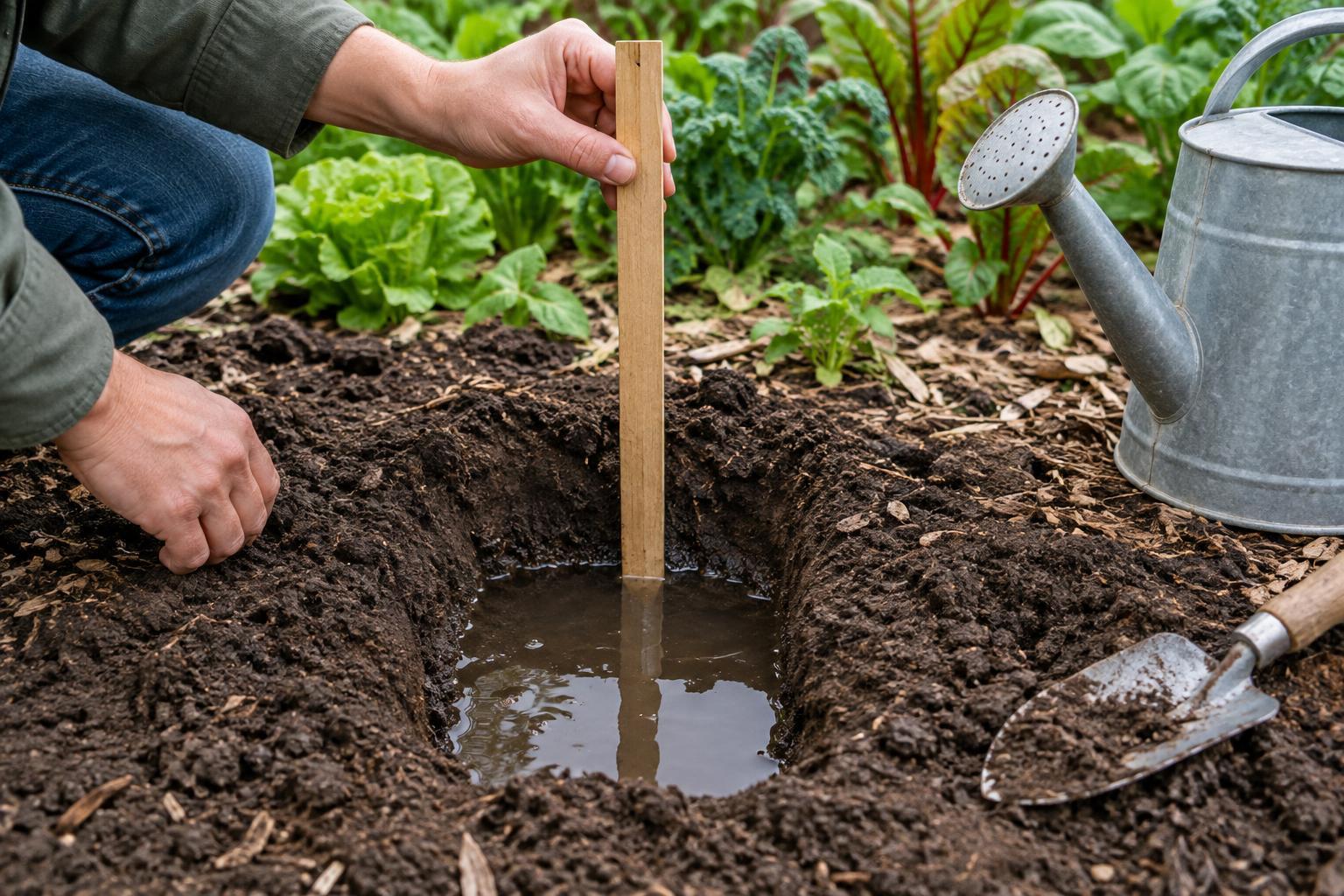
Dig a hole about 6 to 12 inches wide and 12 inches deep. Keep the sides reasonably straight, and gently remove loose soil from the bottom without pressing it down. If your planting area is shallower than 12 inches, note that limitation: a test hole extending below the prepared bed may measure a different layer of soil. Set the excavated soil aside so you can replace it afterward.
Test when the ground is workable rather than frozen or already covered with standing water. If the soil is extremely dry, the first filling may disappear quickly as dry pores take up water. Pre-wetting makes the next measurement more useful for judging how the soil behaves after it has received a substantial soaking.
Fill, measure, and calculate
First, fill the hole with water and let it drain. If it empties quickly, proceed with the measured filling. If water remains for many hours, that observation is useful too; you do not need to keep adding water to a hole that is barely draining. Record how long the first filling took, or note how much water remains when you return.
For the measured filling, add water to a known depth, such as 6 inches. Place a ruler in the hole or mark the starting waterline on a stake. Start a timer and measure how far the water level drops over a set period. For a slowly draining hole, checking after an hour is practical. For a fast-draining hole, use shorter intervals so you can measure a drop before it empties. Refill to the starting level if you want to repeat the measurement.
Divide the drop in inches by the elapsed time in hours to estimate inches per hour. For example, a 1-inch drop in 30 minutes is about 2 inches per hour. Write down the hole location, the starting depth, and each measurement. Consistent notes make comparisons more useful than a single number remembered later.
Interpret the result in context
There is no single ideal rate for every garden plant or every season. A hole that still holds much of its water the next day suggests a drainage concern, especially if nearby plants also show signs of prolonged wetness. A hole that empties very rapidly may indicate coarse soil, cracks, or a route through which water bypasses much of the surrounding soil. Repeat an unexpected result nearby before making major changes.
An infiltration test does not reveal everything below the hole. A compacted layer, a high seasonal water table, or a buried obstruction may affect drainage at another time or depth. Weather also matters: recently saturated soil may behave differently from soil tested during a dry spell. Use the test alongside observations after rain, such as where puddles form and how long beds remain wet.
Put the findings to work
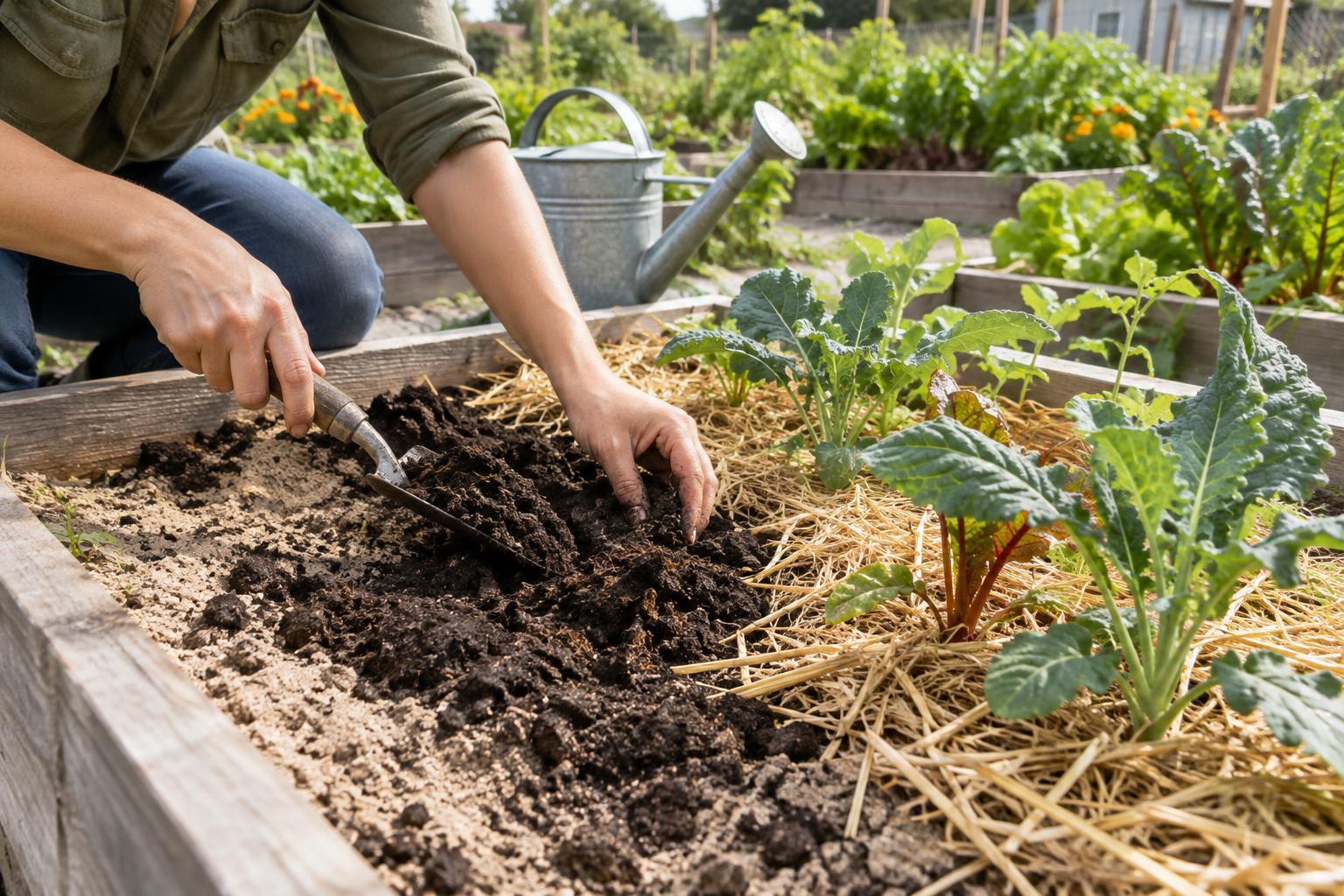
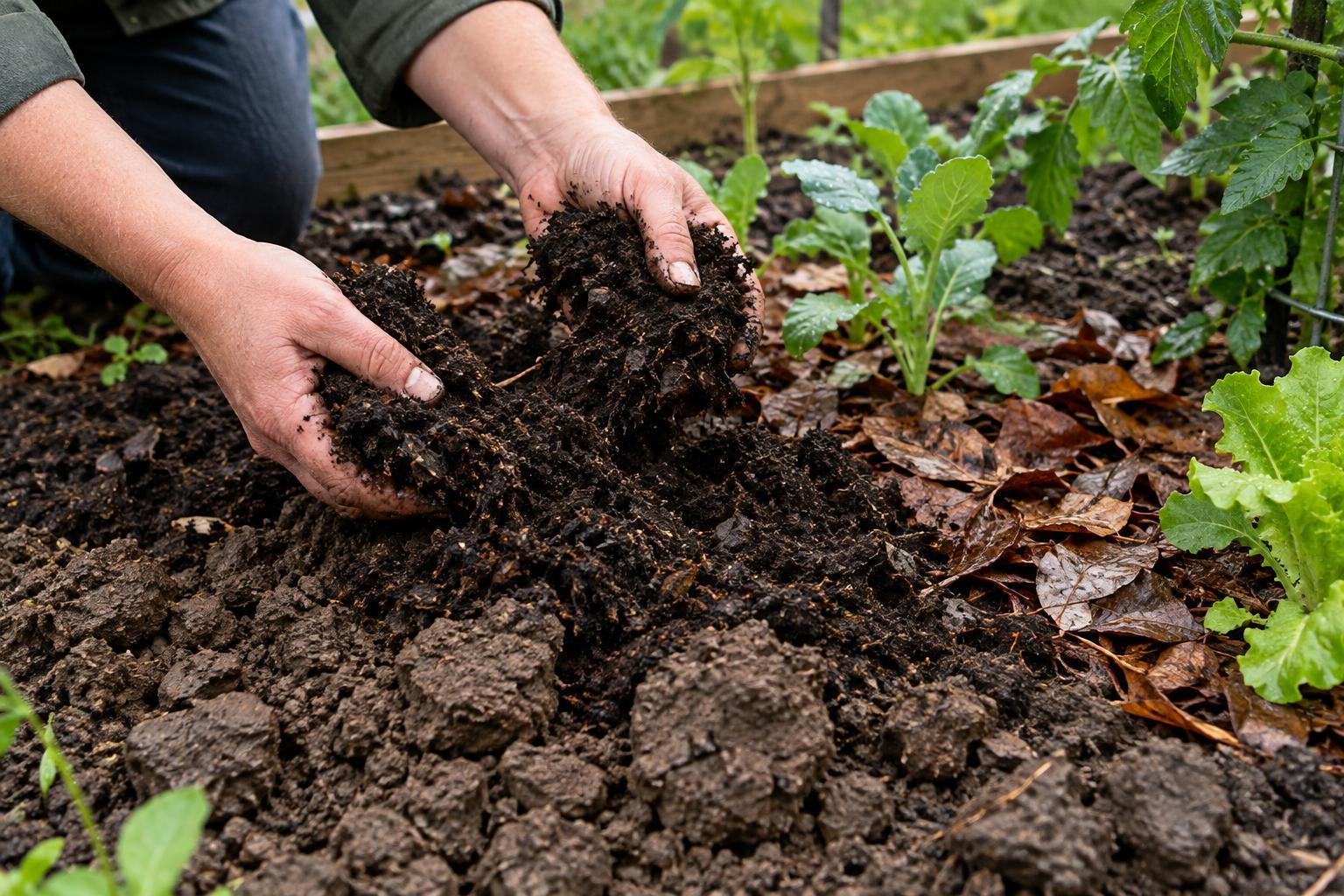
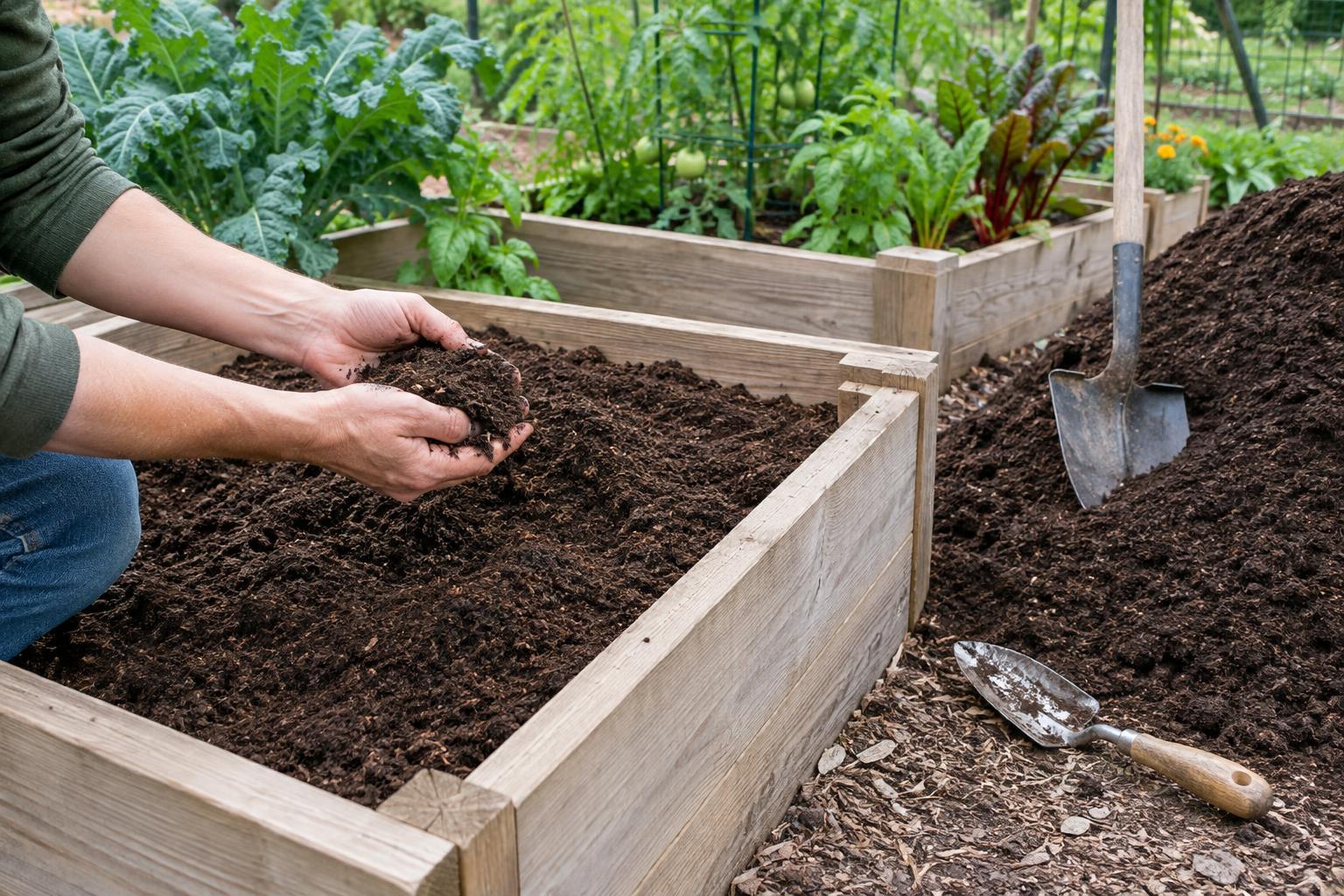
If water moves slowly, protect the bed from compaction by keeping feet and equipment on designated paths. Add finished compost to improve soil structure over time, and avoid working the soil while it is wet and easily smeared. Where a persistently wet site cannot be changed, a raised planting area or plants suited to moist conditions may be more practical than repeated digging.
If water moves quickly, compost and an organic surface mulch can help the bed hold moisture more consistently. Water slowly enough for it to soak in, and check moisture below the surface before watering again. In a community garden, share the test locations and notes with other growers. A simple map of fast- and slow-draining spots can guide planting, watering, and path placement for seasons to come.