Start with the soil, not the calendar
A fixed watering schedule is easy to remember, but it cannot account for a cool rainy week, a windy afternoon, or a newly planted bed. Before watering, check the soil a few inches below the surface near the plants’ roots. If it feels moist and holds together, the bed may not need water yet. If it feels dry and crumbly, water is more likely to help. Check more than one spot: the edge of a bed, the area beneath dense foliage, and a nearby container can dry at different rates.
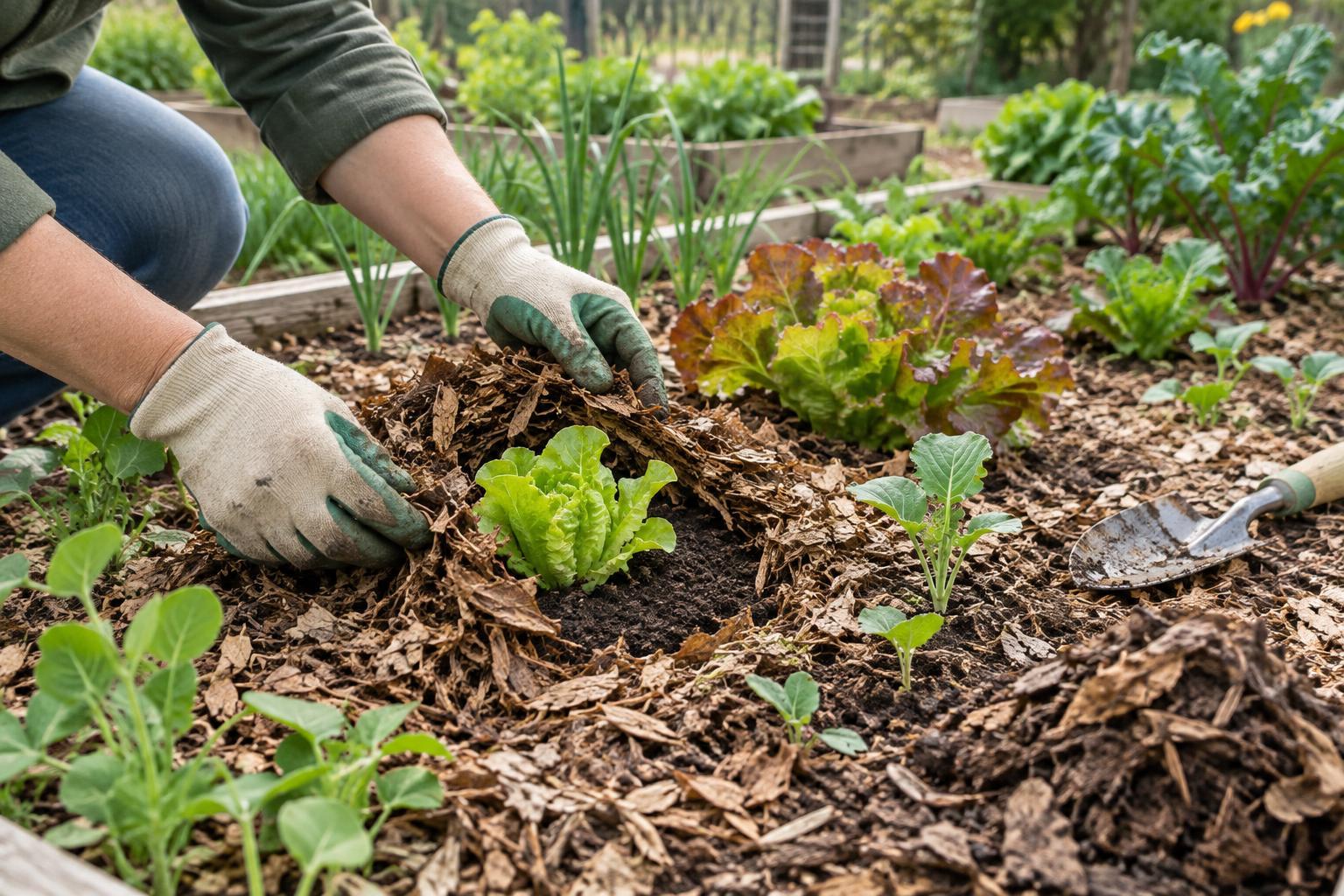
When you do water, aim to moisten the root area rather than briefly wetting the surface. Apply water slowly enough that it soaks in instead of running onto paths. Check the soil afterward to see how far the moisture reached; that feedback is more useful than guessing from the time spent holding a hose. Mulch can slow surface drying, but leave a little space around stems so mulch is not piled against them. Whatever the season, let actual soil conditions guide your next watering.
Spring: support new roots without saturating beds
Spring often brings a mix of rain, cool days, and drying winds. Established plants may draw on moisture already in the ground, while seeds and recent transplants need closer attention. Keep the shallow soil around germinating seeds from drying out completely. For transplants, water the root ball and surrounding soil so roots can begin growing beyond the planting hole. Check these areas regularly, even when the rest of the bed still feels damp.
Avoid assuming every spring shower watered deeply. A brief shower may only dampen the surface, while a longer wet spell may leave a bed needing time to drain. If soil is sticky or water pools, pause watering and avoid working the bed until it is less wet. As plants establish, shift from frequent light sprinkling toward watering that reaches deeper roots when the soil needs it. This helps reduce unnecessary watering while keeping young plants from facing a sudden dry spell.
Summer: watch heat, containers, and uneven drying
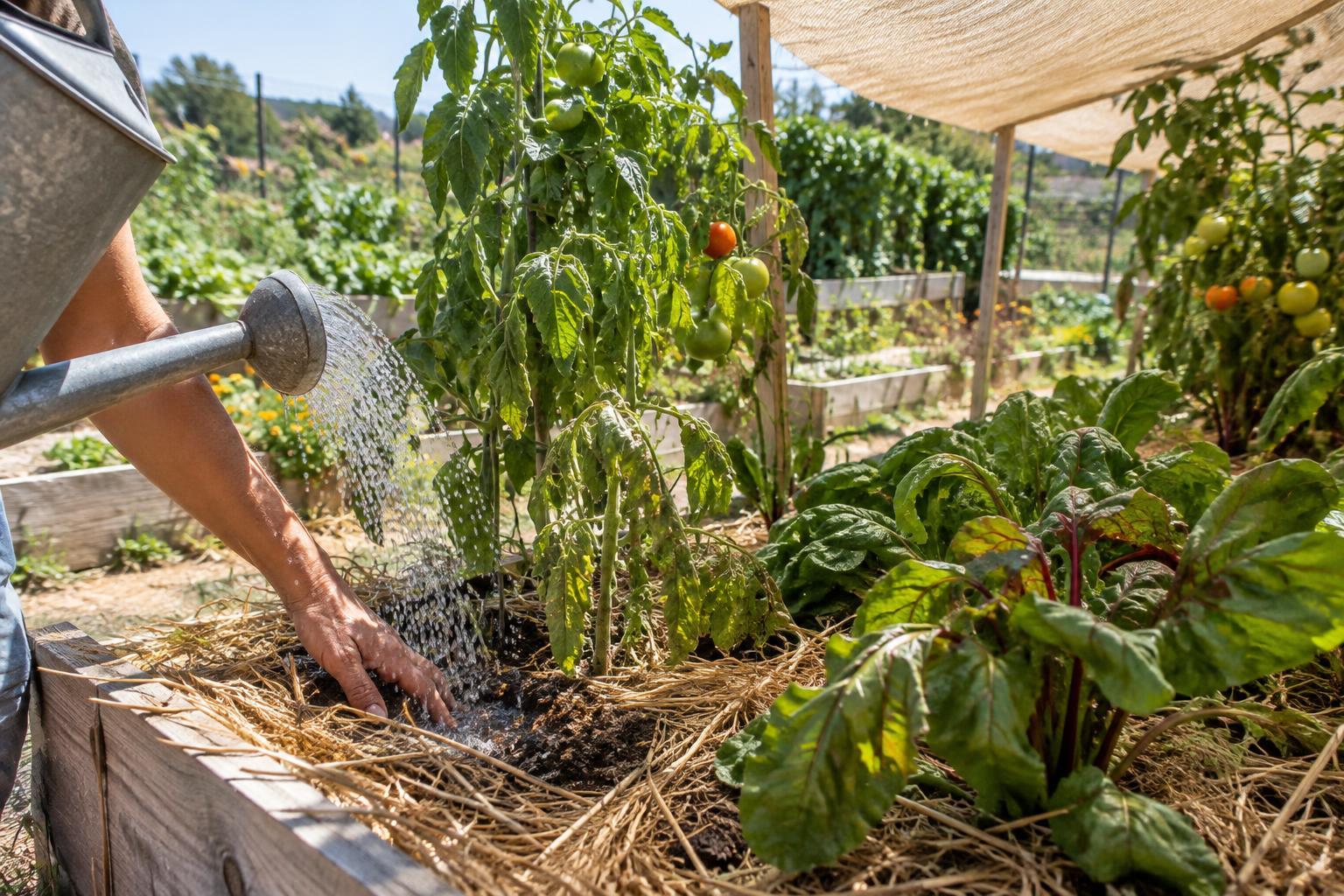
Summer sun and wind can increase water loss, especially in raised beds and containers. Check those spaces more often than in-ground beds, and pay particular attention to plants that are flowering or developing fruit. A plant that droops in afternoon heat is not always in dry soil; check the root area before adding water. If it remains limp in the cooler part of the day and the soil is dry, watering may be needed.
Watering near the base of plants makes it easier to direct water where roots can use it. Early in the day is often a convenient time: you can assess the bed before peak heat and spot a missed container. If water runs off hard, dry soil, apply it in smaller rounds with time to soak between them. Keep mulch in place where appropriate, pull weeds that compete for moisture, and check that hoses or drip lines are reaching every part of the bed. As plants grow, their foliage can hide a dry patch or block a spray pattern.
Fall: ease back gradually, but keep checking
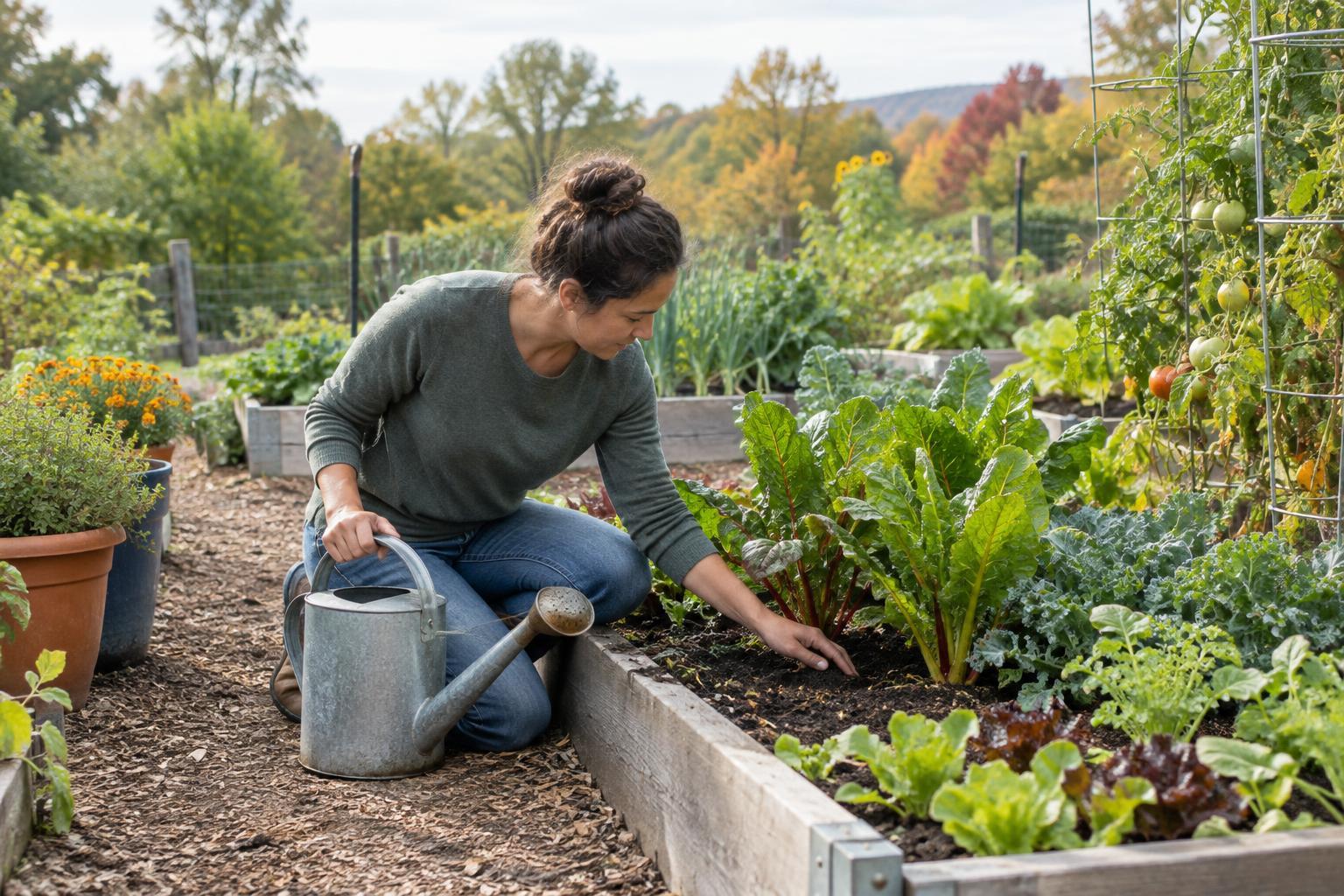
Shorter days and cooler temperatures often slow soil drying, so a summer routine may become more water than the garden needs. Reduce watering in response to soil moisture and rainfall rather than stopping on a particular date. Fall vegetables and newly planted perennials still need water when conditions are dry, particularly while their roots are establishing. Containers may also need attention even after nearby beds have stayed moist.
Clear fallen leaves from watering equipment and check that water can still reach the soil beneath remaining crops. As beds are emptied, note which areas stayed wet or dried quickly; that information can help with next season’s planting and mulch plans. Before freezing conditions arrive in your area, drain and store hoses or other equipment as appropriate for your setup. A final soil check is more informative than watering an empty bed simply out of habit.
Make a shared watering routine easy to follow
In a community garden, good watering depends on clear handoffs as much as garden knowledge. Agree on who checks shared beds, where watering tools belong, and how to report a leak or a struggling plant. A simple log can record recent rain, beds watered, and areas that still need checking. It need not prescribe an amount for every visit; its main purpose is to prevent both missed beds and repeat watering.
Label plants or beds with special needs, such as newly sown seeds or recently installed shrubs. Ask volunteers to check soil before turning on the water, and show newcomers what a thorough watering looks like in that garden’s soil. Over time, these observations make it easier to adjust as spring growth becomes summer heat and then gives way to fall.