Understand what sandy soil does well
Sandy soil has relatively large particles and spaces between them. Water moves through those spaces readily, which can leave plant roots dry sooner than they would be in a finer-textured soil. Dissolved nutrients can move with that water, particularly when a bed receives more irrigation or rain than plants can use. You may notice that the surface dries quickly or that plants wilt between waterings even though the bed was recently soaked.
Quick drainage is not all bad. Sandy beds often warm and become workable without staying soggy for long. The goal is not to turn sand into clay or keep it constantly wet. It is to give roots a more reliable supply of moisture and nutrients while preserving the drainage that many garden plants need.
Build the soil with compost over time
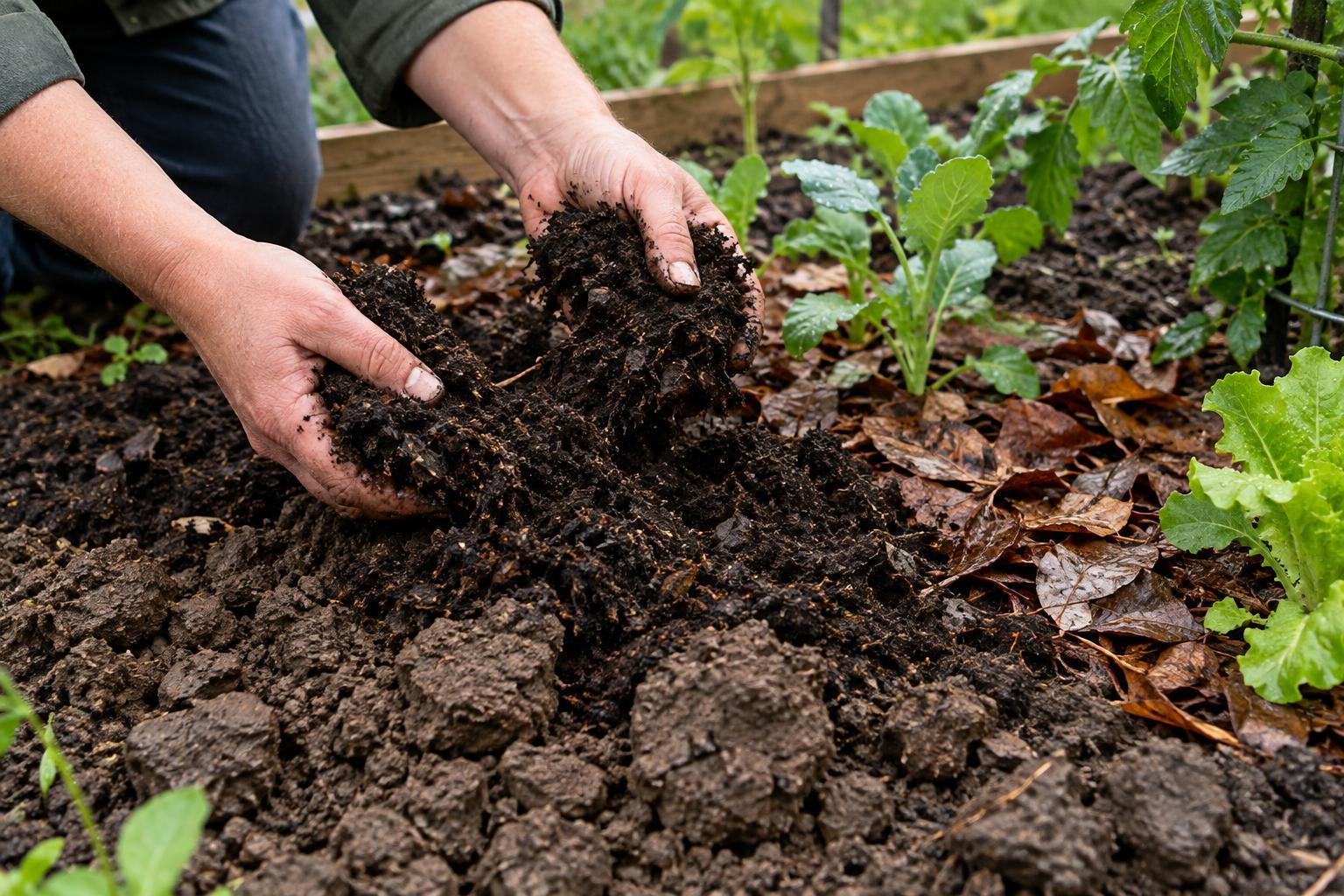
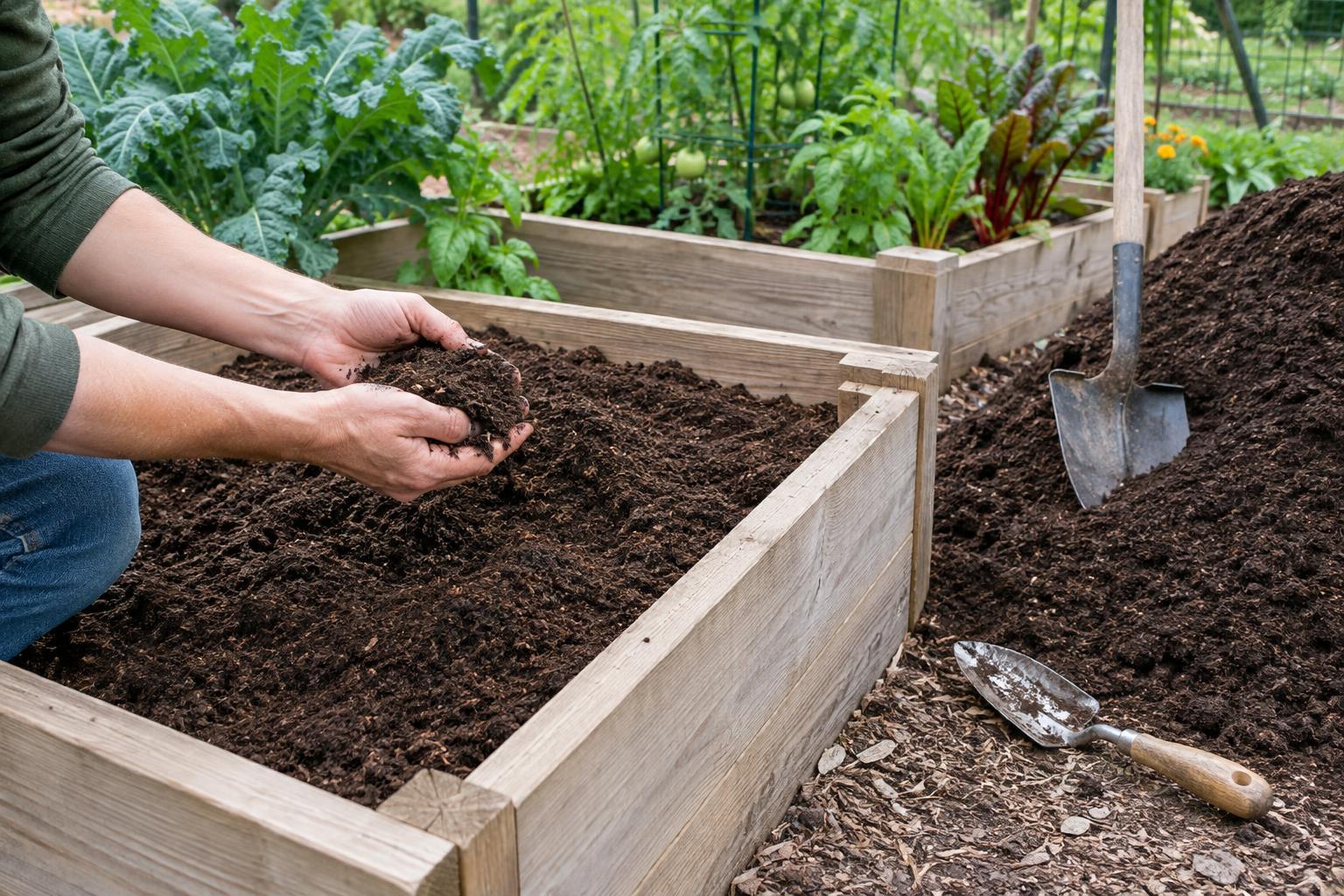
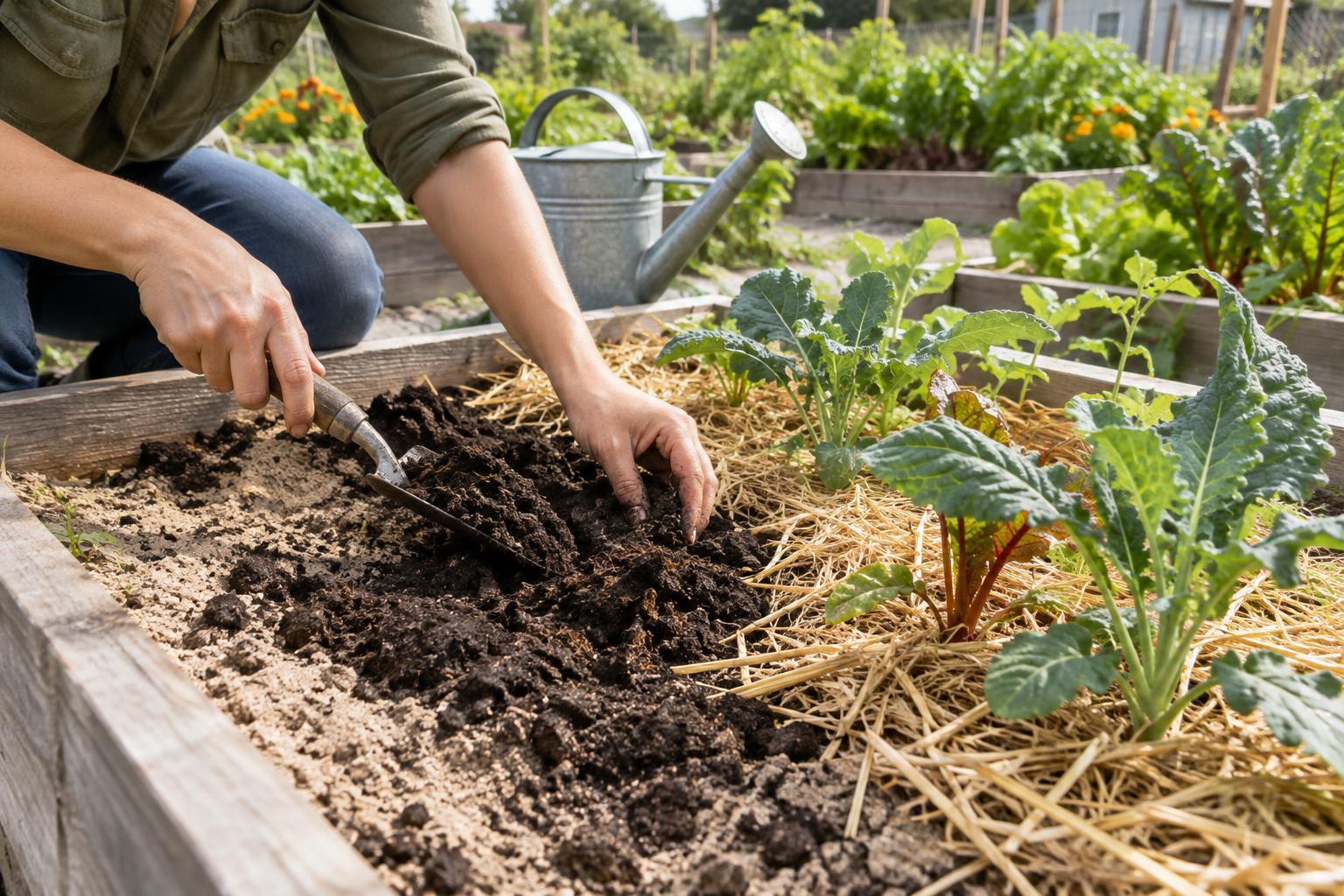
Finished compost is a useful starting point because organic matter helps sandy soil hold water and provides places for nutrients to be retained. Before planting a new bed, spread a modest, even layer of finished compost and mix it into the upper part of the soil where many feeder roots will grow. In an established bed, apply compost to the surface between crops and let watering, soil organisms and normal cultivation gradually incorporate it. Use compost that smells earthy rather than sour and no longer contains recognizable scraps.
More is not automatically better. Repeated heavy applications, especially of manure-based compost, can add more nutrients or salts than plants need. If a shared garden has a soil test, use its results to guide amendments; if not, keep additions moderate and observe how plants respond. Compost improves soil condition gradually, so plan to replenish organic matter regularly rather than expecting one application to solve every dry spell.
Protect the surface with mulch and living roots
A layer of organic mulch helps shade the soil and slow evaporation. Shredded leaves, clean straw or other suitable plant-based materials can work around vegetables and ornamentals. Apply mulch after the soil has been watered, leaving a small gap around stems and crowns so they do not stay damp against the material. Check beneath the mulch before watering: a dry-looking surface does not always mean the root zone is dry.
Where a bed will be empty for a while, a cover crop or other planned planting can keep living roots in the soil. Roots and their residues add organic material over time, while foliage shields bare ground. Choose a cover crop that fits the time available and can be managed before the next planting. In a community garden, agree on that plan before sowing so a helpful cover crop does not become an unexpected job for the next gardener.
Water and feed according to the root zone
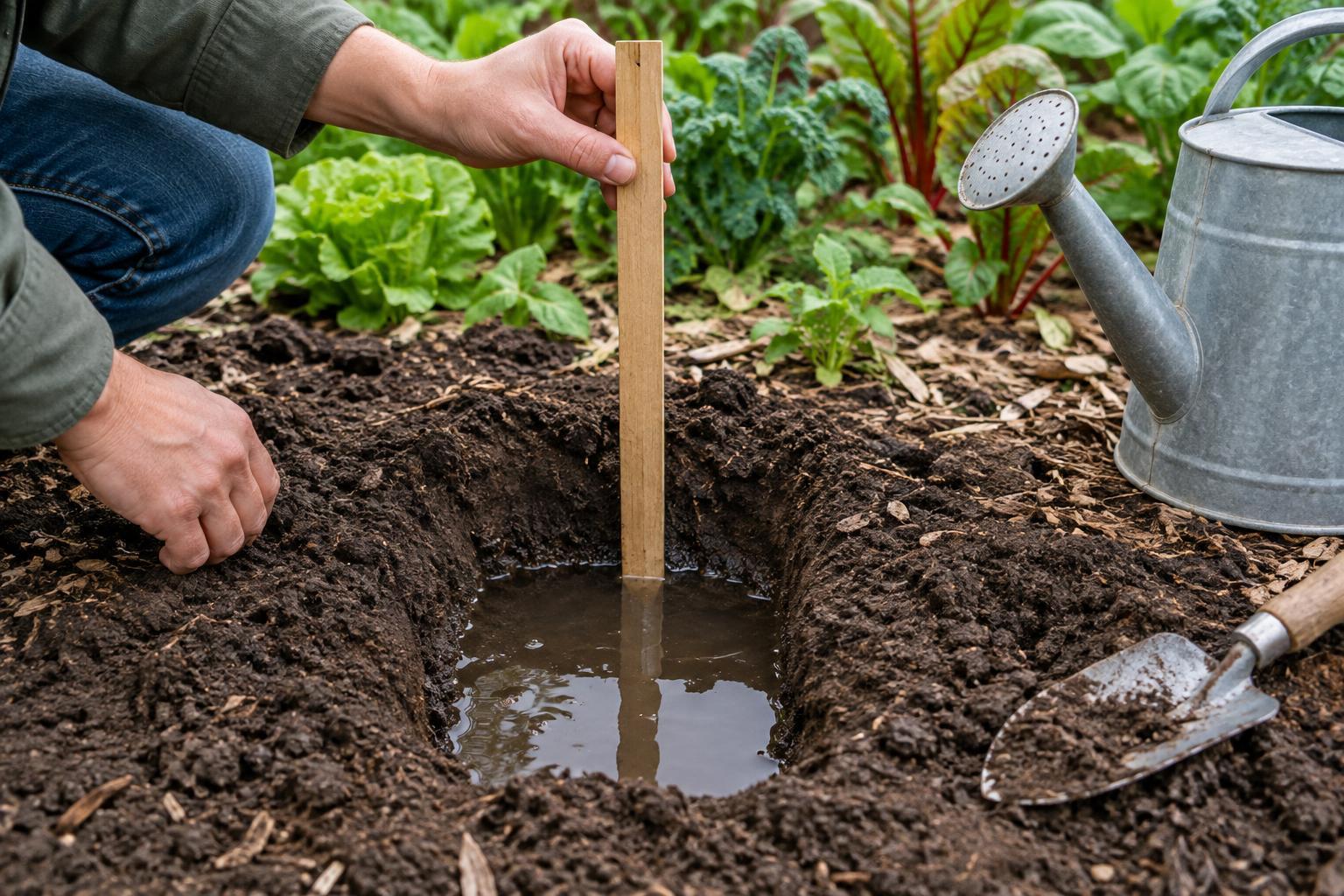
In sandy soil, a large amount of water applied at once may move below shallow roots. Instead of watering by a fixed calendar alone, feel the soil a few inches down near the plants and adjust for their size, rooting depth and the weather. Water slowly enough to soak the active root zone, then check how far the moisture reached. Young seedlings may need smaller, more frequent drinks than established plants. Drip lines or soaker hoses can help direct water to planted areas rather than paths.
The same measured approach applies to fertilizer. Compost contributes to fertility, but a crop may still need additional nutrients; a soil test is the best guide when one is available. Follow product directions and avoid applying extra fertilizer simply because sandy soil drains quickly. Smaller, appropriately timed applications are generally more useful than a large dose before plants can take it up. Keep fertilizer off paths and avoid watering so heavily afterward that nutrients wash beyond the roots.
Make improvement a shared routine
In a shared growing space, small repeatable tasks often work better than a one-time overhaul. Label compost and mulch supplies, agree on how much to use, and note which beds dry fastest. A simple watering check—feeling beneath the mulch before turning on a hose—can prevent both missed plants and unnecessary irrigation. Keep paths covered or clearly defined so gardeners are not repeatedly disturbing the soil in planting areas.
At the end of a growing period, compare notes on which beds supported healthy plants and which dried out too quickly. That record can guide the next round of compost, mulch or irrigation changes. Sandy soil will remain sandy, but with steady organic matter, covered ground and attentive watering, it can become a productive and easier-to-manage place to grow.