Start with the space you have
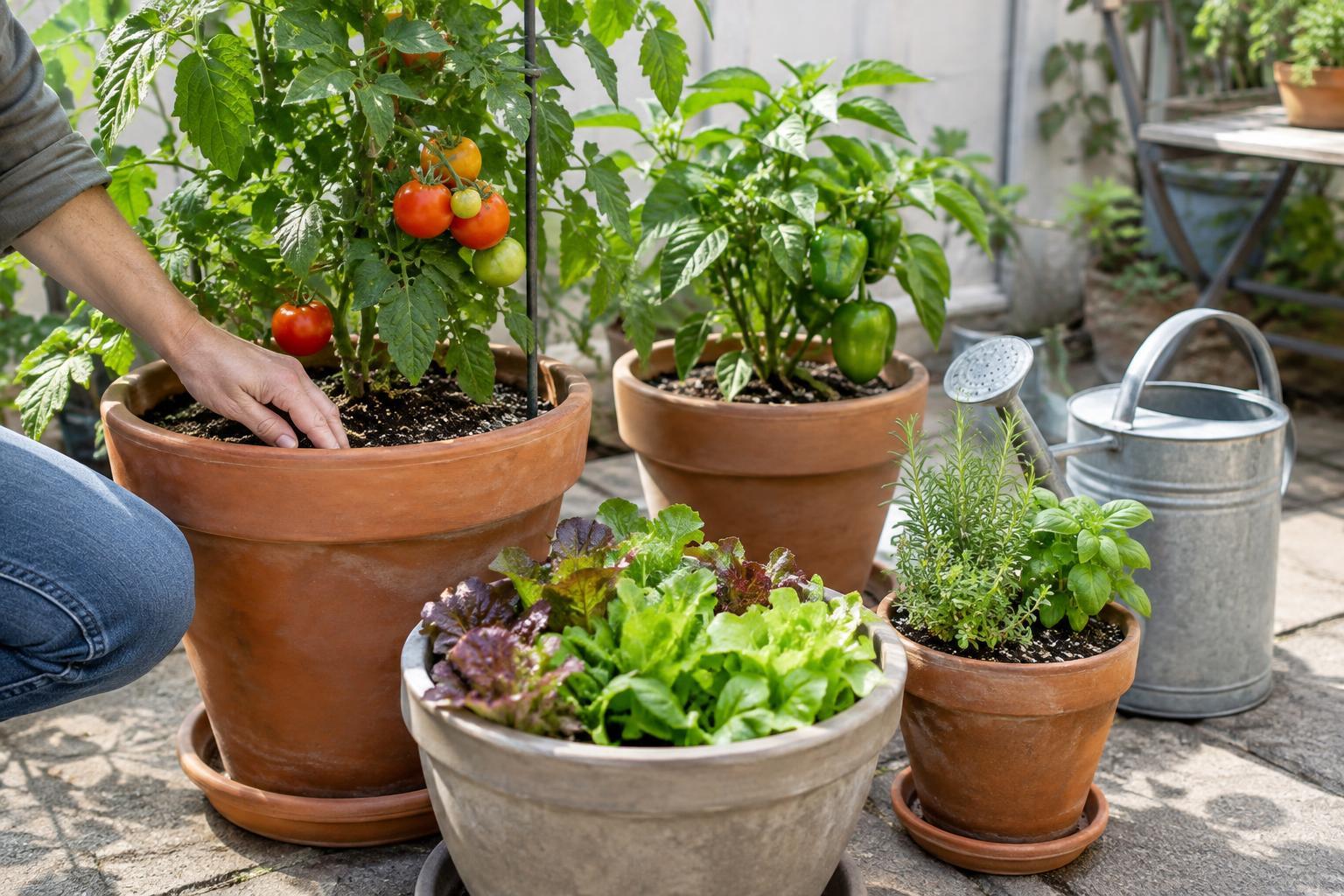
Vegetable containers can turn a sunny doorstep, patio, or paved corner of a community garden into productive growing space. Before buying pots, watch where sunlight falls during the day. Fruiting crops such as tomatoes and peppers generally do best with plenty of direct sun. Leafy greens and some herbs may tolerate a little less, especially when afternoons are hot. Also consider access to water: a productive pot is much easier to care for when a tap or watering can is nearby.
Choose containers with drainage holes so excess water can escape. A pot without an outlet can leave roots sitting in saturated soil, even when the surface looks dry. If containers stand on paving, raise them slightly or use saucers that can be emptied after watering. Remember that a large pot full of damp growing mix is heavy. Put it in its final position before filling it, and check that shelves, balconies, or raised surfaces can safely support the weight.
Match pot size to the crop
Root space affects more than the size of the harvest. A larger volume of growing mix usually holds moisture longer and gives roots a steadier environment. Small pots dry quickly, particularly in sun and wind. As a practical starting point, use a container holding roughly one to two gallons for a compact herb or a few small leafy plants. A single pepper or compact tomato generally benefits from about five gallons or more. A larger tomato, cucumber, or similar vigorous crop may need a container of ten gallons or more, along with sturdy support.
These are starting points, not guarantees: plant varieties, climate, and how often someone can water all matter. Check the mature size on a seed packet or plant label, and give sprawling crops room to grow. Wide containers can be useful for shallow-rooted greens and radishes because several plants can share the surface. Root crops such as carrots need enough depth for the variety selected. If space is tight, choosing a compact variety is usually more effective than crowding a large one into a small pot.
Choose crops that suit container life
For an easy first season, try crops you can harvest a little at a time. Leaf lettuce, chard, and many herbs let you pick usable leaves while the plant keeps growing. Radishes grow quickly and suit a wide pot, provided seedlings are thinned to the spacing recommended on the packet. Bush beans are another option when the container is large enough and gets good light. These crops can help a new gardener learn how quickly their particular pots dry out.
Fruiting plants can be rewarding but ask more of a container. A tomato or pepper needs consistent moisture and nutrients as it grows; a cucumber also needs a trellis or other support if it climbs. Look for compact or patio varieties when available, and avoid placing several vigorous plants in one pot simply because they look small at planting time. In a shared garden, label each container with the crop and variety so anyone helping with care knows what is growing.
Fill pots for healthy roots
Use a growing mix intended for containers rather than digging soil from a garden bed. Container mixes are generally lighter and are designed to hold some moisture while allowing excess water to drain. Garden soil can compact in a pot and make watering uneven. Fill the container to a little below the rim so water can soak in rather than running off the sides. After planting, water thoroughly until moisture reaches the lower part of the pot and some excess drains away.
Nutrients in a container are limited because roots cannot explore beyond the pot. A container mix may include fertilizer, but its supply will not last indefinitely. Follow the product label if you add fertilizer, and avoid assuming that more will produce a better harvest. Removing dead leaves, checking for pests, and keeping supports secure are useful regular tasks. At the end of a crop’s season, clear out plant debris and inspect the mix before reusing the container.
Water according to the plant, not a fixed calendar
Container watering needs change with pot size, weather, and plant growth. A newly planted seedling uses less water than a large plant carrying fruit. Hot or windy days may dry a pot faster than cool, cloudy ones. Check the mix by feeling an inch or two below the surface, then water when it begins to feel dry at that depth. Water slowly and thoroughly so the whole root area gets moist; a quick splash may wet only the top layer.
Watch the plant as well as the soil. Wilting can signal dryness, but a plant may also droop in intense midday heat or when roots are too wet. Check the mix before adding water. Mulch on the surface can help slow evaporation, provided it does not block you from checking moisture. In a community space, agree on who checks containers each day during warm spells and how helpers will record watering. A simple shared routine prevents both missed pots and well-meaning double watering.