Choose tomatoes for your space and harvest plans
Before choosing a tomato, decide how you want to use the harvest. Cherry tomatoes are convenient for snacking and often produce over a long period. Slicing tomatoes suit sandwiches and salads, while paste types have firmer flesh that works well for sauces. Flavor, fruit size, and color vary widely, so try a few types rather than filling every available space with one variety.
Plant habit matters just as much as fruit type. Determinate tomatoes grow to a more limited size and tend to concentrate their harvest, making them useful where space or support height is limited. Indeterminate tomatoes keep extending their vines and producing flowers while conditions suit them. They usually need taller, sturdier support and regular attention through the season. Check the plant label or seed packet rather than assuming a variety’s habit from its fruit size.
Match the variety to your growing season, too. Where warm weather is brief, a variety described as early-maturing may be a sensible choice. In a shared garden, ask fellow growers which varieties have worked in similar plots, but leave room to experiment: sunlight, soil, and care can differ even within one garden.
Give plants a strong start
Tomatoes grow best in a sunny spot with soil that drains well. Work finished compost into the bed if the soil needs organic matter, and avoid crowding plants simply to fit more varieties into a small plot. Air needs room to move through the foliage, and you need enough space to inspect and harvest without damaging stems. For containers, choose a large pot with drainage holes and use potting mix rather than compacted garden soil.
Set transplants outdoors after the risk of frost has passed and the weather has warmed. If they were raised indoors, introduce them gradually to outdoor sun and wind before planting. Water them in well, then place their support immediately; adding a cage or stake later can disturb established roots. Where garden rules allow, label each plant with its variety and growth habit so anyone helping with care knows what to expect.
Support vines before they become heavy
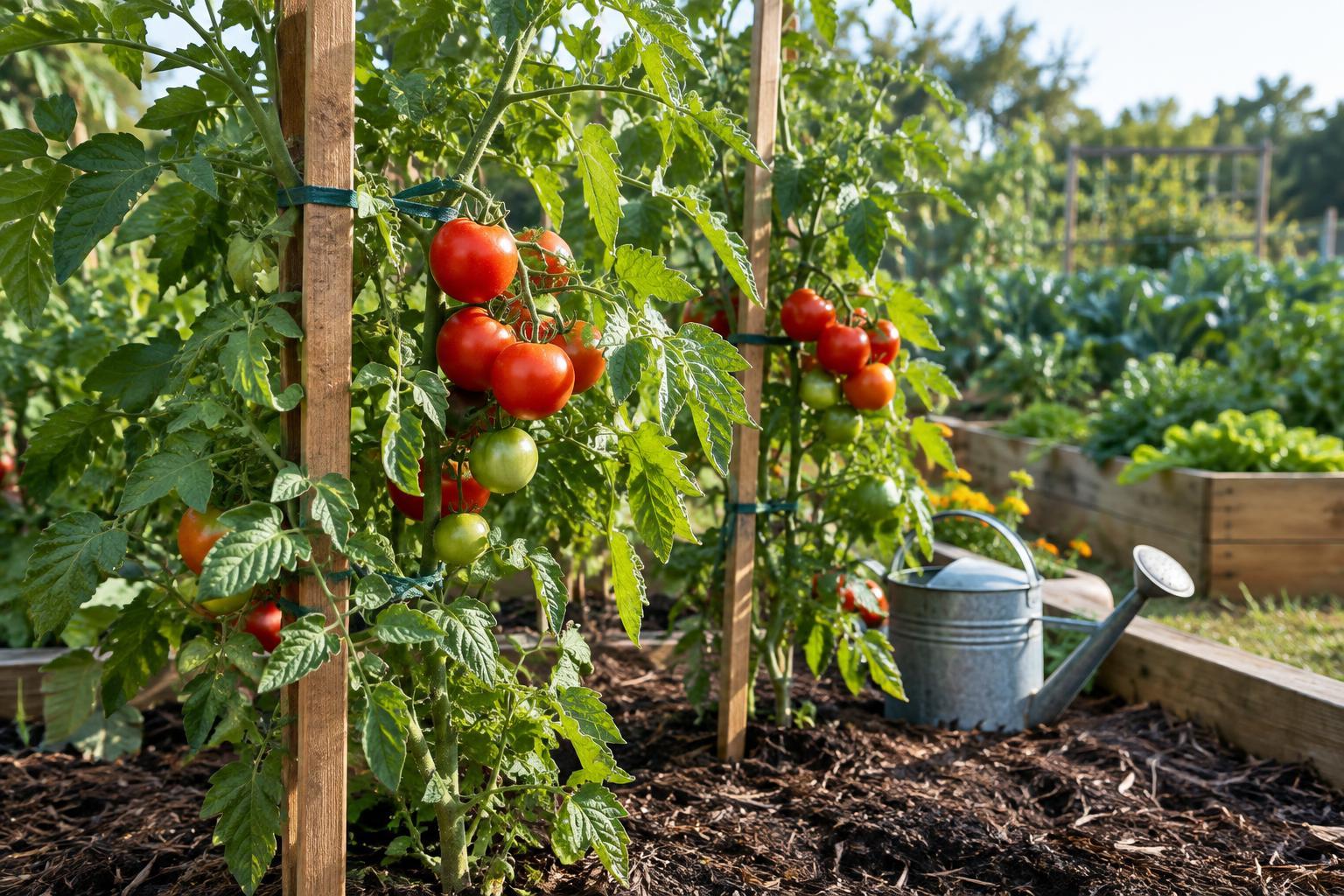
A sturdy cage is a simple option for a compact plant, provided it is wide and tall enough for the variety. Taller indeterminate plants may need a strong stake, trellis, or string system anchored securely against wind. Tie stems loosely with soft material, leaving room for growth. Check ties regularly so they do not constrict the stem, and guide new growth back onto the support before branches become heavy with fruit.
Pruning is a choice, not a requirement for every tomato. Removing a few lower leaves that touch the soil can make watering and inspection easier. Some gardeners also remove selected side shoots from indeterminate plants to keep them manageable on a single-stem support. Avoid stripping a plant heavily: leaves help feed the fruit and shade it from intense sun. Determinate varieties generally need less pruning because removing growing shoots can reduce their potential harvest.
Water steadily and watch for trouble
Aim for even soil moisture rather than alternating long dry spells with heavy watering. Check the soil below the surface before watering, since a dry-looking top layer does not always mean the root zone is dry. Water at the base of plants when possible, and add mulch after the soil has warmed to help slow evaporation and keep soil from splashing onto leaves. Containers may need more frequent checks than garden beds, especially in warm, windy weather.
Inconsistent moisture can contribute to fruit cracking and blossom-end rot, which appears as a dark, sunken patch at the blossom end of a fruit. Blossom-end rot is associated with poor calcium movement into developing fruit; improving watering consistency is often a better first step than adding supplements without knowing what the soil needs. Remove badly affected fruit and keep caring for the plant, which may produce healthy fruit later.
Inspect leaves and stems while you water. Spots, yellowing, or wilting can have several causes, so avoid diagnosing a problem from one leaf alone. Remove badly damaged foliage when appropriate, keep tools clean, and avoid handling wet plants if disease is a concern. Look under leaves for pests, and deal with small infestations early. If a plant is failing, note the symptoms and growing conditions before choosing a response.
Harvest often and learn from the season
Pick tomatoes as they reach the color and firmness expected for their variety. Frequent harvesting keeps ripe fruit from being lost to splitting, pests, or accidental damage. Handle vines gently, especially on shared paths where a full branch can be bumped. If several people tend the plot, agree on which fruit is ready to pick and where the harvest should go.
At season’s end, make a brief note of which plants fit the space, which supports held up, and where watering was difficult. Those observations are more useful for next year’s choices than a perfect-looking seed catalog picture. A tomato patch rarely goes exactly to plan, but good spacing, reliable support, and steady attention give plants a solid chance to produce.