Choose greens that suit your space
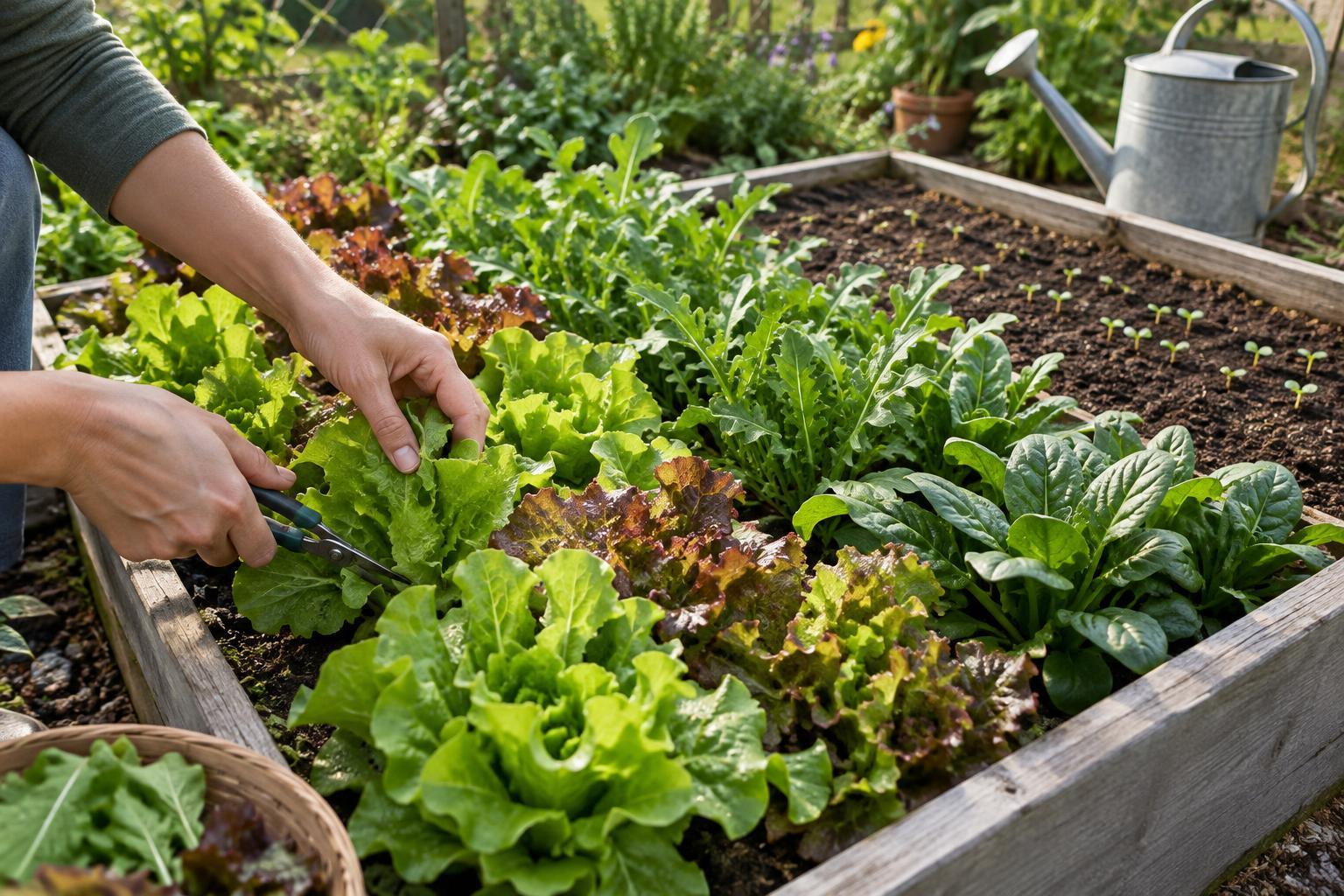
“Salad greens” can mean leaf lettuce, arugula, mustard greens, baby kale, spinach, and other crops harvested for tender leaves. They do not all grow at the same pace or taste alike. Mild lettuce makes a useful base for a salad, while arugula and mustard add sharper flavors. If you are new to growing greens, start with one mild crop and one stronger-flavored crop rather than a large mixed seed packet. That makes it easier to notice which plants thrive and which leaves your household enjoys.
Most greens grow best when they receive good light without prolonged heat. A bed that gets morning sun and some afternoon shade can be useful as weather warms, though too little light may produce slow, thin growth. Containers are another option if the garden has limited bed space. Choose one with drainage holes and enough depth for roots to develop, and use a growing mix that holds moisture without staying soggy.
Sow small amounts for a longer harvest
Prepare a loose, level seedbed and remove large clods that could keep tiny seedlings from emerging. Sow according to the seed packet’s depth guidance; many greens need only a light covering of soil. Water gently so the seeds stay in place. Keep the surface consistently moist while they germinate, then shift to deeper watering as the plants establish.
Instead of planting an entire packet at once, sow a short row or small patch and repeat when the first seedlings are well underway. This spreads out the harvest and reduces the chance that every plant becomes ready at the same time. Leave room to reach the greens without stepping into the bed. Thin crowded seedlings as directed on the packet: plants packed tightly together may stay small, dry slowly after rain, and be harder to harvest cleanly. Tender thinnings can be used if they are healthy and free of soil.
Cut leaves while plants can regrow
For a cut-and-come-again harvest, take outer leaves from established plants and leave the central growing point intact. You can also cut a patch of baby greens above the crown, but regrowth depends on the crop, its condition, and how low you cut. A clean pair of scissors or snips makes it easier to avoid tugging roots from the soil. Harvest only the leaves you need and give the patch time to replace them before cutting heavily again.
Leaves are often more pleasant when picked before they become oversized or weather-worn. Look for firm, healthy growth, and leave damaged or decaying leaves out of the harvest basket. In a shared bed, agree on a simple harvesting rule so everyone knows which rows are ready and how much to take. A small marker showing the crop and sowing area can prevent someone from cutting a newly planted patch by mistake.
Understand why leaves turn bitter
Bitterness is partly a feature of the crop: arugula and mustard are naturally more assertive than many lettuces. A sudden increase in sharp flavor, especially alongside a lengthening stem or flower buds, can mean a plant is bolting. Warm conditions, long days, uneven moisture, and the plant’s age can all play a part. Shade and steady watering may help keep leaves tender for a while, but they will not reverse a plant that has committed to flowering.
Taste a leaf before deciding what to do with the whole patch. If the flavor is stronger but still appealing, mix a few leaves with milder greens or use them in a cooked dish. If the leaves are unpleasant, clear the crop and sow again when conditions are more suitable. For future plantings, harvest young leaves regularly, maintain even soil moisture, and consider choosing varieties described on their packets as suited to the season in which you plan to grow them.
Keep the next planting healthy
After a harvest, check whether the soil is drying out, crusting over, or staying wet. Water at the soil surface when possible, and add a light mulch around established plants if it helps conserve moisture without burying their crowns. Pull competing weeds while they are small. Remove plants that have finished producing useful leaves so they do not crowd the next sowing.
Wash harvested greens in clean water before eating, even if they look spotless, and discard leaves that are slimy or visibly spoiled. In a community garden, use clean harvest tools and containers, and follow the garden’s shared practices for water and compost. Keeping planting areas labeled and recording what tasted good will make the next round of sowing simpler. Salad greens are a crop you can adjust as you go: a few small plantings teach more about your space than one crowded bed.