Start with a bed roots can grow through
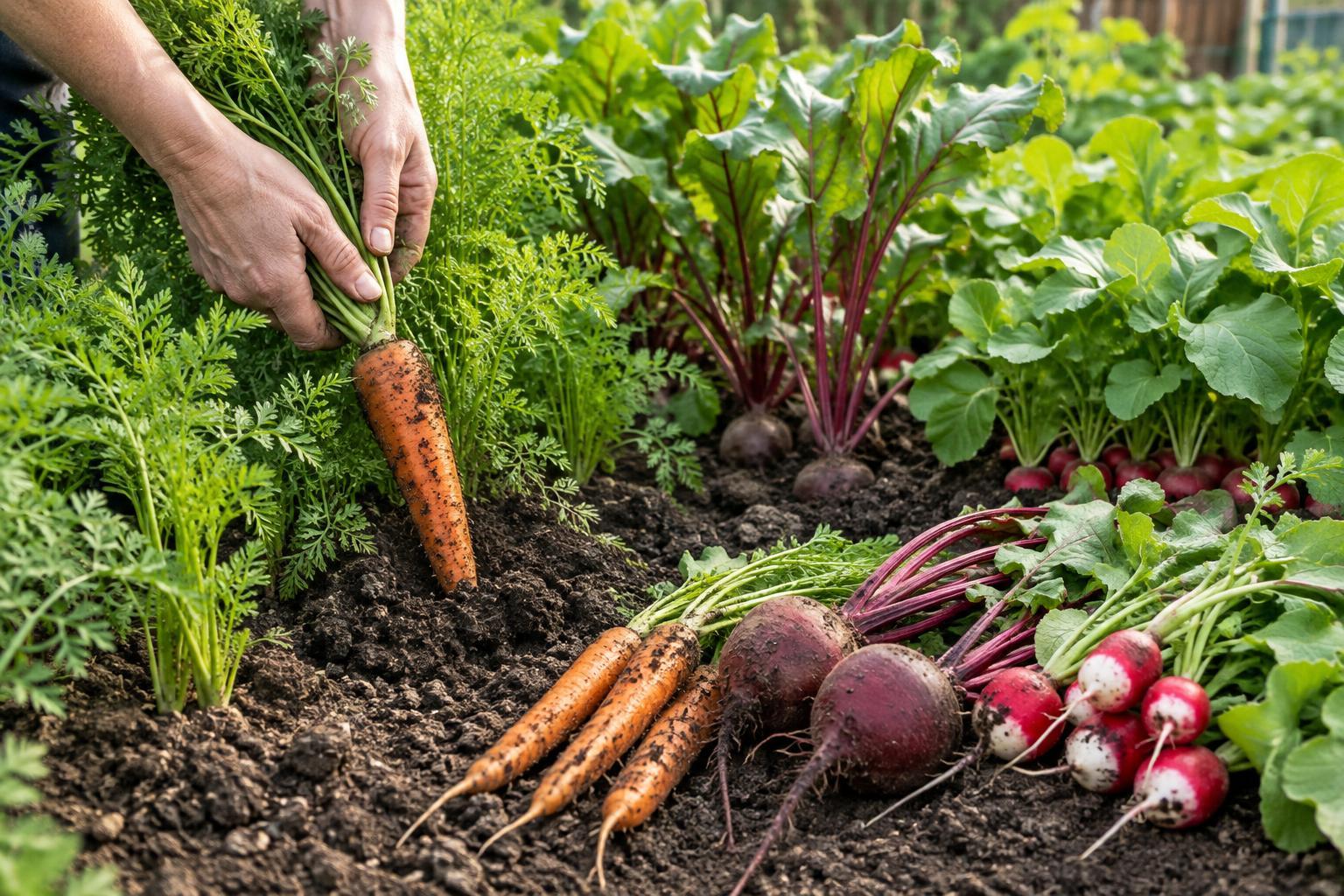
Carrots, beets, and radishes all grow best when their roots can push through soil without meeting a hard layer. Choose a spot that receives plenty of direct sun and drains well after rain. Loosen the soil to at least the depth you expect the roots to reach, removing stones, large clods, and old plant debris. A smooth, crumbly surface also makes it easier to sow small seeds at an even depth.
If the bed is compacted, work in finished compost to improve its texture over time. Avoid adding fresh manure just before sowing; it can interfere with root development and may raise food-safety concerns for crops grown in soil. In a shared garden, mark the bed clearly before planting so it is not stepped on. A narrow bed that gardeners can reach from the paths helps keep the growing area loose.
Sow directly and give seedlings room
Direct-sow these crops where they will grow. Carrots and radishes generally do not respond well to transplanting because their developing roots are easily disturbed. Beets can sometimes be moved while very young, but direct sowing is simpler for most garden beds. Sow according to the seed packet’s depth guidance, cover lightly, and water gently so seeds stay in place. Keep the surface consistently moist until seedlings appear; a dry crust can make emergence difficult, especially for carrots.
Thin seedlings rather than leaving a crowded row to sort itself out. Carrots need enough space to form roots without pressing against their neighbors. Radishes also need room to round out, though the exact spacing depends on the variety. Beet “seeds” often produce more than one seedling, so thin clusters after they emerge. Use the spacing on the packet as your guide, and make a second pass if the plants become crowded as they grow.
Radishes are useful for filling small openings in a bed because many varieties mature quickly. Carrots and beets occupy the space longer. In suitable growing weather, sowing a short row of radishes at intervals can provide a steadier harvest than sowing the entire packet at once. Leave room for later sowings rather than planting every available inch on the first day.
Match the crop to the season
These vegetables generally favor cooler growing conditions, but planting windows depend on local weather and the variety. Sow when the soil can be worked and is suitable for germination, using the seed packet and your garden’s conditions as guides. Radishes may become sharp-tasting or woody if they grow slowly or remain in the ground too long. Carrots can also lose quality under prolonged stress, while beets may develop a tougher texture when oversized.
In warm periods, pay closer attention to moisture and consider whether a later sowing would have better conditions. Where a fall crop is possible, count backward from the season’s likely cold weather using the packet’s days-to-maturity estimate, allowing extra time as days shorten. For a shared plot, note each sowing date on a bed label or garden log. That simple record helps other gardeners know whether an empty-looking row is newly seeded or ready to replant.
Water steadily and weed early
Aim for even soil moisture rather than alternating between very dry soil and heavy watering. Water slowly enough to soak the root zone without washing soil away from young plants. Once seedlings are established, check below the surface before watering again; the top of the bed can look dry while the soil beneath is still moist. A light layer of mulch between established rows may help reduce evaporation, but keep it from burying tiny seedlings.
Weeds compete with these crops early and can make thinning harder. Remove them while they are small, using shallow strokes or pulling by hand near the crop row. Deep hoeing risks nicking developing roots. Watch for leaves that have been heavily damaged and for roots exposed at the soil surface. Garden conditions and pests vary, so inspect plants regularly before deciding what, if any, intervention is needed.
Harvest for texture and flavor
Begin checking roots when they approach the size described on the seed packet. Gently brush soil away from the shoulder of a carrot or beet to judge its width, then cover roots you are leaving in place. Pull radishes promptly once they are ready; leaving them in the bed rarely improves their texture. If the soil is firm, loosen it beside carrots and beets with a hand fork before lifting so the roots are less likely to snap.
Remove the tops after harvest if you are storing the roots, and brush off loose soil. Store sound roots in a cool place suited to the crop, keeping them from drying out. Beet greens are edible when healthy and clean, so thinning can yield a small harvest before the roots are ready. Record which varieties grew well in the bed: next season, that note will be more useful than trying to remember which row produced the sweetest carrot.