Start with the pepper you want to eat
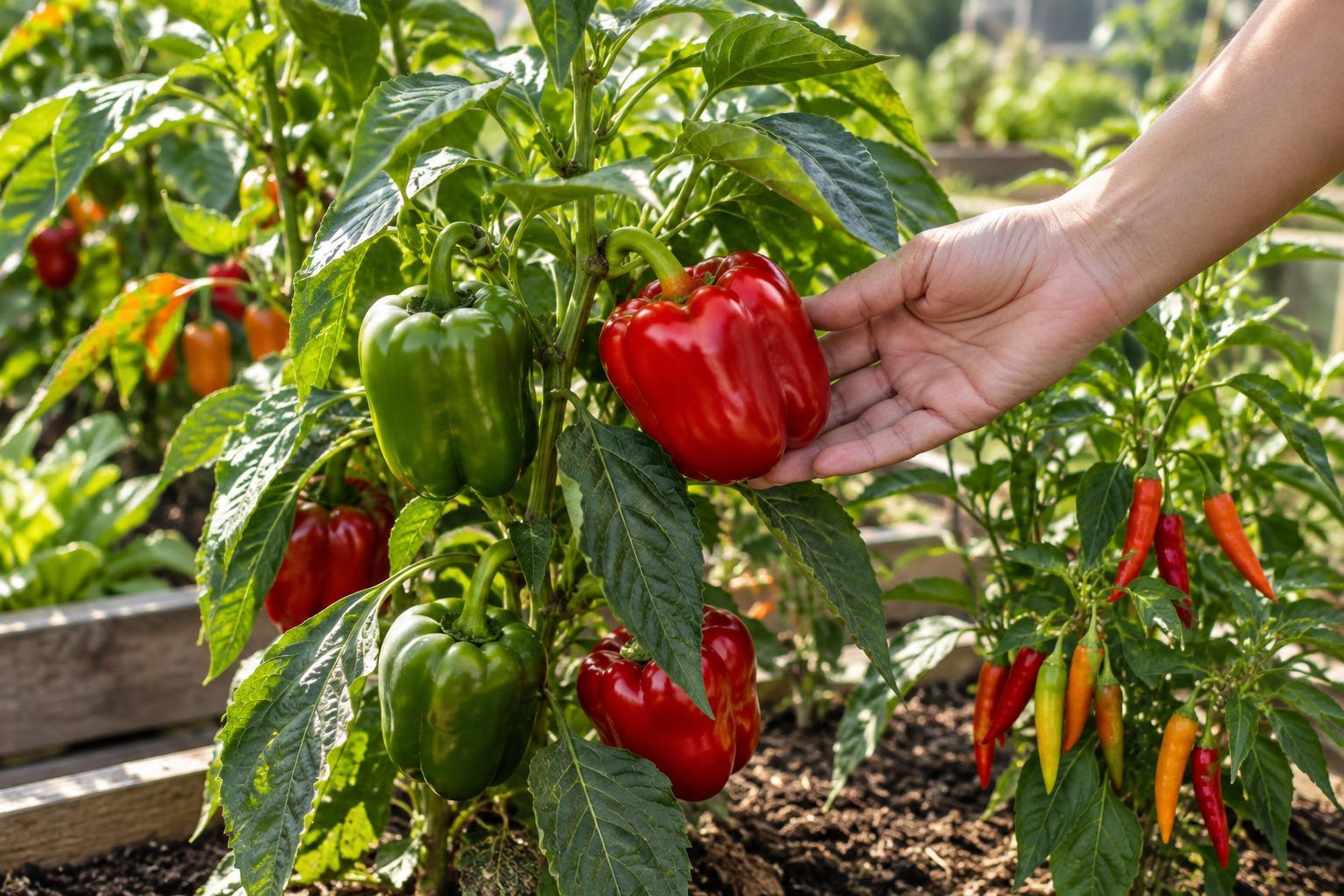
Sweet bells, small snacking peppers, and hot peppers all benefit from similar basic care, but they differ in size, flavor, and time to maturity. Before choosing plants or seeds, think about how you will use the harvest. A compact sweet pepper may suit a container or a shared plot with limited room, while a variety with larger fruit may need more support. Seed packets and plant labels can help you compare expected plant size and typical harvest color.
Peppers need warmth to grow well. Put them in a spot with plenty of direct sun and soil that drains rather than staying soggy. If starting seeds indoors, allow enough time for sturdy seedlings to develop, then gradually introduce them to outdoor conditions before planting. Set transplants outside after the risk of frost has passed and the soil has warmed. A cool spell may slow growth even when it does not visibly damage the plants.
Give plants steady, uncomplicated care
Mix finished compost into the bed before planting, and leave enough space between plants for air to move around them and for gardeners to reach the fruit. Water deeply when the soil begins to dry below the surface, aiming at the soil rather than wetting the leaves. The goal is reasonably even moisture, not constantly wet ground. A layer of organic mulch can help slow drying once the soil is warm.
Peppers do not need aggressive feeding. Excess fertilizer, especially one high in nitrogen, can encourage leafy growth at the expense of fruit. If plants are growing in a container, check moisture more often than you would in a garden bed; pots can dry quickly in hot weather. Use a container with drainage holes, and add a stake or cage early if the variety is likely to carry heavy fruit.
Look over plants regularly as you water. Drooping in strong afternoon heat may be temporary, but persistent wilting calls for a check of soil moisture and roots. Remove badly damaged fruit, watch for insects on leaf undersides, and avoid crowding that makes problems harder to spot. In a community garden, keep stems and supports out of shared paths so neighbors can tend their plots without brushing against the plants.
Understand what makes a pepper hot
The burning sensation in hot peppers comes from capsaicinoids, which are concentrated mainly in the pale tissue that holds the seeds. The seeds can carry some of that heat on their surface. Removing the pale inner tissue may make a pepper milder to eat, but it will not turn a very hot variety into a sweet one. Sweet peppers have little or none of the heat associated with hot types.
Variety is the most useful guide to expected heat. Individual fruits can still differ, and growing conditions may affect how a pepper develops, so do not rely on its appearance alone to judge intensity. Label hot varieties clearly in a shared garden, especially if they grow beside sweet peppers. When cutting hot fruit, consider wearing gloves, keep your hands away from your eyes, and wash tools and cutting surfaces afterward.
Know when to pick
Many peppers can be harvested at more than one stage. A bell pepper picked while green is typically firm and less sweet than one allowed to reach its mature color. Hot peppers can also change in flavor as they color up, although the exact difference depends on the variety. Check the plant label for the expected mature color rather than assuming every pepper should turn red.
Look for fruit that has reached a useful size, feels firm, and has healthy skin. If you want fully colored peppers, give them time to change color on the plant. Pick promptly if fruit is damaged or a cold spell threatens. Use snips or pruners to cut the short stem above the fruit; pulling can break a branch. Frequent picking may also keep productive plants from holding an oversized crop of aging fruit.
Make the harvest work for your garden
A shared pepper planting is easier to manage when everyone knows which varieties are growing and what color signals the desired harvest stage. Simple labels can prevent someone from picking a green fruit that another gardener hoped to leave until yellow or red. Agree on how ripe fruit will be shared so it does not sit on the plant simply because no one is sure who should take it.
At home, sort the harvest and use bruised or damaged fruit first. Keep sound peppers cool, and wash them before preparing them to eat. At the end of the growing season, note which varieties fit the space, produced fruit you enjoyed, and were easy to care for. Those observations are often more helpful for next year’s planting plan than choosing solely by a pepper’s picture or promised heat.