Start with the location
Before choosing flowers, watch the spot where the container will sit. Note how many hours of direct sun it receives, whether nearby walls reflect heat, and whether rain can reach the pot. A bright patio and a shaded entrance call for different plants, even if they are only a short walk apart. Also consider wind: tall stems and lightweight pots can be a frustrating combination in an exposed space.
For a shared garden, leave room for people to pass, work, and use paths comfortably. Place containers where someone can reach them with water without dragging a hose through neighboring beds. A pot that is easy to maintain is more likely to stay attractive throughout the season.
Choose a pot with enough room
A container needs drainage holes so excess water can leave the root zone. If a decorative outer pot has no holes, use it as a cover for a removable inner pot and empty any water that collects inside. Fill the planting pot with a potting mix made for containers rather than garden soil, which can become dense in a pot and make watering harder to manage.
Match pot size to the mature size and number of plants, not just the size of their nursery pots. Several vigorous flowers crowded into a small container will compete for water and need frequent attention. A larger pot generally holds moisture longer and gives roots more space, though it will be heavier to move. Check the plant labels for expected spread, allow room for growth, and avoid filling every gap on planting day.
Think about stability as well as appearance. A broad, sturdy pot suits tall flowers or a windy location better than a narrow, top-heavy one. If the container may need to move, consider its weight after it has been filled and watered.
Combine flowers with compatible needs
A mixed container works best when its plants prefer similar light, moisture, and growing conditions. Pair sun-loving flowers with other sun lovers rather than asking one plant to tolerate shade while its neighbor needs strong light. In a shady spot, choose plants suited to lower light instead of expecting a sun-loving display to flower heavily.
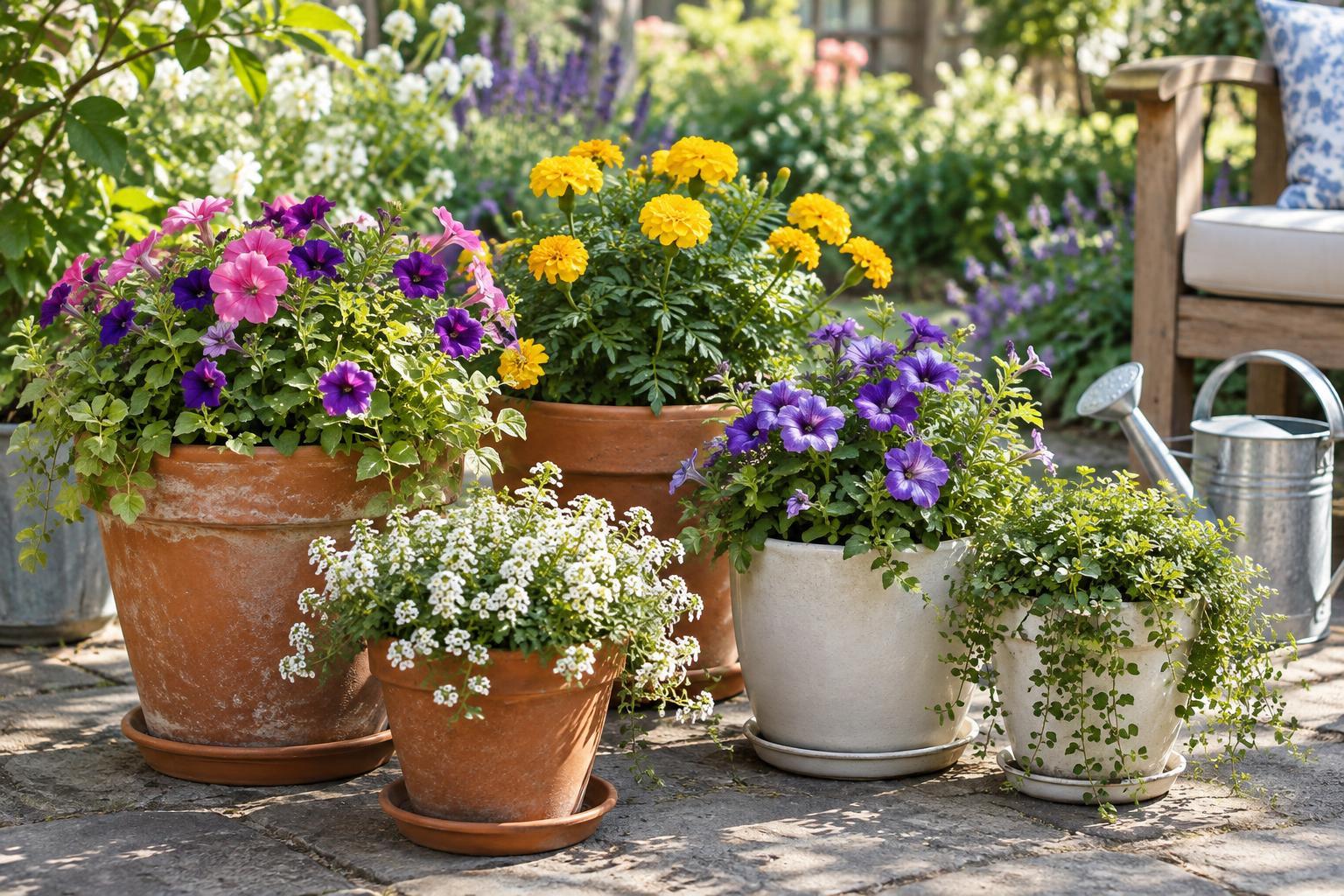
Build a combination around shape and growth habit. An upright plant can provide height, mounding plants can fill the middle, and a trailing plant can soften the rim. This is an option, not a rule: a pot filled with one flower can be easier to care for and just as effective. Repeating a few colors or leaf textures often looks more cohesive than squeezing in many unrelated varieties.
Read labels for mature height and spread before planting. Give vigorous plants enough space so they do not overwhelm slower growers, and select flowers that suit the space available. At a busy shared-garden entrance, compact plants may be easier to manage than sprawling stems that lean into a walkway.
Plant carefully and water thoroughly
Moisten dry potting mix before planting so it takes up water more evenly. Set each plant at about the depth it grew in its nursery pot, gently firm the mix around the roots, and leave a little space below the rim to make watering easier. Water until it runs from the drainage holes, then let the pot drain. If you use a saucer, check it after watering so the pot does not remain in standing water.
There is no single watering schedule that suits every container. Heat, wind, plant size, and pot material all affect how quickly the mix dries. Check by feeling the mix below the surface; when it is drying out, water thoroughly rather than adding a small splash to the top. Newly planted containers deserve especially close checks while roots are settling into the fresh mix.
Keep the display healthy through the season
Container flowers depend on a limited amount of potting mix for nutrients. If growth slows or leaves look pale, follow the directions for a fertilizer intended for flowering container plants; adding more than the label recommends is not a shortcut to more blooms. Remove spent flowers where appropriate, trim stems that block paths, and turn a pot occasionally if one side is growing toward the light.
Inspect plants while watering. Wilting can indicate dry mix, but it can also occur when roots sit in overly wet conditions, so check the mix before reaching for the watering can. Remove damaged foliage and look for pests on leaf undersides. If one plant fails while the others thrive, replacing it with a plant that matches the container’s conditions may be simpler than trying to rescue the original combination.
In a community space, agree on who will water and what to do during absences. A simple, shared care plan helps prevent both missed watering and well-meant overwatering, giving the flowers a better chance to remain welcoming all season.