Choose herbs by growth habit, not just by recipe
Culinary herbs can fit into a raised bed, a border, or a collection of containers. Before planting, it helps to know whether an herb will finish its life cycle in one season or return from its roots. That distinction affects where you put it, how much space you give it, and how you harvest it.
Basil is generally grown as an annual: once cold weather or the end of its season stops growth, you start again with a new plant. Cilantro is also commonly grown as an annual and may flower quickly in warm conditions. Parsley is botanically a biennial, but many gardeners replace it after its first season because it tends to flower in its second. Chives, mint, sage, and thyme are perennials in suitable climates, though winter survival varies by location, drainage, and exposure. Rosemary may persist for years where winters are mild but often needs protection or replanting where they are colder.
Give each herb a place it can thrive
Most culinary herbs need enough light to produce leafy, flavorful growth. Basil and many Mediterranean herbs, including thyme, sage, and rosemary, generally do well with plenty of sun. Parsley, chives, and cilantro may appreciate some relief from intense afternoon heat. Observe your garden rather than treating one light recommendation as a rule for every season and site.
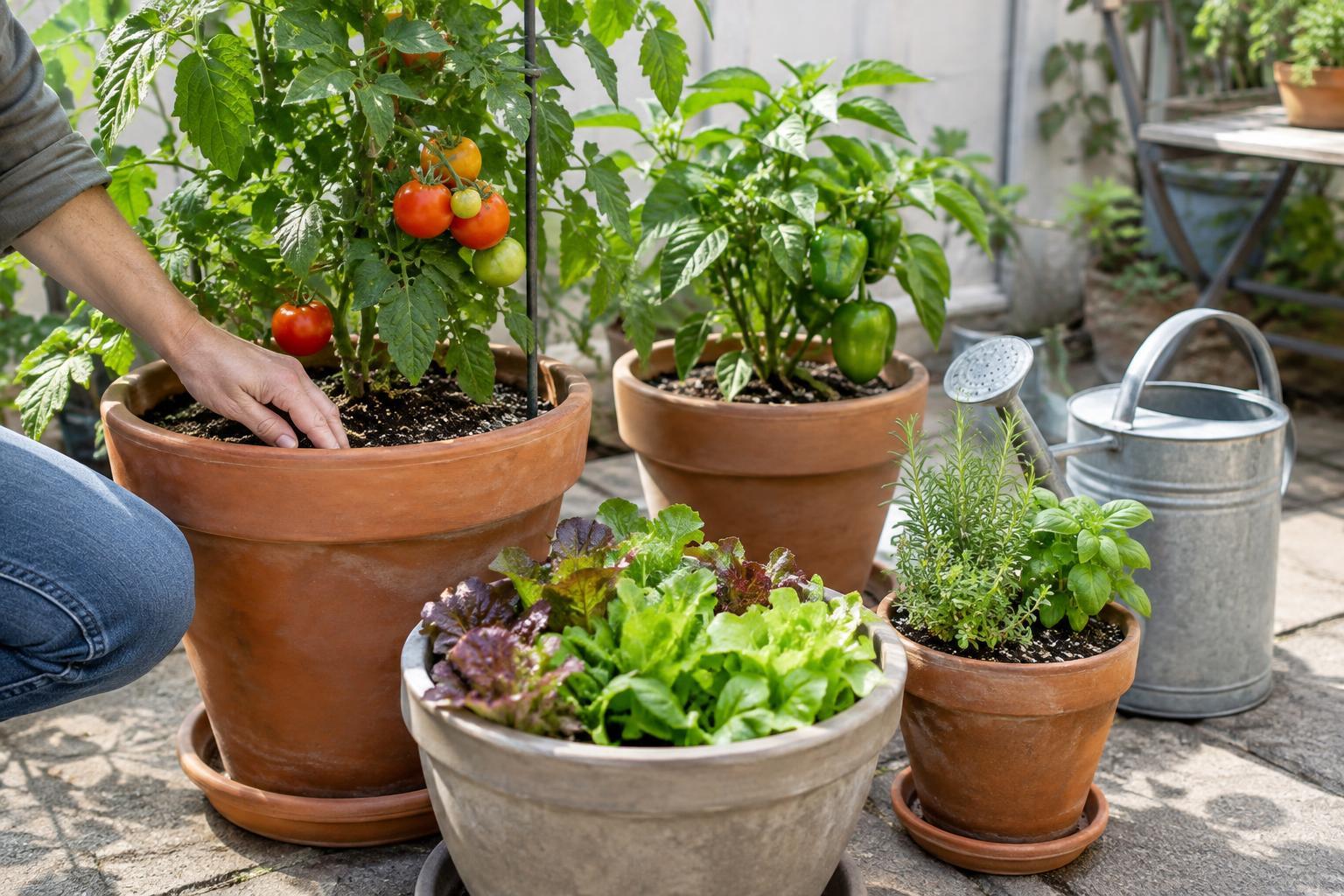
Drainage matters as much as light. Thyme, sage, and rosemary dislike sitting in persistently wet soil, while basil and parsley benefit from more consistent moisture. Water deeply when needed, then let the soil condition guide the next watering. A container with drainage holes can make it easier to give herbs with different needs separate care. Give mint its own container if you do not want its spreading stems and roots to occupy neighboring plants’ space; check the container regularly, since stems can grow over the rim and root nearby.
Harvest leaves while leaving growth behind
Start harvesting after a plant is established and putting on new growth. Take modest amounts from several healthy stems rather than removing most of the leaves at once. The leaves left behind help the plant continue growing. A rough goal is to leave substantially more foliage than you take, especially from a small plant or one recovering from heat, drought, or a recent harvest. Use clean snips or pinch tender stems without tugging on the roots.
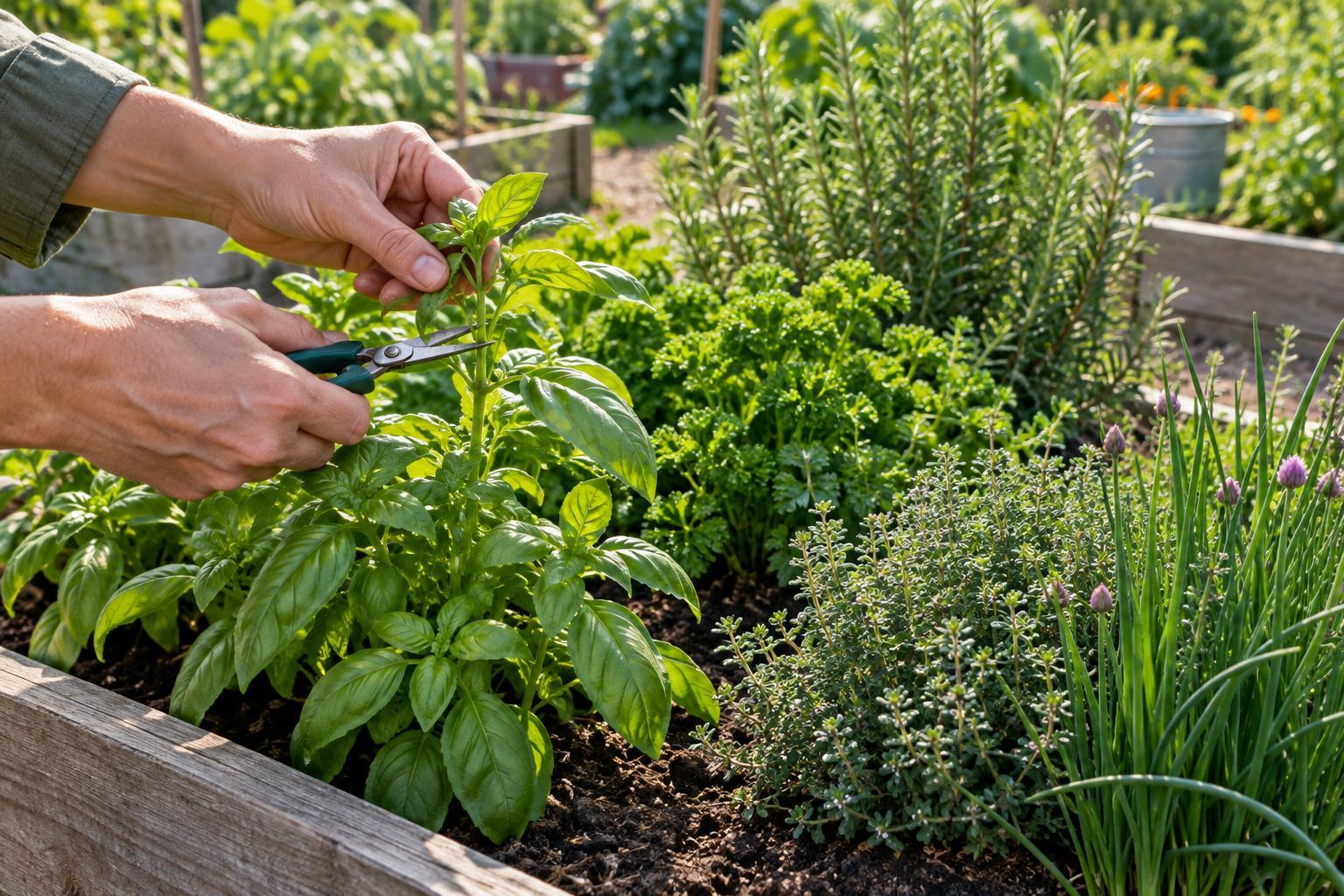
For basil, cut a stem just above a pair of leaves where new side shoots can develop. Repeating this on vigorous stems encourages branching; removing developing flower tips can help keep the plant focused on leaves. With cilantro, take outer leaves and stems while leaving the center to grow. Because cilantro often flowers as weather warms, sowing small batches over time may provide a steadier supply than relying on one plant. For parsley, remove outer stalks near their bases and leave the central growth intact.
Treat established perennials differently
Perennial herbs need enough growth to maintain their roots and prepare for the next season. Once chives form a substantial clump, cut portions of the leaves near the base and allow them to regrow before cutting again. Pick mint tips regularly to encourage fresh shoots, but avoid stripping the whole plant. On sage, take a few leaves or tender stem tips at a time, particularly when the plant is young.
With thyme and rosemary, harvest the soft, leafy ends of stems rather than cutting deeply into old woody growth. Woody sections may be slow to produce new shoots, or may not do so reliably. Keep harvests lighter as growth slows, and avoid hard pruning just before cold weather. If a perennial looks sparse, let it recover before taking more. Regular small harvests usually give a more useful supply than a single large cutting that leaves little foliage behind.
Make harvesting work in a shared garden
In a shared growing space, label herbs with their names and, where useful, whether they are annuals or perennials. Agree on which plants are available for communal picking and which belong to individual plots. A simple reminder to take small amounts and leave the growing tips or center intact can prevent accidental overharvesting.
Check plants before picking: choose healthy leaves, avoid any plant with an uncertain identity, and follow the garden’s rules for recently treated or restricted areas. Rinse harvested herbs before using them. At the end of a season, note which herbs produced steadily, which spread beyond their space, and which struggled with your site’s light or moisture. Those observations can guide next year’s planting more effectively than trying to grow every herb in the same way.