Start with a space plan
Cucumbers and summer squash grow quickly once warm weather settles in. Their size can be surprising in a shared plot: a plant that looks modest at planting time may soon reach across a path or shade smaller neighbors. Before sowing, decide where each crop can expand without blocking access to beds, water, or harvest baskets.
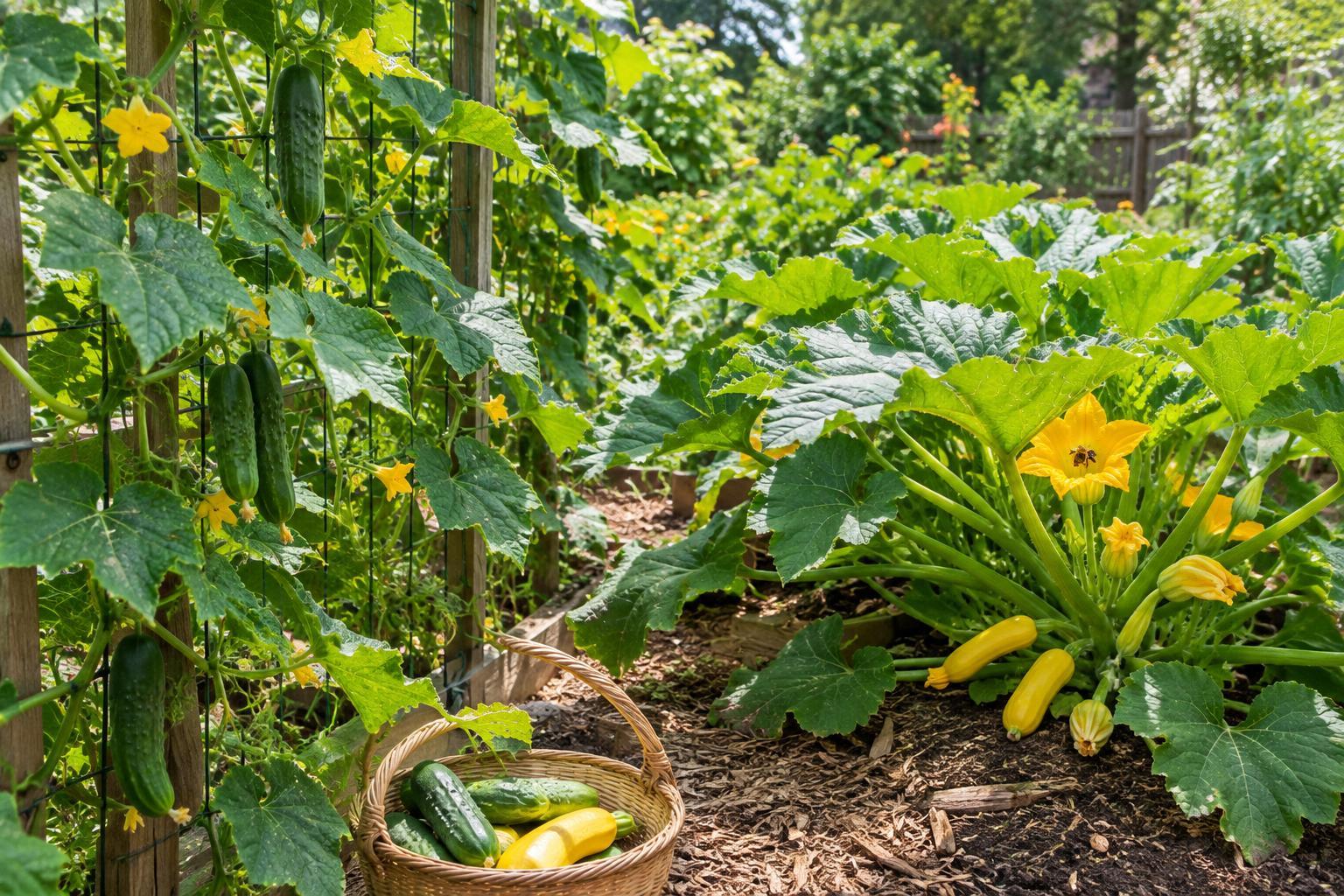
Check the seed packet or plant label for the variety’s growth habit and spacing guidance. Many cucumbers make long vines that can be trained onto a sturdy trellis, while compact cucumber varieties may suit smaller beds or containers. Summer squash is often described as bush type, but its broad leaves still need substantial room. Some summer squash varieties trail and need a different plan. Avoid packing plants tightly simply to fit more into a bed; good access makes watering, inspection, and picking much easier.
Place supports before cucumber vines spread, so installing them does not disturb established roots. A trellis should be secure enough to hold vines and developing fruit, with space on at least one side for people to harvest. Leave clear routes through a community plot, especially where several gardeners will need to reach the same plants.
Give roots steady care
Choose a spot with ample sun and soil that drains well. Mixing finished compost into the bed before planting can improve soil structure and help it hold moisture without staying soggy. Sow or transplant after the danger of frost has passed and the soil has warmed; cold conditions can slow these heat-loving crops. If starting with transplants, handle their roots gently.
Water deeply enough to moisten the root area, then check the soil before watering again rather than following a rigid schedule. Containers and newly planted seedlings may dry faster than established plants in the ground. A layer of organic mulch can help limit moisture swings and keep fruit off bare soil. Aim water at the base of the plants when practical, and avoid walking through wet foliage, which can spread problems from plant to plant.
As growth fills in, look beneath leaves for developing fruit, damaged stems, and changes in leaf health. Removing a badly declining plant from a crowded bed may be more useful than letting it occupy space all season. Keep plant debris and weeds from building up around the crop so gardeners can see and reach what needs attention.
Understand flowers and pollination
Many cucumber and summer squash varieties produce separate male and female flowers. A female flower has a tiny, immature fruit just behind it; a male flower does not. Early blossoms may be mostly male, so flowers without fruit are not automatically a sign that something is wrong. Some cucumber varieties set fruit differently and may not need pollination, making the seed packet a useful guide.
For varieties that do need pollination, insects moving between flowers help fruit develop. Make the garden welcoming by growing a range of flowering plants nearby and avoiding unnecessary pesticide use, particularly around open blossoms. Rainy weather or limited insect activity can sometimes reduce pollination. Small squash that start to grow and then shrivel may be a sign of incomplete pollination, though plant stress can also play a part.
Where insect visits seem scarce, hand-pollinating squash is an option. In the morning, transfer pollen from a freshly opened male flower to the center of a freshly opened female flower using a small, clean brush or the male flower itself. It is a useful experiment for a few plants, not a substitute for giving them good growing conditions.
Pick often and make harvests easy to share
Regular picking is one of the simplest ways to manage these crops. Cucumbers can become large and seedy when hidden among vines, while summer squash can grow past the tender size many cooks prefer. Check plants frequently during their productive period, lifting leaves carefully to find fruit before it becomes oversized. Harvest size depends on the variety and how you plan to use it, so learn its typical shape and pick with that goal in mind.
Use a clean knife or pruners to cut fruit rather than pulling on vines. Handle leaves and stems gently; damaged vines can make future harvests harder. Remove fruit that is overmature or spoiled instead of leaving it on the plant. For a shared bed, agree on a simple picking routine: who checks the plants, where harvested produce goes, and how gardeners can tell which fruit is ready for anyone to take.
A short note beside the bed can help, especially if several people garden on different days. It might name the varieties, show the desired harvest size, and explain where to leave extra produce. That small bit of coordination prevents missed cucumbers and squash while making the harvest easier for everyone to enjoy.