Start with a selective cleanup
Fall cleanup is often treated as an all-or-nothing task: clear every bed or leave everything standing. A more useful approach is to look at each planting and ask two questions. Is this material likely to cause a problem in the next growing season? Could it provide shelter, food or cover through winter? The answers can differ from one bed to the next.
Begin with access and safety. Keep paths, gates, water points and shared work areas clear. Remove stakes, ties or netting that could become tangled or hard to see. Then inspect plants before cutting them down. Healthy seed heads and sturdy stems may be worth keeping, while soft, collapsing growth or material showing persistent disease may be better removed. A selective cleanup preserves useful habitat without asking gardeners to work around avoidable obstacles.
Remove material that may carry problems forward
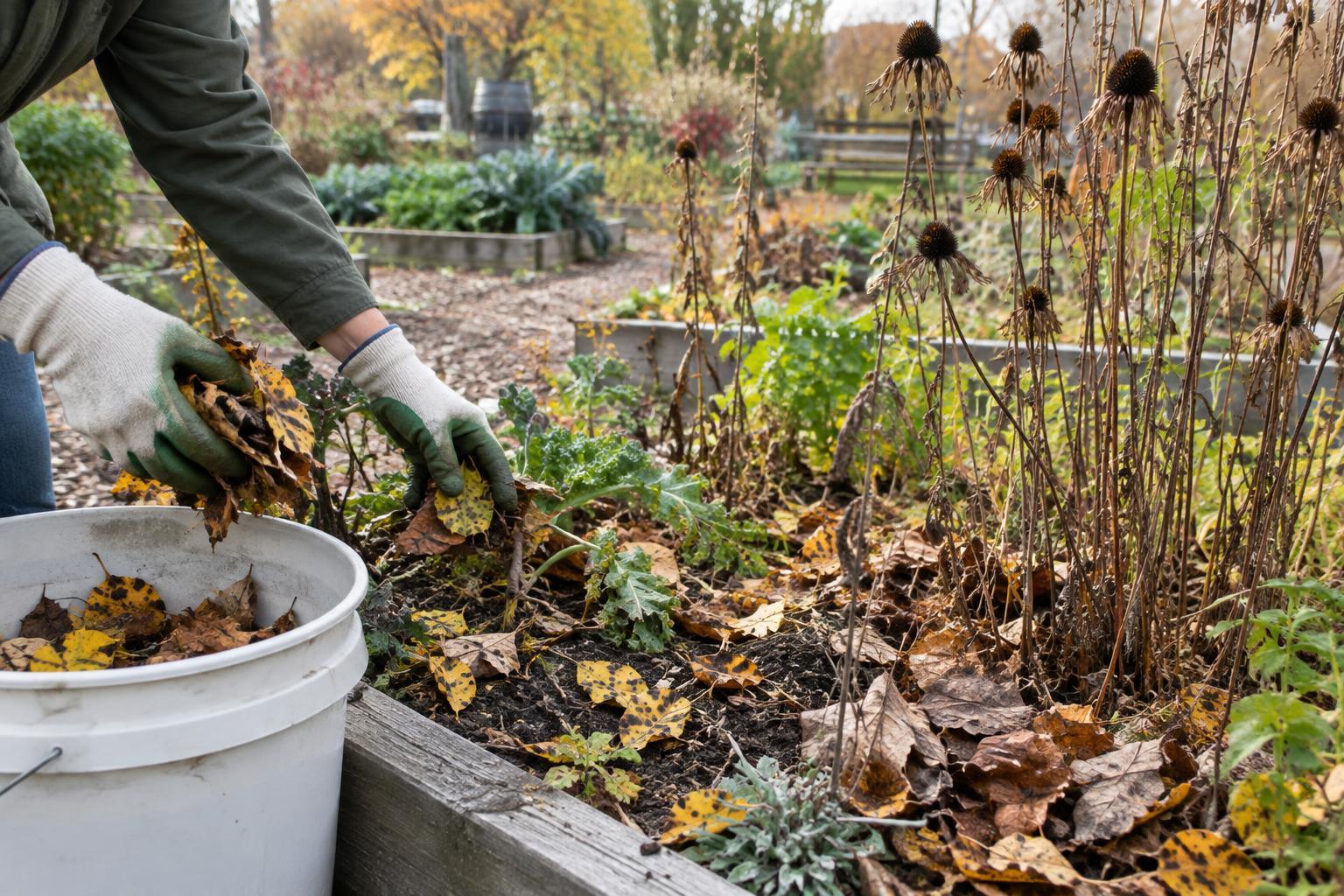
Plants with obvious disease symptoms deserve closer attention than healthy, spent growth. If a crop or ornamental has repeatedly developed leaf spots, blight-like damage or other concerning symptoms, collect the affected leaves and stems rather than leaving them in place as mulch. Pick up fallen fruit and heavily damaged plant parts, too. This is especially helpful where the same crop is likely to grow nearby again.
Keep suspect material separate from clean garden debris. A home or community compost pile may not heat evenly enough to break down every plant pathogen or viable seed. Follow the garden’s agreed disposal method instead of assuming all waste belongs in the compost. Clean up volunteer plants and weeds that have set seed if they are likely to spread into neighboring plots.
Not every brown leaf signals disease. Frost, drought and normal aging can all leave plants looking rough by fall. When the cause is unclear, focus on material that is severely affected or has been a recurring problem, and avoid stripping otherwise healthy beds simply for appearance. Note what you observed so next season’s gardeners can watch for the same issue.
Leave useful shelter where it fits
Standing stems, seed heads and leaf litter can offer winter cover for insects and other small creatures. Some hollow or pithy stems may also be used for nesting later on. In an ornamental bed, leaving sturdy plants upright can provide habitat and visual structure at little cost to the garden. If a whole bed cannot be left standing, retain a few grouped patches rather than scattering isolated stems everywhere.
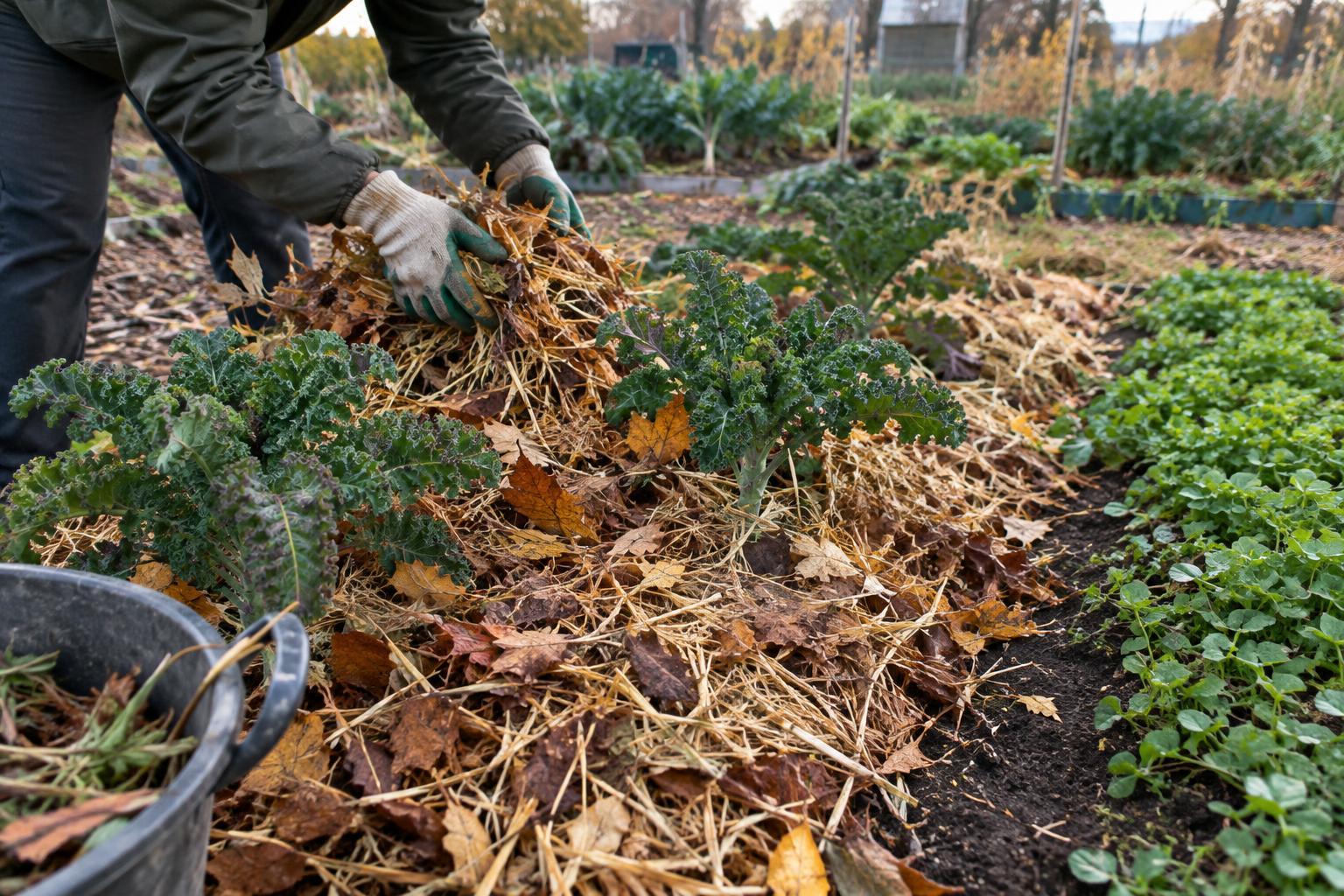
Leaves are useful when placed thoughtfully. A loose layer under shrubs or among established perennials can protect the soil surface and provide cover. Keep thick mats off low-growing plants and clear leaves from drains, paths and places where they become slippery. Shredding every leaf is not necessary; moving some intact leaves into sheltered planting areas gives gardeners a tidy route through the space while keeping that material on site.
Delay cutting back healthy stems until spring where the bed’s use allows it. When work resumes, check for new growth before trimming and move cut stems gently to an out-of-the-way spot for a short time rather than immediately compacting everything. The goal is not a perfectly untouched garden, but a few dependable places where winter shelter remains.
Give edible beds a different kind of attention
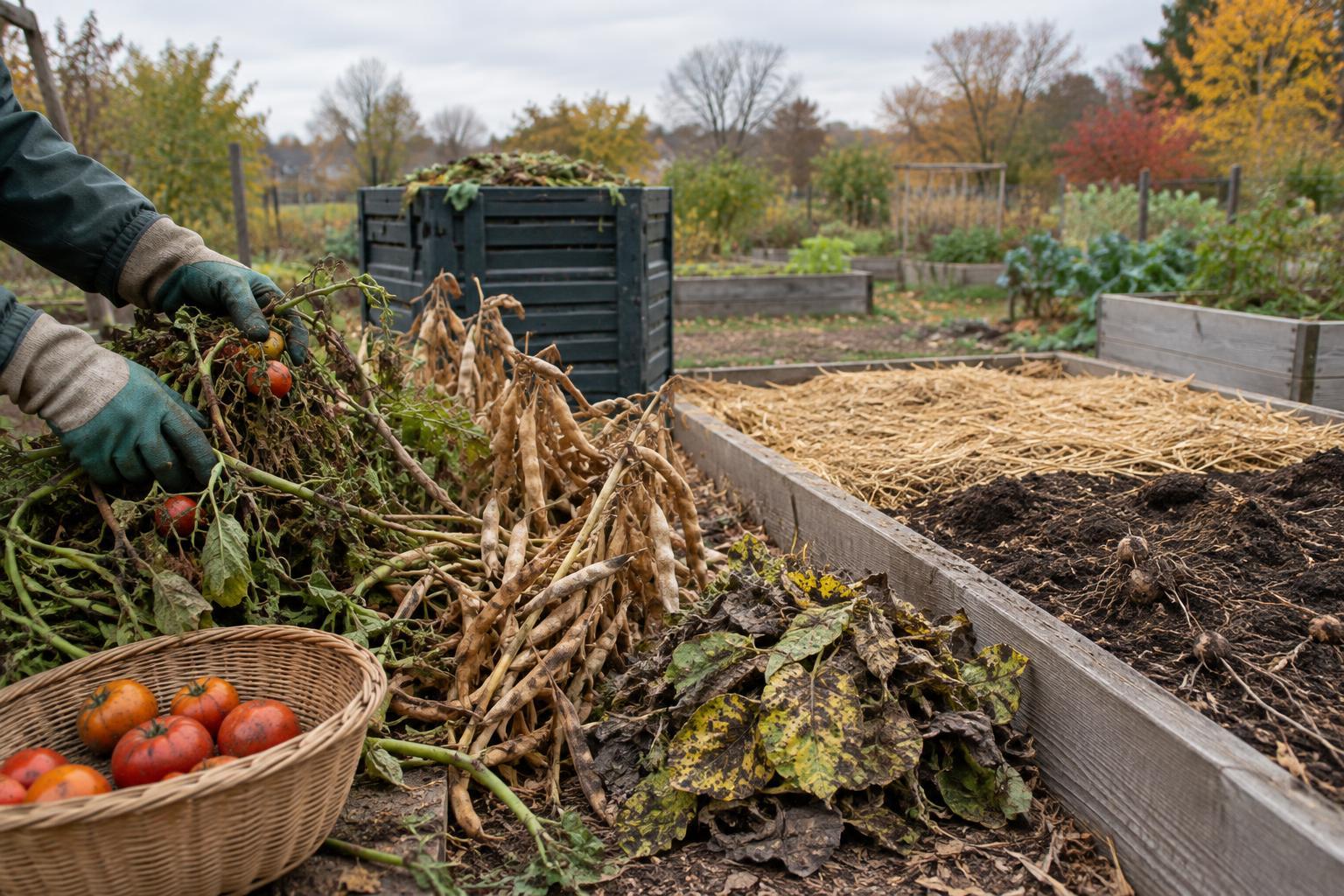
Vegetable beds often need more thorough cleanup than perennial borders. Remove spent crops that were diseased, along with fallen produce and supports that are no longer needed. Healthy plant material can go to compost if the garden accepts it, but first pull out plastic clips, string and other noncompostable pieces. Label reusable supports before storing them so they are easier to return to the right plot.
Bare soil does not need to be the result. Where appropriate, cover an empty bed with clean leaves, finished compost or another suitable mulch, leaving room around any plants still growing. This helps protect the soil surface from weather and reduces the urge to step on wet beds during winter. If a cover crop is part of the garden’s plan, make sure its planting and eventual removal fit the next gardener’s schedule.
Make the plan work for the whole garden
In a shared space, consistency matters more than a single definition of tidiness. Agree on a few simple zones: clear paths and common work areas, vegetable beds prepared for their next use, and designated habitat patches in suitable ornamental or border beds. Mark intentional standing plants so they are not mistaken for unfinished work during a volunteer cleanup.
Set expectations for where leaves, compostable debris and suspect plant material go. A brief bed-by-bed note can record recurring plant problems, places where stems will remain and tasks to revisit in spring. This makes selective cleanup easier for gardeners who were not present when the decisions were made.
Fall work can be spread across several visits. Handle safety and disease concerns first, then leave healthy material wherever it serves a clear purpose. By treating cleanup as a set of choices rather than a demand for bare ground, a community garden can enter winter both cared for and alive with shelter.