Decide whether the clump needs dividing
Perennials return from the same root system year after year, and some gradually spread into broad clumps. Division separates a clump into smaller plants, giving each one space and a share of healthy roots. It can also provide plants for another bed or a shared garden. But size alone is not a reason to dig: a vigorous plant with room to grow may be best left undisturbed.
Consider dividing when stems are crowded, the center has become bare or woody, flowering has declined, or the plant is pushing into a path or its neighbors. Check its growing conditions first. Too much shade, dry soil, or competition from nearby roots can also weaken growth; splitting the plant will not necessarily solve those problems. Identify the perennial before starting, because plants differ in how readily they tolerate division.
Choose a gentle time to work
Cooler weather and moist, workable soil make division easier on roots. A common approach is to divide spring-flowering perennials after they finish blooming, and many summer- or autumn-flowering perennials in early spring as new growth begins. Autumn can also work for suitable plants where there is enough time for roots to settle before the ground freezes. Avoid digging during intense heat, drought, or when soil is waterlogged.
These are guides rather than rules for every species. Some perennials resent disturbance or have deep taproots that are difficult to divide. Peonies, for example, can remain in place for many years and need careful handling if moved. Bearded irises have their own division and planting needs because they grow from rhizomes. If you are unsure what is in a shared bed, label it and confirm its identity before lifting it.
Lift and split the plant
Prepare the new planting space before digging so exposed roots spend as little time out of the ground as possible. Remove weeds, loosen the soil, and make sure the site suits the plant's light and moisture needs. Water a dry clump the day before if practical. Have a spade, a hand fork, and a clean, sturdy knife ready; tools should be cleaned between plants if disease is suspected.
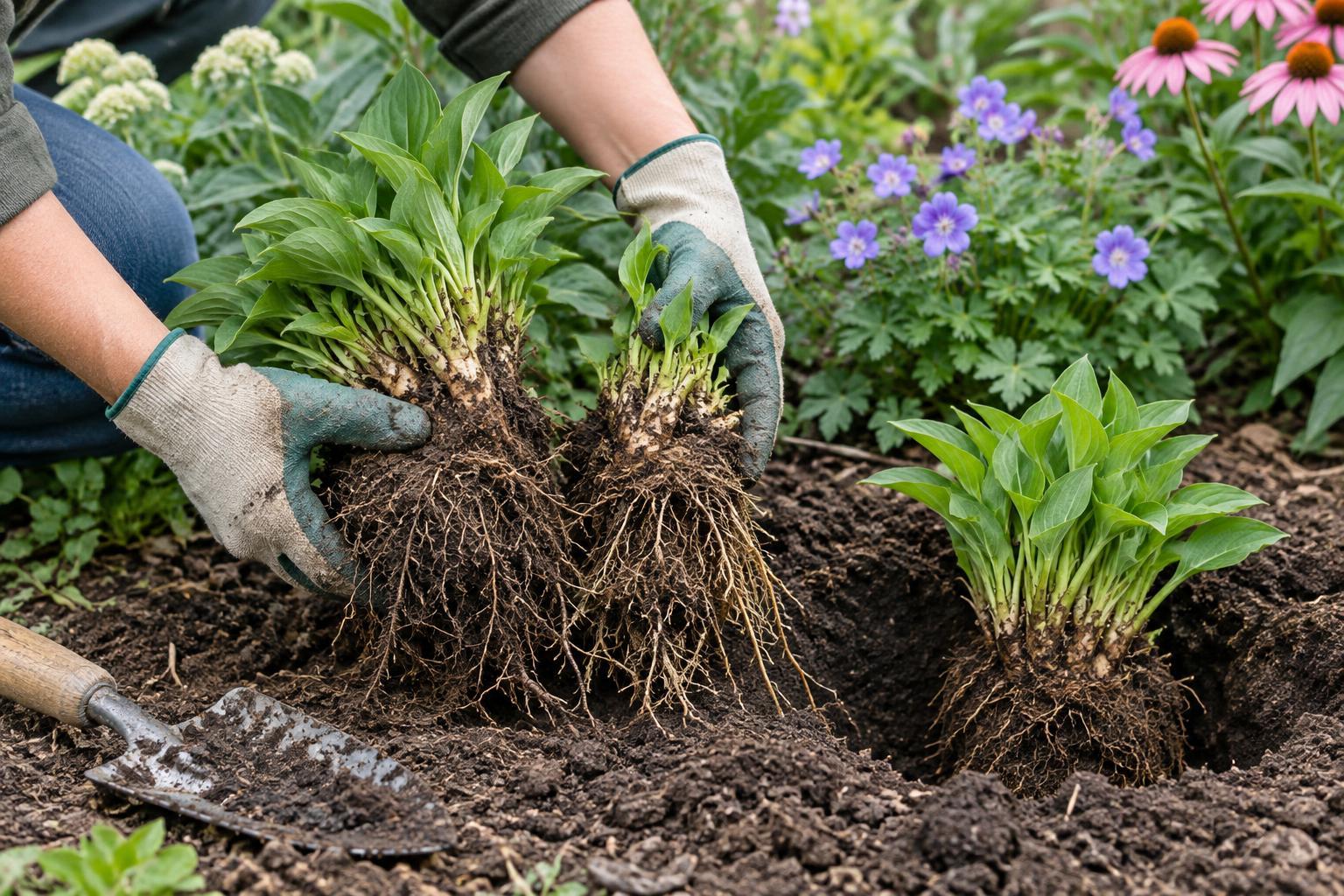
Dig a circle around the clump, keeping the spade far enough from the stems to preserve a useful mass of roots. Lift from several sides rather than pulling on the foliage. Shake or brush away just enough soil to see how the roots connect. Many fibrous clumps can be pulled apart by hand or eased apart with two forks placed back to back. A dense crown may need to be cut with a sharp spade or knife.
Aim for pieces with several healthy shoots or buds and a good portion of roots. Discard dead, hollow, or badly damaged central material, and trim broken roots cleanly. Very small pieces may survive, but larger divisions are usually easier to establish. Keep the roots shaded and damp while you work, especially if several people are dividing plants for different beds.
Replant at the right depth
Set each division at roughly the depth it grew before, unless that plant has specific planting requirements. Spread its roots into the prepared hole rather than folding them tightly underneath. Backfill with soil, firm it gently to remove large air pockets, and water thoroughly. Leave enough space for the mature plant, not just the small division you see today. A light layer of mulch can help conserve moisture, but keep it away from the crown.
Check the soil regularly during establishment. Water when the root zone is becoming dry, adjusting for rainfall and drainage rather than following a rigid schedule. Some wilting or a pause in growth can occur after division. Remove spent or damaged foliage, but leave enough healthy leaves to support recovery. If a piece has no viable buds or roots, replace it rather than repeatedly watering an unlikely start.
Make divisions useful in a shared garden
In a community bed, agree on what will be lifted and where the new plants will go before anyone starts digging. Mark plants that should remain in place, and label divisions with their names and intended locations. Replant promptly, offer sound extras to other gardeners, and compost only material that is free of concerning pests or disease. A short note recording what was divided and where it went can help the next volunteer distinguish a newly planted perennial from a gap in the bed.