Choose a suitable spot and time
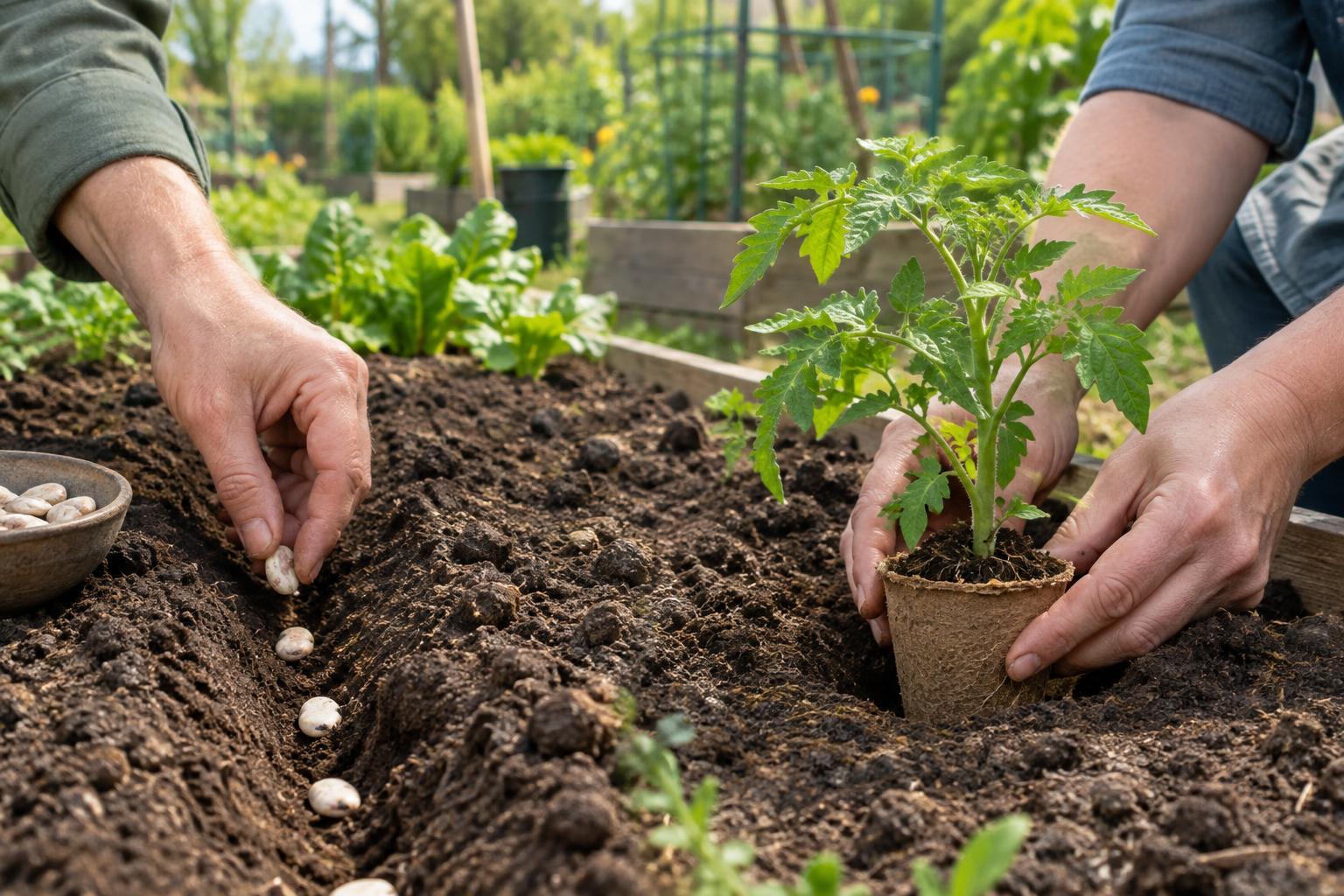
Direct-sowing means planting seeds in the bed where the vegetables will grow. It is a good fit for crops that establish readily from seed and for plants whose roots can be disturbed by transplanting. Beans, peas, radishes, carrots, and many leafy greens are commonly sown this way. Start by checking the seed packet for the crop’s preferred season, planting depth, and spacing. Those instructions are more useful than a single rule for every vegetable.
Pick a place with the light the crop needs and enough room to reach the planting area without stepping on it. Soil should be workable rather than soggy: if a handful stays in a sticky clump when squeezed, give the bed more time to drain. In a shared garden, confirm which bed and paths are yours to use before marking rows. A simple plan also helps you leave access for watering, weeding, and harvesting.
Prepare an even seedbed
Remove weeds and old plant debris, then loosen the soil where roots will grow. Break up large clods and rake the surface fairly level. Seeds make better contact with fine, settled soil than with a rough surface full of gaps. If the bed needs organic matter, mix finished compost into the soil before sowing; avoid placing seeds directly against chunks of unfinished material.
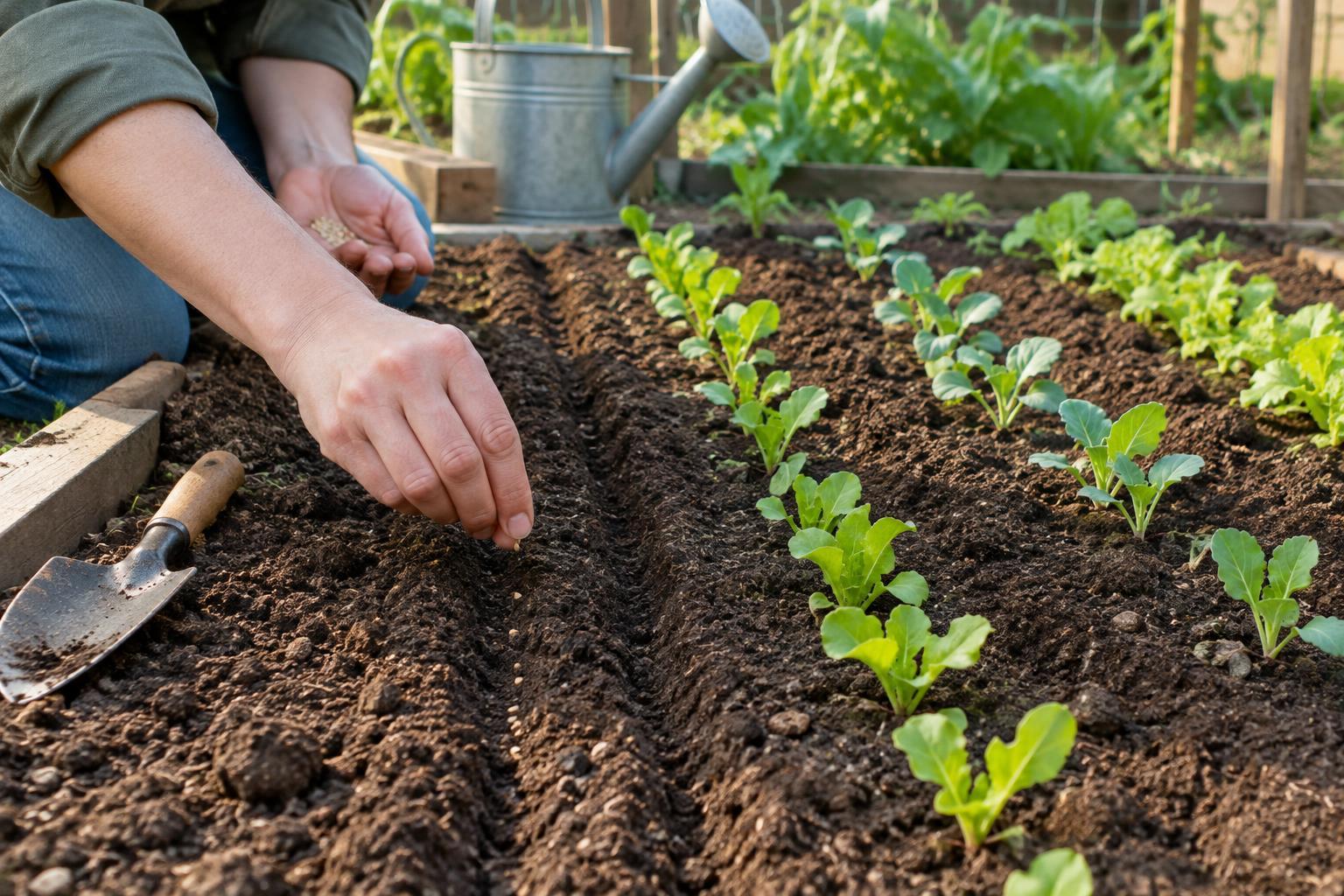
Make a shallow furrow with a hoe, trowel, or the edge of a board. A string between two stakes can guide a straight row, but straightness is optional. What matters is that you can recognize the planting line later and leave the spacing recommended for the mature plants. Gently firm the bottom of the furrow if it is very loose. Water dry soil before planting and let the surface drain, so a heavy watering afterward is less likely to wash small seeds away.
Plant seeds with depth and spacing in mind
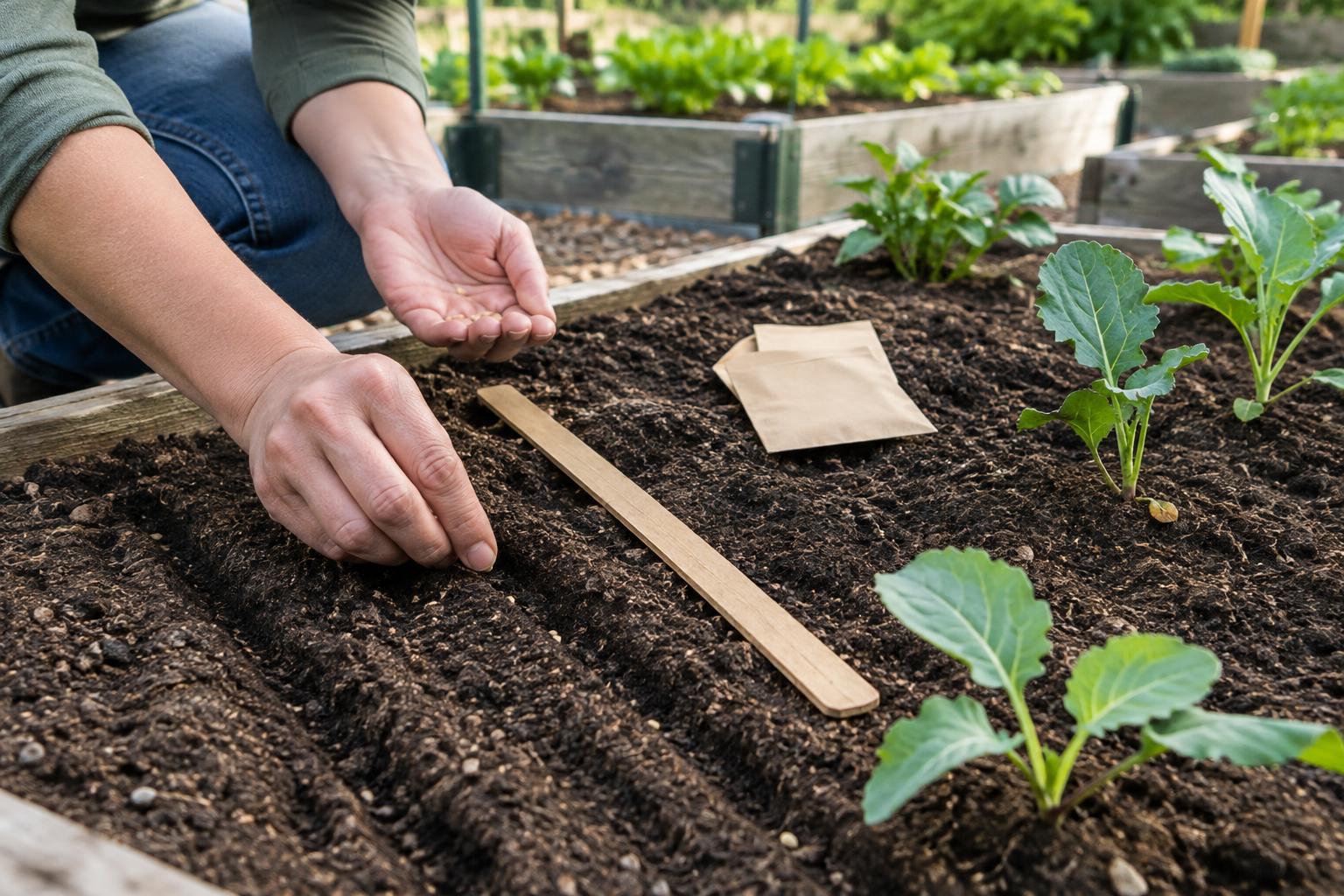
Read the packet before opening a furrow: tiny seeds generally need shallower covering than large ones, and some crops have particular germination requirements. Place seeds along the row as evenly as you can. For very small seeds, take your time rather than trying to make one quick pass. Sowing slightly more seed than the final plant spacing allows can account for uneven germination, but sowing thickly creates extra thinning work.
Cover the seeds to the recommended depth with loose soil, then press lightly to bring soil into contact with them. A fine spray of water can settle the surface without dislodging the row. Label the planting with the crop and variety, if known, and note when you sowed it. Labels are especially helpful in community beds, where another gardener may otherwise mistake a new crop for an empty row or pull its first leaves as weeds.
Care for the row while seeds emerge
Keep the seed zone consistently moist during germination without leaving the bed waterlogged. A gentle watering method helps preserve the soil surface; a forceful stream can expose or move seeds. Check moisture beneath the surface rather than judging by color alone, since the top may dry faster than the layer holding the seeds. Germination time varies by crop and conditions, so use the packet as a guide and be patient.
Once seedlings appear, learn what their first leaves look like and remove nearby weeds while both are small. Work carefully around the row to avoid lifting young roots. If rain has formed a hard crust, loosen the surface between seedlings gently rather than digging over the planting line. Where paths and beds are shared, let other gardeners know that the row has been seeded so it is not disturbed before the crop becomes obvious.
Thin seedlings before they become crowded
Thinning gives each remaining plant space for light, water, and root growth. Check the packet’s final spacing and begin once seedlings are large enough to distinguish and handle. Choose healthy, well-placed plants to keep. Snip unwanted seedlings at soil level with small scissors when pulling might disturb neighboring roots; for sturdier seedlings with room between them, careful pulling may be practical. Thin in stages if you are unsure which plants will establish.
After thinning, water gently if the soil is dry and check that the remaining plants are upright. Leaving crowded seedlings in place can mean smaller roots or leaves and makes weeding harder later. The goal is not a perfectly uniform row but a usable stand of plants with room to mature. Keep your planting notes so the next sowing can be adjusted if seeds came up too sparsely, too densely, or unevenly.