Start with the site and the view
Before choosing flowers, stand where people will usually see the border. A bed along a fence is viewed mostly from one side, while an island bed may be seen from every direction. Notice where paths, entrances, and seating areas meet the planting. In a shared garden, leave enough room for people to pass, tend plants, and enjoy blooms without stepping into the bed.
Check the light at different times of day, and pay attention to spots that stay wet or dry longer than the rest. Choose plants suited to those conditions rather than relying on a design that works only on paper. Sketch the bed’s shape and mark any plants that will remain. A simple plan makes it easier to see whether the border has space for a variety of plants or would benefit from fewer kinds used more generously.
Use height to shape the border
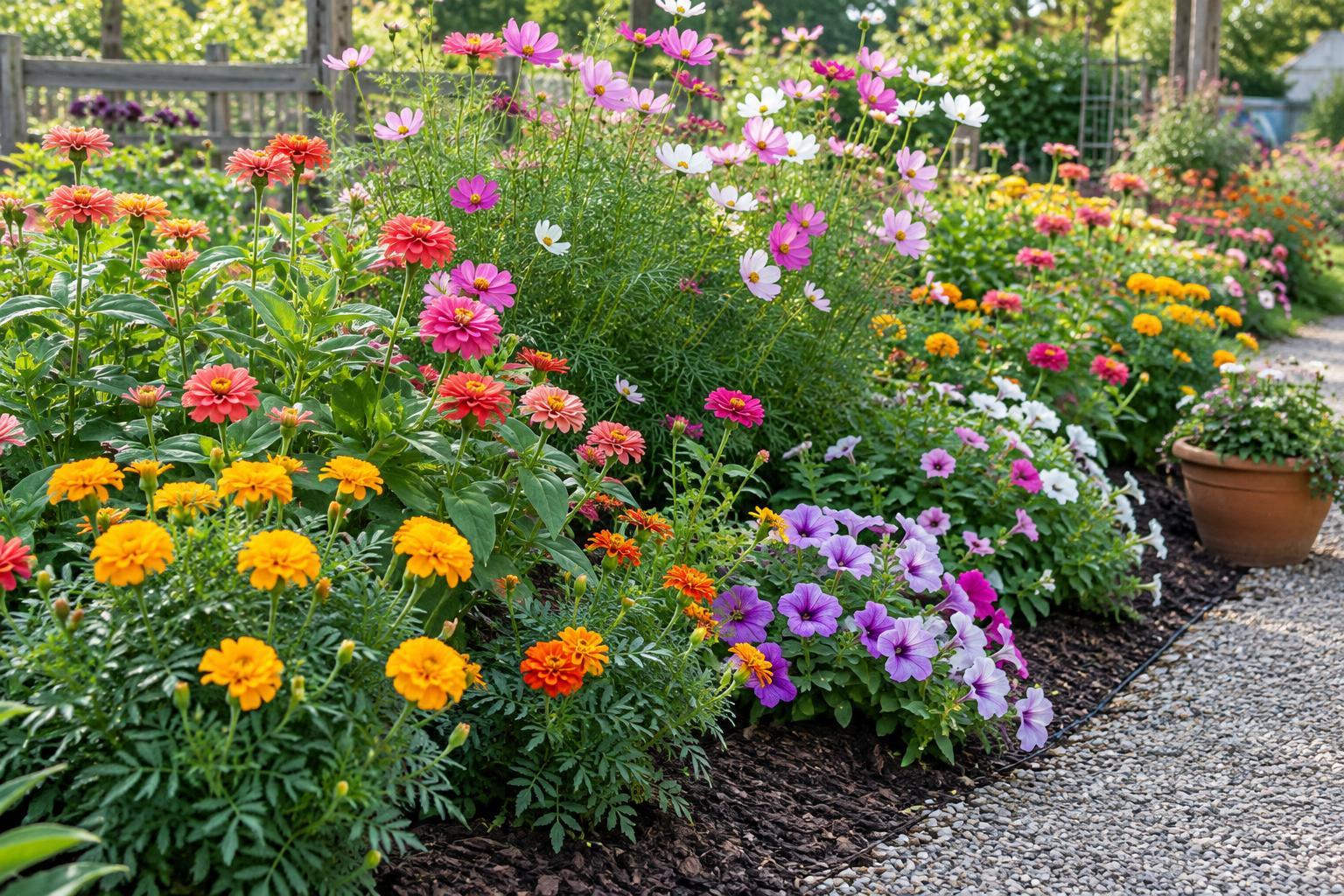
For a border viewed mainly from a path, place most taller plants toward the back, medium-height plants through the middle, and lower plants near the front. This gives each layer a chance to be seen. It is a starting point, not a strict rule: a tall, airy plant can rise through the middle without blocking everything behind it, while an occasional medium-height plant near the front can keep the arrangement from looking like rows.
In an island bed, put many of the tallest plants near the center and work outward toward shorter edges. Consider more than the height of flowers in bloom. Foliage height, the width of a mature clump, and whether stems tend to lean all affect the view. Keep plants with sprawling leaves or arching stems back from paths, even if their listed height is modest. If the border sits beside a shared walkway, preserve clear sightlines at corners and entrances.
Space for the plants they will become
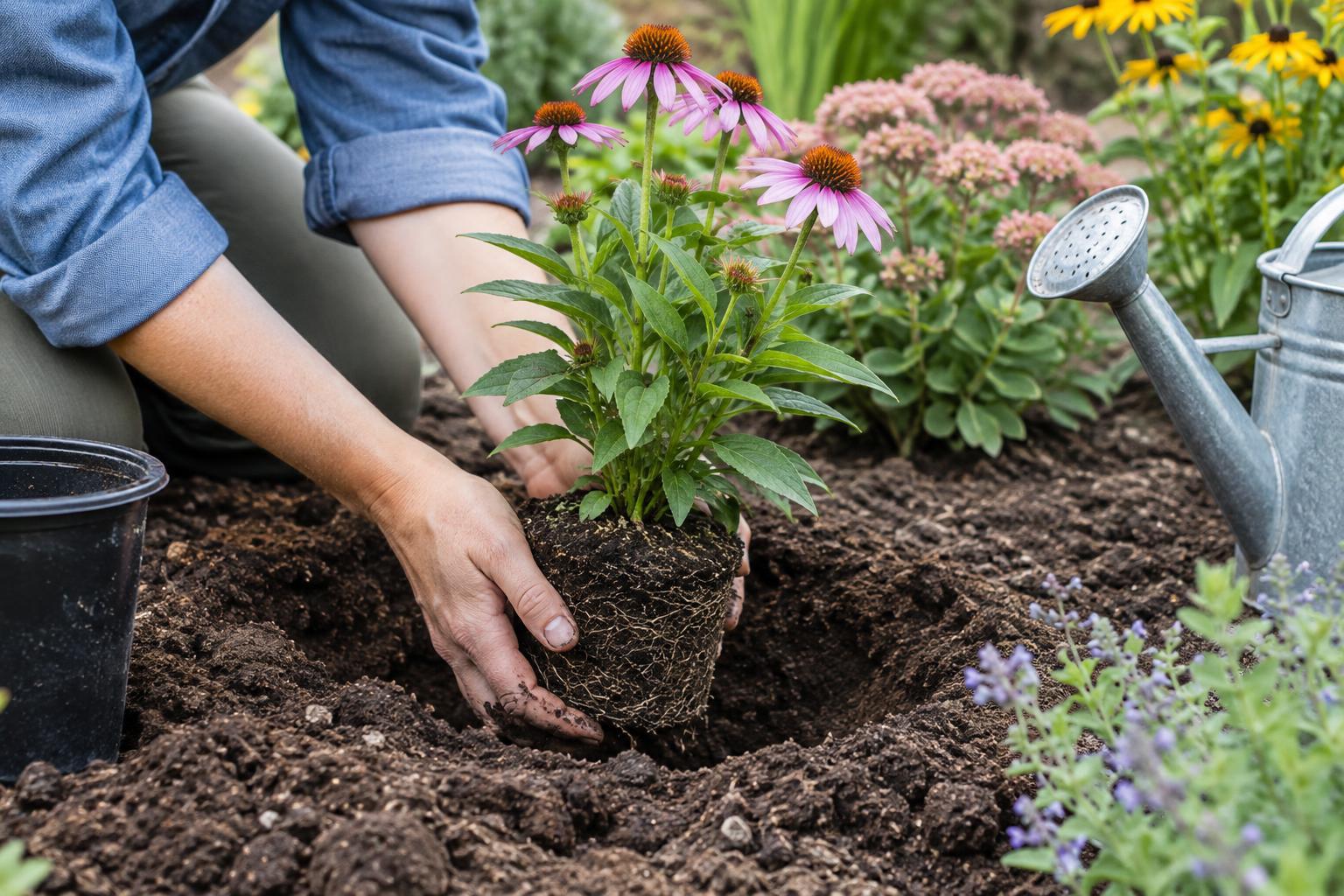
Newly planted borders can look sparse, which makes it tempting to fill every gap. Instead, use the expected mature width of each plant as a guide. Allow neighboring plants enough space to develop their natural shapes, and consider how easily a gardener will be able to reach in to weed, divide, or remove spent stems. Plants that are crowded early may compete for light and become harder to maintain.
Spacing need not be identical across the bed. A loose group of the same flower can grow close enough to read as one generous patch, while larger plants may need more separation to keep their outlines visible. If you want color while perennials fill in, use temporary annuals in open spaces rather than permanently packing in more perennials. Leave a little breathing room around features worth noticing, such as a distinctive leaf shape or a strong flower color.
Build a rhythm through repetition
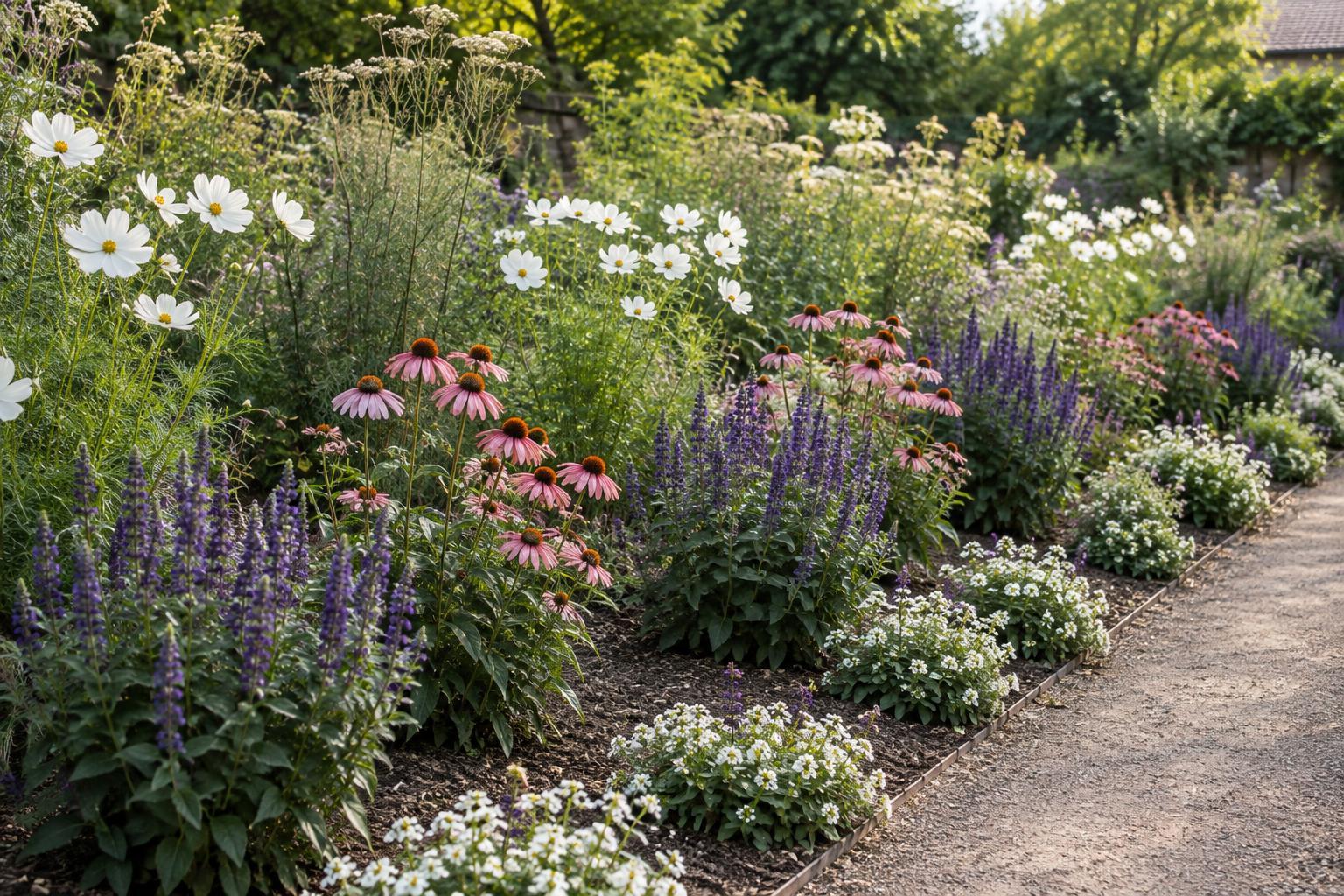
Repetition helps a border feel connected. Choose a small number of plants, colors, or foliage forms to carry through the space, then repeat them in groups at intervals. Three patches of one flower spread along a long border often create a clearer rhythm than one patch of that flower followed by many unrelated single plants. The groups do not need to match exactly; varying their size can keep the border relaxed.
Repetition can also come from leaves. A recurring mound of fine foliage or a broad-leaved plant can hold the design together when flowers are between blooms. For variety, place contrasting forms beside one another: upright stems next to rounded mounds, for example. Aim for a few recognizable patterns rather than repeating every plant. This gives visitors something familiar to follow while leaving room for seasonal changes and contributions from different gardeners.
Plan for change and easy care
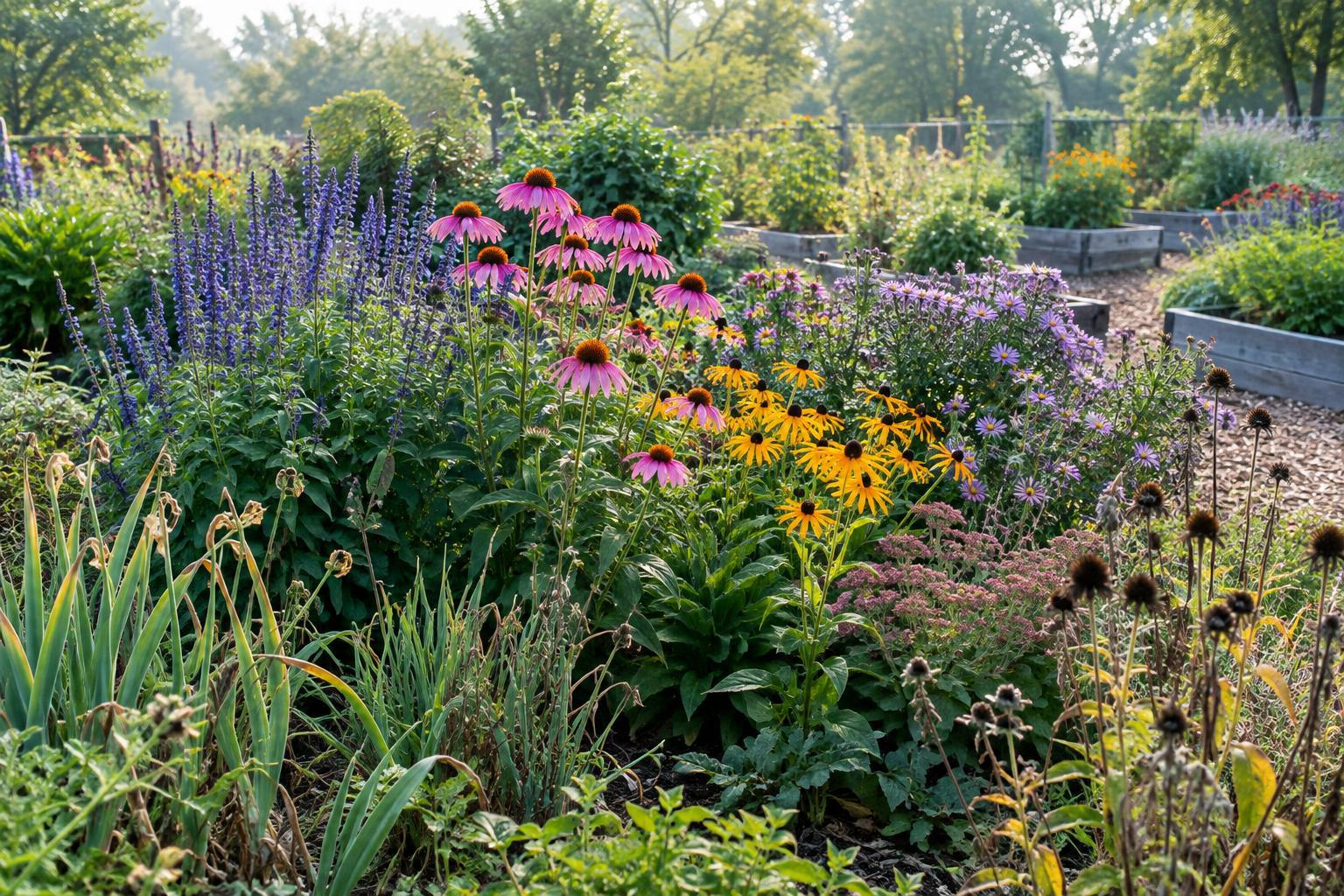
A border is not a fixed picture. Flowers open at different times, some plants expand, and others may not suit the site as well as expected. Include plants that offer interest at different points in the growing season, and look for appealing foliage to carry the border when blooms are scarce. Revisit the planting after a season to see where a view is blocked, a gap needs filling, or a repeated group has become too large.
In a community space, a design that people can maintain is more valuable than a complicated plan that depends on constant attention. Group plants with similar watering needs where practical, make access points clear, and leave room to work without brushing against every stem. A border with thoughtful height, comfortable spacing, and a steady rhythm can feel abundant while still welcoming the people who care for it.