Start with the site and the people who will use it
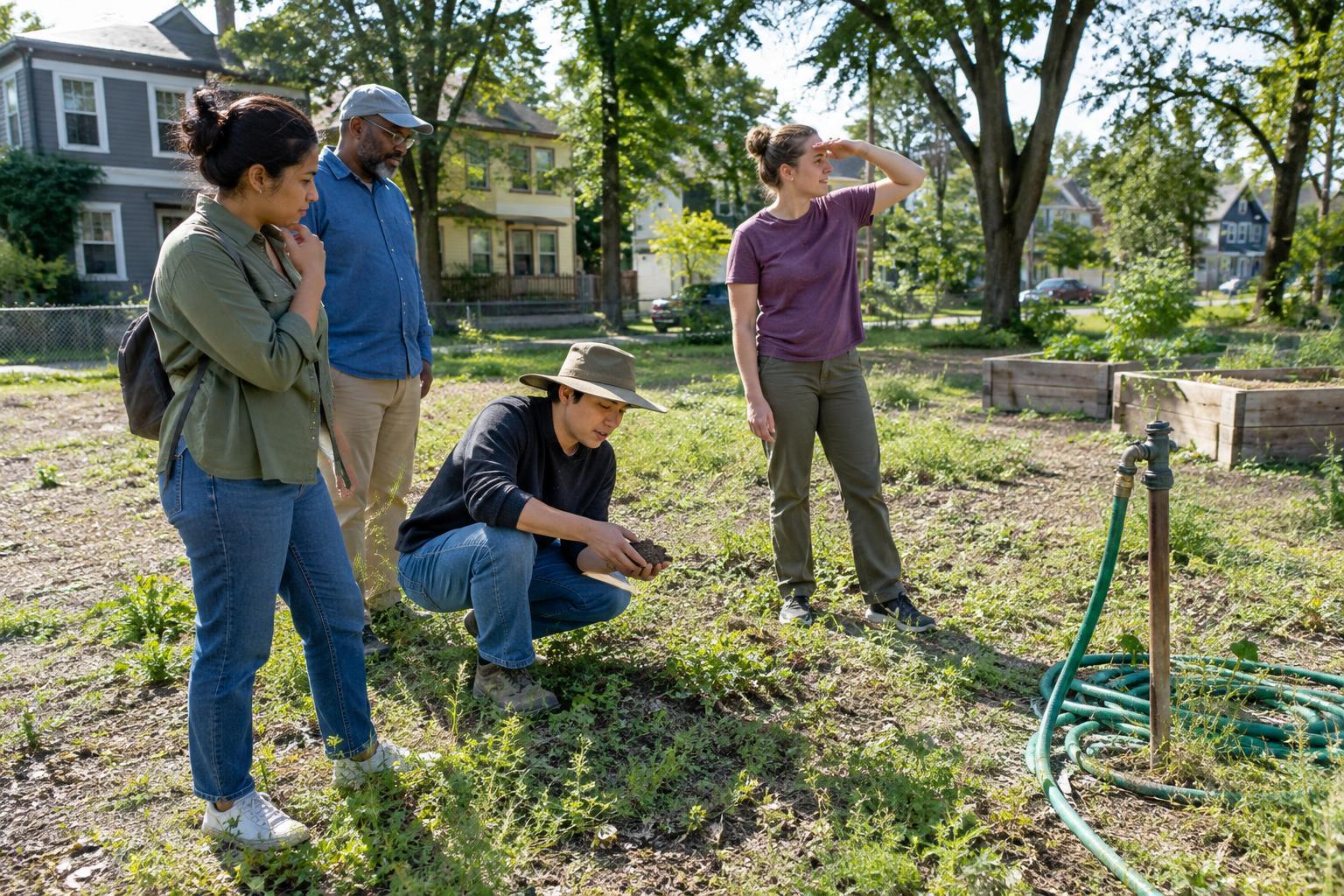
Before drawing plots, walk the site with prospective gardeners at different times of day. Note where sunlight reaches the ground, where water collects after rain, how people enter, and whether a hose can reach the likely growing areas. Mark trees, slopes, existing structures, and places that must stay clear. If the site has rules about structures or access, confirm them before committing to a layout.
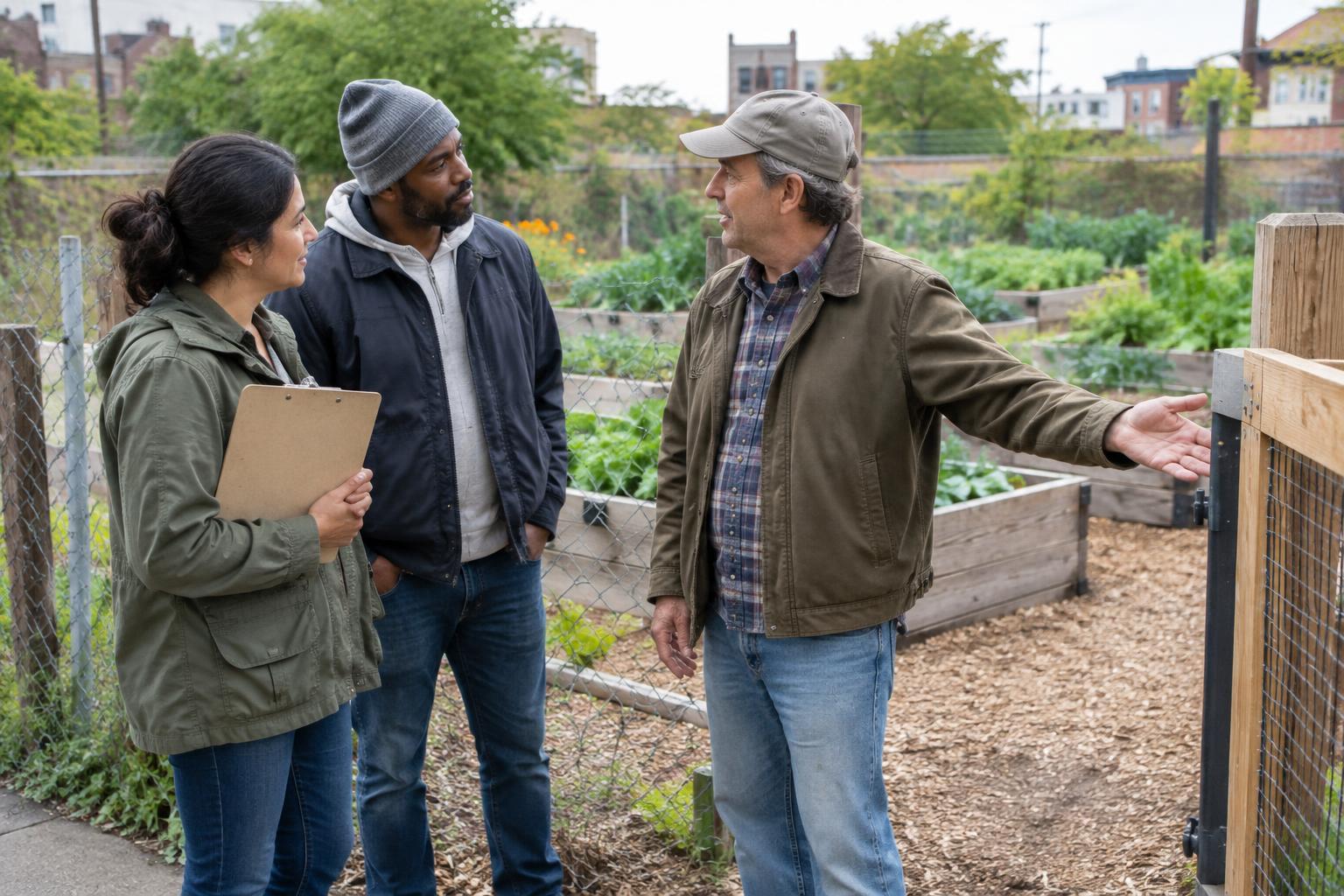
Ask gardeners what they need from the space. Some may want a small individual plot; others may prefer shared beds, a place to sit, or room to bring children. A simple sketch with several layout options gives people something concrete to discuss. Leave space for future needs rather than dividing every usable patch into plots immediately.
Make paths easy to follow and maintain
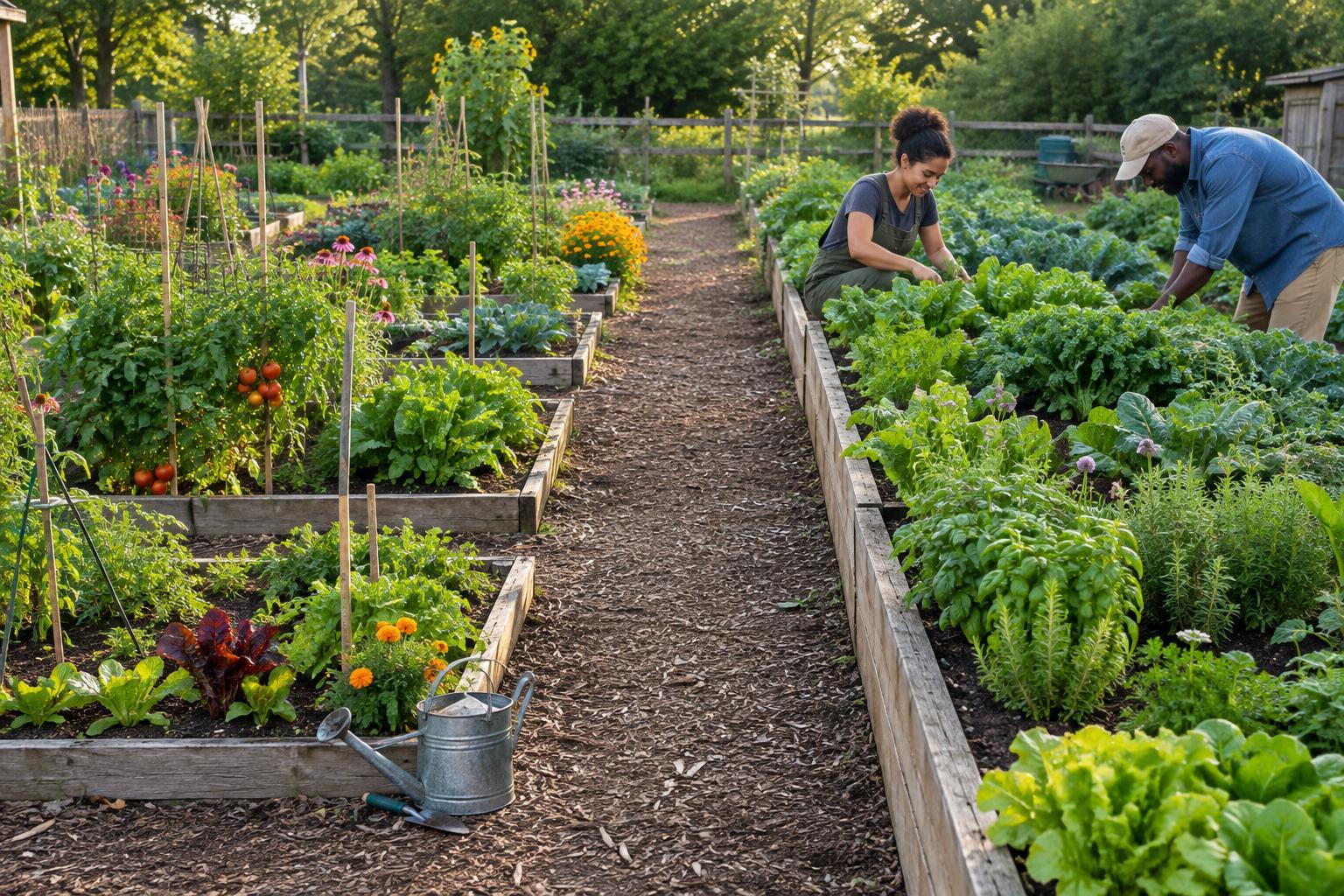
Plan the main route first. It should connect the entrance to plots, water, gathering space, compost, and storage without forcing people to cut through beds. Make it wide enough for the people and equipment expected to use it, including wheelbarrows and mobility aids where possible. Check that turns and gates are practical, too; a generous straight path is less useful if its entrance is difficult to navigate.
Choose a path surface with upkeep in mind. A firm, even surface is easier to travel than loose or rutted ground, but the best choice depends on the site, budget, drainage, and who will maintain it. Keep paths distinct from planting areas with edging or a clear mowing boundary. Add smaller routes only where they help gardeners reach beds without stepping on growing soil, and plan how paths will be weeded or repaired over time.
Size and arrange plots for comfortable work
Place food-growing plots where they receive the most useful sunlight, while keeping shade-tolerant plants or seating for less sunny spots. Orient and space beds so gardeners can reach plants from the paths without routinely walking on the soil. Plot dimensions need not be identical: a mix of smaller beds, larger plots, and raised beds may suit a wider range of gardeners. Keep access to water convenient, rather than making a distant tap the responsibility of a few nearby plot holders.
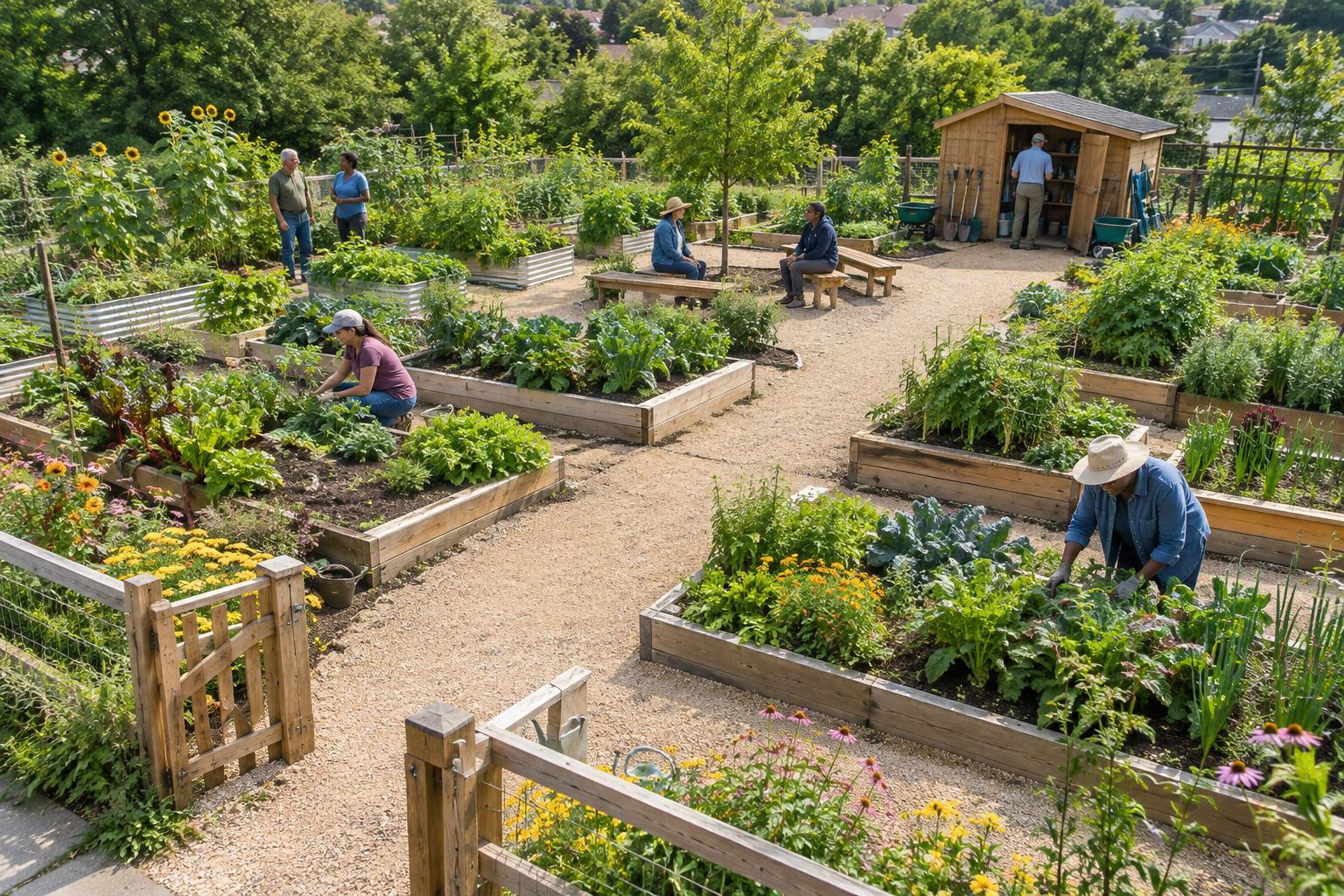
Decide early which spaces are assigned and which are shared. Clearly marked plot edges reduce confusion, while shared areas can hold herbs, flowers for pollinators, or crops that need more room. Include a place for compost only if the group can manage it consistently. Sketch hose routes and consider how mature plants, trellises, and overflowing crops might affect neighboring plots and paths.
Give gathering space a real purpose
A community garden is also a place to exchange ideas and work together. Set aside an area where a small group can meet without blocking a path or occupying productive beds. Seating near the entrance may welcome visitors; seating near plots can give gardeners a convenient place to rest. Shade is valuable where available, but check whether an existing tree’s roots or canopy will complicate planting nearby.
The gathering area does not need to be elaborate. A stable surface, movable seats, and a clear place for notices may be more useful than a large structure that the group cannot maintain. Think about how the area will function during workdays: where can volunteers set down tools, sort materials, or talk without crowding gardeners who are tending their plots?
Put storage where daily work happens
Locate tool storage close enough to the entrance for deliveries and close enough to beds for regular use. A lockable shed or cabinet can keep shared tools organized, but it needs a dry, accessible location and someone responsible for checking its contents. Reserve separate space for bulky items such as wheelbarrows, stakes, and spare hose. Keep frequently used tools easy to find, and avoid storing materials where they narrow paths or block access to water.
Treat the first layout as a working plan, not a permanent diagram. Before building, mark proposed beds and paths on the ground and walk through ordinary tasks: moving compost, carrying a watering can, opening storage, and passing another gardener. After the garden is in use, ask what creates bottlenecks or extra work. Small adjustments to a path, plot boundary, or storage routine can make the whole space easier to share.