What deadheading does—and what it cannot do
Deadheading means removing a flower after it fades, usually before it forms mature seed. For plants capable of producing more buds, this can encourage continued flowering or make the next flush easier to see. It also removes brown petals and can prevent prolific self-seeders from spreading through a shared bed. The effect depends on the plant: removing a spent bloom will not make a once-blooming plant flower all summer.
Before cutting, decide what the bed needs. A flower that looks untidy near a path may be worth removing, while a sturdy seedhead farther back can provide winter texture and food for birds. In a community garden, agreeing on which plants should set seed helps avoid well-meant pruning that works against another gardener’s plans.
Where to make a clean cut
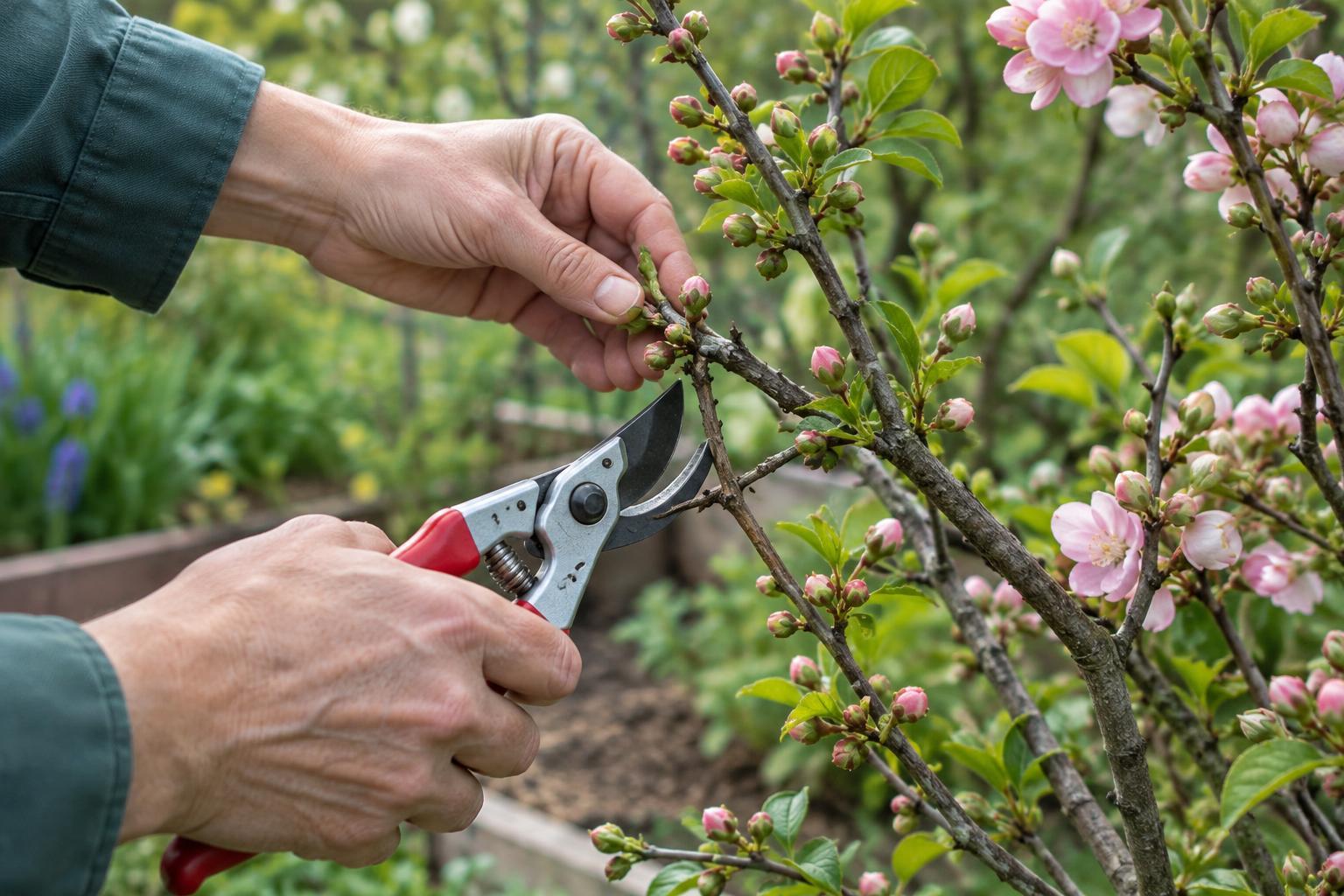
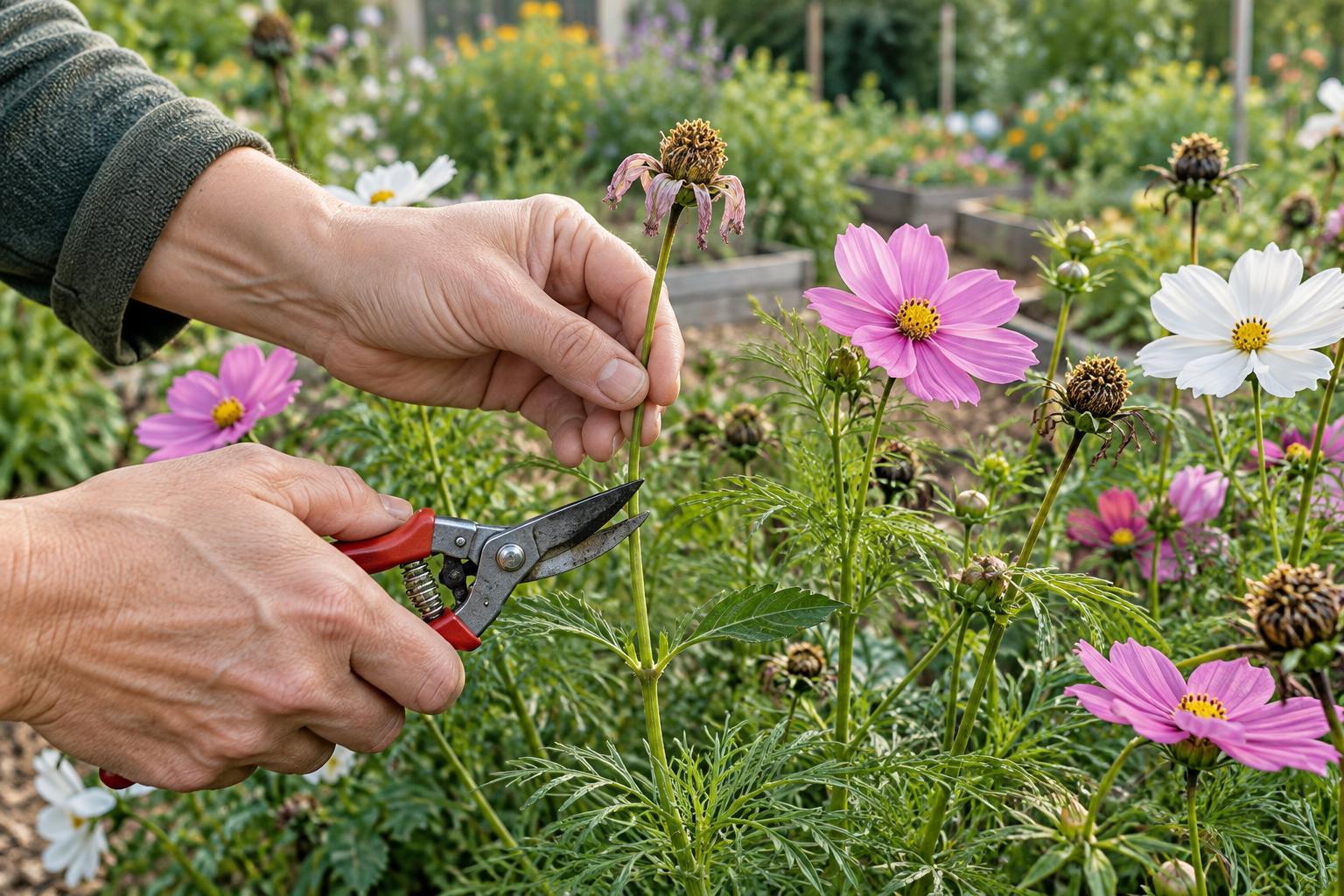
Follow the faded flower’s stalk downward to the first healthy leaf, pair of leaves, branching stem, or visible bud. Cut just above that point, leaving the leaf or bud intact. Removing the whole spent stalk generally looks neater than pinching off petals while leaving an empty stem. If several flowers share a stem, remove individual spent blooms without cutting off unopened buds.
Use fingers for soft, thin stems and clean snips for tougher growth. Check the plant from the side before cutting: buds can be tucked below faded flowers. Put healthy trimmings in a suitable compost collection, but keep material showing suspicious rot or other disease out of a shared compost pile if its handling rules are uncertain. Clean tools after working on visibly diseased plants.
Flowers that often reward regular deadheading
Many flowering annuals are good candidates. On zinnias and cosmos, trace the finished flower stem down to a leaf joint or side branch and cut just above it. Remove faded marigold heads with their short stalks rather than pulling off only the petals. Petunias may benefit from removing the developing seedpod behind the wilted flower; if the entire plant becomes long and sparse, a broader trim may do more than picking individual blooms.
Repeat-blooming roses can also benefit. Cut a spent flower or cluster back to a healthy, outward-facing leaf or strong side shoot, choosing a cut that suits the size of the plant. There is no need to count a fixed number of leaflets on every stem. With salvias that send up flowering spikes, cut a finished spike back to a leafy point without removing fresh side shoots. Some plants will bloom again readily; others may produce only a modest second showing.
Perennials that need a lighter touch
For a daisy-type perennial such as Shasta daisy, remove individual faded flowers above a leaf or branching point while other buds remain. Once the entire stem is finished, cut it down toward the leafy base. Hardy geraniums, often called cranesbills, can look ragged after a heavy flush; some varieties respond to a light shearing by producing fresh foliage and occasional new flowers. Give a newly planted or stressed clump a gentler trim rather than cutting it hard.
Deadheading does not have to be all or nothing. Coneflowers may produce more flowers if early spent heads are removed, but later heads can be left for their seeds and shape. Likewise, leave ornamental seedheads that you want for winter interest. If a perennial has finished its natural flowering period and shows no new buds, removing old blooms is mainly a tidying choice.
When to stop—and how to share the task
Do not confuse deadheading with cutting back the whole plant. Spring bulbs such as daffodils can have their spent flowers removed, but their green leaves should remain until they yellow naturally; the foliage supports next year’s growth. On shrubs that bloom once on older wood, such as many lilacs, remove faded flower clusters soon after bloom if desired. Avoid indiscriminate late-season pruning, which may remove buds for the following year.
In a shared garden, make the routine simple: identify the plants that should be deadheaded, the ones kept for seed, and any stems that should not be touched. A brief weekly pass is often easier than a major cleanup. Look for new buds, cut only what has finished, and leave intentional seedheads standing. That approach keeps beds welcoming without treating every fading flower as a problem.